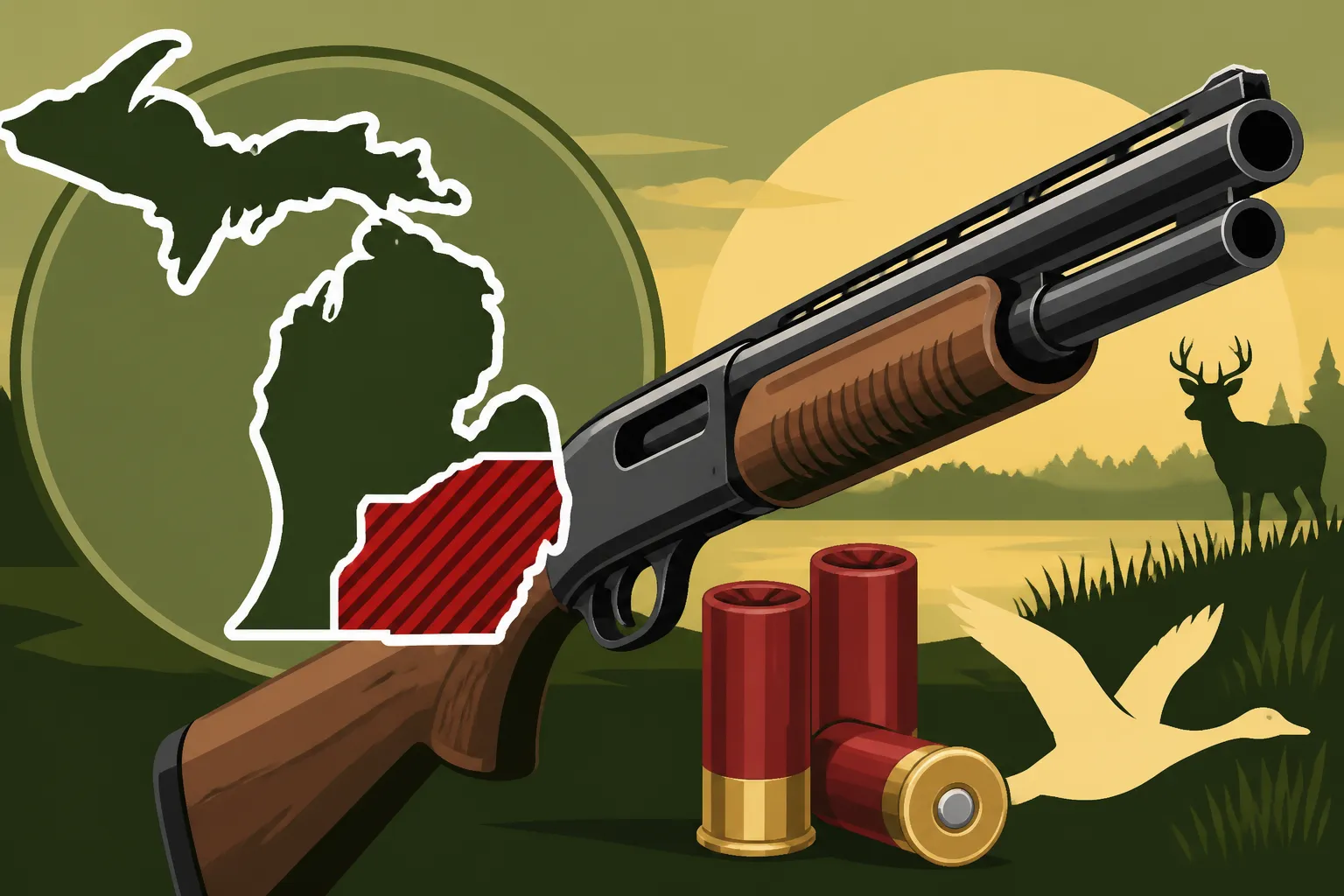
Shotguns and Slugs in Michigan’s Restricted Zone
Navigating Michigan's deer hunting regulations can feel like trying to hit a moving target, especially when you start diving into the specifics of firearms. For so many of us who hunt the more populated southern half of the Lower Peninsula, the "Limited Firearm Deer Zone" often dictates what we can and can't use, leaving many feeling frustrated and confused about their options. This comprehensive guide is here to untangle that web, helping you understand shotguns, slugs, and the newer straight-wall cartridges so you can choose the best, most ethical, and most effective setup for your next Michigan deer hunt.
Understanding Michigan's Limited Firearm Deer Zone
The concept of a "restricted" or "limited firearm" zone can be a real head-scratcher for new hunters and even seasoned veterans who move to different parts of the state. It essentially carves out a significant portion of Michigan where the use of traditional high-powered rifles for deer hunting is, well, limited. This isn't just a random rule; there's a good reason behind it, and understanding that helps clarify its purpose.
The Historical Context of the Zone
Historically, much of southern Michigan developed with more concentrated populations, smaller agricultural parcels, and a greater density of homes compared to the vast forests of the north. Imagine a rifle round traveling for miles, well beyond the intended target. In areas where houses might be just a quarter-mile away, or a bustling two-track runs behind a woodlot, the potential for a bullet to travel great distances becomes a serious safety concern. The initial response was to limit firearms to those with shorter effective ranges and faster energy dissipation.
For decades, this meant shotguns with slugs, and later, handguns. The idea was to keep hunters safe and, perhaps more importantly, keep non-hunters safe. While hunting accidents are extremely rare, the perception of safety is critical for public support of our hunting heritage. This zone was designed to mitigate risk in areas where a stray round could cause significant property damage or, tragically, harm to people.
Geographic Boundaries and What They Mean
So, how do you know if you're in the zone? Generally speaking, the Limited Firearm Deer Zone encompasses much of the Lower Peninsula south of a line that roughly runs from Muskegon eastward to Bay City. However, you can't just eyeball it. County lines and specific township boundaries dictate the exact borders, and these can be tricky. It's not always as simple as "south of M-20" or "below the Thumb." Knowing exactly Where Michigan Restricts Rifles for Deer is crucial for compliance and ethical hunting.
For hunters, this means an extra layer of pre-hunt preparation. You can't just assume. Utilizing resources like the Michigan DNR's interactive maps or a mapping application like GoHunt, which often have specific layers detailing hunting zones, is indispensable. Don't be that hunter who finds out mid-season that their trusty rifle is illegal in their favorite spot. It impacts everything from your weapon choice to your hunting strategy, especially if you hunt close to the invisible line separating zones. Michigan Deer Management Units are also worth familiarizing yourself with, as some regulations can vary even within this broader zone.
Allowed Firearms Within the Restricted Zone
So, if traditional rifles are largely out, what can you use? For a long time, it was primarily shotguns with slugs, muzzleloaders, and handguns. These firearms were deemed to have a more limited range, making them safer for the more populated areas of the Lower Peninsula. But the landscape of acceptable firearms has evolved, offering hunters more options than ever before.
The key characteristic for legal firearms in the zone revolves around the projectile's trajectory and effective range. Modern ammunition and firearm technology have significantly improved the accuracy and downrange energy of these "limited range" options, but the fundamental principle remains: choose a firearm that poses less risk of long-distance projectile travel. This evolution means that while shotguns and slugs are still mainstays, a new class of firearms has gained popularity, offering rifle-like performance within the zone's constraints.
The Evolution of Slug Guns for Deer Hunting
For generations of Michigan hunters, the shotgun was the deer gun in the southern Lower Peninsula. And for good reason – it was the primary legal option. But the "slug gun" of today is a far cry from the bumpy, short-range cannon many of us grew up with. Technology has transformed these firearms, making them incredibly effective within their intended range.
From Smoothbore to Rifled Barrels
The earliest slug guns were simply smoothbore shotguns, the same ones used for bird hunting, loaded with a single, large lead projectile called a Foster slug. These slugs were designed to stabilize somewhat in a smooth barrel due to their weight-forward design and hollow base. They worked, but accuracy was often limited to 50-75 yards, and consistency could be frustrating. Many hunters remember the "pumpkin ball" reputation – hitting a deer was more about luck than precision at longer ranges.
Then came the game-changer: the rifled slug barrel. These barrels, often interchangeable with smoothbore barrels on the same receiver, feature spiral grooves just like a rifle. This rifling imparts spin on the slug, much like a football, dramatically improving its stability and accuracy. Suddenly, slug guns were capable of much tighter groups and ethical shots out to 125-150 yards, sometimes even further with the right ammunition. This innovation truly bridged the gap between traditional shotguns and what hunters expected from a deer rifle.
Types of Shotgun Slugs
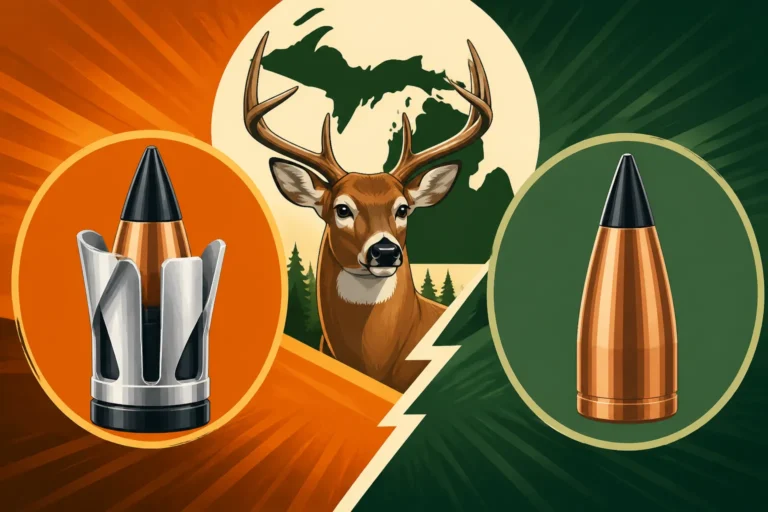
With rifled barrels came an explosion in slug technology. No longer were hunters limited to the basic Foster slug. Today, we have a variety of specialized slugs designed to take full advantage of rifled barrels. Sabot slugs, for instance, consist of a smaller, aerodynamic projectile encased in a plastic sleeve (the sabot) that engages the rifling. Once the slug leaves the barrel, the sabot separates, allowing the projectile to continue its flight with minimal drag.
These modern sabot slugs are typically made of lead, copper, or alloys, and come in various designs, from pointed tips for better ballistics to hollow points for rapid expansion. They offer superior accuracy and flatter trajectories than their smoothbore counterparts. Then there are "full bore" slugs, often made of solid copper, designed to be fired from rifled barrels without a sabot, relying on the rifling to stabilize a larger, heavier projectile. Each type offers different performance characteristics, and finding the right one for your gun is key to maximizing accuracy.
Modern Slug Gun Accuracy and Effective Range
Let's be realistic: a slug gun, even a highly accurate one, is not a traditional rifle. But modern slug gun setups can deliver impressive performance. With a quality rifled barrel, a good scope, and the right sabot ammunition, a hunter can expect to consistently hit a deer-sized target at 100 yards, and often out to 150 yards. Some dedicated setups can even push past 200 yards in the hands of an experienced shooter, though this is pushing the ethical limits for many.
The real-life scenario often means shots are taken within 100 yards in Michigan's often dense cover. So, the ability to group shots within a few inches at these ranges is more than adequate for ethical harvesting. The key is finding the specific slug that your shotgun "likes" – every gun is different. This often means buying a few different boxes of ammunition from various manufacturers and spending time at the range, patterning your shotgun and zeroing your optics. Don't assume all slugs perform the same; a little range time can make a world of difference.
Straight-Wall Cartridges: A Game Changer for Michigan Hunters
The introduction of straight-wall rifle cartridges into Michigan's Limited Firearm Deer Zone was a significant shift, offering hunters rifle-like ballistics and accuracy previously unavailable. This change recognized advancements in cartridge design and allowed for a wider array of effective hunting tools within the spirit of the zone's safety regulations.
What Exactly is a Straight-Wall Cartridge?
At its simplest, a straight-wall cartridge is a type of ammunition where the casing from the base to the mouth is cylindrical, or "straight," without the distinct bottleneck taper seen in many traditional rifle cartridges (like a .30-06 or .270). The reason this design is allowed in the restricted zone boils down to the projectile's ballistic properties. Generally, straight-wall cartridges are designed to propel heavier, slower-moving projectiles that lose energy more rapidly and have a more pronounced bullet drop at longer distances compared to bottlenecked rifle cartridges. This means they are less likely to travel extreme distances.
This distinction is crucial for safety in populated areas. The Michigan DNR explicitly allows certain straight-wall pistol and rifle cartridges in the Limited Firearm Zone. It's not just any rifle cartridge, but those that fit specific dimensional criteria. This has opened up a world of new possibilities for hunters who previously felt limited to shotguns or handguns. You'll want to review Straight-Wall Cartridges Legal in Michigan to ensure your choice is compliant.
Popular Straight-Wall Calibers for Deer
Since their approval, several straight-wall calibers have surged in popularity among Michigan deer hunters. The .450 Bushmaster is arguably the most well-known, offering significant knock-down power and excellent accuracy, often out to 200 yards or more with a good rifle. Its popularity stems from its flat trajectory and effectiveness on large game. However, it does come with a notable amount of recoil.
Other popular options include the .350 Legend, a newer cartridge specifically designed for states with straight-wall restrictions. It offers a much lighter recoil than the .450 Bushmaster, good accuracy, and is perfectly capable of taking deer cleanly. It's often compared to a .30-30 in terms of performance. You also see older handgun calibers adapted for rifles, like the .44 Magnum, .45 Colt, and .357 Magnum, which have a long history of being effective deer rounds in carbine form. Each has its own ballistic profile, recoil characteristics, and ideal hunting scenarios, giving hunters a fantastic range of choices to fit their personal preferences and hunting styles.
Advantages and Disadvantages Compared to Slugs
Comparing straight-wall cartridges to shotguns with slugs brings up some clear differences. The primary advantage of straight-walls is typically superior accuracy and flatter trajectory, especially beyond 100 yards. This translates to more confident and ethical shots at slightly longer ranges than most slug guns can comfortably achieve. Rifles chambered in straight-wall cartridges often have less felt recoil than a heavy 12-gauge slug gun, particularly for youth or smaller-framed hunters, which can lead to better shot placement.
However, shotguns with rifled barrels and sabot slugs are often more versatile if you also bird hunt with the same firearm by swapping barrels. They also tend to be a more budget-friendly entry point for many hunters. Straight-wall rifles, while offering rifle performance, are still limited by the overall energy and trajectory of their bullet compared to a full-power bottlenecked rifle cartridge. Ultimately, both are highly effective tools, but straight-walls have provided a valuable option for hunters seeking better accuracy and handling in a dedicated deer rifle within the restricted zone.
Choosing Your Weapon: Shotgun vs. Straight-Wall Rifle
Deciding between a modern slug gun and a straight-wall rifle for hunting in Michigan's Limited Firearm Zone is a great problem to have, as both are incredibly effective. Your choice often comes down to a blend of personal preference, the specific type of hunting you do, and practical considerations.
Factors to Consider: Terrain, Shot Distance, Recoil
Think about where you primarily hunt. Are you deep in thick woods, pushing swamp edges, or sitting on the border of a standing cornfield? Hunting a Standing Cornfield in the Thumb or deep in heavy timber might mean shorter, quicker shots, where a fast-handling slug gun is perfectly adequate. If you're hunting more open agricultural fields or power line clearings, where a 150-yard shot is possible, the increased accuracy and flatter trajectory of a straight-wall rifle might offer more confidence.
Recoil is another significant factor. A 12-gauge slug can pack a punch, especially with heavier loads. While manageable for most, it can be a deterrent for some hunters, particularly youth or those sensitive to recoil. Many straight-wall cartridges, like the .350 Legend or even a .44 Magnum lever action, offer significantly reduced recoil compared to a heavy 12-gauge slug, leading to better practice habits and more accurate shots in the field. Test firing both types of firearms, if possible, is a great way to gauge what feels comfortable to you.
Cost and Availability Considerations
When considering cost, shotguns often have a slight edge in initial purchase price, especially if you're adapting an existing smoothbore shotgun with a rifled barrel. Many hunters already own a shotgun, and a dedicated rifled barrel can be a more economical upgrade than purchasing an entirely new straight-wall rifle. Ammunition prices can vary significantly between specific brands and calibers, but generally, popular slug loads and common straight-wall cartridges are readily available, though price fluctuations happen.
Keep in mind that while a dedicated slug gun might be cheaper upfront, the cost of quality sabot slugs can add up, especially if you're doing a lot of patterning and practice. Straight-wall ammunition, while often priced similarly to standard rifle cartridges, also requires dedicated range time to ensure proficiency. It's not just the gun's price, but the cost of getting proficient with it, that should be factored into your decision.
Personal Preference and Familiarity
Ultimately, the best hunting tool is the one you are most comfortable and proficient with. If you've spent years hunting with a slug gun and know its capabilities inside and out, sticking with it makes perfect sense. Confidence in your equipment and your shooting abilities is paramount for ethical hunting. Many hunters have deep-seated traditions with their specific firearms, and there's a lot to be said for that connection to the hunt.
On the other hand, if you've always preferred the feel and handling of a rifle, the straight-wall options now provide that experience within the restricted zone. Perhaps you want to pass down a true rifle to a younger hunter, or you appreciate the ergonomics and trigger pull of a bolt-action platform. Spend time handling different firearms, understanding their mechanisms, and if possible, shoot them. The one that feels like an extension of yourself will likely be the most effective in the deer woods.
| Feature | Modern Slug Gun (Rifled Barrel) | Straight-Wall Rifle |
|---|---|---|
| Typical Caliber | 12 ga, 20 ga | .450 Bushmaster, .350 Legend, .44 Mag, .357 Mag |
| Projectile Type | Sabot Slugs (Lead, Copper), Full Bore | Jacketed Soft Point, Hollow Point, Monolithic |
| Accuracy (100yd) | Good (2-4 MOA common) | Excellent (1-2 MOA common) |
| Effective Range | 100-150 yards (some push 200) | 150-250 yards (depending on caliber and shooter) |
| Recoil | Moderate to Heavy (esp. 12 ga) | Moderate (less than 12 ga slug, more than .223) |
| Versatility | Can swap barrels for bird hunting | Generally dedicated deer rifle |
| Entry Cost | Potentially lower (if converting existing) | Moderate (dedicated rifle purchase) |
| Ammunition Cost | Varies by brand/type, generally comparable | Varies by brand/type, generally comparable |
Optimizing Your Setup for the Restricted Zone
Once you've decided on your primary firearm – whether it's a slug gun or a straight-wall rifle – the next step is to optimize your entire setup. A great firearm is only as good as the accessories and preparation that go with it. This involves careful consideration of optics, ammunition, and other gear that can make a real difference in the field.
Optics: Scopes for Slug Guns and Straight-Walls
A good scope is absolutely non-negotiable for maximizing the accuracy of both modern slug guns and straight-wall rifles. Forget the old iron sights; a quality optic will allow you to precisely place your shots and extend your ethical range. For most Michigan hunting scenarios in the restricted zone, a scope with a magnification range from 1-4x, 2-7x, or 3-9x is ideal. A lower bottom end magnification (like 1x or 2x) is excellent for close-quarters shots in thick cover, providing a wide field of view and quick target acquisition.
Consider a scope with good Rifle Scopes for Low-Light Swamps performance. Michigan's hardwoods and cedar swamps can get dark quickly, especially during legal shooting hours at dawn and dusk. A larger objective lens (e.g., 40mm or 42mm) and quality glass will gather more light, giving you precious extra minutes of visibility. Durability is also key; your scope will take a beating in the Michigan woods, so look for waterproof, fog-proof, and shock-resistant models from reputable manufacturers.
Ammunition Selection and Patterning/Zeroing
This is arguably the most critical step for accuracy. Just like every rifle has a preferred bullet, every slug gun and straight-wall rifle has a preferred ammunition type. You cannot simply buy any box of slugs or straight-wall ammo and expect peak performance. You must pattern your shotgun or zero your rifle with several different brands and grain weights of ammunition to see which one performs best. This isn't just about brand loyalty; it's about what your specific barrel prefers.
For slug guns, this means shooting at 50 and 100 yards to see which sabot slug provides the tightest groups. For straight-wall rifles, it's about zeroing for a specific distance, typically 100 yards, and then learning your bullet drop at 150 and 200 yards. Spending a few hours at the range before the season is not just fun; it's an ethical responsibility. You need to know exactly where your shot will go under various conditions. This also allows you to learn the recoil characteristics and handling of your firearm, building confidence for when that moment of truth arrives in the field. You can read up on Zeroing a Rifle for Woods Distances and apply similar principles here.
Accessory Considerations: Slings, Bi-pods, and Muzzle Brakes
Beyond the firearm and optics, a few key accessories can significantly enhance your hunting experience. A good quality sling is essential, especially when traversing Michigan's often challenging terrain, from dense woods to swamp edges. It keeps your hands free for climbing, carrying other gear, or navigating difficult ground. Look for a sling that's comfortable, durable, and provides a secure grip, especially for those long walks back to the truck.
For straight-wall rifles, especially those with higher recoil like the .450 Bushmaster, a muzzle brake can be a real comfort. It redirects gasses to reduce felt recoil and muzzle rise, allowing for quicker follow-up shots and reducing flinching. However, be aware that muzzle brakes significantly increase muzzle blast and noise, so hearing protection is crucial. If you're hunting from a blind or a fixed position, a small bi-pod can offer rock-solid stability for those longer shots, ensuring precision when it counts. Even a simple set of Shooting Sticks From a Ground Blind can make a huge difference in field accuracy.
Practical Hunting Strategies in the Limited Firearm Zone
Hunting in Michigan's Limited Firearm Zone isn't just about having the right gun; it's about employing smart, ethical hunting strategies tailored to the characteristics of the landscape and the specific firearms you're using. These areas often have higher hunter density and more human activity, requiring a thoughtful approach.
Understanding the Realistic Range of Your Weapon
Regardless of whether you choose a slug gun or a straight-wall rifle, you must understand your personal ethical range with that specific setup. Don't let advertisements or online forums dictate your limits. Practice at the range until you can consistently place shots into a deer's vital zone at various distances. For many, this means 100-150 yards for a slug gun, and perhaps 175-225 yards for a straight-wall rifle, but your mileage may vary.
Never take a shot at an animal beyond your proven capabilities. A wounded animal that escapes is a terrible outcome for everyone involved, especially the deer. Factors like wind, light conditions, and the angle of the shot all play a role, and these are much harder to account for beyond your comfortable range. Prioritizing a clean, humane kill above all else is the hallmark of a responsible hunter.
Adapting Tactics to Densely Populated Areas
Hunting in Southern Michigan often means dealing with more fragmented habitat, smaller woodlots, and closer proximity to roads and homes. This requires adapting your tactics to ensure safety and respect for non-hunting landowners. Michigan Safety Zone Rules are non-negotiable; you cannot shoot within a certain distance of an occupied building without permission. Always be aware of your surroundings, beyond just the deer.
Consider scouting with tools like GoHunt that provide detailed property lines and topographic information. This helps you identify public land corridors, understand private land boundaries, and spot potential safety concerns well before opening day. Hunting small private tracts in Michigan or public land surrounded by homes might also mean focusing on quieter hunting methods, such as still-hunting, rather than loud deer drives, to avoid disturbing residents and other hunters.
Scouting and Stand Placement with Restricted Firearms
Effective scouting is even more critical in the Limited Firearm Zone. You're often working with smaller parcels of habitat, so finding where deer funnel between bedding and feeding areas is key. When placing treestands or ground blinds, always consider your shooting lanes and, crucially, your backstop. A straight-wall bullet or slug will still travel a significant distance, even if it dissipates energy faster than a bottlenecked rifle round.
Always know what's beyond your target. Look for natural backstops like hillsides, thick stands of timber, or ravines. If you're hunting a field edge, think about the trajectory of your shot as it relates to buildings or roads beyond. Placing your stand to maximize shot opportunities within your ethical range, while also ensuring a safe shot, is a careful balance. Scouting early, well before the season, allows you to find these ideal locations and plan your entry and exit routes without disturbing deer.
Michigan Rules and Regulations Beyond the Zone
While understanding firearm restrictions in the Limited Firearm Deer Zone is a big piece of the puzzle, Michigan hunting involves a host of other critical regulations that all hunters must adhere to. These rules are in place to ensure safety, fair chase, and the conservation of our wildlife resources.
Hunter Orange Requirements
Safety first, always! Michigan has strict Michigan Hunter Orange Rules that apply to firearm deer hunters, as well as those hunting bear and elk. During daylight hours of the firearm deer season, hunters are required to wear hunter orange on their head, shoulders, and back. The rule specifies a certain percentage of exposed clothing must be hunter orange. This highly visible color dramatically increases a hunter's visibility to other hunters, reducing the risk of accidental shootings.
Even if you're not actively hunting deer during the firearm season but are out for small game in the same area, it's a smart idea to wear orange for your own safety. It's a simple, non-negotiable rule that protects everyone in the woods. Always double-check the current regulations, but generally, the hunter orange requirement is a constant during specific firearm seasons.
Legal Shooting Hours and Safety Zones
Legal shooting hours are another fundamental rule all hunters must follow. In Michigan, these hours are typically defined as 30 minutes before sunrise to 30 minutes after sunset. This applies across all hunting seasons for deer, small game, and waterfowl. Hunting outside these hours is illegal and dangerous. Always carry a reliable watch or use a hunting app that provides accurate sunrise/sunset times for your specific location.
Michigan Legal Shooting Hours are designed to ensure sufficient light for safe and ethical shot identification. Coupled with hunter orange and safety zones, these regulations work together to create a safer hunting environment. The aforementioned safety zone rule, prohibiting discharge of a firearm within a certain distance of an occupied building without permission, is critical. Violating this rule not only carries penalties but can also damage the reputation of hunting in general. Always be hyper-aware of your surroundings and potential non-hunting residents.
Reporting Your Harvest
After a successful hunt, your responsibility doesn't end with field dressing and packing out your deer. Michigan requires hunters to report their deer harvest. This is a crucial step in wildlife management, providing valuable data that the Michigan DNR uses to assess deer populations, antler point restriction effectiveness, and overall herd health. This data directly influences future hunting regulations and season structures.
Reporting a Michigan Harvest in 72 Hours is usually required, and it can typically be done online, through the DNR's mobile app, or by calling a specific number. Make sure you understand the current reporting requirements and deadlines for your specific license. This information includes details about the deer's sex, antler points (if any), and the location of the kill. It's a small but vital part of contributing to Michigan's strong hunting tradition and ensuring healthy deer populations for generations to come.
Disclaimer
This article is for general informational purposes only and does not constitute professional advice. Laws, prices and regulations vary by location and change over time. Consult a qualified professional for guidance on your specific situation.