Michigan Safety Zone Rules
There's nothing quite like the feeling of being out in the Michigan woods, chasing whitetails or turkeys. But the peace of the forest can quickly turn to anxiety when you're unsure if your chosen hunting spot is too close to a house or a barn. Understanding Michigan's safety zone rules is absolutely crucial for every hunter, not just to avoid legal trouble, but to ensure everyone's safety and maintain a positive image for our hunting traditions. This guide is here to untangle the complexities of safety zones, offering clear explanations and practical advice to help you hunt confidently and legally in the Mitten State.
Understanding Michigan's Basic Safety Zone
Michigan's safety zone rules are designed to protect people and property from hunting-related accidents, creating a buffer between hunting activity and inhabited areas. It's not just a suggestion; it's a fundamental part of responsible hunting that every single person carrying a weapon in the field needs to commit to memory. Ignoring these rules can lead to serious consequences, both legal and ethical.
The 150-Yard Rule and Its Rationale
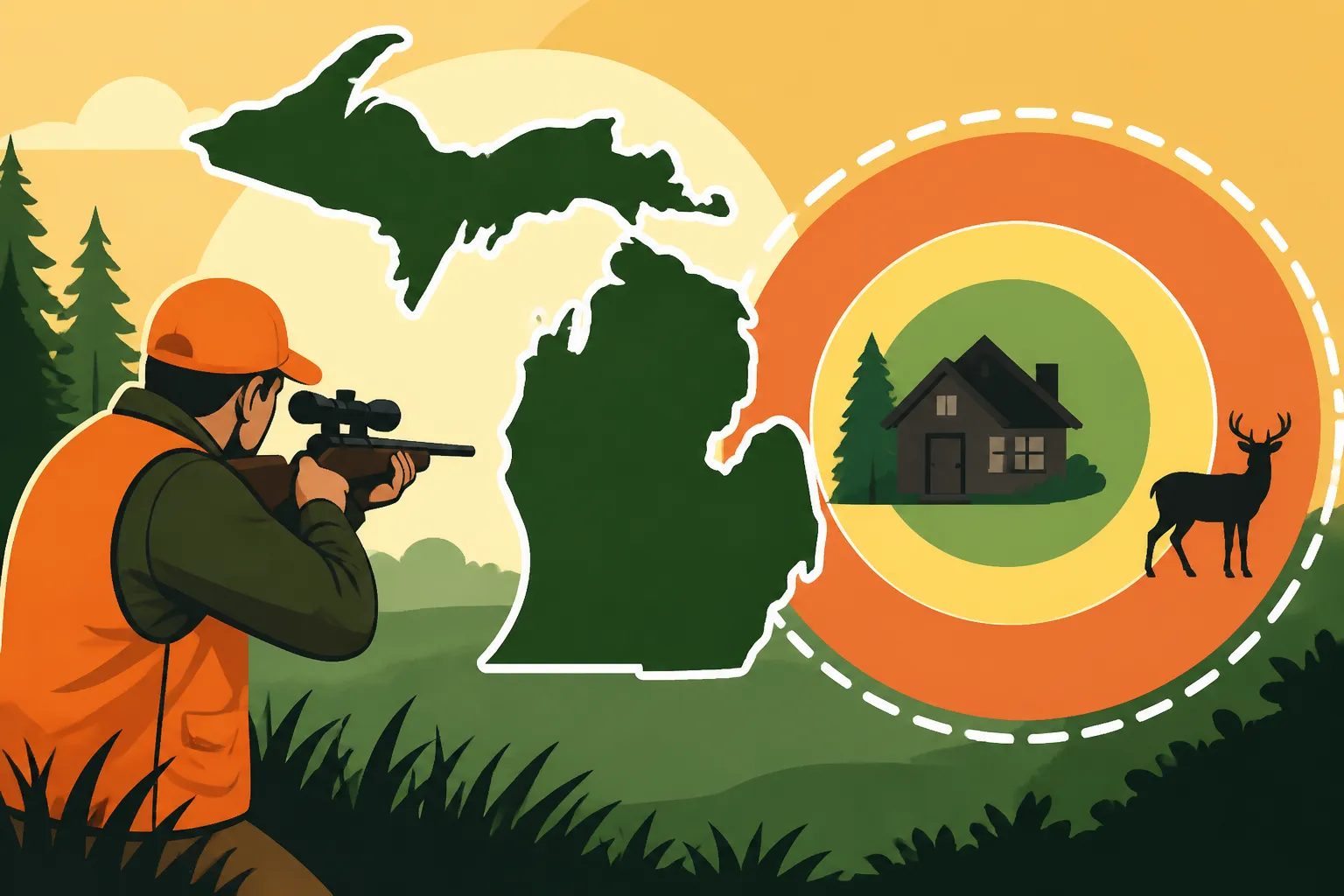
At the core of Michigan's safety zone regulations is the "150-yard rule." This rule states that you absolutely cannot hunt with a firearm or bow, nor discharge a firearm or bow, within 150 yards of an occupied dwelling, house, lodge, or other building, or any barn or other outbuilding, without obtaining the express permission of the owner or occupant of that specific structure. Think of it as an invisible bubble of protection around these buildings. The 150 yards is approximately 450 feet, which is a considerable distance, but one that's easily covered by modern hunting projectiles.
The rationale behind this specific distance isn't arbitrary. It’s based on ballistics and public safety. A shotgun slug, a rifle bullet, or even an arrow can travel much further than 150 yards and still carry enough kinetic energy to cause injury or damage. The goal is to minimize the risk of stray shots hitting a structure, or worse, an unwitting person enjoying their property. It's about preventing tragedies and ensuring that non-hunters feel safe in their own homes and yards, even during hunting season. This also applies to archery equipment; while an arrow might not travel as far as a rifle bullet, it still poses a significant danger within that range. It's easy to get excited when a deer comes by, but that quick shot needs to be preceded by a quick scan to ensure you're well outside that invisible boundary.
What Constitutes an "Occupied Building" or "Dwelling"
This is where some hunters get tripped up, and it's vital to be clear. An "occupied building" or "dwelling" doesn't necessarily mean someone has to be home at that exact moment. If a cabin is used seasonally, even if it's empty during deer season, it generally still counts as an occupied dwelling if it's maintained and used by its owner throughout the year. The key is that it's intended for human habitation or regular use. A derelict, collapsing shack that's clearly abandoned might not fit the definition, but any structure that's actively maintained and frequented by people usually does. This includes hunting lodges, permanent camps, and even occupied trailers.
Furthermore, the rule extends to "any barn or other outbuilding." This means sheds, detached garages, agricultural barns, and even structures like pump houses or permanent deer blinds if they are on someone else's property and regularly used. It’s not just about residential homes. If you're hunting near a farm, you need to be just as mindful of the barn where livestock might be housed or equipment stored as you are of the farmhouse itself. Always err on the side of caution. If there's any doubt about whether a structure is "occupied" or an "outbuilding," assume it is and give it a wide berth, or seek permission.
Exceptions and Considerations Around the Safety Zone
While the 150-yard rule is broad, there are specific nuances to be aware of. The primary exception is, as mentioned, obtaining explicit permission from the owner or occupant. This permission must be granted for you to legally hunt within that 150-yard radius. It’s not enough to assume they won’t care; you need to ask. For example, if you're hunting a small private parcel and the property owner next door has given you permission to hunt right up to their house, then you are exempt from the 150-yard rule on their property with their permission. However, this doesn't extend to other neighbors unless you have their permission too.
Another key consideration is hunting waterfowl. Special rules sometimes apply to hunting ducks and geese from watercraft, particularly on large bodies of water or in managed waterfowl areas. These often have different safety distances or specific regulations regarding distance from shore or other hunters. Always check the specific regulations for waterfowl hunting if you plan to hunt near shorelines or structures on the water. For most upland and big game hunting, though, the 150-yard rule is steadfast. It's a cornerstone of safe hunting and should never be taken lightly.
Navigating Safety Zones on Public Versus Private Land
Understanding safety zones is one thing, but actually applying them in the diverse landscapes of Michigan, whether you're deep in state forest or bordering a farm field, presents its own set of challenges. The boundaries can feel invisible, and knowing whose property is whose becomes paramount.
Public Land Challenges and How to Identify Boundaries
Michigan boasts an incredible amount of public land, from sprawling state forests to numerous state game areas. While this offers fantastic hunting opportunities, it also means you're often hunting adjacent to private parcels. On public land, you're responsible for knowing where those private land boundaries lie. It's not uncommon for homes or cabins to border public land, creating invisible safety zones that can cut into prime hunting territory. You might be deep in a section of woods you think is entirely public, only to realize you're just a stone's throw from a secluded cabin. This is where modern mapping technology becomes a lifesaver.
Using tools like the Michigan DNR's Mi-HUNT map or commercial apps such as onX Hunt or GoHunt can be absolutely invaluable. These apps layer property ownership information onto topographic and aerial maps, allowing you to see exactly where public land ends and private land begins, and critically, where dwellings are located. Before you even set foot in the woods, you can scout potential stand locations, identify areas that are likely to be within safety zones, and plan your approach and exit routes accordingly. Trying to eyeball 150 yards in thick timber or dense brush is notoriously difficult and unreliable. Rely on technology, and always assume the buffer applies unless you've confirmed otherwise. Learning Finding Michigan Property Lines before you head out is a skill every hunter needs to master.
Private Land Nuances and Owner Permission
Hunting on private land in Michigan comes with its own set of safety zone considerations, primarily revolving around the critical aspect of permission. If you're lucky enough to gain access to private property, that permission generally covers the entire parcel for which it was granted. However, even with permission to hunt a specific piece of private land, you still have to respect the safety zones of neighboring occupied dwellings or outbuildings. Your permission from Farmer John doesn't give you the right to shoot within 150 yards of his neighbor's house, unless you also have permission from that neighbor.
This is where clear communication is key. When you're talking to a landowner about hunting access, it's a good idea to discuss any houses or structures on adjacent properties. You might even ask if they know their neighbors well enough to suggest you ask for permission to hunt closer to a property line, thereby reducing the impact of a neighboring safety zone. Always remember that while you may have permission to be on a property, your actions must not infringe upon the safety or property rights of others. It’s a delicate balance that relies heavily on respect and proactive communication. This is especially true when Hunting Small Private Tracts in Michigan where boundaries and dwellings can be very close.
The Role of Mapping Apps (onX Hunt, GoHunt)
In today's hunting world, digital mapping applications have become indispensable, especially when it comes to navigating safety zones. Gone are the days of relying solely on paper plat maps and guessing distances. Apps like onX Hunt and GoHunt provide detailed satellite imagery, property lines with owner information, and often even marked safety zones around structures. I've used onX Hunt extensively, and it's literally saved me from potential violations more times than I can count.
Before I even leave the house, I'll pull up my hunting area on my phone. I look for any homes or buildings, especially those just inside or bordering public land, or on adjacent private parcels. I'll use the distance tool to measure out 150 yards from those structures, giving me a clear visual no-go zone. Some of these apps even have features that will automatically highlight these areas for you. This kind of pre-hunt scouting, combined with real-time GPS tracking in the field, means you always know exactly where you are in relation to any safety zone. It removes the guesswork and greatly reduces the chance of an accidental infringement. This technology truly empowers hunters to be more responsible and informed, making the entire experience safer for everyone.
Practical Implications for Hunters on the Ground
Knowing the rules is one thing, but implementing them consistently and effectively when you're actively hunting, especially in the heat of the moment, requires a dedicated mindset and some solid practical strategies. The last thing you want is a legal headache or, worse, an accident.
Situational Awareness and Scouting for Safety Zones
Once you're actually in the field, your situational awareness regarding safety zones needs to be top-notch. It's not just about consulting your map app before the hunt; it's about constantly scanning your surroundings. As you walk to your stand or still-hunt through the woods, keep an eye out for tell-tale signs of human habitation. This could be anything from a distant glint of a window, a faint plume of smoke from a chimney, or even sounds like dogs barking or distant machinery. These are immediate indicators that you need to check your position and ensure you're well outside that 150-yard buffer.
Effective scouting isn't just about finding deer sign; it's about scouting for safety hazards too. When choosing a stand location, consider the lay of the land and where a shot might carry. Is there a ridge or a dense woodlot that could stop a projectile, or is it open country where a bullet could travel a mile? Pay attention to prevailing winds, as sounds can carry further than you might think. Before you settle into your spot, take a few minutes to identify any structures that might be within range, even if they're not visible. If in doubt, move. No buck is worth risking a safety zone violation. You can learn a lot from Scouting Michigan Public Land Before Season about where structures might impact your hunt.
Retrieval of Game Within or Near Safety Zones
One of the most common dilemmas related to safety zones occurs after you've made a shot. What happens if your deer runs into a safety zone or onto private property where you don't have permission? First and foremost, you cannot pursue game into a safety zone or onto private land without permission. Discharging another shot within that 150-yard zone without permission is absolutely illegal, even if it's to finish a downed animal.
If your game travels into a safety zone on private land where you don't have permission, your immediate action should be to attempt to contact the landowner. Explain the situation calmly and politely ask for permission to retrieve your animal. Most landowners, even if they don't allow hunting on their property, are understanding when it comes to game retrieval, especially if you approach them respectfully. If they grant permission, remember you are only allowed to retrieve the animal, not to continue hunting. If your game runs into a safety zone on public land (e.g., within 150 yards of a cabin that borders state forest), you still need to obtain permission from the owner/occupant of that structure to enter that specific safety zone for retrieval. Never assume. This is crucial for avoiding violations and respecting property rights. Knowing What Michigan Requires After You Kill a Deer is part of responsible hunting.
Hunter Responsibility and Ethical Considerations
Ultimately, Michigan's safety zone rules boil down to individual hunter responsibility and ethics. It's not just about avoiding a ticket; it's about protecting lives, property, and the future of hunting. Every time you head afield, you are an ambassador for the hunting community. Violations of safety zone rules, whether intentional or accidental, can erode public trust and fuel anti-hunting sentiment.
As hunters, we owe it to ourselves and to the non-hunting public to exercise extreme caution and always prioritize safety. This means actively checking maps, scouting carefully, asking for permission when necessary, and making smart decisions about shot placement and direction. If you're ever in doubt about whether you're too close to a dwelling, the answer is simple: move. Find another spot, or gain explicit permission. The ethical hunter always puts safety first, ensuring that their actions reflect positively on our shared heritage. Always be mindful of Michigan Hunter Safety Requirement principles.
Avoiding Violations and Staying Legal
Nobody wants to get a ticket or, worse, be involved in an incident. Understanding the rules is the first step, but actively working to avoid violations requires a proactive approach and a clear understanding of the consequences.
Penalties and Consequences of Safety Zone Infringements
Violating Michigan's safety zone rules is not a minor infraction; it's a serious offense that can carry significant penalties. Discharging a firearm or bow within a safety zone without permission can result in a misdemeanor charge, which can include hefty fines, court costs, and even jail time. Beyond the immediate legal and financial repercussions, you could also face the suspension or revocation of your hunting privileges. Losing your hunting license for a period of time is a consequence no hunter wants to endure, especially when it could have been easily avoided.
Furthermore, if your projectile causes property damage or, tragically, injures someone, the legal ramifications escalate dramatically. You could be facing civil lawsuits, criminal charges far more severe than a misdemeanor, and the profound personal burden of having caused harm. The ripple effects of such an incident can be devastating and long-lasting. It’s a stark reminder that these rules aren’t just arbitrary lines on a map; they are about protecting lives and property. Understanding Michigan Wildlife Violation Penalties can help emphasize the seriousness of these rules.
Best Practices for Proactive Compliance
To ensure you're always in compliance, adopt these best practices:
- Pre-Season Digital Scouting: Before the season even begins, use your digital mapping apps (like onX Hunt or GoHunt) to thoroughly scout your chosen hunting areas. Mark all known structures and establish a clear 150-yard buffer around them. This helps you mentally prepare and identify safe hunting locations.
- In-Field Verification: Always have your mapping app handy and use your GPS to verify your position relative to safety zones. Don't just rely on memory or estimation. If you're hunting with a partner, compare maps and confirm your locations.
- Visual Confirmation: While digital maps are excellent, nothing beats your own eyes. Look for power lines, maintained driveways, mailboxes, or other indicators of nearby dwellings. If you see signs of human activity, double-check your position.
- Buffer Zone Mentality: Even if your app says you're at 151 yards, try to create an even larger personal buffer zone. Give yourself extra room for error. A little extra caution goes a long way.
- Get Explicit Permission: If you intend to hunt within a safety zone (which is only legal on the owner's property or with permission from a neighbor), ensure you have explicit, clear permission from the owner or occupant. Ideally, get it in writing or have a witness.
- Educate Others: If you hunt with new hunters or younger family members, take the time to thoroughly explain the safety zone rules and their importance. Instill these habits early. This is a critical part of Michigan Hunter Safety Requirement.
When to Report a Potential Safety Zone Violation
Sometimes, despite all your efforts, you might encounter situations where others are not adhering to safety zone rules. If you witness a blatant violation—someone actively hunting or discharging a weapon well within 150 yards of an occupied dwelling without apparent permission—it's your responsibility as an ethical hunter and a citizen to report it.
However, it's important to report responsibly. Do not confront individuals directly, as this can escalate into dangerous situations. Instead, gather as much information as possible: the exact location, time, a description of the individuals, their vehicles, and the nature of the violation. Then, contact the Michigan Department of Natural Resources (DNR) Report All Poaching (RAP) hotline or your local DNR law enforcement office. Provide them with all the details you have. This helps the authorities investigate safely and effectively. Reporting violations helps protect innocent people, preserves the integrity of hunting, and ensures that everyone abides by the rules designed to keep us all safe. For more information, refer to Reporting a Poacher in Michigan.
| Safety Zone Rule Aspect | Key Takeaways | Best Practice |
|---|---|---|
| Distance | 150 yards from occupied buildings/outbuildings | Use a rangefinder or mapping app to confirm distances. |
| "Occupied" Defined | Actively used or intended for regular human use, not just present | Err on the side of caution; assume it's occupied if in doubt. |
| Permission | Only exception to the 150-yard rule | Always get explicit, ideally written, permission from the owner/occupant. |
| Public Land | Still applies; know adjacent private land boundaries | Utilize onX Hunt, Mi-HUNT, or GoHunt to identify property lines. |
| Game Retrieval | Cannot enter safety zone for retrieval without permission | Immediately contact landowner/occupant for permission if game enters. |
| Consequences | Fines, jail time, license suspension, civil/criminal charges | Prioritize safety and legal compliance above all else. |
Specific Scenarios and Edge Cases
Michigan's landscape and diverse hunting opportunities mean that safety zones can pop up in unexpected places. Thinking through some specific scenarios can help prepare you for these less common, but still important, situations.
Roads, Trails, and Other Common Structures
While the primary focus of the 150-yard rule is on dwellings and outbuildings, it's worth noting how other common structures or features interact with hunting regulations. Roads themselves are generally not considered "occupied dwellings," so the 150-yard rule doesn't directly apply to them. However, you cannot legally shoot across a public road, and you must always consider the safety implications of shooting near or parallel to any road or trail where people might be present. A bullet traveling down a two-track could pose a serious risk to hikers, bikers, or other hunters.
Other common structures like power line towers, communication towers, or abandoned shacks usually do not trigger the 150-yard safety zone rule unless they are explicitly designated as occupied structures or are regularly used as outbuildings. The key is "occupied" or "used." An old, crumbling foundation or a long-abandoned deer camp that hasn't seen human activity in decades typically wouldn't qualify. However, a well-maintained, even if seasonal, hunting camp would. Always use common sense and safety first. The spirit of the law is to prevent harm, so if a structure or area feels unsafe to shoot near, it probably is.
Temporary Structures or Unoccupied Dwellings
The question often arises: what about temporary structures like pop-up campers, tents, or construction sites? Generally, if a temporary structure is being actively occupied at the time of hunting, it should be treated as an occupied dwelling, and the 150-yard rule applies. A family camping in a tent in their backyard would certainly fall under this protection. A construction trailer with workers inside would too. However, an empty tent pitched in the middle of a remote area, far from any permanent dwelling, likely would not. The intent behind the occupancy is important here.
Regarding dwellings that are clearly unoccupied—say, a house for sale that's been vacant for a year, or a cabin that burned down but still stands as a shell—these generally do not require the 150-yard buffer unless they are still considered "outbuildings" on an occupied property, or if the property owner intends to use them in the near future. Again, the spirit of the law is protection from harm. If there's no reasonable expectation of people being present, and it's not part of an actively used property, it might not trigger the rule. However, prudence dictates checking with local authorities if you're truly unsure, or simply giving it a wide berth.
Watercraft and Hunting from the Water
Hunting from watercraft, particularly for waterfowl, introduces a unique set of safety zone considerations. While the 150-yard rule typically focuses on land-based structures, hunters must also be mindful of distances from occupied dwellings or places of assembly on shore. If you're hunting ducks from a boat on a lake that has cottages along the shoreline, you still need to ensure you're 150 yards from those occupied structures. This applies even if you're floating on the water.
There can be specific regulations for hunting from a boat or blind in certain areas, particularly managed waterfowl zones, where rules about distances from other hunters, other blinds, or shoreline properties might be different or more stringent. Always check the specific regulations for the body of water you intend to hunt. Safety zones on water extend to boats and other watercraft too. You shouldn't discharge a firearm in a manner that would endanger other boaters or individuals on the water. It’s a complex environment, so understanding all applicable rules before setting out on the water is paramount. Remember, safety always extends beyond just what's written in the general guide, especially in specialized hunting scenarios.
Disclaimer
This article is for general informational purposes only and does not constitute professional advice. Laws, prices and regulations vary by location and change over time. Consult a qualified professional for guidance on your specific situation.