What Michigan Trespass Law Requires
It's an age-old frustration for Michigan hunters: the fear of accidentally stepping where you shouldn't, or the confusion surrounding what "No Trespassing" truly means. Navigating Michigan's patchwork of public and private land can feel like walking a legal tightrope, making you second-guess every step in the woods. This guide is here to untangle the complexities of Michigan's trespass laws, offering clear, realistic insights so you can hunt with confidence and respect for private property.
The Core of Michigan's Trespass Law: What It Means for Hunters
Michigan's trespass laws are designed to protect private property rights, and as hunters, we have a responsibility to understand them. It’s not just about avoiding confrontation; it’s about upholding the integrity of our hunting traditions and ensuring we remain welcome in the landscape. The fundamental principle is that entering private land without permission from the landowner or their agent is illegal. This might sound straightforward, but the nuances are where things get tricky, especially when you're deep in the woods or tracking a wounded animal.
Understanding "Permission" in Michigan
The linchpin of legal hunting on private land in Michigan is explicit permission. This isn't something to take lightly or assume. Many hunters, especially those new to the sport or moving from other states, mistakenly believe that if land isn't posted with "No Trespassing" signs, it's fair game. That couldn't be further from the truth in Michigan. Unposted private land is still private land, and you need permission to be on it.
Permission doesn't always have to be written, though written permission is always the best way to protect yourself. A verbal agreement from the landowner is legally binding, but proving it in a dispute can be difficult. Imagine a scenario where you've been given verbal permission by an elderly landowner for years, and then their property changes hands to a new generation who denies ever granting you access. Without something in writing, it becomes your word against theirs. This is why many seasoned Michigan hunters carry a small card with the landowner's name, phone number, and a signed date, even for verbal permissions, as a tangible reminder. It just shows you're being diligent.
What Constitutes Trespass for Hunters
For hunters, trespass generally means entering or remaining on someone else's property to hunt, fish, trap, or for any other purpose, without their express consent. It also extends to activities like scouting, retrieving game, or even setting up trail cameras without permission. It’s a violation of personal property, plain and simple.
Consider this: you're walking a beautiful stretch of woods, and you come across what looks like an old two-track on state land. You follow it, only to find yourself suddenly in someone's backyard, or worse, approaching a blind on private land. This can happen all too easily if you're not constantly aware of property boundaries. Even if you don't intend to hunt, being on private land without permission is trespassing. Michigan law doesn't care about your intentions as much as your presence. This is particularly relevant when scouting new areas before the season. Scouting Michigan Public Land Before Season is crucial, but it's equally important to know where public land ends and private land begins.
Navigating Property Lines: Posted, Unposted, and Permission
Michigan's landscape is a mosaic of public and private holdings. Knowing whose land is whose is perhaps the biggest challenge for hunters, especially when public land often borders private land with little more than an old fence or a barely visible painted line on a tree. This is where modern tools and good old-fashioned communication become invaluable.
The Role of "Posted" Signs and Boundaries
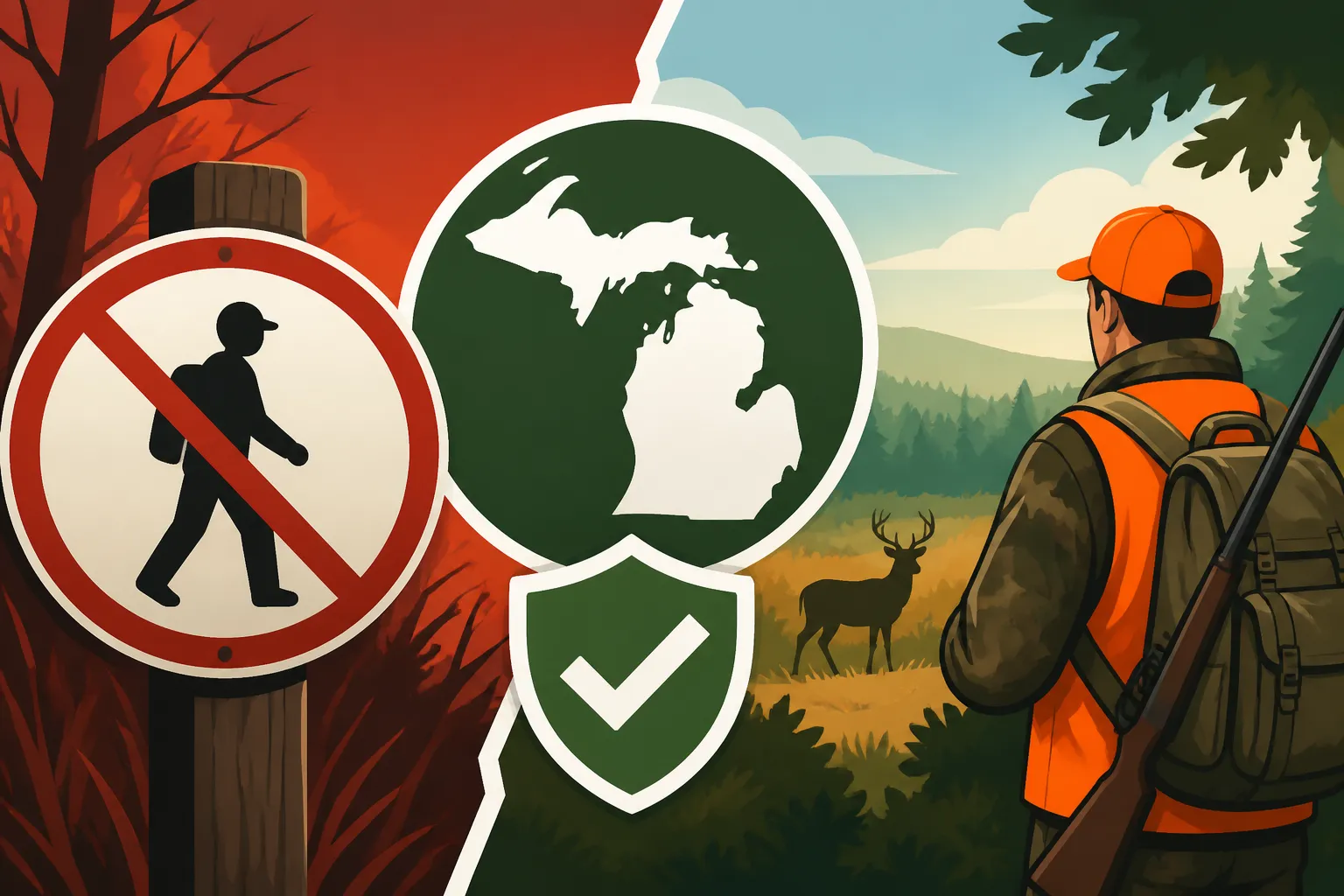
While Michigan law doesn't require private land to be posted to be considered private, "No Trespassing" signs serve as a clear, unmistakable warning. They remove any ambiguity about the landowner's wishes. When land is properly posted, it indicates the owner intends to strictly enforce their property rights. Ignoring such signs is a blatant disregard for the law and property owner's wishes, leaving you with little defense if caught.
Posted signs are a good indicator, but you cannot rely solely on the absence of signs to assume public access. Sometimes, landowners will mark their boundaries with painted lines on trees, specific types of fencing, or even unique natural features. It's on us, as hunters, to be vigilant and informed. This is where tools like onX Layers for Michigan Land Status become incredibly helpful. They visually overlay property lines and ownership information onto a map, allowing you to see exactly where you stand in relation to private and public parcels. This technology has truly revolutionized how hunters can navigate the woods responsibly, especially in areas with complex ownership patterns.
Getting and Documenting Private Land Permission
Securing permission is more than just a formality; it's about building trust and showing respect. When you approach a landowner, be polite, well-groomed, and clearly state your intentions. Are you looking to deer hunt? Squirrel hunt? Just scout? Be specific. Offer to share some of your harvest, help with chores, or provide your contact information. A good relationship with a landowner can open up opportunities for years to come. Asking a Michigan Farmer for Permission can be intimidating, but a respectful approach often yields positive results.
Once permission is granted, documenting it is smart. Even if it’s verbal, jot down the date, time, and specific areas you're allowed to access. As mentioned, a small, signed note from the landowner is ideal. This is especially true if you plan to hunt with a crossbow during Michigan's archery season, or if you are hunting in a unique situation like during The Early Antlerless Firearm Weekend. Having documentation can save you a lot of grief if there's ever a misunderstanding or if a new person confronts you.
Here's a quick comparison of permission types:
| Permission Type | Description | Recommended Documentation | Pros | Cons |
|---|---|---|---|---|
| Verbal | Spoken agreement from landowner. | Note with date, name, contact. | Easy to obtain quickly. | Difficult to prove if disputed. |
| Written | Signed document specifying terms and dates. | Signed letter or permission slip. | Clear, legally defensible. | Requires landowner's time and effort. |
| Implied | Not legally recognized for hunting in MI. | None. | None for hunter. | Never assume implied permission for hunting. |
Remember, Michigan law on Michigan Posted Land Rules is clear: posting isn't mandatory for land to be private. Assume all land is private until you confirm otherwise.
When Your Hunt Leads You Across the Line: Retrieving Game
It's every hunter's worst nightmare: you make a perfect shot, but the deer runs onto private property that you don't have permission to access. This situation often tests a hunter's ethics and knowledge of the law. While your instinct is to pursue the animal, Michigan law has specific provisions for this, and ignoring them can lead to serious consequences.
Tracking Wounded Game onto Private Land
Under Michigan law, you generally cannot enter private property to retrieve wounded game without the landowner's permission. Even if you see your trophy buck fall just over the fence line, you still need to obtain permission before stepping foot on that land. This can be incredibly frustrating, especially when you know the animal is there.
The best course of action is to immediately try to contact the landowner. If you don't know who owns the property, resources like the Mi-HUNT map from the Michigan DNR or mapping apps like onX Hunt can often provide ownership information, or at least parcel IDs that can help you look it up through county records. Explain the situation calmly and respectfully. Offer to show them where the animal is and ask for permission to retrieve it. Most landowners, if approached respectfully, understand the ethical obligation to recover a wounded animal and will grant access. However, they are not legally obligated to do so. If you cannot reach them or they deny permission, you might be out of luck, which is a tough pill to swallow but a legal reality. This is one of those situations where having good relationships in the community can really pay off.
What if You Accidentally Trespass?
Let's be realistic: in the vast, wild stretches of the Upper Peninsula or even the fragmented parcels of southern Michigan, accidentally crossing a property line can happen. Maybe your GPS died, or an unmarked boundary was simply too subtle to notice. If you realize you've accidentally trespassed, the best thing to do is immediately and calmly leave the property the way you came. Do not linger, do not hunt, and do not try to conceal your presence.
If you encounter a landowner while on their property, be honest, apologetic, and explain that it was an unintentional mistake. Show them your maps (if you have them) to demonstrate you were trying to stay legal. A respectful and cooperative attitude can often de-escalate the situation and avoid formal charges. However, repeated "accidental" trespasses will quickly erode any goodwill and can lead to legal action. Being prepared with tools like onX Layers for Michigan Land Status can significantly reduce the chances of these situations.
Avoiding Trouble: Tools and Best Practices for Hunters
The best defense against trespass charges is prevention. Being proactive and educated about property boundaries and local laws will not only keep you legal but also foster better relationships between hunters and landowners, which is vital for the future of our sport in Michigan.
Utilizing Mapping Technology and Public Resources
Modern mapping applications are a game-changer for navigating Michigan's complex land ownership. Apps like onX Hunt provide detailed property lines, landowner names, and public land boundaries right on your phone. You can download maps for offline use, which is critical in Michigan's remote areas where cell service is spotty. Before every hunt, especially in new areas, take the time to study these maps. Identify public land access points, mark potential boundaries, and know the names of adjacent landowners. This kind of preparation goes a long way.
The Michigan DNR also provides excellent resources, such as the Mi-HUNT map, which allows you to view public land holdings, various habitat types, and even some private land details. Learning Using Mi-HUNT on a Phone can save you hours of confusion and prevent accidental trespass. Combine these digital tools with a traditional paper map and compass as a backup, especially when you're hunting in the big woods.
Best Practices for Responsible Land Use
Beyond understanding the law, practicing good ethics is paramount. Always leave private property cleaner than you found it. Close gates, don't damage fences, and respect any crops or livestock. If you're granted permission to hunt, ask specific questions about where you can park, where certain areas are off-limits, and any other rules the landowner might have. For instance, some landowners might permit hunting but strictly forbid any kind of baiting, regardless of whether Michigan Baiting and Feeding Rules allow it in their specific DMU.
Consider the potential for over-hunting an area, even with permission. A good relationship is a long-term one. Showing up only during prime hunting times and disappearing afterward can make landowners feel used. Occasional check-ins, offering help, or even just sharing a friendly word outside of hunting season can build immense goodwill. Remember, every time you step into the woods, you represent hunters as a whole. A single act of irresponsible behavior can sour a landowner on all hunters, making it harder for everyone else to gain access. For those looking to expand their hunting opportunities, exploring options like Michigan Hunting Access Program Farms can provide legal access to private lands that have enrolled in public programs, offering another avenue for responsible hunting.
Consequences of Trespassing
The legal ramifications of trespassing in Michigan can range from fines to jail time, depending on the severity and intent. Penalties can be steeper if the trespass involves hunting, damaging property, or if you're a repeat offender. Beyond the legal consequences, there's the damage to your reputation and the hunting community. A negative encounter with a landowner due to trespass can lead to "No Hunting" signs going up, effectively closing off land to everyone.
It's also important to remember Michigan Safety Zone Rules. Even if you have permission to hunt on a piece of private property, you still cannot discharge a firearm or bow within a certain distance of an occupied dwelling without explicit permission. This isn't just about trespassing; it's about safety and common courtesy, and violations carry their own set of penalties. Ultimately, understanding and respecting Michigan's trespass laws is not just about avoiding punishment; it's about being a responsible, ethical hunter who contributes positively to the hunting heritage and landowner relationships across our beautiful state.
Disclaimer
This article is for general informational purposes only and does not constitute professional advice. Laws, prices and regulations vary by location and change over time. Consult a qualified professional for guidance on your specific situation.