Public Ground in Cheboygan County
Finding reliable public hunting ground in Michigan can often feel like searching for a needle in a haystack, especially when you're targeting a specific area like Cheboygan County. Many hunters get frustrated with outdated maps or vague descriptions, wasting precious scouting time. This guide is here to cut through that confusion, helping you understand the unique public land opportunities in Cheboygan County and how to effectively navigate them for a successful hunt.
The Lay of the Land: Cheboygan County's Public Hunting Opportunities
Cheboygan County, nestled in the northern Lower Peninsula, offers a diverse landscape that can be a fantastic playground for hunters seeking everything from whitetails to grouse. Unlike the vast, unbroken tracts of federal land in some parts of the Upper Peninsula, Cheboygan's public lands are often a mosaic of state forests, state game areas, and smaller parcels, intermingled with private holdings. Understanding this patchwork is the first step to unlocking its potential.
Michigan State Forest Land in Cheboygan
The vast majority of Cheboygan County's public hunting opportunities lie within the Michigan State Forest system. You'll find significant portions of the Mackinaw State Forest and Black Lake State Forest here, providing thousands of acres accessible to the public. These aren't typically manicured parks; they are working forests, meaning you'll encounter a variety of timber types and age classes.
Expect to find a mix of mature hardwoods, particularly oak and maple ridges, interspersed with lowland cedar swamps, tag alders, and pockets of aspen. These diverse habitats are crucial. The hardwood ridges provide vital food sources like acorns in the fall, drawing deer, turkeys, and squirrels. The cedar swamps, often overlooked or deemed impenetrable by some, serve as critical thermal cover for deer during harsh winters and offer escape routes from hunting pressure. Older aspen cuts, while perhaps not as immediately appealing, are absolute magnets for ruffed grouse and woodcock. Access to these state forests is generally good, with a network of two-track roads, seasonal roads, and designated trails, though some areas require significant foot travel to reach the deepest, least-pressured spots. Remember that Michigan State Forest Hunting Rules apply, so always be aware of vehicle use restrictions and camping regulations.
State Game Areas and Managed Lands
While state forests dominate, Cheboygan County also features various State Game Areas (SGAs) and other managed parcels. These lands are often smaller in scale compared to the sprawling state forests but are specifically managed for wildlife habitat and public recreation, including hunting. The characteristics of these areas can vary widely. Some might be former agricultural lands that have been restored to grasslands and wetlands, ideal for pheasants (if stocked, or if wild populations persist), rabbits, and waterfowl. Others might focus on maintaining early successional forests for species like grouse and woodcock.
These managed lands often have clearer boundaries and may see different types of hunting pressure. They might also have specific regulations or features like designated parking areas or walking trails. It's always a good idea to check the Michigan DNR website or contact the local DNR office for details on specific SGAs within Cheboygan County. While less prevalent than in the southern Lower Peninsula, these parcels can offer excellent hunting for specific species and are often easier to scout due to their smaller, more defined nature. Don't overlook them just because they aren't labeled "forest" – they can hold hidden gems.
Navigating Public Access and Regulations
Stepping onto public land is one thing; knowing exactly where you are, what the rules are, and how to find the best spots is another. Modern technology and a little homework can make all the difference in Cheboygan County.
Using Mapping Tools to Find Your Spot
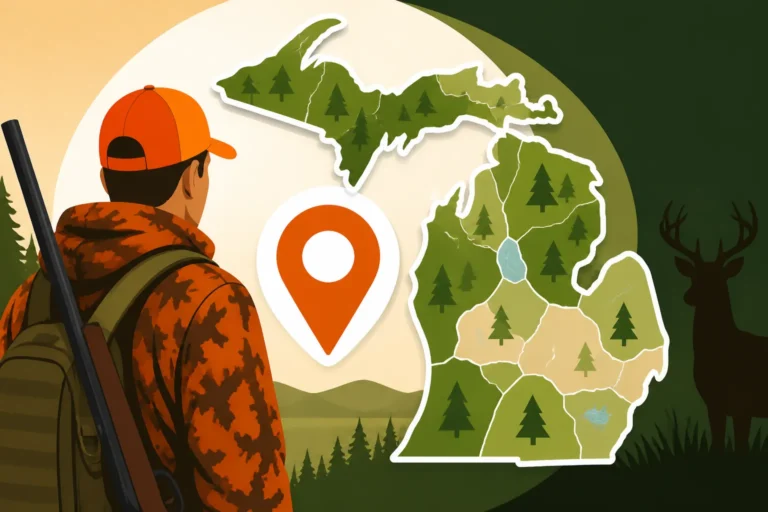
Gone are the days of relying solely on paper maps and compasses, though those are still invaluable backup tools. Today, digital mapping applications are indispensable for hunting Michigan's public lands, especially in a county like Cheboygan where public and private boundaries can be intricate. Tools like onX Hunt and GoHunt allow you to see property lines, landowner names, and various land classifications (state forest, state game area, private) right on your smartphone or GPS device. This is crucial for avoiding accidental trespass and for maximizing your hunting time on legal ground.
Before you even leave home, you can spend hours scouting virtually, identifying potential funnels between swamps and ridges, spotting clearcuts, or locating secluded pockets of cover that might hold deer away from the crowds. You can mark waypoints for promising areas, plan your entry and exit routes, and even monitor wind direction in real-time. The ability to download maps for offline use is also vital, as cell service can be spotty in the deeper woods of Cheboygan. Beyond commercial apps, the Using Mi-HUNT on a Phone map from the Michigan DNR is another excellent resource for viewing public land boundaries and habitat types. Using these tools effectively can transform a confusing landscape into a manageable hunting area.
Understanding Local Rules and Restrictions
Hunting public land in Michigan comes with a set of general rules, but it's essential to understand that some local nuances can exist, particularly regarding specific seasons or types of equipment. For example, knowing the statewide rules regarding Treestand Rules on Michigan Public Land and Ground Blind Rules on Michigan State Land is non-negotiable. You can't just leave a stand up year-round on state land, and there are regulations about how blinds are constructed and when they can be placed.
Another critical regulation to always double-check, especially in the northern Lower Peninsula, is Michigan Baiting and Feeding Rules. While the Upper Peninsula has different regulations, the Lower Peninsula generally has a ban on baiting and feeding deer. This dramatically influences how you might scout and set up for deer hunting in Cheboygan. Always review the current Michigan Hunting and Trapping Digest for any updates or specific regulations that might apply to the particular DMU (Deer Management Unit) you're hunting in Cheboygan County. Understanding these rules isn't just about avoiding a ticket; it's about ethical hunting and respecting the resource and other hunters.
Strategies for Hunting Cheboygan Public Land
Cheboygan County offers diverse hunting opportunities, but success often hinges on adapting your tactics to the specific terrain and understanding game behavior in these northern Michigan environments.
Deer Hunting Tactics in Cheboygan's Forests
Deer hunting in Cheboygan County's state forests requires a strategic approach. The terrain is often a mix of mature hardwoods, dense conifer swamps, and younger growth. This mosaic creates excellent opportunities if you know how to read the landscape. Look for natural funnels where deer movement is concentrated, such as narrow strips of timber between two swamps or pinch points created by elevation changes. Identifying these features, often aided by your mapping apps, can be key.
Still-hunting can be incredibly effective here, especially after a fresh snow. Moving slowly through the woods, stopping frequently to scan ahead, allows you to cover ground while being alert to deer movement. Focus your efforts around the edges of thick cover, as deer will often stage in these transition areas before entering open feeding areas or bedding down in dense swamps. Hunting Michigan Swamp Edges for Deer can be particularly productive, as these areas offer both food and security. Also, remember that Where Big Woods Bucks Bed in Michigan often comes down to the nastiest, most impenetrable cover – those thick cedar or tag alder swamps provide unparalleled security. Don't be afraid to put in the legwork to get away from road hunters; deer quickly learn to avoid areas with heavy human activity.
Small Game and Bird Hunting
Beyond deer, Cheboygan County is a fantastic destination for small game and bird hunters. The varied habitat supports healthy populations of ruffed grouse, woodcock, rabbits, and squirrels. For grouse, focus on areas with young, regenerating aspen stands. These cuts provide the dense cover and food sources (like catkins in winter) that grouse thrive on. Grouse Hunting Michigan Aspen Cover involves walking through these thickets, often with a good bird dog, but can be done effectively by flushing birds on foot. Look for cuts that are 5-20 years old for prime grouse habitat.
Woodcock, on the other hand, prefer moist, dense cover, particularly alder runs along streams or low-lying areas. Timing your hunt with their fall migration can lead to incredible opportunities. Woodcock Hunting Michigan Alder Runs is a classic northern Michigan pursuit. For rabbits and squirrels, the hardwood forests provide ample food in the form of acorns and other nuts. Squirrels will be active in mature oak and beech stands, while rabbits often hide in briar patches, brush piles, and thickets along forest edges. Exploring these different habitats provides a diverse and rewarding hunting experience in Cheboygan.
Common Challenges and How to Overcome Them
Hunting public land in Cheboygan County is not without its hurdles. Being prepared for these common challenges will significantly improve your chances of success and enjoyment.
Dealing with Hunting Pressure
One of the most persistent realities of hunting public land, particularly during popular seasons like the November firearm deer season, is hunting pressure. Cheboygan County is a popular destination, and you can expect other hunters, especially near easily accessible roads and parking areas. The key to overcoming this is to "hunt smarter, not harder" – or rather, "harder and smarter."
First, consider hunting during weekdays if your schedule allows, as pressure often dips significantly. Second, and perhaps most importantly, be willing to walk. Most hunters stick close to their vehicles. By walking a half-mile or more into the woods, especially into areas with challenging terrain like swamps or dense thickets, you dramatically increase your chances of finding less-pressured animals. Deer, especially mature bucks, will quickly relocate to these sanctuaries when disturbed. Scouting tools like onX Hunt can help you identify these harder-to-reach pockets. Learn from the experiences of others, and always remember that Opening Day Crowds on Michigan State Land are a reality, but solutions exist by adjusting your tactics and effort.
Navigating Terrain and Accessibility
The diverse terrain of Cheboygan County, while offering excellent habitat, can also present challenges for hunters. You'll encounter everything from rolling hardwood hills to extensive lowland cedar and tag alder swamps. These swamps, while excellent for deer, can be incredibly difficult to traverse. They are often wet, muddy, and dense, making for slow and tiring progress. Proper footwear is absolutely essential; good quality rubber boots, preferably insulated for late-season hunts, are a must. They'll keep your feet dry in soggy conditions and offer some protection against thorns and brush. Check out options for Boots for Michigan Swamps and Snow before you head out.
Vehicle access on state forest lands can also be variable. Many two-track roads are seasonal, meaning they might not be maintained in all conditions or during certain times of the year. Some roads might be sandy, muddy, or even flooded. Always check road conditions, and have a reliable vehicle if you plan to explore deeper routes. Using a quality GPS unit or a phone app with downloaded maps is crucial for navigation, especially if you venture deep into the woods where landmarks are scarce. Getting turned around in a dense swamp or a vast timber block is a frustrating and potentially dangerous situation. Prior planning and smart gear choices, alongside pre-season Scouting Michigan Public Land Before Season, will set you up for success.
Disclaimer
This article is for general informational purposes only and does not constitute professional advice. Laws, prices and regulations vary by location and change over time. Consult a qualified professional for guidance on your specific situation.