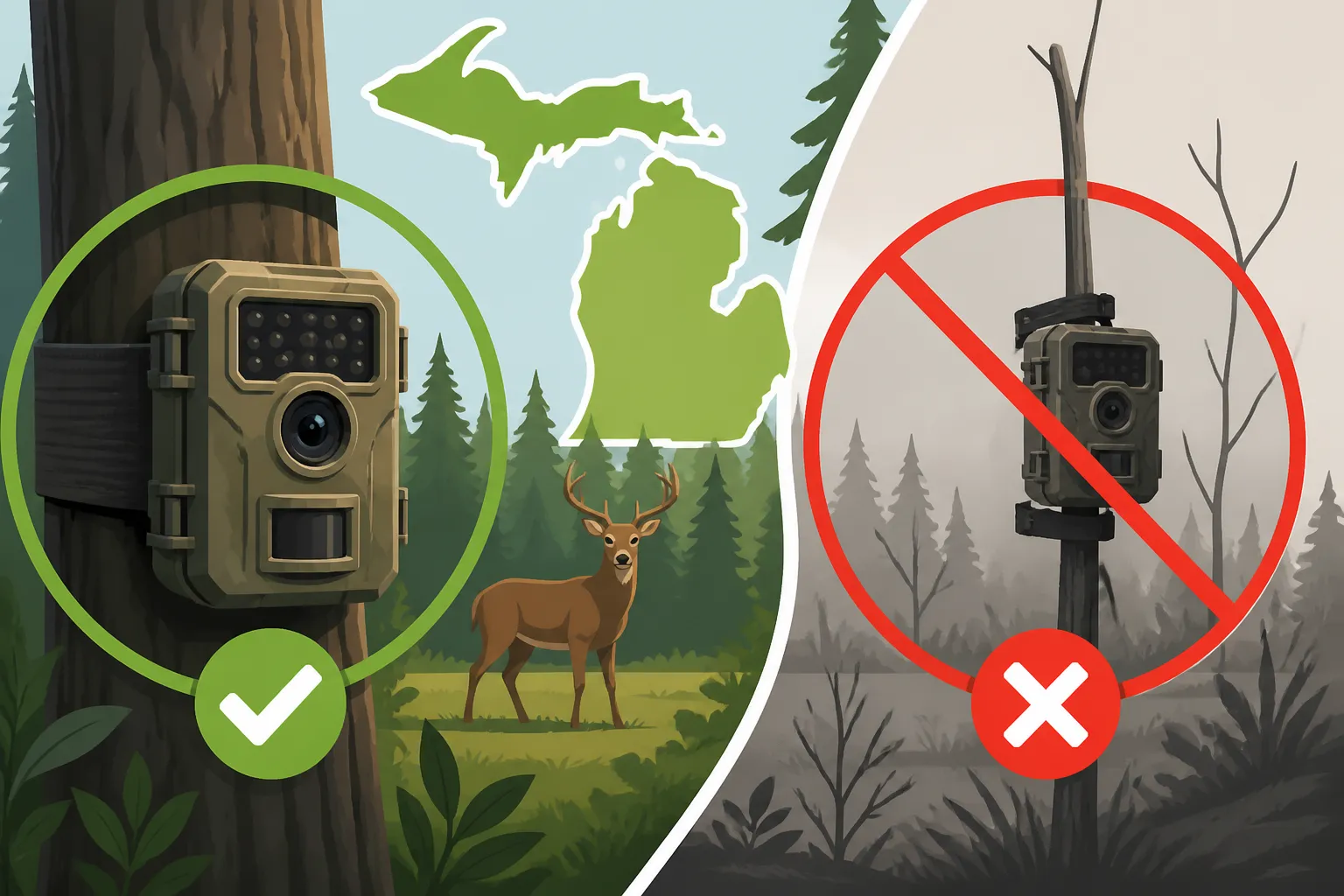
Trail Camera Rules on Michigan Public Land
Heading out to scout new ground or just keep tabs on your favorite deer run, and you want to deploy a trail camera on public land. It sounds straightforward, right? But then you start wondering about all the rules and regulations. Can you nail it to a tree? Does it count as baiting if it's near a mineral lick? What if someone steals it? The truth is, Michigan's public land offers incredible hunting opportunities, but it also comes with a responsibility to understand and abide by the rules, especially concerning something like a trail camera that you're leaving unattended. This guide will walk you through everything you need to know about legally and ethically using trail cameras on Michigan's vast public lands, helping you scout smarter without running afoul of the law or other hunters.
The Foundation: Michigan's Rules for Trail Cameras on Public Land
Michigan boasts millions of acres of public land, from sprawling state forests to managed state game areas and federal national forests. Each offers unique challenges and opportunities for hunters, but they all share a common thread: rules are in place to ensure fair access, protect natural resources, and maintain a positive experience for everyone. Trail cameras, while a modern scouting tool, fall under these broader regulations, and understanding the core principles is your first step toward responsible use.
The General "Leave No Trace" Principle
At its heart, Michigan's approach to public land management for hunters is built around the "Leave No Trace" ethic. This isn't just a suggestion; it's a fundamental expectation. When you're using public land, whether it's for hiking, camping, or hunting, the idea is that you should leave the area exactly as you found it, if not better. This principle applies directly to trail cameras. You can't install anything that causes permanent damage, alters the landscape significantly, or leaves a lasting impact after you've packed up and left.
This means no drilling into trees, no hammering nails, and no using screws that will remain in the tree after your camera is gone. These actions can injure the tree, creating entry points for disease or pests, and they certainly don't align with leaving the area undisturbed. Instead, the focus is on temporary, non-damaging attachments. Think about what you'd want to find when you arrive at a pristine spot, and try to replicate that when you depart. This is about being a good steward of the land, something every Michigan hunter should strive for.
Furthermore, "Leave No Trace" extends to the presence of the camera itself. While you might want to hide it to prevent theft, the intent isn't to create a hidden hazard for others. It's about being discreet but not deliberately deceptive or dangerous. Always consider how your actions impact not just the environment, but also the safety and experience of fellow outdoor enthusiasts who might stumble upon your gear. If it's a piece of equipment you can't remove entirely and without trace, it shouldn't be deployed on public ground.
Specifics for State Lands: Forests and Game Areas
When you're hunting Michigan State Forests or State Game Areas, the regulations regarding trail cameras tend to be quite consistent. The Michigan Department of Natural Resources (DNR) generally permits the use of trail cameras, but with clear stipulations that reinforce the "Leave No Trace" ethic. The primary concern is preventing damage to natural resources and ensuring that these tools don't interfere with other public land users.
For instance, the DNR emphasizes that any device you affix to a tree or other natural feature must be done in a way that causes no lasting harm. This means using straps or bungee cords that cinch around the tree without penetrating the bark. You'll often see language about "non-damaging" or "non-permanent" attachment methods. If you're unsure, always err on the side of caution. A flexible, wide strap that distributes pressure is far better than a thin wire or a tight band that could girdle a tree over time. Remember, these properties are for everyone, and the DNR has a responsibility to manage them sustainably. You can learn more about general rules in Michigan State Forest Hunting Rules.
Beyond attachment, the expectation is that your camera is temporary. You're not allowed to leave a camera indefinitely, especially if it's not actively being used for scouting. If you place a camera in the early fall for archery season, it should be removed once that season is over or you're done scouting that specific location. Abandoned equipment not only becomes litter but can also pose a hazard or simply annoy other users. There have been instances where cameras left for months or years have been removed by land managers as abandoned property. Always plan for timely retrieval and keep track of your deployed units, perhaps using a mapping application to pinpoint exact locations.
Navigating the Nuances: Common Concerns and Ethical Hunting
Understanding the basic "Leave No Trace" principle is a great start, but Michigan's public land environment, particularly with its specific hunting regulations, introduces several important nuances that hunters need to consider. These often involve interpretations of rules, ethical behavior towards other hunters, and practical steps to avoid problems.
Avoiding Baiting and Permanent Structure Violations
This is where things can get a little tricky, especially in areas where baiting is prohibited. Michigan has specific regulations regarding baiting and feeding, particularly in the Lower Peninsula and areas with Chronic Wasting Disease (CWD). While a trail camera itself isn't bait, its placement can sometimes raise questions if it's found near illegal bait. If you're in an area where baiting is banned, placing a camera directly over a pile of corn or a mineral block that you didn't place, but someone else did, could still put you in a tough spot if enforcement finds it. The key here is not to aid or condone baiting, even passively. For a full breakdown of these regulations, make sure to check Michigan Baiting and Feeding Rules.
Beyond baiting, hunters need to be hyper-vigilant about what constitutes a "permanent structure." As mentioned, nails and screws are out. But what about leaving a camera in the same spot for multiple seasons, year after year? While the camera might be removed for a few weeks, the spirit of "temporary" and "non-permanent" suggests a more active, seasonal deployment rather than continuous installation. The DNR wants to avoid public lands becoming cluttered with personal equipment, and prolonged, unattended presence could be seen as an attempt to "claim" a spot, which is generally frowned upon. If you're building a blind or leaving a stand, similar rules apply, as detailed in Treestand Rules on Michigan Public Land.
It's also crucial to remember that what you attach your camera to matters. Public land can include not just trees but also brush, rocks, or even small structures like old fence posts. However, the rule of no damage or permanent alteration still applies. Attaching a camera to a historical marker, a signpost, or anything man-made that isn't specifically designated for such use is generally a bad idea and likely prohibited. Stick to natural, living elements, and ensure your attachment method is completely benign to them. If you suspect an area might be problematic or the rules unclear, it’s best to choose another location or consult the latest DNR hunting digest.
Respecting Shared Space and Other Hunters
Public land, by its very nature, is a shared resource. This means that while you have the right to hunt and scout, so does everyone else. Ethical trail camera use extends beyond legal compliance to include respect for other users. One of the biggest frustrations for hunters is encountering someone else's trail camera pointed directly at their stand, their preferred deer run, or even at them personally. While it might not be illegal to point a camera in a certain direction, it's certainly not neighborly and can create uncomfortable situations.
When deploying your camera, think about discretion and privacy. Placing cameras deeper in the woods, off main two-tracks, and away from obvious access points helps keep them out of sight from casual passersby. This not only deters theft but also minimizes the chance of another hunter feeling like they're being monitored. No one likes the feeling of being watched in the woods, especially when they're trying to enjoy a peaceful hunt. Consider what you would feel if you walked up on a camera looking directly at your setup; that empathy should guide your own camera placement.
Furthermore, encountering someone else's trail camera demands respectful behavior. Under no circumstances should you tamper with, move, or steal another hunter's camera. This is not only illegal but also deeply unethical and undermines the sense of community among hunters. If you find a camera that seems improperly placed or abandoned, contact the DNR rather than taking matters into your own hands. The Michigan hunting community is a tight-knit one, and mutual respect ensures that public lands remain enjoyable for all. If you find yourself frustrated by crowds, remember that Hunting Pressure on Michigan State Land is a reality, and finding less-pressured areas often means deeper scouting.
Smart Deployment: Maximizing Effectiveness Legally and Ethically
So, you understand the rules and the ethics. Now, how do you put that knowledge into practice to make your trail cameras truly effective scouting tools on Michigan public land? It’s about being strategic with placement, ensuring security, and leveraging modern technology to enhance your efforts while staying within the legal boundaries.
Strategic Placement and Security Measures
The art of trail camera placement on public land is a balance between getting good intel and avoiding issues. First, always verify you are on public land. Using a robust mapping app like onX Hunt or GoHunt is invaluable for this. These apps have layers that clearly delineate public and private property boundaries, preventing accidental trespass or misplacement of your camera. There's nothing worse than setting up a perfect spot only to realize later it's on private land, forcing you to retrieve it or worse. Familiarize yourself with Finding Michigan Property Lines before you even leave home.
When you're actually in the field, think like a deer and like a person. Deer will use natural funnels, pinch points, and cover transitions. These are prime locations for a camera. However, these are also often the same places other hunters frequent. To increase security and reduce interference, try to place cameras off the beaten path, deeper into cover, or in less obvious locations. Angle the camera to capture deer movement without pointing directly at a well-used two-track or a visible game trail that other hunters might be using to enter or exit. Camouflage your camera as much as possible, blending it into the tree or surroundings. Consider using a security box and a cable lock to deter casual theft; while it won't stop a determined thief, it makes it harder and less appealing.
Battery life and SD card capacity are also key considerations, especially if you're trying to minimize visits to a spot. Cold Michigan weather can drain batteries quickly, so invest in good quality lithium batteries for longer life. Choose SD cards with ample storage to avoid frequent card swaps, which introduce human scent and disturbance. Scouting Michigan Public Land Before Season is an excellent time to get these cameras out and familiarize yourself with your chosen spots before the pressure is on.
Leveraging Technology for Compliance and Success
Modern hunting offers incredible technological advantages, and smart applications can play a huge role in ensuring you comply with regulations and maximize your scouting success. As mentioned, tools like onX Hunt are indispensable for verifying property boundaries. You can drop pins for your camera locations, track your entry and exit routes, and review satellite imagery to identify subtle terrain features that might concentrate deer movement. This helps you avoid putting a camera where it shouldn't be and allows you to return to it efficiently without excessive wandering, further minimizing your impact. GoHunt offers similar robust mapping and planning tools that hunters find incredibly useful.
Beyond just mapping, these apps can help with planning your scouting trips. You can analyze wind direction, terrain elevation, and cover types to predict how deer will move and where your cameras will be most effective. Marking your camera locations on an app ensures you don't forget where you put them, a common problem when deploying multiple units across vast public land. This meticulous record-keeping makes it easier to retrieve all your equipment at the end of the season, fulfilling your "Leave No Trace" commitment. Even Michigan's own Using Mi-HUNT on a Phone tool can help visualize public lands and access points.
Finally, while cell-connected trail cameras offer the ultimate convenience of remote monitoring, remember that the "physical presence" rules still apply. Even if you're getting photos to your phone, the camera itself must remain legally and ethically placed. The technology doesn't exempt you from regular checks (to ensure it's still there and functioning, and not causing any issues) or the ultimate responsibility of retrieval. Use these tools to be a smarter, more efficient hunter, but never as an excuse to ignore the foundational principles of public land use.
Do's and Don'ts for Trail Cameras on Michigan Public Land
To summarize the key points, here’s a quick reference table to help guide your trail camera use on Michigan's public lands:
| Do's | Don'ts |
|---|---|
| Do use non-damaging straps (bungee, wide web) | Don't use nails, screws, or thin wires that damage trees |
| Do check property lines with mapping apps (onX Hunt, GoHunt) | Don't place cameras on private land without permission |
| Do retrieve cameras promptly after use or season | Don't leave cameras indefinitely or abandon them |
| Do camouflage and secure cameras discreetly | Don't point cameras at main trails or other hunter's setups |
| Do position cameras away from bait in ban zones | Don't place cameras over illegal bait sites |
| Do respect other hunters' equipment | Don't tamper with, move, or steal other cameras |
| Do report abandoned or illegal setups to DNR | Don't take matters into your own hands |
| Do use reliable batteries and large SD cards | Don't introduce excessive human scent with frequent checks |
Disclaimer
This article is for general informational purposes only and does not constitute professional advice. Laws, prices and regulations vary by location and change over time. Consult a qualified professional for guidance on your specific situation.