How Far to Walk From a Two-Track
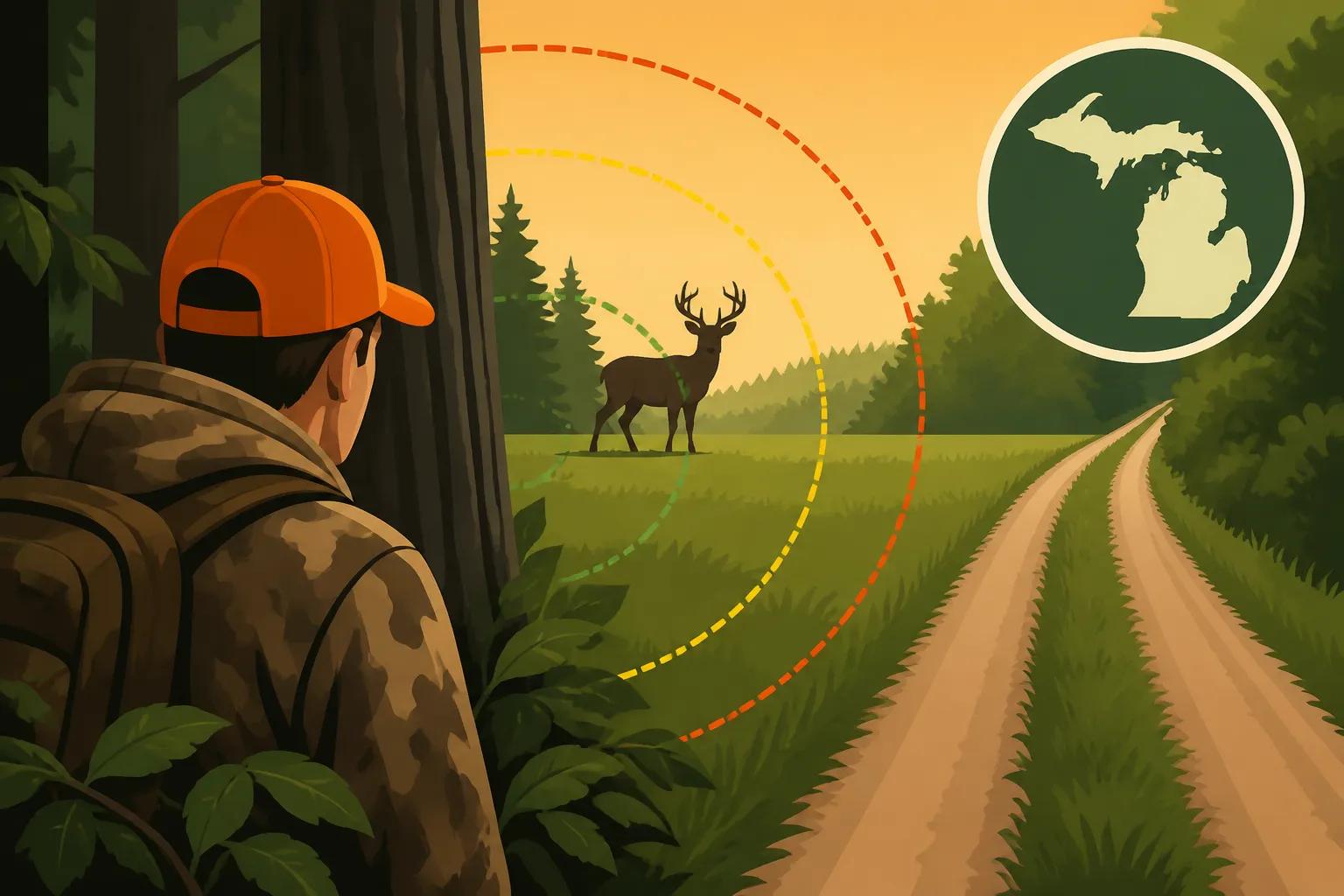
We've all been there, standing at the edge of a well-worn two-track on Michigan public land, looking into the woods and wondering: how far do I really need to walk to get away from the crowds and find some unpressured deer? It's a common frustration, especially when every obvious trail seems to have boot prints. This guide is here to help you dissect that dilemma and equip you with the knowledge to make an informed decision on how far to venture, transforming those long walks into strategic moves.
The Inevitable Question: Why Walking Farther Matters (Sometimes)
The romance of Michigan's vast state forests and game areas often clashes with the reality of hunting pressure, particularly near easily accessible points. Those gravel two-tracks and dirt roads, while convenient for parking, are also entry points for countless other hunters. If you've ever scouted an area only to find it riddled with old boot prints, spent shells, or even forgotten ground blinds just a couple hundred yards off the road, you know the feeling. The idea of "walking farther" isn't just about covering ground; it's about escaping the immediate radius of human disturbance and finding deer that haven't been pushed or patterned.
The Problem with Proximity to Pavement
Deer, especially mature bucks, are incredibly sensitive to human intrusion. While some might tolerate a certain level of disturbance, consistent pressure pushes them deeper into cover, makes them largely nocturnal, or causes them to seek out areas that fewer people are willing to reach. The closer you are to a road, the higher the likelihood that deer movement is already being dictated by other hunters. They learn quickly, and those mature animals become masters of evasion.
Consider a typical opening morning in November. Trucks are lined up along popular two-tracks. Most hunters will get out, walk a few hundred yards, and set up. This creates a "pressure bubble" around these access points. Deer within this bubble might move initially, but they'll quickly learn to filter into areas outside this zone. To consistently find deer that are behaving naturally during daylight hours, you often have to go where others simply won't, or can't, go. This means evaluating the landscape, understanding hunting patterns, and being willing to put in the miles. Hunting Pressure on Michigan State Land is a very real factor that dictates deer behavior.
The Advantage of Deep Penetration
When you commit to walking farther, you're not just covering distance; you're often penetrating into more remote, less frequently disturbed habitats. These areas might include thicker swamps, dense cedar tangles, or difficult terrain that deters casual hunters. In such spots, deer are more likely to exhibit natural patterns, feeding and moving during daylight without the constant threat of human encounters.
The deeper you go, the more you increase your odds of encountering a less educated deer, or one that's simply feeling more secure. This isn't just about deer either; it applies to turkeys, bear, and other game animals. For example, mature gobblers on public land often roost in secluded areas far from roads, making a deep penetration strategy essential for a successful spring hunt. The advantage isn't just about deer density, but about deer behavior. You're trying to find pockets where deer feel safe enough to move during legal shooting light.
Key Factors Influencing Your Walking Distance
Deciding how far to walk isn't a one-size-fits-all answer. It's a dynamic calculation based on a combination of terrain, cover, time of year, target species, and the all-important variable: how many other hunters are out there. Ignoring these factors can lead to either an unnecessarily exhausting hike or, worse, setting up in an area already saturated with human scent and movement.
Terrain and Topography
Michigan might be known for being relatively flat compared to western states, but don't let that fool you. Our terrain, especially in the northern Lower Peninsula and the Upper Peninsula, can be rugged, featuring steep river drainages, rolling hills, vast swamps, and dense thickets.
- Flat, Open Woods: In areas with relatively open hardwoods or scattered pines on flat ground, hunters tend to spread out more easily. Here, "farther" might mean pushing past a quarter-mile to half-mile. If the timber is open, human presence is easily detected by deer, so you need more space.
- Rolling Hills and Ridges: Topography offers natural breaks and travel corridors. Often, simply dropping into a valley or climbing to the back side of a ridge can put you out of sight and sound of other hunters. Deer use these elevation changes to travel undetected. Sometimes, even a few hundred yards over a crest can feel like a world away. Understanding Wind and Thermals on Michigan Ridges is crucial here, as they can reveal entry routes and stand locations that others overlook.
- Swamps and Wetlands: These are often the ultimate deterrents for many hunters. While difficult to navigate, thick swamps, cedar tangles, and marshy edges offer phenomenal security cover for deer. If you're willing to don your rubber boots and push through the wet and tangled stuff, even a few hundred yards into a swamp can often be enough to find undisturbed deer. Hunting Michigan Swamp Edges for Deer is a classic tactic for a reason, as these areas provide both cover and water.
Cover Type and Density
The type and density of vegetation play a huge role in how far you need to walk to escape pressure. Thick cover offers visual and scent-blocking advantages, allowing deer to feel secure even closer to human activity.
- Dense Conifer Stands (Cedars, Pines): These are absolute gold for security cover. Deer will bed down in the thickest stuff available. If a dense cedar swamp or pine plantation starts just 100 yards off a two-track, pushing 200-300 yards into that thicket can often be enough. Most hunters won't fight through the density.
- Open Hardwoods/Mixed Forest: In more open timber, deer rely more on their senses of smell and hearing. In these environments, you'll generally need to walk farther – think half a mile to a mile – to truly get away from immediate pressure.
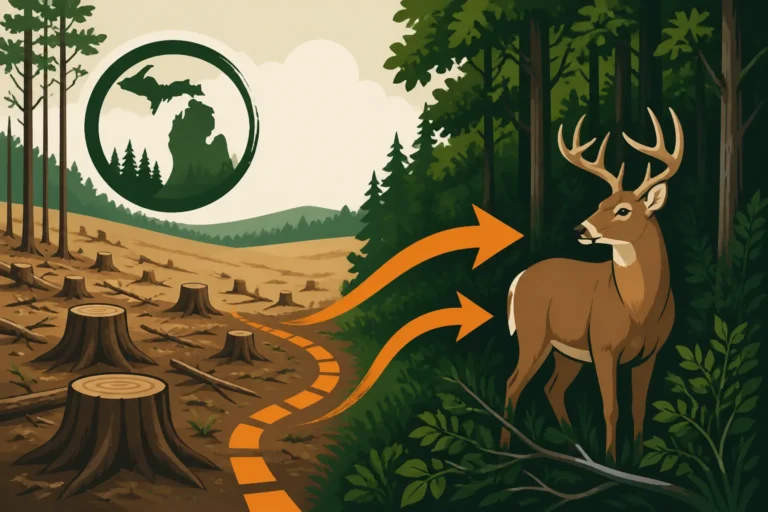
- Brushy Clearcuts/Aspen Stands: These young growth areas provide excellent browse and thick cover. Deer love them. While they can be found closer to roads, the sheer density of a fresh clearcut means that just 400-600 yards can feel like a marathon, and often puts you beyond where most hunters are willing to go. These spots are prime for Hunting Michigan Clearcuts and Aspen Cuts.
Time of Season and Hunting Pressure
Michigan's deer seasons are long, and hunting pressure fluctuates significantly. Your walking strategy needs to adapt.
- Early Archery (October): Pressure is generally lower, especially on weekdays. Deer are often still in their late-summer patterns, and less prone to being pushed. You might not need to walk quite as far as later in the season, but still aim for at least 300-500 yards from obvious access.
- Firearm Season (November): This is peak pressure time. Opening weekend, in particular, demands significant effort to find unpressured pockets. You'll want to push at least 800 yards to a mile, often more. The collective movement of many hunters can drive deer far back into remote areas. Opening Day Crowds on Michigan State Land are a real challenge. Even during the Hunting the Second Week of Firearm Season, many hunters have packed it in, but deer are still wary.
- Late Season (December/January): Pressure drops off dramatically, but deer are also highly wary and focused on late-season food sources. If you can find these food sources in remote areas, you might not need to walk as far from that food source, but getting to the food source itself might require a deep trek. Late-Season Food Sources for Whitetails are key here.
| Factor | Typical Walking Distance for Less Pressure | Considerations |
|---|---|---|
| Open Hardwoods | 0.5 – 1+ mile | Deer see/hear easily; need more distance. |
| Dense Conifer/Swamp | 0.25 – 0.75 mile | Thick cover provides security; harder for hunters to penetrate. |
| Rolling Hills/Ridges | 0.25 – 0.5 mile (over a crest) | Topography blocks sight/sound; deer use features. |
| Brushy Clearcuts | 0.4 – 0.8 mile | Difficult walking, but excellent cover and food. |
| Early Season (Low Pressure) | 0.25 – 0.5 mile | Deer less wary, but still avoid immediate access. |
| Peak Season (High Pressure) | 0.75 – 1.5+ miles | Many hunters; deer pushed deep; requires significant effort. |
| Late Season (Low Pressure) | Varies, often 0.5 – 1 mile to food | Less pressure, but deer are wary and food-focused. |
Strategies for Deeper Penetration and Less Pressure
Simply walking a mile in any direction isn't always the answer. Smart hunters employ specific strategies to maximize their efforts when seeking those elusive, unpressured zones off the two-track. It's about combining distance with tactical awareness.
Utilize Natural Barriers
Look for features on your map that naturally deter other hunters. These are your golden tickets to finding solitude.
- Rivers and Large Creeks: A significant water crossing, especially one that requires waders or a small boat, can be an instant barrier. Most hunters won't bother. Scouting maps often reveal these opportunities.
- Large Swamps or Bogs: As mentioned, thick, wet areas are excellent. Find an island of high ground within a large swamp, or a dry ridge running through one, and you've found a sanctuary. Getting a Deer Out of a Michigan Cedar Swamp might be a challenge, but the hunting can be phenomenal.
- Steep, Undulating Terrain: While Michigan isn't mountainous, areas with sharp elevation changes, ravines, or heavily eroded banks can be difficult to traverse. These spots often hold pockets of undisturbed game.
- Dense Blowdowns or Logging Debris: Recently logged areas, especially if not cleaned up, can create impenetrable tangles of downed trees. While a pain to walk through, these offer incredible security. If you can find a way to navigate through them, you're ahead of the game.
When looking at a map, whether it's a paper topo or a digital tool like onX Hunt, actively search for these features. They're not just obstacles; they're opportunities.
Diverse Entry and Exit Points
Don't just walk straight back from where you park. That's what everyone else does. Instead, think about creative entry and exit routes.
- The "Long Way Around": Sometimes, the best way to get to an area behind the immediate pressure zone is to walk a longer route, skirting the perimeter of a block of timber, or coming in from an unexpected direction on another two-track. This might mean adding mileage to your walk, but it could put you right in the deer's natural travel path without crossing other hunters' ground.
- Using Non-Traditional Access: Power lines, gas lines, snowmobile trails (outside of winter), or even old logging cuts that aren't marked as official two-tracks can provide discrete access points. Always verify the legality of hunting along these corridors, but they can be low-traffic options.
- Still-Hunting In, Sitting Out: For some situations, a slow, deliberate still-hunt deep into a target area is the best approach. You're constantly evaluating the sign, wind, and terrain. Once you reach a prime spot, you might then set up for an afternoon sit. Alternatively, you could reverse this for morning hunts, walking in quickly to a pre-scouted stand location and then still-hunting out later in the day. This is a common tactic, especially when Still-Hunting Michigan Cedar Swamps.
Scouting and Intelligence Gathering
The best way to know how far you need to walk is to put in the time before the season. Scouting Michigan Public Land Before Season is invaluable.
- Digital Mapping Tools: Tools like onX Hunt or GoHunt are indispensable for identifying remote areas and potential barriers. They allow you to layer satellite imagery with property lines, topography, and even public land boundaries. You can drop pins, measure distances, and plan routes from the comfort of your home, saving valuable in-field time and energy. Understanding onX Layers for Michigan Land Status can reveal hidden opportunities.
- Boots-on-the-Ground Reconnaissance: Nothing beats actually walking the ground. Even a couple of off-season hikes can reveal hidden trails, overlooked food sources, or pinch points that maps don't fully convey. Look for old deer sign (rubs, scrapes, trails), but also for human sign (old stands, trash, boot prints). If you find a spot a mile back with fresh deer sign and no human sign, you've found a gem.
- Adjusting Based on Real-Time Pressure: On opening morning, if you see 10 trucks at your planned access point, it's probably time to adjust. Have a backup plan further down the road, or be prepared to walk significantly farther than you initially intended. Flexibility is key.
Gear and Tools to Aid Your Journey
Walking farther on public land isn't just about willpower; it's about being prepared with the right equipment to make the journey safe, efficient, and successful. The extra miles demand a bit more thought in your packing list.
Navigation Essentials
Getting deep into the woods is fantastic, but getting lost deep in the woods is a nightmare. Reliable navigation is paramount.
- GPS Unit or Phone App: While modern smartphones with apps like onX Hunt are incredibly capable, a dedicated GPS unit can offer more robust battery life and better signal in dense cover or extreme cold. Either way, always have a fully charged device, ideally with offline maps downloaded. Bring a portable charger! It's a tough choice between GPS Units Versus Phone Apps, so having both can be a smart move.
- Compass and Paper Map: Even with digital tools, a traditional compass and a good waterproof paper map of your hunting area are non-negotiable backups. Batteries die, phones break. Knowing how to use them can literally be a lifesaver. This also helps with Finding Michigan Property Lines when on the move.
- Marking Tape/Reflectors: If you're going really deep, especially in thick cover or unfamiliar terrain, a few pieces of non-obtrusive marking tape (biodegradable is best) can help you find your way back to a specific stand or a landmark. Remember to remove it when you leave.
Comfort and Safety for Longer Walks
The extra miles mean more exposure to the elements and more physical exertion. Dressing and packing smartly are critical.
- Appropriate Footwear: This is perhaps the most crucial piece of gear for long walks. Comfortable, waterproof, and supportive boots are essential. For Michigan's diverse terrain, rubber boots for swamps and wet areas, or well-insulated, waterproof hiking boots for drier ground and colder temperatures are typical choices. Ensure they are well broken in to avoid blisters. If you plan Hunting Michigan Cedar Swamps, rubber boots are a must. Consider Insulated Boots for All-Day Sits for those colder, late-season treks.
- Layered Clothing System: Michigan weather is notoriously fickle. You might start a walk in crisp, cool air and end up sweating by the time you reach your spot. A good layering system allows you to add or shed clothing as needed, regulating your body temperature to prevent both overheating and chilling. Avoid cotton directly against your skin. Base Layers for a Michigan November are a great starting point.
- Backpack with Essentials: A comfortable daypack is necessary for carrying your gear. Don't skimp on essentials:
- Water and Snacks: Hydration is key, especially during long walks.
- First-Aid Kit: For blisters, cuts, or minor injuries.
- Headlamp: Crucial for walking in before dawn or out after dark. Headlamps for Walking Out After Dark are non-negotiable.
- Emergency Shelter/Fire Starter: A lightweight emergency blanket or small tarp, and a reliable fire starter, can be crucial in an unexpected overnight situation.
- Game Bags/Hauling Gear: If you're walking a mile or more in and plan to harvest a deer, think about how you'll get it out. A set of strong game bags for boning out meat, or a deer cart or sled for easier dragging (if terrain allows), becomes critical for Packs for a Day on State Land and longer retrieves. Deer Sleds for Snow Country are a lifesaver in winter.
Strategic Planning for Retrieval
One often-overlooked aspect of walking far is the logistics of getting your game out. If you're a mile back in a swamp, that 150-pound buck suddenly feels like 300 pounds.
- Have a Plan B: If you hit a deer deep, do you have a plan for help? Can you call a friend? Are you prepared to bone out the animal and make multiple trips? This is a serious consideration, especially if you're hunting alone.
- Consider Boning Out: Learning the gutless method and carrying game bags can significantly reduce the weight and bulk of a deer, making it much easier to carry out over long distances. This method is particularly useful when you're far from any road or trail.
- Scout Retrieval Routes: When you're initially scouting, don't just look for stand locations. Also, identify potential retrieval routes. Are there any slightly easier paths, old logging roads, or drier stretches that would make dragging or packing out a deer less arduous?
Walking farther from a Michigan two-track isn't a guarantee of success, but it dramatically increases your odds of encountering undisturbed game. It's about smart strategy, careful preparation, and the willingness to put in the effort that many others won't. Embrace the challenge, enjoy the solitude, and may your long walks lead to full freezers.
Disclaimer
This article is for general informational purposes only and does not constitute professional advice. Laws, prices and regulations vary by location and change over time. Consult a qualified professional for guidance on your specific situation.