Deer Sleds for Snow Country
There’s a common scenario that plays out in Michigan’s northern woods every winter: you’ve finally put a deer down after a long, cold hunt, and the exhilaration quickly gives way to a daunting reality – a heavy deer in deep, soft snow. Dragging a buck or a doe through drifts, over fallen logs, and across frozen uneven terrain can be one of the most physically exhausting parts of the hunt, often leaving you questioning your life choices. This guide is here to tell you there’s a better way: the deer sled. We’re going to dive deep into why a deer sled isn't just a luxury, but a true game-changer for deer hunters in Michigan’s snow-covered landscapes, what to look for, and how to use one effectively.
The Dragging Dilemma: Why Michigan's Snow Makes Deer Sleds Essential
Let's be honest, few things are as brutal as dragging a Michigan whitetail through even a modest amount of snow. Your boots sink, your muscles burn, and that "short" walk back to the truck suddenly feels like an expedition to the North Pole. When you add heavy, wet snow, or worse, that crunchy, ice-crusted snow that cuts your hands and rips your clothes, it becomes a true test of endurance. This isn't just about convenience; it's about making a safe, efficient, and less back-breaking recovery after a successful hunt in our state.
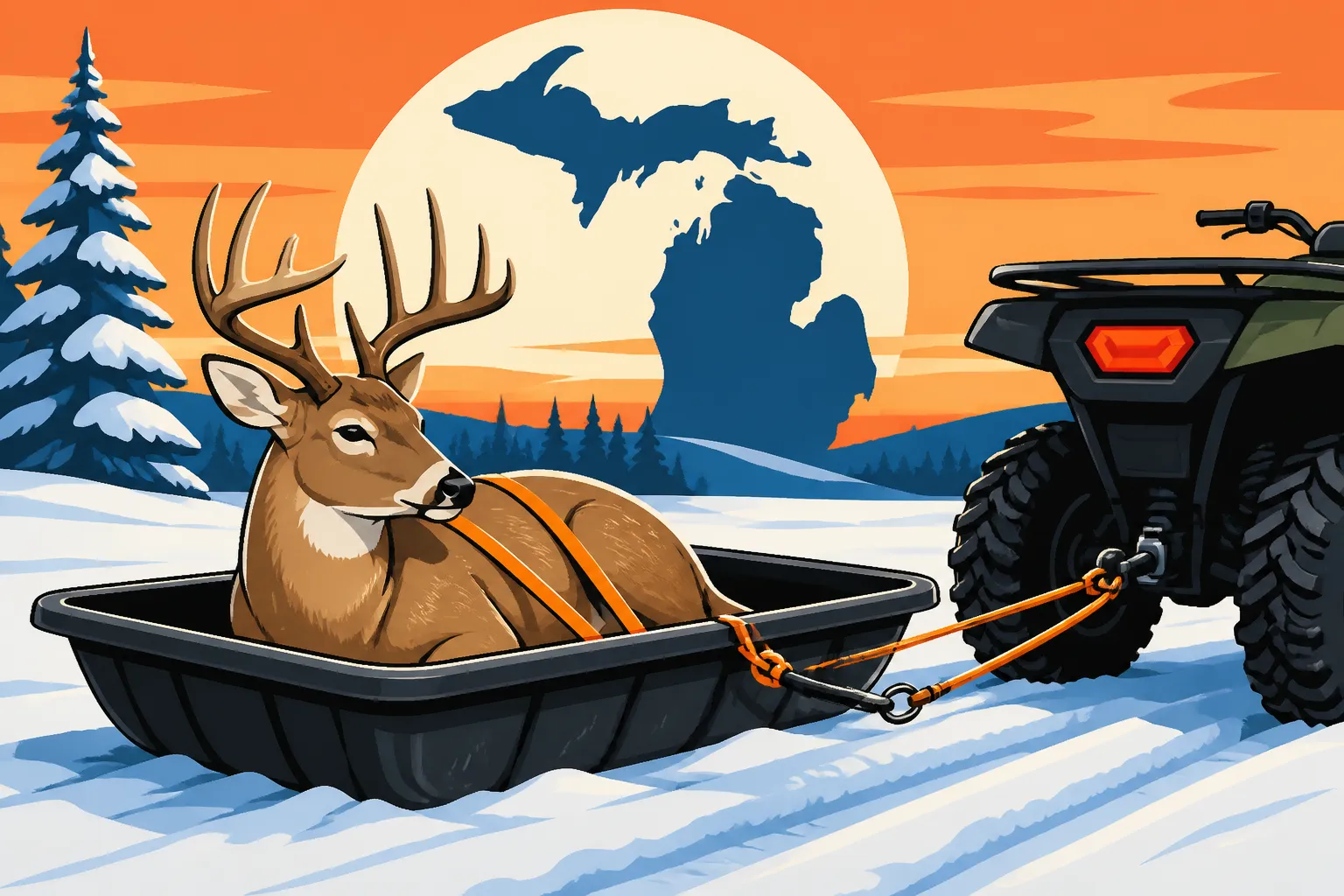
Michigan's snow country, especially in the Upper Peninsula and the northern reaches of the Lower Peninsula, can present vastly different conditions throughout a single season, let alone from one winter to the next. You might start a hunt with a light dusting, only for a lake-effect storm to dump a foot of fresh, heavy powder while you’re on stand. Or, perhaps you’re dealing with several inches of packed, icy snow that makes every step a treacherous slide. A deer sled helps mitigate these challenges by providing a low-friction surface that glides over most snow conditions, significantly reducing the effort required to move your harvest. Without one, you’re often left with the choice of an agonizing drag, quartering your deer in the field, or trying to coordinate a complicated deer drive to get the animal closer to an accessible point. Dragging a Deer Through Michigan Snow can be a brutal task, and a sled can transform it from a grueling chore into a manageable recovery.
Beyond the sheer physical effort, there's the consideration of your valuable meat and hide. Dragging a deer directly on the snow or ground can be incredibly hard on the carcass. It picks up debris, dirt, and often rips the hide, especially around the shoulders and neck. If you plan to have your deer caped for a taxidermy mount, a torn cape can be devastating. A sled keeps the animal clean and off the abrasive ground, protecting the hide and ensuring your meat stays as clean as possible until you can get it back to camp or your processing station. This preservation is crucial, especially if you're hunting during Michigan's later seasons where temperatures might hover around freezing, and you want to ensure the meat cools properly without contamination.
Choosing the Right Sled: Features for Michigan's Winter Wilderness
When you decide to invest in a deer sled, you'll quickly realize there's a surprising variety out there. It's not just a piece of plastic; the right features can make a world of difference when you're deep in a cedar swamp or battling drifts in the Huron-Manistee National Forest. Think about the typical conditions you face and the size of the deer you typically harvest.
First and foremost, material matters. Most deer sleds are made from high-density polyethylene (HDPE), which is known for its durability and slickness, even in freezing temperatures. The thicker the material, generally, the more robust the sled will be. Thin, flimsy plastic might work for a small deer on a smooth trail, but it won't stand up to dragging a big U.P. buck over frozen stumps and rocks. Look for models with a slightly heavier gauge plastic that can flex without cracking.
Size is another critical factor. You want a sled that's large enough to accommodate the full length of an adult deer, preferably with some room to spare. This allows you to position the deer comfortably and secure it without it hanging over the edges. Most popular models range from 60 to 80 inches in length and 24 to 36 inches in width. While a wider sled might offer more stability, a narrower one can sometimes be easier to maneuver through tight timber. If you're consistently hunting areas where you might need to Getting a Deer Out of a Michigan Cedar Swamp, a slightly narrower profile might save you some headaches.
Consider the design:
- Basic Sleds (Tarp-style or Flat-bottom): These are often the simplest and most affordable. They're essentially a thick plastic sheet with a molded front edge, sometimes with a rope already attached. They excel in relatively open, consistent snow where friction is minimal. They are lightweight and easy to store, making them a popular choice for hunters who don't face extreme conditions regularly.
- Utility Sleds (Heavy-Duty, Molded Sides): These are more robust, often featuring taller, rigid sidewalls that help contain the deer and prevent it from sliding out. They typically have a more defined "nose" or prow that helps them cut through deeper snow and prevent snagging. Many of these have multiple tie-down points molded into the design, which are invaluable for securing your harvest. Some even feature molded grooves or runners on the bottom, designed to improve tracking and reduce resistance.
- Specialized Game Sleds: These can incorporate advanced features like built-in, ergonomic pull handles or padded harnesses for single or two-person pulling. Some even have a rigid frame or a slightly elevated bed to further protect the carcass. While often more expensive, these features can significantly enhance comfort and reduce strain on longer hauls.
Here's a quick comparison of common sled types:
| Feature | Basic Flat Sled | Utility Sled (Molded Sides) | Specialized Game Sled |
|---|---|---|---|
| Material | Thinner HDPE | Thicker, more rigid HDPE | Heavy-duty HDPE, sometimes reinforced |
| Sidewalls | Minimal or none (tarp-like) | Significant, provides containment | Pronounced, often with advanced features |
| Nose/Prow | Simple, often less aggressive | Defined, cuts through snow effectively | Highly designed for snow displacement |
| Tie-Down Points | Few, often just rope holes | Multiple, molded-in | Numerous, often with integrated straps |
| Pull System | Simple rope | Sturdy rope, sometimes with handgrips | Ergonomic handles, padded harnesses |
| Durability | Good for light use | Excellent for varied conditions | Superior, built for heavy abuse |
| Maneuverability | Good in open areas | Good, tracks well in deep snow | Can be excellent, depending on design |
| Cost | Lower | Mid-range | Higher |
When selecting your sled, don't overlook the rope or harness system. A thin, cheap rope can cut into your hands, especially when wet and cold. Look for a thick, braided rope that's comfortable to grip, or even better, consider adding a heavy-duty nylon strap with a handle or a shoulder harness. A quality harness distributes the pulling force across your core and shoulders, saving your back and arms. Remember, your gear needs to stand up to Muzzleloader Tactics in December Cold, so choose wisely.
Mastering the Snow Country Retrieval: Tips for Using Your Deer Sled Effectively
Owning a deer sled is one thing; using it efficiently in Michigan's variable winter conditions is another. There's a bit of an art to it, and a few techniques can make your life a whole lot easier when that moment of truth arrives.
First, loading your deer correctly is paramount. Position the deer head-first in the sled. This allows the sled's nose to cut through the snow more effectively, rather than having the deer's antlers or shoulders snagging. If you have a large buck, try to tuck the head and antlers as much as possible, perhaps even lashing them down to prevent them from catching on brush or digging into the snow. Use heavy-duty cam straps or rope to secure the deer firmly in the sled. Criss-cross the straps over the deer's body and through the sled's tie-down points. A securely strapped deer won't shift, making for a much more stable and easier drag. If the deer starts sliding around, it becomes harder to pull and less efficient.
Navigating different terrains requires adaptable techniques. In open, relatively flat snow, a steady pull is usually sufficient. However, when you encounter deeper drifts, uphill slopes, or thick brush, you'll need to adjust. For deep snow, a continuous, strong pull is better than short, jerky tugs; it allows the sled to maintain momentum and glide. When going uphill, break the drag into shorter segments, resting frequently. If you have a hunting partner, a two-person drag is a game-changer. One person pulls from the front, setting the pace, while the other can push from the rear or use a separate rope to pull from the back, especially helpful for navigating turns or getting over obstacles like downed trees. This kind of teamwork is invaluable for extended hauls, and can even be utilized during Deer Drives With Three or Four Hunters to get the animal out once it's down.
When facing obstacles:
- Logs and Stumps: Instead of trying to drag directly over a large log, try to angle the sled. Get the nose over the obstacle, then pull from the side to "pivot" the sled and the deer over. If possible, lift the back of the sled to help clear the obstruction.
- Thick Brush/Alders: This is where a narrower sled helps. If the brush is too dense, you might have to temporarily pull the deer out of the sled and drag it through the thickest section, then put it back on the sled. Sometimes, it's worth taking a slightly longer, clearer route if the brush is truly impenetrable.
- Icy Patches: Be extra cautious. Reduce speed and maintain a steady, controlled pull. If the ice is slick and angled, you might need to use short, powerful tugs to keep the sled from sliding sideways.
Finally, consider your own comfort and safety. Pulling a heavy deer in cold weather is a workout. You'll generate a lot of body heat, so proper layering is essential. Wear moisture-wicking base layers, and have an outer layer that can be easily shed or opened to vent. You don't want to sweat profusely and then cool down, risking hypothermia during a Cold Weather Sitting Strategy or the walk out. Good gloves are a must to protect your hands from the cold rope and the elements. And always, always prioritize safety. Don't overexert yourself; take breaks, stay hydrated, and know your limits. After all, the goal is a successful hunt and a safe return. Still-Hunting After a Michigan Snow can be physically demanding, and the recovery should not add undue risk.
Beyond the Sled: When and How to Handle the Toughest Michigan Pack-Outs
While a deer sled is incredibly effective for most Michigan winter deer retrievals, there are situations where even the best sled might hit its limits. Understanding these scenarios and knowing your alternatives can save you a lot of grief and ensure you successfully recover your game.
One of the primary challenges for sleds is extremely deep, fluffy powder snow. In these conditions, even a wide sled can "plow" rather than "glide," creating a trench and requiring immense effort. If you're encountering snow that's a foot or more deep and very light, a sled might still be better than dragging directly, but it will be tough. Similarly, dense, tangled cover like thick cedar swamps or dogwood thickets can make sledding nearly impossible. The sled gets hung up constantly, requiring you to lift and maneuver it over every obstacle, negating its advantage. This is where scouting tools like GoHunt, which can show you satellite imagery and topo maps, become invaluable for identifying potential retrieval routes before the shot. Planning for the pack-out is just as important as planning the hunt.
So, what are your alternatives when the sled isn't cutting it, or you simply don't have one?
- Deer Carts (Limited Snow): If the snow is very shallow or patchy, a two-wheeled deer cart can be an excellent option. They keep the deer entirely off the ground and distribute the weight efficiently. However, they are virtually useless in anything more than a few inches of snow or very muddy conditions, as the wheels will bog down.
- Boning Out the Deer: This is often the most practical solution for extremely long distances, dense cover, or when you're hunting alone in rugged terrain, particularly in areas like the Upper Peninsula. Boning out involves field dressing the deer, then systematically removing the major muscle groups (backstraps, tenderloins, hams, shoulders) from the bone, and often the cape if you plan to mount it. These boneless pieces are then placed into game bags and carried out in a sturdy backpack. This drastically reduces the weight and bulk you need to transport. It requires a good knife, game bags, and knowledge of anatomy, but it's a technique every serious Michigan big woods hunter should know. Field Dressing a Deer in Cold Weather is the first step, and learning the Bone Saws Versus the Gutless Method can make this process efficient.
- Calling for Reinforcements: Sometimes, the best option is to simply call a friend or family member with a larger vehicle, an ATV, or even a second strong back. Many deer camps operate on this principle – everyone helps with the drag when a deer is down. Always have a plan for communication in remote areas, as cell service can be spotty in much of Michigan's prime hunting land.
Ultimately, being prepared for the retrieval is just as crucial as being prepared for the shot. A deer sled is a fantastic tool that will make most winter deer recoveries in Michigan significantly easier. However, understanding its limitations and having backup plans – whether that's a deer cart for light snow, a good backpack for boning out, or a reliable hunting buddy – will ensure that your successful hunt ends with a successful and safe retrieve, no matter what Michigan’s winter throws at you.
Disclaimer
This article is for general informational purposes only and does not constitute professional advice. Laws, prices and regulations vary by location and change over time. Consult a qualified professional for guidance on your specific situation.