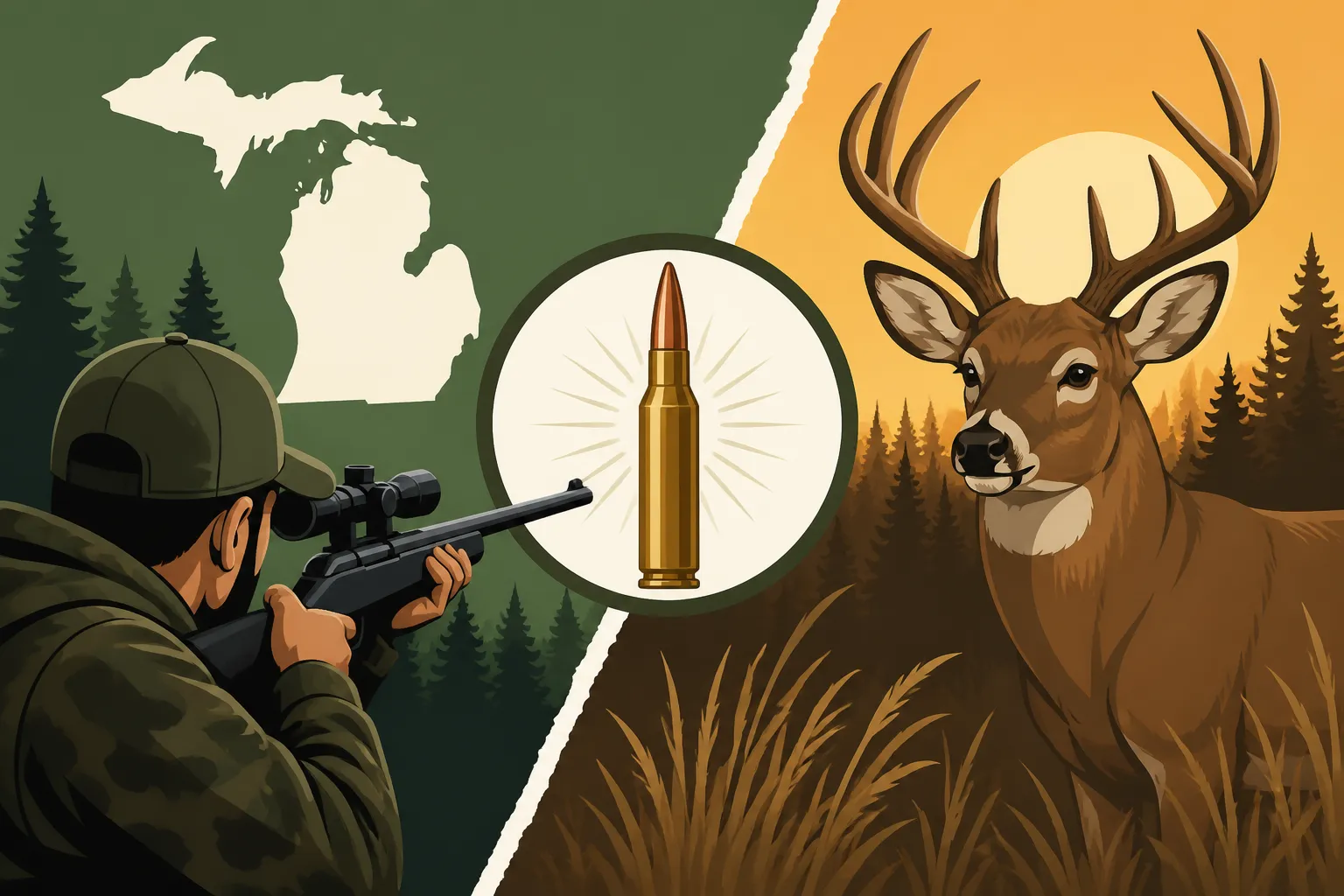
Is a .243 Enough for Michigan Whitetails?
Many Michigan hunters wonder if their tried-and-true .243 Winchester is truly enough gun for whitetails, especially when faced with conflicting opinions around the deer camp campfire or online forums. It's a valid concern – you want to make a clean, ethical kill, and nobody wants to feel under-gunned. This guide will dive deep into the capabilities of the .243, offering a realistic look at its performance, how to maximize its effectiveness, and what Michigan hunters need to know to confidently bring home venison with this popular cartridge.
Understanding the .243 Winchester for Deer Hunting
The .243 Winchester has been a staple in many hunting camps for decades, often praised for its mild recoil and flat trajectory. However, its effectiveness on deer, particularly larger bucks or those taken at longer ranges, remains a frequent topic of debate. Let's break down what makes this cartridge tick and how it measures up against Michigan's whitetails.
Ballistics and Performance on Whitetails
At its core, the .243 Winchester is a necked-down .308 Winchester case, firing a .243-inch diameter bullet. This design allows for light, fast bullets, typically ranging from 55 grains for varmints up to 100 or 105 grains for deer-sized game. For deer, hunters generally opt for the heavier end of that spectrum, usually 95 to 100 grains, because these bullets are designed to hold together better and penetrate deeper.
When properly placed, a quality 95 or 100-grain deer bullet from a .243 can deliver more than enough energy to swiftly and ethically harvest a whitetail. The key phrase here is "properly placed." The velocity of these lighter bullets means they shed energy faster than heavier, larger-diameter projectiles, especially as distance increases. This isn't to say it's ineffective, but it does mean your margin for error, particularly on bone or less-than-ideal angles, is smaller compared to, say, a .30-06. Many hunters appreciate the lower recoil, which leads to better accuracy, especially for youth hunters or those sensitive to heavier kicking rifles. If you can shoot it accurately, that's half the battle.
Shot Placement: The Critical Factor
I cannot stress this enough: shot placement is paramount, regardless of caliber. With a .243, it moves from being important to absolutely critical. A perfectly placed shot from a .243 through the vitals (lungs and heart) will drop a deer just as dead as a perfectly placed shot from a magnum. Conversely, a poorly placed shot, even from a larger caliber, can lead to a wounded animal and a long, difficult tracking job – or worse, a lost deer.
Michigan deer, while sometimes robust, aren't armor-plated. Their vitals are relatively small targets, roughly the size of a dinner plate. Your goal with a .243 should always be a broadside or slightly quartering-away shot, aiming directly for the lung-heart region. Avoid high shoulder shots that might encounter heavy bone or Texas heart shots. A good bullet in the lungs creates massive internal damage and a quick bleed-out. The key is to be patient and wait for that ideal shot opportunity. Knowing your rifle and practicing your shot placement under hunting conditions, perhaps from a treestand or a ground blind, will build the confidence you need. For more on getting set up right, check out Treestand Setups in Michigan Hardwoods.
Michigan's Deer Sizes and Hunting Conditions
Michigan's deer herd, while healthy, can vary in size depending on the region. A mature buck in the southern Lower Peninsula's farm country might weigh 200 pounds dressed, while a buck in the deep woods of the Upper Peninsula or northern Lower Peninsula might be closer to 150 pounds. Most does will fall in the 100-140 pound range. The .243 Winchester is capable of cleanly taking any of these animals with correct bullet selection and shot placement.
Hunting conditions across Michigan also play a significant role. In the thick cedar swamps and dense cover of the U.P. or northern L.P., shots are often close, typically under 100 yards, sometimes even under 50. In these scenarios, the .243 performs exceptionally well. However, in the more open farm country of southern Michigan, where deer might cross large fields, shots can extend to 150-200 yards or more. At these longer ranges, bullet drop and energy retention become more pronounced with the .243. It's crucial for hunters to understand their rifle's ballistic performance at various distances and to limit shots to ranges where they can consistently place a bullet precisely. Scouting your hunting area, perhaps with tools found on GoHunt, can help you identify realistic shooting lanes and distances before the season even begins. Understanding Michigan Deer Harvest Trends can give you an idea of the typical deer you might encounter.
Advantages and Disadvantages of Hunting with a .243 in Michigan
Every cartridge has its strengths and weaknesses, and the .243 Winchester is no exception. For Michigan hunters, weighing these factors is essential to decide if it's the right choice for their specific hunting style and local conditions.
The Pros: Why Hunters Choose the .243
One of the biggest advantages of the .243 is its low recoil. This makes it an absolute joy to shoot, reducing flinching and promoting better accuracy. For new hunters, especially youth, or smaller-framed individuals, the .243 is often recommended as a fantastic starter deer rifle. It allows them to focus on the fundamentals of shooting without developing a fear of recoil, which can haunt a hunter for years. This ease of shooting also translates to more enjoyable practice sessions at the range, which, as we discussed, directly impacts ethical hunting outcomes. Many mentors use it for teaching Michigan Hunter Safety Requirement principles.
Secondly, the .243 is known for its inherent accuracy and flat trajectory out to moderate distances. This means less guessing on holdover for shots out to 200 yards, which can be a real benefit in variable terrain. Ammunition is also widely available and often more affordable than some of the newer, more specialized cartridges. Its versatility also allows it to be used effectively for smaller game and predators like coyotes, making it a true all-around rifle for many.
The Cons: Limitations to Consider
While the .243 has many benefits, it does come with certain limitations for deer hunting. The primary one is its smaller bullet diameter and lighter weight compared to traditional deer calibers. This means that if your shot placement isn't absolutely perfect, especially if you hit a shoulder blade or a large leg bone, the bullet may not penetrate sufficiently to reach the vitals or may deflect, causing a non-lethal wound. There's less "forgiveness" in the .243 if things go slightly awry.
Another concern for some hunters is the perceived lack of "knockdown power." While a well-placed .243 shot certainly puts deer down, it might not always anchor them on the spot like a heavier, slower bullet might with a similar hit. Deer hit with a .243 often run a short distance before succumbing, even with a lethal shot. This isn't a fault of the cartridge but a characteristic of lighter, faster bullets. This means hunters need to be diligent in tracking, even if the deer seems to run off with no immediate reaction. Tracking a Deer in Michigan Snow or Blood Trailing After Dark in Michigan become critical skills.
Finally, at longer ranges, beyond 200-250 yards, the .243's energy drops off more significantly than heavier calibers. While it technically can make kills at these distances, the margin for error shrinks considerably, and bullet performance can be less predictable. This makes understanding your ethical range, and sticking to it, absolutely paramount.
Comparing to Other Common Michigan Calibers
To put the .243 into perspective, let's look at how it compares to some other popular deer hunting calibers commonly used in Michigan. This isn't about declaring one "better" than another, but understanding their characteristics.
| Caliber | Typical Bullet Weight (grains) | Recoil (Relative) | Effective Energy (Relative) | Typical Use Case |
|---|---|---|---|---|
| .243 Winchester | 95-100 | Low | Moderate | Youth, smaller hunters, accurate short to medium range, dual-purpose varmint. |
| .30-30 Winchester | 150-170 | Moderate | Moderate | Brush country, lever actions, shorter ranges, traditional hunting. |
| .308 Winchester | 150-180 | Moderate | High | All-around, versatile, good for medium to long range, excellent for Michigan. |
| .450 Bushmaster | 250-300 | High | Very High | Michigan's Limited Firearm Zone, heavy-hitting at short range. |
| .30-06 Springfield | 150-180 | Moderate-High | Very High | All-around, powerful, longer range capability, common everywhere. |
This table highlights that while the .243 might have less raw energy than some of its larger brethren, its low recoil and accuracy offer unique advantages. For a deeper dive into other options, consider reading Choosing a Rifle Caliber for Michigan Deer.
Optimizing Your .243 Setup for Michigan Whitetails
If you choose to hunt with a .243 in Michigan, or already own one, there are specific steps you can take to ensure you're as effective and ethical as possible. It's all about making smart choices with your gear and honing your skills.
Choosing the Right Ammunition
This is perhaps the single most critical factor in making your .243 a reliable deer slayer. Forget the cheap varmint rounds; you need bullets specifically designed for deer. Look for premium hunting ammunition in the heavier end of the weight spectrum, typically 95 to 100 grains. These bullets are constructed differently than thin-jacketed varmint bullets.
What's the difference? Deer hunting bullets are designed for controlled expansion and deep penetration. They have tougher jackets, sometimes bonded cores, or even monolithic (all-copper) construction to ensure they don't break apart on impact. This allows them to retain their weight and drive through hide, muscle, and even light bone to reach the vital organs. Examples of bullet types to look for include bonded soft points, partitioned bullets, or solid copper designs. While I won't name specific brands or models, a quick search on a reputable hunting resource like GoHunt can help you find excellent deer-specific loads for your .243. Invest in good ammunition; it's a small price to pay for an ethical kill.
Practical Shooting Ranges and Scopes
Michigan hunting, especially on public land, often involves shots at closer distances. In the thick woods, cedar swamps, and aspen cuts, an ethical shot with a .243 is usually well within 150 yards. Even in more open areas like clearcuts or agricultural fields, most deer are taken under 200 yards. This is well within the effective range of a well-equipped .243. Practical Range in Michigan Timber reinforces this reality.
Your scope should complement these conditions. A variable power scope with a lower minimum magnification (e.g., 2-7x, 3-9x) is ideal for Michigan's diverse terrain, offering a wide field of view for close-range snap shots and enough magnification for longer distances. Look for good low-light performance in your scope, as many prime hunting hours are at dawn and dusk, especially in dense cover. A quality scope that gathers light efficiently can make all the difference in target identification. Learn more about Low-Light Performance in a Scope. Practice shooting at various ranges, from 50 to 200 yards, to truly understand your rifle's capabilities and your own limitations. Make sure you've properly zeroed your rifle for your intended range, often 100 or 150 yards for typical Michigan hunting. Zeroing a Rifle for Woods Distances is a great resource.
Ethical Considerations and Confidence
Ultimately, the question "Is a .243 enough?" boils down to the hunter. Your confidence in your equipment and your abilities is paramount. If you feel hesitant, that doubt can lead to poor decisions in the field.
- Know Your Limits: Be honest about your effective shooting range. If you can only consistently group shots within 150 yards at the range, don't attempt a 250-yard shot at a deer in the field.
- Practice, Practice, Practice: Regular range time is crucial. Shoot from hunting positions (sitting, kneeling, off a bipod or tree rest) as much as possible. This builds muscle memory and confidence.
- Pass on Marginal Shots: If a shot presents itself that isn't clean – too far, too much brush, or a poor angle – be prepared to pass. There will always be another deer, but an injured deer reflects poorly on all hunters. Using hunting maps on GoHunt to understand terrain and cover can help anticipate shot opportunities and plan for ethical engagements.
Final Thoughts for the Michigan Hunter
The .243 Winchester is absolutely a capable deer cartridge for Michigan whitetails. It is not a magical death ray, and it demands respect and careful consideration, but neither is any other rifle. Its low recoil makes it a joy to shoot accurately, and accuracy is always king when it comes to ethical hunting. By selecting appropriate hunting ammunition, practicing regularly, and understanding your ethical limits, you can confidently and successfully hunt deer in Michigan with your .243.
Many Michigan hunters have taken countless deer with the .243, and with proper preparation, you can too. Focus on bullet construction, place your shots precisely, and always prioritize an ethical harvest. Happy hunting out there!
Disclaimer
This article is for general informational purposes only and does not constitute professional advice. Laws, prices and regulations vary by location and change over time. Consult a qualified professional for guidance on your specific situation.