Choosing a Rifle Caliber for Michigan Deer
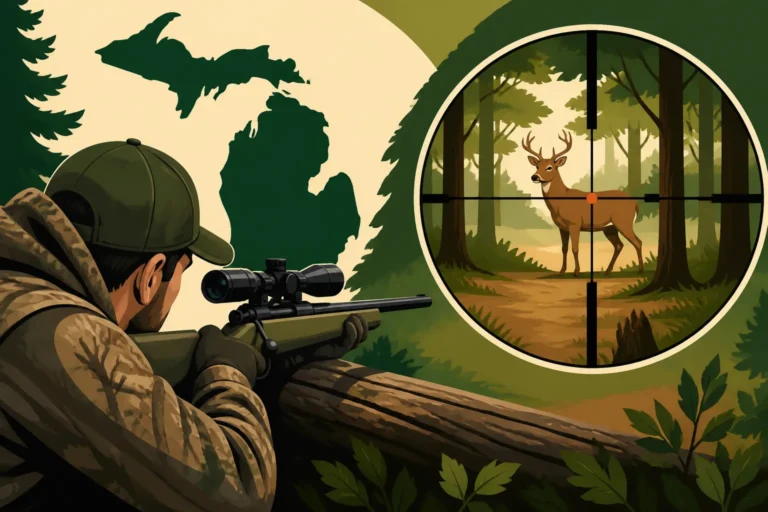
Choosing the right rifle caliber for deer hunting in Michigan can feel like a daunting task, especially with so many options on the market and the diverse landscapes we hunt, from dense Upper Peninsula forests to open Lower Peninsula farmlands. It’s easy to get caught up in the endless debates about "stopping power" or "flat trajectories," often leaving hunters more confused than when they started. This guide is here to cut through the noise, helping you understand the factors unique to Michigan hunting that should truly influence your decision, ensuring you pick a caliber that performs reliably and ethically for your specific hunting style and location.
Understanding Michigan's Diverse Hunting Landscapes
Michigan is a state of incredible natural beauty and varied terrain, which means what works perfectly in the wide-open spaces of the western states might be totally overkill—or underkill—in our local haunts. Our deer often live in cover so thick you can barely see twenty yards, then suddenly you find yourself looking across a sprawling cut field where a longer shot is a real possibility. Ignoring these geographical nuances when picking a caliber is a common pitfall.
Thick Cover Versus Open Fields
A huge chunk of Michigan deer hunting happens in heavy cover. Think dense cedar swamps in the Upper Peninsula, thick young aspen cuts in the northern Lower, or brushy river bottoms running through southern farmlands. In these environments, shots are typically close, often 75 yards or less, and sometimes as tight as 20 or 30 yards. The deer are often moving, and you need a round that can deliver energy effectively without excessive over-penetration or deflection on light brush. A fast, flat-shooting caliber designed for 300-yard shots in wide-open country often doesn't offer a significant advantage here and can sometimes lead to greater bullet fragmentation at close range.
Conversely, many hunters, particularly in the southern Lower Peninsula, spend time hunting field edges, food plots, or even along longer gas lines and two-tracks. Here, a shot might stretch out to 150 or even 200 yards. While not mountain hunting, these longer distances require a caliber with sufficient velocity and energy retention to ensure a clean kill. It's a balance, right? You want something versatile enough to handle both the tight woods and the occasional longer poke. This duality is why many Michigan hunters often lean towards calibers that strike a good middle ground or, in some cases, own multiple rifles for different situations.
Upper Peninsula Versus Lower Peninsula Considerations
The geographical divide in Michigan isn't just a political line; it represents a significant difference in hunting conditions and deer behavior. The Upper Peninsula, with its vast tracts of state and federal forest, deeper snows, and generally lower deer densities, often means hunters are still-hunting or putting on Deer Drives With Three or Four Hunters through big timber. Shots can be quick, in heavy cover, and sometimes after a long, cold track through snow. Reliability in harsh conditions and adequate power for potentially larger-bodied, cold-weather deer are key.
In the Lower Peninsula, especially the northern half, you still have vast state forests, but often with more managed timber, more aspen regeneration, and a mix of swamp and ridge country. Southern Michigan is a patchwork of agricultural fields, woodlots, and suburban fringes. Here, deer densities can be higher, and hunting often involves sitting on stand overlooking food sources or funnels. The terrain is generally flatter, and deer might be moving between cover and fields. The considerations might shift from raw power to accuracy over moderate distances and the ability to minimize meat damage, especially if you're taking a shot at a deer standing broadside in a cornfield. Understanding these regional differences helps inform not just your caliber choice, but also your entire Rifle Setups for Michigan Deer.
Legal Considerations in Michigan
Michigan has some distinct rules regarding firearms for deer hunting, and failing to understand them can turn a successful hunt into a legal headache. It's not just about what's powerful enough, but what's actually allowed in the area you plan to hunt. These regulations are designed with public safety in mind, especially in more densely populated or fragmented landscapes.
The Limited Firearm Zone Rules
One of the most critical distinctions in Michigan hunting regulations is the "Limited Firearm Deer Zone." This zone encompasses most of the southern Lower Peninsula. In this area, hunters are generally restricted to shotguns, muzzleloaders, and certain handguns. However, the regulations have evolved to include straight-walled rifle cartridges, which has been a game-changer for many. You can't just grab any rifle and hunt anywhere in Michigan; you need to know if you're above or below that invisible line that dictates what firearm types are legal.
This rule exists primarily because of population density and smaller land parcels. A high-velocity, bottlenecked rifle cartridge, designed for long-range performance, poses a greater risk of over-penetration and longer bullet travel in areas where houses, roads, and other non-hunting infrastructure are more prevalent. Shotguns with slugs, muzzleloaders, and straight-walled cartridges typically have a shorter effective range and less propensity for long-distance ricochets, making them safer options in these environments. Knowing if you're hunting in a restricted zone is paramount; many hunters carry a map or use a reliable hunting app like GoHunt to confirm their location relative to these boundaries. It truly impacts your ability to legally carry the rifle you might prefer. For more detail, refer to Where Michigan Restricts Rifles for Deer.
Straight-Wall Cartridges Explained
The introduction of straight-walled rifle cartridges into the Limited Firearm Zone was a huge relief for many hunters who disliked the limitations of slug guns. These cartridges, such as the popular .450 Bushmaster, .350 Legend, or .44 Magnum (in rifle form), have a cartridge case that is essentially straight from the base to the mouth, without the characteristic "shoulder" of bottlenecked rifle cartridges like a .30-06 or .270. While they are still rifle cartridges, their ballistic performance generally resembles that of a powerful handgun or shotgun slug, with a shorter effective range compared to traditional bottlenecked rifle rounds.
This means you can enjoy the advantages of a rifle's accuracy, feel, and optics mounting capabilities, even in areas previously restricted to shotguns. The effective range of these cartridges in Michigan's cover is often more than adequate, typically out to 150-200 yards, which covers the vast majority of deer hunting scenarios. They hit hard and reliably, often dropping deer in their tracks with good shot placement. The key is to check the specific regulations each year, as the list of approved straight-walled cartridges can sometimes be updated. It's a fantastic option for those southern Michigan woodlots and field edges where you want rifle precision without breaking the law. Understanding these options is critical, so be sure to read up on Straight-Wall Cartridges Legal in Michigan.
Popular Calibers and Their Performance in Michigan
When you walk into a sporting goods store or browse online, the sheer number of rifle calibers available can make your head spin. For Michigan deer hunting, however, a few key calibers consistently rise to the top, each with its own set of advantages and considerations.
Traditional Woods Calibers
Many Michigan hunters still swear by the classic "woods calibers," and for good reason. These cartridges often represent reliability, sufficient power for local deer, and a heritage of successful hunts.
-
.30-30 Winchester: This lever-action favorite is probably responsible for more Michigan deer on the pole than any other cartridge. It's a quintessential timber cartridge, perfectly suited for the brushy areas where shots are close. Its effective range is generally considered to be within 150 yards, which is ample for the majority of shots taken in dense cover. The .30-30 delivers a heavy, slow bullet that creates significant impact energy without excessive over-penetration, making it very effective for deer-sized game. Recoil is manageable, and rifles chambered in .30-30 are often light and handy for quick target acquisition. It's truly a Michigan icon, especially in the thick stuff.
-
.308 Winchester: While often thought of as a more modern, flatter-shooting round, the .308 is incredibly versatile and shines in Michigan's diverse terrain. It offers excellent ballistics, sending a wide range of bullet weights (typically 150-180 grains) at respectable velocities. This means it's powerful enough for a big U.P. buck in deep snow, yet accurate and flat-shooting enough for longer shots across a field edge. Recoil is moderate, and ammunition is widely available. For many, the .308 is the ultimate do-it-all Michigan deer caliber, bridging the gap between deep woods hunting and more open country.
-
.243 Winchester: Often recommended for youth hunters or those sensitive to recoil, the .243 is a surprisingly effective deer cartridge. It sends lighter bullets (typically 80-100 grains) at high velocities, resulting in a flat trajectory and excellent accuracy. While some might question its power for larger deer, with good shot placement, a .243 is more than capable. The key here is bullet choice – using a quality hunting bullet designed for controlled expansion is crucial. It excels in more open terrain where longer shots might be possible and is a joy to shoot accurately. However, in very thick brush, its lighter bullets can be more prone to deflection than heavier, slower rounds.
Modern Straight-Wall Options
As mentioned, straight-wall cartridges have opened up a new world for hunters in Michigan's Limited Firearm Zone. They combine the best aspects of rifle accuracy with the legal requirements of the zone.
-
.450 Bushmaster: This has become the king of the straight-wall revolution in Michigan. The .450 Bushmaster launches heavy, large-diameter bullets (typically 250-300 grains) with impressive power. It delivers a tremendous amount of energy on target, often resulting in dramatic knockdown power. While its trajectory drops off significantly past 200 yards, it's incredibly effective within that range, which is perfect for most Michigan hunting. Recoil can be stout, but modern rifles and muzzle brakes can mitigate this. It’s a favorite for its sheer power and undeniable effectiveness on deer.
-
.350 Legend: For hunters looking for a lighter-recoiling, more affordable, and widely available straight-wall option, the .350 Legend is an excellent choice. It’s purpose-built for states like Michigan that have straight-wall restrictions. It fires a lighter, smaller-diameter bullet (typically 150-180 grains) than the .450 Bushmaster, but at higher velocities. This results in a flatter trajectory out to about 200 yards and very mild recoil, making it ideal for younger hunters, smaller-framed individuals, or anyone who prefers less punishment at the shoulder. Ammunition is generally less expensive, and many AR-style platforms are chambered for it, offering a modern sporting rifle option for deer.
-
.44 Magnum (in a rifle): While commonly known as a handgun cartridge, the .44 Magnum gains considerable velocity and power when fired from a rifle-length barrel. It’s a classic straight-wall round that has been legal in the Limited Firearm Zone for decades. Often found in lever-action carbines, it's compact, quick to handle, and very effective for deer out to 100-125 yards. Recoil is modest, and it's a nostalgic choice for many, offering a blend of tradition and practicality.
Versatile All-Around Options
Beyond the dedicated woods or straight-wall calibers, some rounds offer a truly exceptional balance for Michigan's varied deer hunting.
-
.30-06 Springfield: The venerable .30-06 has been a staple for North American big game for over a century, and it's still an outstanding choice for Michigan. It can handle a wide range of bullet weights, from 150 grains for flatter shooting to 180 or even 200 grains for maximum penetration on larger animals. This versatility means it's equally at home in the thickest U.P. swamp or across the widest southern Michigan bean field. Its effective range easily exceeds typical Michigan shot distances, providing a substantial margin of error. While recoil is more noticeable than a .243 or .350 Legend, it's generally manageable for most hunters. The .30-06 provides confidence for any deer hunting scenario you might encounter in Michigan.
-
6.5 Creedmoor: This modern cartridge has taken the shooting world by storm, and for good reason. It offers a flat trajectory, excellent accuracy, and surprisingly low recoil for its effectiveness. While often praised for long-range shooting, its benefits translate well to Michigan. The 6.5 Creedmoor launches efficient, high-ballistic-coefficient bullets that retain energy well and buck the wind effectively. For shots out to 250 yards (which would be a very long shot in Michigan but still within its comfortable range), it's incredibly precise. It performs admirably on deer, and its mild recoil makes it a pleasure to shoot and practice with, helping you to achieve those ethical, well-placed shots.
Here's a quick comparison of some popular calibers for Michigan deer:
| Caliber | Typical Bullet Weight (gr) | Effective Range (yards, general Michigan context) | Recoil (Relative) | Legal in Limited Firearm Zone (as rifle) | Best Use Case |
|---|---|---|---|---|---|
| .30-30 Winchester | 150-170 | 150 | Low-Moderate | No | Dense timber, brush, short-range woods hunting |
| .308 Winchester | 150-180 | 250+ | Moderate | No | All-around, versatile for mixed terrain |
| .243 Winchester | 80-100 | 250+ | Low | No | Open country, youth, recoil-sensitive, smaller deer |
| .450 Bushmaster | 250-300 | 200 | Moderate-High | Yes | Limited Firearm Zone, heavy cover, maximum impact |
| .350 Legend | 150-180 | 200 | Low | Yes | Limited Firearm Zone, youth, recoil-sensitive |
| .44 Magnum (rifle) | 240-300 | 125 | Low-Moderate | Yes | Limited Firearm Zone, classic lever-action, short-range |
| .30-06 Springfield | 150-200 | 300+ | Moderate-High | No | All-around, heavy timber, potential larger game |
| 6.5 Creedmoor | 120-140 | 300+ | Low-Moderate | No | Mixed terrain, precision, low recoil, longer shots |
Note: "Effective Range" here refers to typical practical hunting distances for deer in Michigan, not the maximum ballistic range of the cartridge.
Matching Caliber to Your Hunting Style
Your personal hunting style, physical capabilities, and ethical considerations are just as important as the rifle's ballistic properties when choosing a caliber. What works for a seasoned woodsman might not be ideal for a new hunter, and vice versa. It’s all about finding what makes you confident and effective in the field.
Stand Hunting Versus Still Hunting
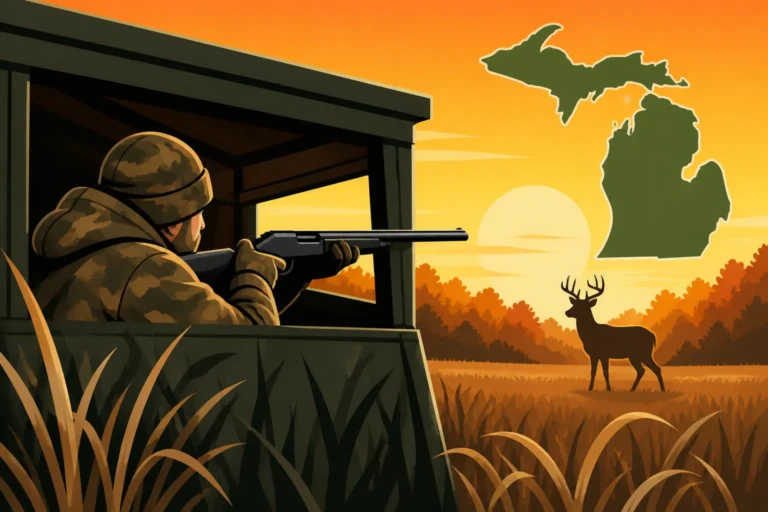
If you're primarily a stand hunter, setting up in a fixed position overlooking a food plot, a travel corridor, or a scrape line, you often have the luxury of time. You can range the distances, get steady, and wait for the perfect shot. In this scenario, a caliber with good accuracy and a flat trajectory can be beneficial for those longer field edge shots, even if most shots are closer. You might prefer a slightly heavier rifle for stability or one with a higher-magnification scope, knowing you won't be carrying it far. For example, a .308 or a 6.5 Creedmoor might shine here.
Still-hunting or driving deer, especially in the thick cover of northern Michigan or the U.P., is a different beast entirely. You're constantly on the move, often walking miles through challenging terrain. Shots can be fast, close, and sometimes off-hand. A light, quick-handling rifle is a huge asset. Calibers like the .30-30 in a lever-action or a compact .450 Bushmaster in a bolt-action are excellent choices. You need something you can carry comfortably all day, bring to bear quickly, and that hits hard at close range without much fuss. When you're constantly on the move, covering ground on public land to find deer that others walk past, having a rifle that feels like an extension of yourself is invaluable. This is where Still-Hunting Michigan Cedar Swamps or even Deer Drives With Three or Four Hunters often come into play.
Youth and Recoil Considerations
For new hunters, especially youth, minimizing recoil is often the most important factor in promoting good shooting habits and preventing flinching. A young hunter who develops a flinch from too much recoil will struggle with accuracy and potentially lose interest in hunting. Calibers like the .243 Winchester or the .350 Legend are outstanding choices for their mild recoil and proven effectiveness on deer. Paired with a properly fitting rifle, these calibers allow new hunters to focus on fundamental skills like sight picture, breath control, and trigger squeeze, without anticipating a painful kick.
It's not just youth, either. Many adult hunters, whether due to physical limitations, a desire for more comfortable practice sessions, or simply a preference for lighter-recoiling firearms, also benefit from these options. A confident, recoil-sensitive hunter with a .243 making a perfect shot is far more ethical and effective than a flinching hunter with a magnum that's too much gun for them. The goal is always a clean, ethical kill, and that starts with accuracy, which is directly linked to comfort and confidence. When considering a setup for a new hunter, remember the Michigan Mentored Youth Licence Rules for additional guidance.
Beyond the Caliber: Shot Placement and Practice
While caliber choice is important, it's critical to remember that it's only one piece of the puzzle. The most powerful magnum in the world is useless if you can't hit your target accurately and consistently. In Michigan, where deer can be tough and cover can be dense, precision trumps raw power almost every time.
The Importance of Shot Placement
No matter what caliber you choose, ethical hunting hinges on shot placement. A perfectly placed shot from a .243 will drop a deer far more effectively and humanely than a poorly placed shot from a .30-06 or .450 Bushmaster. Deer, like all game animals, have vital organs (heart and lungs) located in a relatively small area. Hitting these vitals reliably is paramount.
Understanding deer anatomy and practicing to hit that vital zone consistently under various conditions (from a stand, offhand, at different distances) is a skill that transcends caliber. Invest in good quality bullets designed for controlled expansion, even for common calibers. These bullets are engineered to penetrate adequately and expand reliably, maximizing tissue damage in the vital zone. Don't fall into the trap of thinking a bigger, faster bullet compensates for poor shooting; it doesn't. When you're scouting new public land areas, especially with a tool like GoHunt that can show you terrain and cover, visualizing where a deer might appear and where your shot placement needs to be is crucial.
Practice Makes Perfect
This cannot be stressed enough. Regular practice at the shooting range is vital for proficiency with any firearm. Don't just sight in your rifle once a year and call it good. Practice shooting from various positions you might encounter in the field – sitting, kneeling, offhand, and from your treestand or ground blind. Practice shooting at realistic distances you expect to encounter in Michigan's woods, which often means closer ranges, not just 100-yard bullseyes. Get comfortable with your rifle, its trigger, and its recoil. Zeroing a Rifle for Woods Distances is a great topic to delve into.
Many Michigan shots are under 100 yards, sometimes significantly closer. Practicing quick, accurate shots at 25, 50, and 75 yards can be more beneficial than obsessing over 200-yard groups if you primarily hunt thick timber. The more you practice, the more confident and competent you'll become, and that confidence is what truly leads to ethical, successful hunts. Think about the conditions: practice in cold weather, with gloves on, or after a brisk walk to simulate real hunting scenarios. This will ensure that when that big Michigan buck steps out, you're ready, regardless of the caliber you've chosen.
Disclaimer
This article is for general informational purposes only and does not constitute professional advice. Laws, prices and regulations vary by location and change over time. Consult a qualified professional for guidance on your specific situation.