Turkey Decoys That Work on Pressured Birds
There’s nothing quite like the sound of a gobbler hammering at first light, especially when you know he’s close. But if you’ve spent any time chasing Michigan longbeards on public land or properties that see a lot of hunting pressure, you know the dream of a bird strutting confidently into your decoy spread can quickly turn into a frustrating hang-up at 70 yards, or worse, a quick exit the other way. Those birds are educated, and they've seen every trick in the book. This guide is all about helping you understand why these wary Michigan gobblers are so decoy-shy and, more importantly, what specific types of decoys and tactics you can employ to finally pull them into range, even when they're playing hard to get.
Understanding Why Pressured Birds Are Decoy Shy
It's easy to get frustrated when a gobbler just won't commit, but understanding why he's being so cautious is the first step to outsmarting him. These aren't naive birds fresh out of the nest; they've likely encountered other hunters and lived to tell the tale.
The "Education" of Public Land Gobblers
Think about it from a gobbler's perspective. Each spring, the woods fill with hunters, many of whom are using decoys. After seeing a handful of full-strut jake decoys seemingly appear out of nowhere, often followed by a loud noise or sudden movement, a smart gobbler starts to put two and two together. He learns that a lone strutter, or a group of happy hens, can sometimes mean trouble. It’s like us learning to avoid a certain part of the grocery store at peak hours—we’ve been there, it was a hassle, and we’re not going back without a good reason.
These birds aren't just reacting to past negative experiences; they're also adapting to the sheer volume of hunters on Michigan's state forests and game areas. When every other ridge has a hunter trying to call them in, they become incredibly adept at identifying what looks and feels "off." A shiny, unnatural-looking decoy, or one placed in an obvious, exposed spot, becomes an instant red flag. They quickly become what we call "educated" or "pressured" birds, meaning their natural instincts for caution are heightened.
Reading the Signs of Decoy-Shy Behavior
So, what does this "education" look like in the field? It’s rarely a full-on sprint in the opposite direction, at least not initially. More often, you’ll observe a gobbler "hanging up." This is when he gets to a certain point—say, 60 or 70 yards out—and just stops, strutting and drumming, but refusing to take another step closer. He might circle wide, trying to get a different angle on your setup, or he might just stand there, gobbling his head off, waiting for the "live" birds he sees to come to him.
Another common sign is a lack of interest altogether. You might make perfect calls, and a bird might respond enthusiastically from the roost, but as soon as he hits the ground, he just drifts away, seemingly unimpressed by your spread. He’s already seen similar scenarios and decided it’s not worth the risk. He's assessing the decoy from a distance, looking for any inconsistencies in posture, color, or movement that give it away as a fake. This type of behavior is a stark contrast to an unpressured bird, which might charge right in, eager to assert dominance or find a receptive hen.
Decoy Strategies for Wary Michigan Gobblers
Once you understand why those birds are hanging up, you can start to adjust your strategy. It’s not about giving up on decoys; it’s about using them smarter, not harder.
Less is More: Subtle Decoy Setups
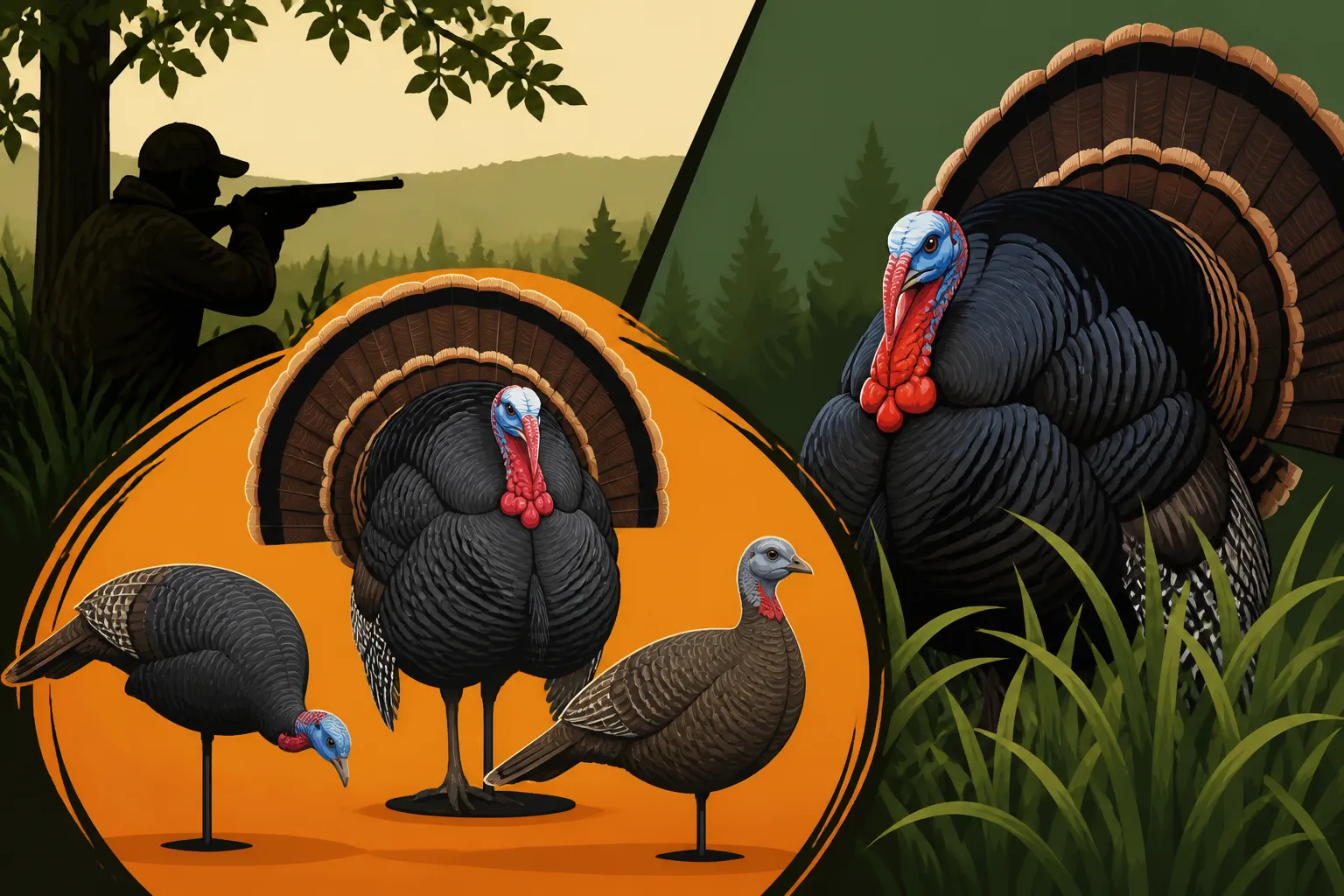
When dealing with pressured birds, the classic "full-strut tom with two hens" spread often does more harm than good. These dominant displays can be intimidating, but wary gobblers have learned to associate them with danger. Instead, think minimalism and realism. A single hen decoy in a relaxed, feeding, or breeding posture is often far more effective. This less aggressive display signals safety and natural behavior, which is much more inviting to a cautious gobbler.
If you must use a jake decoy, opt for a half-strut or quarter-strut jake rather than a full-strutter. A less dominant posture is less likely to trigger a "too good to be true" alarm in an educated tom. The key is to convey a sense of calm and routine. Imagine what a real hen looks like grazing in a field or subtly interacting with others—that’s the image you want to project. Make sure your decoys are non-reflective and flocked to reduce any unnatural sheen that can give them away, especially in bright sunlight or on a dewy morning. Decoy Placement for Pressured Birds is critical, and a subtle setup paired with careful placement can often fool even the wariest gobbler. For those long treks into remote public land, the lighter and more packable your decoys, the better, making Run-and-Gun Turkey Tactics on State Land much more feasible.
Positioning for Success: Angles and Distances
It’s not just what decoys you use, but where and how you place them. On pressured ground, you want your decoys to draw the bird into an ideal shot range without making him suspicious. Generally, place your hen decoy(s) at about 15-20 yards from your position, slightly quartering away or facing directly away from the likely approach of the gobbler. This setup naturally encourages the tom to circle the hen, positioning himself broadside for your shot as he tries to get her attention.
Avoid placing decoys too far out, as this can make the bird hang up even further away. Conversely, don't place them so close that the gobbler ends up too tight for a comfortable shot, or worse, sees you moving to get into position. Use the terrain to your advantage: position decoys just over a slight rise, at the edge of a field, or peeking out from behind some cover. This allows the bird to discover them naturally, rather than seeing them prominently displayed from a great distance. Always consider your concealment and the expected line of approach when placing your decoys.
Specific Decoy Types and Brands for High-Pressure Areas
The market is flooded with turkey decoys, but for pressured Michigan birds, you need to be discerning. Certain types and brands excel at providing the realism and subtlety required to overcome a gobbler's wariness.
Ultra-Realistic Full-Bodied Decoys
When realism is paramount, full-bodied decoys with exceptional detail are hard to beat. Brands like Avian-X and Dave Smith Decoys (DSD) have earned their reputation by producing decoys that mimic live birds almost perfectly. These often feature intricate feather detailing, realistic paint schemes, and lifelike postures (feeding, breeding, loafing hen). The increased realism, especially in texture and color, can be the difference-maker for a gobbler who has seen countless flimsy, shiny plastic decoys.
The pros are clear: unmatched realism, which can be crucial for closing the deal on a tough bird. The cons, however, are also significant: they are typically more expensive than other options, and they can be heavier and bulkier to carry, especially if you're hiking deep into state land. For hunters who spend a lot of time on public ground, a single DSD hen, for example, might be worth the investment if it consistently fools birds where other decoys fail. Always check current prices directly with retailers, as these can vary significantly. Some hunters find great deals through resources like GoHunt, which often features gear reviews and comparisons that can help justify the investment.
Lightweight and Packable Options
For the hunter who likes to move fast and cover a lot of ground—a common strategy when Run-and-Gun on Michigan State Land—heavy, bulky decoys just aren't practical. This is where lightweight and packable options shine. Foam decoys (like those from Montana Decoy) or inflatable decoys offer a great compromise between realism and portability. They compress flat or roll up, fitting easily into a vest or backpack without adding significant weight.
While they may not have the feather-by-feather detail of a DSD, many modern packable decoys have excellent print quality and realistic postures. The key is to find one that doesn't suffer from glare and maintains a natural shape even in a breeze. For example, some models from brands that cater to hunters who prioritize lightweight setups, like those often reviewed on platforms such as GoHunt, are designed with a fabric skin over a collapsible frame, providing good shape without the bulk. These are perfect for quick setups, especially when you're Calling a Michigan Gobbler Off the Roost and need to be ready as soon as he flies down. The trade-off is often durability and overall realism compared to their rigid, full-bodied counterparts, but for covering miles of Michigan timber, they are invaluable.
Specialty Decoys: Reapers and Fanning
The "fanning" craze, where hunters use a full-fan decoy to stalk birds, and the "reaper" style decoys (essentially a fan attached to a stick or vest that you hide behind) have gained popularity. While these can be incredibly effective in certain situations, especially on very aggressive, unpressured birds or during specific times of the Hunting the Peak Rut Week in Michigan, they are generally not recommended for pressured Michigan gobblers.
Why? Because these tactics are now widely known, and many wary birds have already been "educated" by them. A gobbler on state land seeing a full fan bobbing through the woods or even approaching a static fanned decoy often bolts or becomes extremely suspicious. He’s seen it before, and it likely didn’t end well for another tom or jake. There might be rare, specific scenarios where a fanned decoy works (perhaps very late in the season when birds are desperate, or on a private parcel with very low pressure), but for the typical pressured public land bird, stick to subtlety. Aggressive tactics like fanning are best reserved for situations where you have a clear understanding of the local bird's temperament and pressure levels.
Integrating Decoys with Other Pressure Tactics
Decoys are just one tool in your turkey hunting arsenal. To truly succeed with pressured birds, you need to integrate your decoy strategy with calling, scouting, and mindful movement.
Calling with Decoys
When using decoys for wary birds, your calling strategy should mirror your decoy choice: less is often more. Aggressive, loud calling can sometimes spook pressured birds who associate it with hunters. Instead, focus on soft, subtle hen yelps, clucks, and purrs. Use just enough calling to get the gobbler's attention and let him know there’s a hen (or two) in the area. Once he responds, often the best move is to go silent and let the visual of the decoy do the rest of the work.
Think of it as baiting him with sound, then sealing the deal with the visual. If he hangs up, a soft cluck or purr might be just enough to reassure him and entice him to take those last few steps. Avoid over-calling, especially if he's already spotted your decoy. Sometimes, the silence after a soft call can be incredibly effective, as it allows the gobbler to act on his natural urge to investigate what he perceives as a quiet, content hen. Knowing when to use Box Calls Versus Mouth Calls can also aid in versatility.
Scouting and Setups
No amount of decoy wizardry can replace good scouting. For pressured birds, knowing their exact patterns and preferred strut zones is paramount. Spend time before the season using resources like GoHunt's mapping tools or Michigan's Mi-HUNT map to identify potential roosting areas, travel corridors, and strutting flats on public land. Look for fresh sign like droppings, tracks, and primary strut zones. Scouting Michigan Public Land Before Season will pay huge dividends.
Once you know where the birds are likely to be, plan your setup meticulously. Get into position well before first light, long before the birds fly down, to avoid spooking them. Choose a setup location that offers good concealment for you and allows the decoy to be seen but not from an unreasonable distance. A subtle decoy paired with a well-concealed hunter can often draw in a bird that would normally hang up. Consider setting up against a large tree, such as a Setting Up Against a Big Oak, which provides excellent back cover and allows you to remain still as the bird approaches.
Decoy Storage and Transport
Even the most realistic decoy can be rendered useless if it smells like human or reflects light unnaturally. Always store your decoys in a clean, scent-free environment. Avoid throwing them in the back of your truck with gas cans or greasy tools. A dedicated decoy bag can protect them from dirt, dust, and scuffs that create shine.
When transporting your decoys to your hunting spot, especially on long walks through Michigan's diverse terrain, consider a soft cloth or a purpose-built bag to prevent rattling or unnatural movement. Nothing gives away your position faster than the clunking of decoys against each other as you walk through quiet woods. If you're using a full-bodied decoy, a specialized backpack designed to carry it can be a great investment, keeping it secure and allowing you to move quietly and efficiently. Remember, every little detail matters when you're trying to fool a bird that has seen it all.
Decoy Comparison for Pressured Birds
| Decoy Type | Pros | Cons | Ideal Use Case |
|---|---|---|---|
| Full-Bodied (e.g., DSD, Avian-X) | Unmatched realism, lifelike texture | Expensive, heavy, bulky to transport | Static setups, highly pressured birds where realism is key |
| Foam/Collapsible (e.g., Montana Decoy) | Lightweight, packable, relatively realistic | Can be prone to glare, less durable | Run-and-gun, long hikes, situations needing portability |
| Inflatable | Very lightweight, highly packable | Less realistic, can wrinkle/shine | Extreme portability, quick setups, backing up a real hen |
| Silhouette | Extremely lightweight, very affordable | Least realistic, 2D appearance | Ultra-long hikes, minimalist approach, adding volume afar |
Disclaimer
This article is for general informational purposes only and does not constitute professional advice. Laws, prices and regulations vary by location and change over time. Consult a qualified professional for guidance on your specific situation.