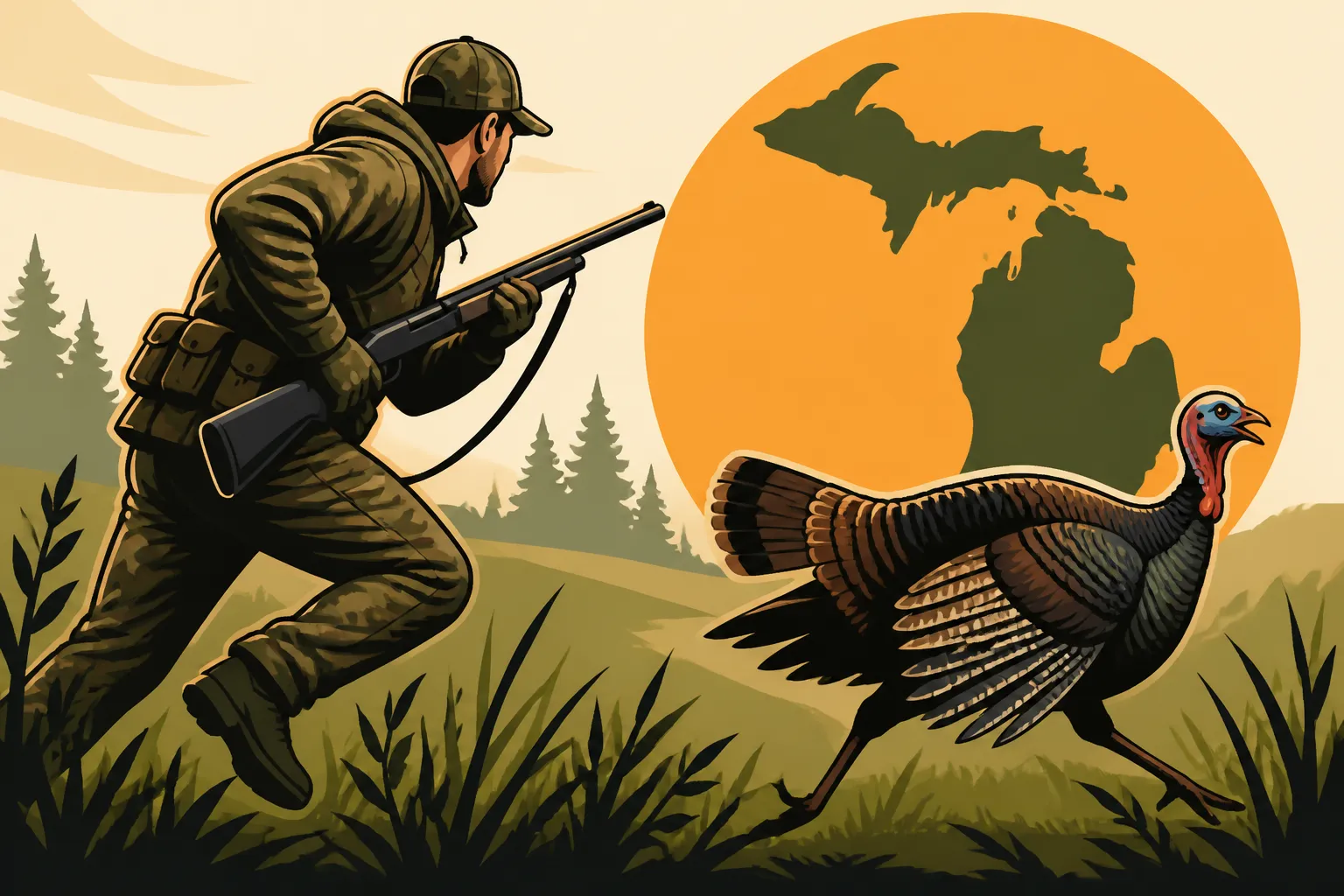
Run-and-Gun Turkey Tactics on State Land
There's nothing quite as frustrating as sitting patiently in a blind, calling softly, and hearing nothing but the rustle of leaves – or worse, hearing a distant gobbler that just won't commit to your setup. For many Michigan turkey hunters hitting the expansive state land, that static approach can lead to empty vests and frustrated minds. This comprehensive guide is all about embracing a different, more dynamic strategy: the run-and-gun approach, designed to put you directly in the path of Michigan gobblers, especially on our vast public hunting grounds.
What Does "Run-and-Gun" Really Mean for Michigan Turkey Hunters?
When you hear "run-and-gun," don't picture a frantic dash through the woods. It's a calculated, mobile strategy that prioritizes covering ground and actively seeking out birds, rather than simply waiting for them to come to you. This aggressive yet intelligent method is born from necessity on public land, where turkeys might be sparse, pressured, or simply on the move across vast acreages. It's about being nimble, making quick decisions, and always being ready to adapt.
Embracing Mobility on Michigan's Public Lands
The core tenet of run-and-gun turkey hunting is mobility. Instead of staking out a single spot before dawn and hoping a gobbler wanders by, you become the active predator, moving through the woods, listening, calling, and repositioning based on the turkeys' responses. This approach is particularly effective on Michigan's state land because these properties are often vast and diverse, spanning thousands of acres of varying habitat. Turkeys aren't always concentrated in one place, and waiting can often mean waiting in the wrong place.
Think of it as a chess match where you're constantly evaluating the board and making moves. If a gobbler answers your call from a quarter-mile away, a static hunter might try to call him across that distance. A run-and-gun hunter, however, will use that response to close the gap, aiming to cut off the bird or get into a better position to draw him in. It’s a proactive strategy that often yields results when traditional, set-it-and-forget-it methods fail on pressured birds.
Why This Strategy Shines in Michigan's Diverse Habitats
Michigan offers an incredible variety of turkey habitats, from the dense, coniferous forests and rolling hardwoods of the Northern Lower Peninsula and Upper Peninsula, to the scattered woodlots and agricultural fields of Southern Michigan. This diversity can be a challenge for static hunters, but it’s a playground for the run-and-gunner. Whether you're navigating swamp edges, climbing a ridge overlooking a vast timber stand, or slipping through a creek bottom, the ability to quickly assess and adapt to the terrain is paramount.
This flexible approach allows you to key into transition zones – those areas where two habitat types meet – which are often highways for wildlife, including turkeys. You can quickly move from an oak flat where birds might be feeding to a dense cedar swamp they use for cover, all while listening for that tell-tale gobble. For instance, Hunting Turkeys in Upper Peninsula Timber often requires covering significant ground to find pockets of birds. The run-and-gun method lets you do just that, keeping you engaged and increasing your chances of finding a cooperative gobbler in areas where turkey densities might not be as high as private agricultural lands.
Assembling Your Lightweight, Mobile Arsenal
Success in run-and-gun turkey hunting hinges on efficiency. You need gear that supports rapid movement, quick setups, and effective communication with gobblers, without weighing you down or creating unnecessary bulk. Every item in your vest or pack should serve a purpose, contributing to your ability to locate, close the distance, and seal the deal.
Calls, Decoys, and Optics for the Nimble Hunter
For calls, versatility and compactness are key. Diaphragm calls (mouth calls) are indispensable because they allow for hands-free calling and can produce a wide range of vocalizations, from soft clucks and purrs to aggressive yelps and cuts. Complement these with a small, lightweight pot or slate call, which offers different tones and can be great for soft tree yelps or purrs when a bird is close. A compact box call can also be a fantastic locator and an easy way to get loud, attention-grabbing sounds when you really need to reach out.
When it comes to decoys, many run-and-gun hunters opt for nothing at all, believing the mobility gained is worth the trade-off. However, a single, lightweight hen or jake decoy can sometimes be the perfect convincer for a hung-up gobbler. If you choose to carry one, make sure it’s easily collapsible and quick to deploy. As for optics, a good pair of 8x or 10x binoculars is vital. They help you scan distant fields, spot subtle turkey movements in timber, and identify potential setup locations without having to walk into every suspicious shadow. While not strictly necessary for every hunt, a compact rangefinder can also be incredibly useful for quickly gauging distances to landmarks or potential shooting lanes, especially when setting up quickly in unfamiliar terrain.
Clothing and Footwear Engineered for Movement
Michigan's spring weather is famously unpredictable. One day you might be basking in sunshine, the next could bring cold rain or even a late-season snow flurry. Layering is your best friend here. Start with moisture-wicking base layers to manage sweat, add an insulating layer for warmth, and top it off with a quiet, durable, and ideally water-resistant outer layer in a camouflage pattern suitable for Michigan's mixed woods. You'll be moving, so avoid overly bulky clothing that restricts motion or creates noise against brush. Brands like Sitka Gear or First Lite offer excellent layering systems designed for active hunting, but even quality synthetic or wool options from brands like Cabela's or Bass Pro Shops will get the job done.
Perhaps the most critical piece of gear for a run-and-gun hunter is comfortable, waterproof, and supportive footwear. You will be covering miles, potentially through wet fields, muddy trails, and even shallow swamp water. Investing in a quality pair of waterproof hunting boots, like those from Irish Setter or Lacrosse, with good ankle support is non-negotiable. Your feet will thank you. Finally, a minimalist turkey vest or small backpack is essential to carry your calls, water, snacks, headlamp, and any emergency items without hindering your ability to move quickly and quietly through the woods. Remember, every ounce counts when you're hoofing it all day.
The Critical Phase: Pre-Season Scouting and Digital Recon
Successful run-and-gun hunting isn't about blind wandering. It's built on a foundation of thorough pre-season scouting, both from the comfort of your home and with boots on the ground. Knowing where to run and where to set up is half the battle, especially on unfamiliar state land. This intelligence gathering phase allows you to predict turkey movements and identify high-percentage areas before the season even begins.
Leveraging Technology to Map Your Mission
Digital mapping tools are no longer a luxury; they're an absolute necessity for serious turkey hunters, especially those employing a run-and-gun strategy. Apps like GoHunt, for instance, let you pore over high-resolution aerial imagery, topographic maps, and public land boundaries right from your phone or computer. Before you ever step foot in the woods, you can identify potential roosting areas – often tall, mature timber near water or open areas – likely feeding spots (oak ridges, old logging clearings, agricultural edges), and natural travel corridors like creek bottoms, old two-tracks, or subtle saddles between hills.
Using these tools, you can virtually walk the property, marking potential setup spots, escape routes, and access points on Michigan state land, all visible on your GoHunt map. Pay close attention to transition lines: where hard timber meets an open field, where a dense swamp gives way to dry ground, or where different timber types merge. These are often high-traffic areas for turkeys. For a more direct way to study public parcels, make sure you're well-versed in Using Mi-HUNT on a Phone, which provides incredible detail on Michigan's vast public land holdings. These digital recon efforts save countless hours of walking and allow you to prioritize the most promising areas for your in-season efforts.
Boots-on-the-Ground Verification and Sign Reading
While digital scouting is invaluable, there's no substitute for getting your boots dirty and confirming your hunches with real-world observations. Once you've identified promising areas on your digital maps, head out to those spots well before the season opens. Your goal is to verify what you saw digitally and to find fresh turkey sign. Look for actual roost trees – identifiable by large droppings at their base – as well as tracks, scratchings in the leaves where turkeys have been feeding, and dusting bowls where they take dirt baths.
Pay attention to subtle terrain features that might not jump out on a map, but could create perfect ambush points or natural funnels for turkeys. Listen in the evenings for distant gobblers heading to roost, or try owl hooting or crow calling at dawn to try and elicit a shock gobble. This type of field scouting also gives you a feel for the lay of the land, the density of the cover, and potential access challenges. It also helps you understand how other hunters might be using the area, allowing you to seek out less-pressured pockets of birds. For more comprehensive tips, consider reviewing strategies for Scouting Michigan Public Land Before Season.
Executing the Hunt: Locate, Call, Move, and Set Up
This is where the rubber meets the road. The run-and-gun method is a fluid dance between listening, calling, and moving, all in an effort to get within striking distance of a gobbler. It requires patience, aggression, and an intuitive understanding of turkey behavior. The key is to be persistent, but also know when to cut your losses and move to a new area.
Mastering Locator Calls and Aggressive Calling Sequences
The first step in a run-and-gun hunt is locating a bird. This often starts with loud, attention-grabbing locator calls. Begin your morning with owl hoots or crow calls to try and elicit a shock gobble from a bird still on the roost. This is often the easiest time to locate a bird before they hit the ground and start moving. Once a bird answers, your strategy shifts. You'll want to move closer, using terrain to conceal your approach, then use more turkey-specific calls.
Don't be shy here; remember, you're trying to provoke a response and get that bird to commit. Aggressive cuts, sharp yelps, and clucks can often get a gobbler to announce his presence. Listen carefully to the bird's response. Is he gobbling consistently, moving towards you, or "hanging up" in one spot? His behavior dictates your next move. Understanding the nuances of these calls is critical for drawing in a gobbler, so make sure you've practiced Calling a Michigan Gobbler Off the Roost and familiarized yourself with various Locator Calls for Michigan Gobblers. The goal isn't just to make noise, but to communicate effectively and persuade that gobbler to come looking for the "hen."
The Art of the Quick Setup and Strategic Relocation
Once a gobbler has answered and you've decided to engage, the race is on. Quickly and quietly close the distance, using whatever cover the Michigan woods provide – ridge lines, thick pines, dense brush. The goal is to get as close as possible without being detected, ideally within 100-150 yards, before setting up. Look for a spot with good back cover (a large tree, a thick bush) to break up your silhouette, and ensure you have clear shooting lanes in the direction you expect the turkey to approach. This isn't the time for elaborate blind building; it's about finding quick, effective concealment.
If the bird hangs up, or if he moves off in a direction you didn't anticipate, don't be afraid to reposition. That's the essence of the run-and-gun. Imagine the ability to quickly reference your GoHunt map to identify the nearest ridge for a quick setup, or a thick clearcut where you might be able to intercept a moving bird. This willingness to move is what separates successful run-and-gun hunters from those who just sit and call. It's a testament to the dynamic nature of Run-and-Gun on Michigan State Land and your ability to adapt on the fly, making sure you are always putting yourself in the best possible position.
Adapting to Michigan's Challenges: Pressure, Weather, and Silent Birds
Michigan turkey hunting isn't always textbook. Public land birds can be notoriously finicky, weather can turn on a dime, and sometimes, those gobblers just refuse to make a sound. A successful run-and-gun hunter understands these challenges and has a mental playbook ready to adapt, ensuring they remain effective even when conditions are less than ideal.
Dealing with Pressured Birds and Hunter Crowds
Michigan's state land offers incredible opportunities, but it also sees its fair share of hunting pressure, especially during the early season. When you encounter other hunters or find that the birds are "gobbled out" and no longer responding readily, your run-and-gun strategy becomes even more crucial. Instead of staying put in an area that's seen a lot of activity, use your mobility to push deeper into less-accessible areas that other hunters might overlook. This often means walking further, crossing difficult terrain, or navigating dense cover that deters others.
Sometimes, pressured birds require a change in calling tactics. Instead of loud, aggressive calls, try quieter, more subtle sequences. Soft clucks, purrs, and quiet yelps can sometimes coax a response from a wary gobbler that's heard every trick in the book. You might also reconsider using decoys, or at least keep them minimal, as some Decoy Placement for Pressured Birds can actually make a smart gobbler hang up further out. Being mindful of Opening Day Crowds on Michigan State Land during deer season, the same principles apply to turkeys: getting away from the crowds can often lead to unpressured birds.
Adjusting for Weather and "Silent" Gobblers
Michigan weather, particularly in spring, can throw a wrench into any turkey hunt. Rain can dampen a gobbler's enthusiasm, making him less likely to sound off, and high winds can carry sounds away, making it difficult to hear responses. When faced with these conditions, adjust your tactics. In windy weather, get into sheltered areas like leeward ridges or thick pine stands where sound travels better. You'll also need to move slower and more deliberately, relying more on your eyes than your ears.
"Silent gobblers" are another common frustration. Sometimes, despite your best calling efforts, a bird simply won't gobble, even if he's close. In these situations, focus on visual scouting. Walk and listen for subtle turkey sounds: soft clucks, the drumming sound of a gobbler, or the tell-tale rustle of leaves as they scratch for food. Look for fresh sign – tracks, droppings, and scratchings. Sometimes, these silent birds are the most killable because they aren't broadcasting their location to every hunter in the woods. Your persistence and willingness to keep moving and searching become your greatest assets.
Safety, Ethics, and Post-Hunt Responsibilities
Being a responsible hunter means more than just filling a tag. It encompasses safety, ethical conduct, and adherence to all regulations. When employing a mobile, run-and-gun strategy on Michigan state land, these considerations are amplified, given the potential for encountering other hunters and traversing diverse public areas.
Prioritizing Safety in a Mobile Hunt
Safety should always be your top priority. While hunter orange isn't strictly required for turkey hunting in Michigan during the spring season (unless you're also firearm deer hunting, or small game hunting during certain seasons), it's a wise precaution to wear some when moving between setups, especially on public land where other hunters might be present. A blaze orange hat or vest stored in your pack for transit can be a lifesaver. Always positively identify your target. Never assume movement in the brush is a turkey; always be certain before you even think about pulling the trigger. This means having a clear, unobstructed view of the entire bird.
If you're hunting with a partner, maintain clear communication. Know each other's general location, especially when moving aggressively. Before you set up to call, take a moment to assess your surroundings, paying particular attention to your backdrop. Never position yourself where another hunter could accidentally shoot at a turkey approaching your position from behind you. Familiarize yourself with basic first aid and carry a small kit, especially if venturing into more remote areas. Remember, safety isn't just about avoiding accidents with firearms; it's also about being prepared for the unexpected in the wilderness. For comprehensive guidance, review Michigan's general Michigan Hunter Safety Requirement and specific Michigan Hunter Orange Rules.
Respecting the Resource and Fellow Hunters
Ethical hunting goes hand-in-hand with safety. Always adhere to all Michigan Department of Natural Resources regulations, including bag limits, season dates, and hunting hours. Being mobile on state land means you're more likely to encounter other hunters. If you hear another hunter calling or see them setting up, give them ample space. Nothing sours a hunt faster than someone moving in on another hunter's setup. A simple wave or polite acknowledgment from a distance is usually enough.
Once you've harvested a turkey, your responsibilities continue. Ensure you properly tag your bird immediately after the kill, following all Michigan DNR requirements for tag placement and validation. Then, you'll need to report your harvest within 72 hours. This data is crucial for wildlife management and helps the DNR make informed decisions about future seasons. Always dispose of any trash or spent shells properly, leaving the woods cleaner than you found them. Treat the land, the wildlife, and your fellow hunters with respect. This ensures that Michigan's wild turkey populations remain healthy and that everyone can enjoy the fantastic hunting opportunities our state offers. For more information, consult the Michigan State Forest Hunting Rules and understand how to properly handle Reporting a Michigan Harvest in 72 Hours.
| Gear Category | Item | Run-and-Gun Specific Considerations |
|---|---|---|
| Calls | Mouth Calls (Diaphragm) | Hands-free operation, versatile sounds, compact. Essential. |
| Pot/Slate Call | Lightweight options available, different tonal range, good for soft calls. | |
| Box Call | Compact models ideal for loud locator calls, easy to use. | |
| Optics | Binoculars (8x or 10x) | Essential for spotting distant birds or subtle movement; lightweight. |
| Rangefinder | Useful for quick distance estimates in new setups, compact preferred. | |
| Navigation | Smartphone with Mapping App | Absolutely crucial for identifying terrain, property lines, marking spots (e.g., GoHunt, Mi-HUNT). |
| External Battery Pack | For charging phone/devices in the field. | |
| Footwear | Waterproof, Supportive Boots | Non-negotiable for covering miles in diverse Michigan terrain. |
| Clothing | Layered System (Camo) | Adapts to changing weather, quiet fabrics, moisture-wicking. |
| Rain Gear (Packable) | For unexpected Michigan spring showers. | |
| Carry | Minimalist Turkey Vest or Small Pack | Carries essentials without bulk, comfortable for walking. |
| Safety | Hunter Orange Hat/Vest (for transit) | Optional but recommended for visibility on public land. |
| Basic First Aid Kit | For minor cuts, scrapes, blisters. | |
| Headlamp | For early mornings or walking out after dark. |
Disclaimer
Please remember that hunting regulations, seasons, and rules can change. Always consult the latest Michigan Department of Natural Resources (DNR) regulations and publications before heading afield. This guide is for informational purposes only and does not supersede official DNR guidelines.