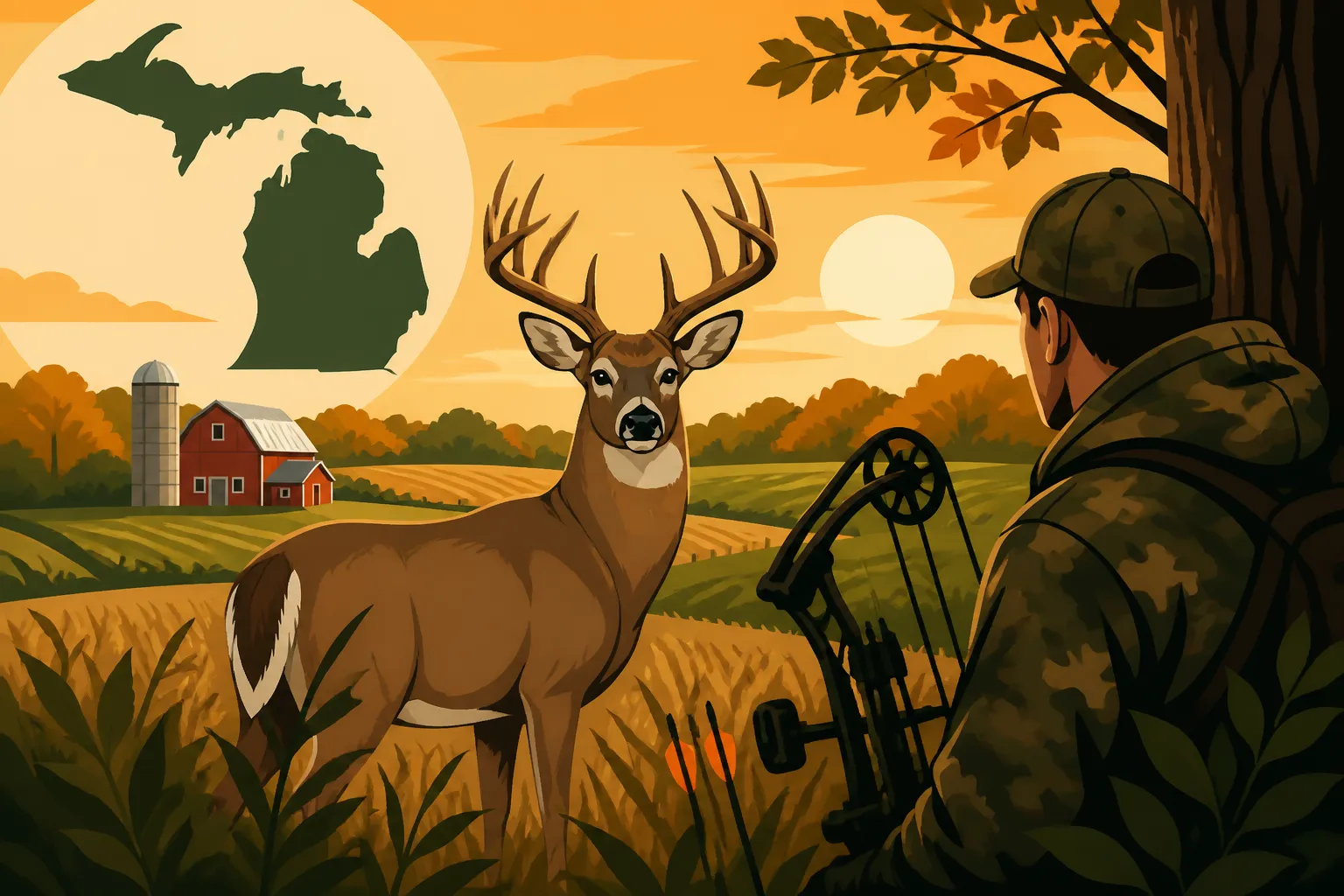
Southern Michigan Farm Country Deer Hunting
Hunting whitetails in Southern Michigan farm country presents a unique set of challenges and, frankly, a lot of frustration if you don't adjust your approach. Gone are the sprawling forests of the north; here, you're dealing with a patchwork of small woodlots, dense river bottoms, and vast agricultural fields, all often bordered by private land and intersected by roads. This guide will walk you through the specific strategies and mindset needed to successfully pursue deer in this complex, often high-pressure environment, helping you unlock the potential that these areas undeniably hold.
Understanding the Southern Michigan Landscape
Southern Michigan's deer hunting landscape is a far cry from the big woods hunting many envision. Instead of continuous timber tracts, you'll find a highly fragmented environment shaped by agriculture and human development. This means deer behavior is often different, and your scouting and hunting tactics need to adapt accordingly. It's a game of hide-and-seek in smaller cover, where deer use every available advantage, often right under our noses.
The Patchwork of Private and Public Land
One of the most defining characteristics of Southern Michigan hunting is the sheer dominance of private land. Much of the region is privately owned farmland, interspersed with residential areas, making large contiguous tracts of public land a rarity. What public land does exist, like state game areas or some county parks, tends to be smaller, more heavily pressured, and often bordered by private property. This fragmented ownership means understanding property boundaries is paramount. You need to know where you can legally hunt and where deer might seek refuge from pressure. It’s not uncommon to find deer "ghosting" from a small public parcel to a neighboring private woodlot with very little effort. Utilizing mapping applications is crucial here; tools like the Michigan DNR Hunt Fish App or platforms with detailed property line overlays, such as those offered by GoHunt, become indispensable for navigating this complex ownership mosaic.
Dominant Agricultural Crops and Deer Movement
Deer in Southern Michigan are intrinsically linked to the agricultural calendar. Their movements, bedding habits, and feeding patterns are heavily influenced by the planting, growth, and harvest of crops like corn, soybeans, and alfalfa. In the early archery season, towering cornfields offer unparalleled bedding cover and a ready food source, making deer incredibly difficult to pattern. As the season progresses, and especially after the harvest, these fields transform from sanctuaries into prime feeding grounds. A freshly cut cornfield, for instance, can draw deer from miles around to glean residual kernels. Soybean fields provide high-protein forage throughout the summer and early fall, and once the beans are harvested, the remaining stubble can still be attractive. Knowing what crops are planted where, and when they are typically harvested, can give you a massive advantage in predicting deer movement. This relationship between deer and agriculture forms the backbone of any successful hunting strategy in this region.
Key Cover Types: Woodlots, Swamps, and River Bottoms
While agriculture dominates, deer still need secure cover to bed, hide, and travel. In Southern Michigan, this typically comes in the form of small, isolated woodlots, often surrounded by fields, as well as more linear features like river bottoms and marshy swamps. Woodlots, even those just a few acres in size, can be magnets for deer, especially if they offer thick undergrowth or specific tree species providing mast. River bottoms are often overlooked gems; their dense, tangled vegetation, often less disturbed by human activity, creates excellent bedding and travel corridors, linking otherwise isolated pockets of cover. Swamps, whether large or small, also provide critical refuge, especially during firearm season when pressure is high. Understanding how deer utilize these diverse cover types, often in conjunction with agricultural fields, is key. They'll use the thickest part of a swamp or the densest section of a woodlot for bedding, then emerge under the cover of darkness to feed in the nearby fields.
Scouting Strategies for Fragmented Land
Effective scouting in Southern Michigan's farm country isn't about covering vast distances, but rather about meticulously analyzing smaller pockets of cover and identifying key transition zones. It requires a more surgical approach, using technology and on-the-ground investigation to pinpoint exactly where deer are living, moving, and feeding within the confines of a highly fragmented landscape.
Leveraging Satellite Imagery and Mapping Tools
In a region where land ownership is diverse and access can be limited, satellite imagery and advanced mapping tools are your best friends. Before you even set foot in the woods, you can spend hours analyzing aerial photos to identify potential bedding areas, travel corridors, and feeding patterns. Look for dense thickets within woodlots, changes in vegetation type, and subtle elevation changes that might create thermal advantages for bedding deer. More importantly, these tools allow you to clearly visualize property lines, which is crucial when hunting near private holdings. Platforms like GoHunt, for example, offer detailed land ownership overlays that can help you understand exactly where you are and where deer are moving between accessible and inaccessible parcels. You can identify potential funnels between two swamps or a hidden bedding area just inside the boundary of a small public parcel. This virtual scouting helps you narrow down your physical scouting efforts to the most promising locations, making your time in the field much more efficient. It's like being a detective, piecing together clues from above before you even get your boots dirty. For a more detailed look, check out our guide on Reading Aerial Photos for Swamp Deer.
Identifying Core Bedding Areas in Small Pockets
Even in small woodlots or narrow river bottoms, deer need a secure place to bed. These core bedding areas are often the densest, most inaccessible parts of the cover, providing both visual concealment and protection from the elements. Look for areas with tangled briars, downed timber, or thick evergreens. In farm country, these sanctuaries might be surprisingly small, perhaps just a few acres, but they are vital. Deer will often bed with the wind at their back, facing downwind to catch any approaching danger. Scouting these areas involves looking for heavy trail networks, fresh droppings, and rubs or scrapes along the perimeter. The trick is to identify these spots without disturbing them, as pushing deer out of a small bedding area can make them relocate or become even more nocturnal. Focus on the edges of these areas, or approach them only when wind conditions are perfect for observation. Remember, the goal is to find where the deer feel safest, which often means the nastiest, most overgrown corner of a woodlot adjacent to a vast cornfield.
Locating Funnels and Travel Corridors
Deer in Southern Michigan, much like anywhere else, are creatures of efficiency. They will take the path of least resistance between bedding and feeding, but in a fragmented landscape, these paths are often constrained by fences, roads, open fields, and changes in cover. These "funnels" and "travel corridors" are prime locations for stand placement. A funnel might be a narrow strip of timber connecting two larger woodlots, a fence line opening, a hedgerow between two fields, or a pinch point along a river bend. Look for natural constrictions where deer are forced to travel through a smaller area. River bottoms, even narrow ones, often serve as superhighways for deer moving between distant bedding and feeding sites. Similarly, a small ditch or overgrown creek bed cutting across a field can provide just enough cover for a deer to feel comfortable traveling during daylight. Understanding how deer utilize these linear features and choke points is critical. These aren't always grand, obvious funnels; sometimes it's just a subtle dip in the terrain or a small patch of brush that offers a perceived advantage to a cautious whitetail. Don't forget to check out our specific tips on Hunting a Standing Cornfield in the Thumb for more on how deer use these crop fields.
Stand and Blind Placement Tactics
The unique terrain of Southern Michigan farm country demands specific strategies for stand and blind placement. You’re often dealing with limited tree choices, open sightlines, and smart, pressured deer. Your ability to adapt your setup to these conditions will directly impact your success.
Maximizing Small Woodlot Potential
Small woodlots, often isolated islands of timber in a sea of agriculture, are the lifeblood for many farm country bucks. While they might seem too small to hold deer, these patches of cover are frequently used for bedding, especially if they offer dense undergrowth. When setting up in a small woodlot, consider your entry and exit routes carefully to avoid spooking deer. The key is to find the "sweet spot" where deer are transitioning between the security of the woodlot and the nearby feeding areas in the fields. Look for trails leading out to corn or soybean fields, or even subtle paths that skirt the edges of the woodlot. Placing a stand on the downwind side of these trails, just inside the timber, can be highly effective. You might only have a narrow window for a shot as deer slip out or return. Focus on the thickest parts of the woodlot for daytime movement during the rut, as bucks will often cruise these areas looking for does. Think about how deer are entering and exiting the woodlot itself, not just how they move through it. Sometimes the best stand isn't deep inside, but strategically placed where two trails converge near an escape route.
Effective Field Edge Setups
Hunting field edges is a quintessential farm country tactic, but it requires finesse. Deer, especially mature bucks, are often reluctant to enter open fields in daylight, particularly when hunting pressure is high. Your setup needs to give you the advantage without alerting the deer. When choosing a tree for a stand, prioritize cover and concealment over elevation. A lower stand with good backdrop cover can be far more effective than a high stand silhouetted against the sky. Look for pinch points along the field edge, such as a point of timber jutting into the field, or where a hedgerow meets a woodline. These spots naturally funnel deer closer to your position. Pay close attention to prevailing winds, as scent control is paramount. Deer will often circle downwind before entering a field. Consider setting up 20-40 yards inside the timber, overlooking the field edge, rather than directly on the edge. This allows deer to feel more comfortable stepping out into the field before they are in range, giving you more time for a shot. For more advanced field edge tactics, consider Brushing In a Blind on a Field Edge.
Ground Blind Advantages in Open Country
In Southern Michigan, where ideal treestand trees can be scarce, or where you need ultimate concealment in open field settings, ground blinds become incredibly valuable. They offer superior concealment, allow for movement inside, and can be critical for hunting with youth or new hunters. When deploying a ground blind, brushing it in is non-negotiable. Don't just set it up and hunt it; take the time to blend it into its surroundings using natural vegetation. Place it against a natural backdrop like a hedgerow, a brush pile, or the edge of a standing cornfield. Location is key; think about where deer will naturally approach the field and set your blind accordingly. This means considering sun direction to avoid glare, and prevailing winds to keep your scent away from where deer are expected to approach. A properly brushed-in ground blind can allow you to hunt right on the edge of a hot food source, even in areas with minimal natural cover. They are excellent for hunting cut cornfields, soybean fields, or even small food plots. Our guide on Using a Ground Blind on Michigan State Land has more tips.
Hunting the Rut in Farm Country
The rut in Southern Michigan farm country is a highly anticipated time, but it often plays out differently than in vast, unbroken forests. Bucks are still driven by the urge to breed, but their movements are heavily influenced by the smaller, fragmented cover and the persistent presence of human activity. Understanding these nuances is crucial for success during this exciting period.
Understanding Peak Rut Behavior in Pressured Areas
When the rut kicks in, typically in late October and early November in Michigan, buck movement significantly increases. However, in pressured farm country, mature bucks are incredibly wary. They often become more nocturnal or utilize the densest cover during daylight hours. While they will chase does, they might do so within the confines of a thick woodlot or a swamp, only venturing into the open fields under the cover of darkness. Don't expect to see endless parades of bucks chasing does across wide-open expanses during legal shooting light, though it can happen! Instead, focus on transition areas between bedding and feeding, and especially on pinch points within cover where bucks are funneled. Bucks will be checking known doe bedding areas and travel routes. They'll also be searching for scent, meaning scrape lines and rubs become even more important indicators of their presence. During the peak of the rut, patience is your greatest ally. Long sits, especially from mid-morning through early afternoon, can pay off as bucks move more unpredictably searching for receptive does.
Calling and Decoying Strategies for Farm Bucks
Deer calling can be incredibly effective during the rut in Southern Michigan, especially when used judiciously. Grunt calls can pique a buck's curiosity, bringing him closer to investigate, particularly if he believes another buck is in the vicinity of a doe. Soft tending grunts can simulate a buck with a hot doe, while a more aggressive grunt can challenge a nearby buck. Rattling, when done correctly, can also be a game-changer. In smaller, fragmented woodlots, lighter rattling sequences might be more appropriate than crashing a full set of antlers together, as sound doesn't carry as far and can seem unnatural. A few short, sharp clashes can indicate a light sparring match, which is less likely to spook wary bucks. For insights into effective calling, consider reading Grunt Calls in Mature Timber. Decoys, particularly a single doe or a subordinate buck decoy, can also be used to draw in curious or challenging bucks, especially in more open field edge scenarios. Ensure your decoy is visible from a distance but placed so an approaching buck will pass by your stand for a shot. Always consider the wind and your scent control when deploying decoys, as a mature buck will circle downwind to scent-check the "deer" before approaching.
Cruising Lanes and Sanctuaries
During the rut, bucks expand their home range and actively cruise for does. In farm country, these "cruising lanes" are often along the edges of woodlots, through narrow strips of timber connecting larger cover, or along river bottoms. These are the paths bucks take when they're actively searching, rather than just moving between specific food and bedding sites. Identifying these lanes is about understanding the lay of the land and where a buck would naturally travel to efficiently cover ground while staying somewhat hidden. Sanctuaries, on the other hand, are those areas of ultra-thick, often impenetrable cover where deer can retreat when pressure mounts. These can be dense cedar swamps, overgrown clear-cuts, or even just a small, briar-choked corner of a woodlot that hunters rarely enter. During firearm season, or even intense archery pressure, bucks will often hold up in these sanctuaries during the day and only move under the cover of darkness. Sometimes, the best strategy is to set up on a travel corridor leading to or from such a sanctuary, catching a buck on his way to or from safety.
Dealing with Hunting Pressure
Southern Michigan is one of the most densely populated regions in the state, and that translates directly to hunting pressure. Deer in farm country are accustomed to human presence, but they also become incredibly adept at avoiding hunters. Learning to mitigate the effects of this pressure is paramount for consistent success.
Navigating Public Land Challenges
Public lands in Southern Michigan, such as state game areas or managed wildlife areas, often receive significant hunting pressure. This means deer on these lands are typically more nocturnal, wary, and will seek out the thickest, nastiest cover available. To succeed on these pressured public parcels, you need to think differently. First, avoid the obvious spots – parking lots, main trails, and easily accessible field edges are often overhunted. Instead, focus on finding overlooked pockets of cover, perhaps a small, isolated swamp or a dense thicket that requires a longer, tougher walk. Utilize satellite imagery to identify these hidden gems. Secondly, adjust your hunting times. Early mornings and late evenings are still productive, but don't discount the middle of the day during the rut when other hunters might be taking a break. Deer will sometimes move during these "off-peak" hours. Consider implementing stealthy still-hunting tactics, slowly moving through cover to jump deer or catch them off guard. For broader public land scouting tips, consult Scouting Michigan Public Land Before Season. Understanding deer movement in response to pressure is key; they often learn to use specific escape routes or shift their patterns based on hunter activity.
Minimizing Impact on Private Land
Even if you have secured private land access, minimizing your impact is crucial for long-term success and maintaining good relations with landowners. Over-pressuring a small private parcel can quickly make deer nocturnal or push them onto neighboring properties. This means careful entry and exit strategies are essential. Avoid walking through bedding areas to get to your stand. Utilize natural cover, ditches, or even non-hunting paths to slip in and out unnoticed. Limit the number of times you hunt a particular stand, especially if it's in a sensitive area. Rest stands for a few days after a hunt, particularly if you've bumped deer. Consider hunting different stands on different days based on wind and expected deer movement, rather than hammering one spot. The less deer associate your presence with danger, the more comfortable they will be moving during daylight hours on your property. Remember, the goal is to hunt smart, not necessarily more often, especially on smaller tracts.
The Role of Neighboring Properties
In a fragmented landscape, deer rarely respect property lines. A buck might bed on your property, feed on a neighbor's field, and rut through another neighbor's woodlot. Understanding the dynamics of neighboring properties is vital. If your neighbor is hunting heavily, deer might be pushed onto your property seeking refuge, or vice-versa. Pay attention to harvest reports or hunter activity on adjacent parcels. If possible, develop a friendly relationship with neighboring landowners and hunters. Sharing information, even simple observations about deer movement, can be incredibly beneficial. Occasionally, you might even be able to coordinate strategies or gain access to retrieve a downed deer. Knowing what's happening around your hunting ground allows you to anticipate deer movement and adjust your tactics. For instance, if a large cornfield on an adjacent property is harvested, you might expect increased deer traffic coming to your property seeking new food sources or cover. This interconnectedness makes the "neighborhood" as important as your specific hunting parcel.
Late Season Opportunities
While many hunters pack it in after firearm season, Southern Michigan's late season (archery and late antlerless firearm) offers fantastic opportunities for patient and persistent hunters. Deer patterns shift dramatically, making understanding their needs for food and thermal cover paramount.
Focusing on Winter Food Sources
As winter settles in and most crops have been harvested, deer in Southern Michigan become hyper-focused on remaining food sources. This means a significant shift from the varied diets of earlier seasons to a reliance on calorie-rich options. Standing brassicas, turnips, or leftover corn that wasn't fully harvested become absolute magnets. Food plots planted with winter wheat, rye, or clover can also be incredibly productive. Identify these key food sources within or adjacent to areas of dense cover. Deer will often bed nearby and move to these food sources during the late afternoon, just before dark, to fuel up for the cold night ahead. Long, cold sits near these food sources, particularly on bitter cold days, can pay off with a big, late-season buck. This is when a deer's need for survival overrides some of their wariness. Pay attention to what's available and what's being actively browsed. A trail leading directly from thick cover to a standing food source is a late-season goldmine. Our article on Hunting Deer Without Bait in Michigan emphasizes the importance of understanding natural food sources.
Hunting Thick Thermal Cover
In the brutal cold of late season, thermal cover becomes as important as food. Deer expend significant energy just staying warm, so they will seek out areas that provide respite from the wind and cold. Dense evergreen stands, particularly cedar swamps, pines, or thick spruce, are prime examples of thermal cover. These areas block the wind and trap what little warmth the sun provides, offering deer a place to conserve energy. Look for deep, dark cedar swamps, even small ones, that might be close to a food source. South-facing slopes that catch more sunlight can also be attractive. Deer will often yard up in these areas when snow gets deep and temperatures plummet. Your strategy should revolve around hunting the transition zones between these thermal bedding areas and the preferred late-season food sources. This might mean setting up on a trail just inside the edge of a cedar swamp, catching deer as they exit in the afternoon or return in the morning.
Tracking in Snow and Cold Weather
A fresh blanket of snow in late season Southern Michigan can be a hunter's best friend. Snow makes tracking much easier, revealing not only the presence of deer but also their specific movements and preferred travel routes. Fresh tracks leading into a specific patch of cover, or indicating a buck is actively browsing, can lead you directly to deer. Tracking during still-hunting can be incredibly effective; you move slowly, following tracks, often spotting deer before they spot you. However, be mindful of snow depth and conditions. Deep, crunchy snow can make stealth difficult. Conversely, soft, fresh snow can muffle your steps. If you've made a shot and need to track a deer, snow significantly improves your chances of a quick recovery. Even a sparse blood trail is much easier to follow on a white backdrop. Knowing how to efficiently track a deer in Michigan's winter conditions is a skill that can turn a tough late-season hunt into a successful one. If you're fortunate enough to tag a deer, make sure you know the rules for Reporting a Michigan Harvest in 72 Hours.
Gear and Tools for Farm Country
Hunting in Southern Michigan's farm country demands specific gear choices that cater to the unique environment. From fragmented parcels to open fields and wary deer, your equipment needs to be versatile, effective, and often built for stealth and observation.
Optics for Distant Field Observation
Given the prevalence of open agricultural fields, quality optics are not just an accessory; they're an absolute necessity. A good pair of binoculars, preferably 10×42 or 12×50, will allow you to scan distant field edges, identify deer emerging from cover, and evaluate bucks without having to move. This is particularly important when scouting or glassing a field during prime feeding times. You want binoculars that perform well in low light, as deer often make their appearance in the twilight hours of dawn and dusk. A spotting scope can also be invaluable if you're regularly observing very distant fields from a vantage point, allowing for detailed antler assessment from afar. When using optics, try to find a natural rest, like a tree branch or tripod, to stabilize your view, especially during long periods of observation. This helps reduce fatigue and improves your ability to pick out subtle details. High-quality glass can make the difference between seeing a deer and just seeing a blur, allowing you to plan your approach or confirm a target.
Mobile Stand Setups for Quick Adjustments
The dynamic nature of farm country deer hunting – changing crop rotations, fluctuating pressure, and the nomadic behavior of rutting bucks – often requires a flexible approach to stand placement. Mobile treestand setups, such as lightweight climbing stands, saddle hunting gear, or hang-on stands with climbing sticks, are ideal. This allows you to quickly adapt to fresh sign, a new food source, or a shift in deer movement. Instead of relying on a few fixed stands, a mobile setup empowers you to "run and gun" where the sign is hottest. You can quickly move to a new woodlot, reposition for a shift in wind, or capitalize on a freshly harvested field. The ability to set up and take down your stand quietly and efficiently is crucial, especially on smaller parcels where every move counts. Practice setting up your mobile system well before the season to minimize noise and maximize efficiency in the field. This adaptability is a huge asset when deer are constantly shifting their patterns due to external factors.
Communication and Mapping Devices
In a landscape with fragmented land ownership and often limited cell service in some pockets, reliable communication and mapping devices are indispensable. A GPS unit or a smartphone with robust offline mapping capabilities is non-negotiable for knowing exactly where you are and avoiding trespassing on private land. Apps that offer detailed property boundaries, such as those provided by GoHunt or the Michigan DNR's own offerings, are critical. Always download offline maps for your hunting area, as cell service can be spotty. For communication, particularly if hunting with a partner or group on public land, two-way radios can be a lifesaver, especially if you're doing small Deer Drives With Three or Four Hunters. They allow you to coordinate movements without relying on cell towers. Beyond navigation, these devices can help you mark sign, track deer movement over time, and plan future hunts. They're more than just tools; they're extensions of your scouting and hunting strategy, keeping you safe, legal, and efficient.
Gaining and Maintaining Private Land Access
In Southern Michigan, gaining access to private land is often the golden ticket to consistent deer hunting success. With so much land in private hands, securing permission can unlock incredible opportunities away from public land pressure. However, it requires a respectful approach and a commitment to being a responsible hunter.
Approaching Landowners with Respect
The most critical step in gaining private land access is a respectful, well-prepared approach. Don't just show up unannounced, especially during hunting season. A polite phone call or a pre-arranged meeting is always best. Dress neatly, introduce yourself clearly, and state your intentions. Emphasize that you are a responsible, ethical hunter. Ask if they allow hunting, and if they say no, respect their decision and move on. If they are open to the idea, explain what kind of hunting you do (archery, firearm, small game, etc.) and what precautions you take regarding safety and property respect. Offer to show them your hunting license and hunter safety card if you are new to hunting. Many landowners are wary of granting access due to past bad experiences, so building trust is paramount. Be upfront about any rules or concerns they might have, and assure them you will follow them explicitly. Our article on Asking a Michigan Farmer for Permission delves deeper into these crucial first steps.
Offering Help Beyond Hunting
One of the most effective ways to build rapport and demonstrate your value to a landowner is to offer assistance beyond just hunting. Many farmers and rural landowners have endless tasks that could use an extra set of hands. This could involve helping with chores, fixing fences, clearing brush, picking up trash, or even assisting with small repairs. By offering your time and effort, you demonstrate that you are a responsible, trustworthy individual who cares about their property, not just what you can take from it. This goodwill can go a long way in securing long-term access. It shows you're not just a seasonal visitor but someone who values the relationship. A landowner is far more likely to grant permission to someone who has actively contributed to their property's well-being than to a stranger who only asks for a favor.
The Michigan Hunting Access Program (HAP)
For hunters struggling to gain private land access, the Michigan Department of Natural Resources (DNR) offers a fantastic resource: the Hunting Access Program (HAP). HAP is a voluntary program where the DNR leases private lands from landowners, opening them up to public hunting access. This is particularly valuable in Southern Michigan, where private land dominates. HAP lands are often agricultural fields, woodlots, and various other habitats that provide excellent hunting opportunities. Hunters can find HAP properties using the DNR's online map, which provides details on location, allowed hunting types, and specific rules for each parcel. While HAP lands can experience pressure, they provide a legal and ethical way for hunters to access quality private land without having to personally negotiate with individual landowners. It's a win-win, offering landowners an incentive to open their property and providing hunters with much-needed access. For detailed information, check out our guide on How the Hunting Access Program Works. It's a great tool for broadening your hunting horizons in Southern Michigan.
| Strategy Component | Southern Michigan Farm Country Application | Key Considerations |
|---|---|---|
| Scouting | Focus on small woodlots, river bottoms, hedgerows; use satellite maps for property lines and crop fields. Look for funnels between cover and agriculture. | Identify all cover, even small patches. Track crop rotations. Pinpoint specific bedding areas to avoid disturbing. Use GoHunt and similar apps. |
| Stand Placement | Prioritize concealment on field edges. Hunt inside woodlots, near transition zones. Use ground blinds extensively. | Choose stands with good back cover. Avoid silhouetting. Set up for wind and sun. Brush in ground blinds thoroughly. Consider mobile setups for adaptability. |
| Rut Tactics | Focus on dense cover, river bottoms, and narrow funnels where bucks cruise for does. Use calling judiciously. | Bucks are wary due to pressure; often move in thick cover during daylight. Grunt and rattle softly. Decoys can work in open areas, but require careful wind consideration. |
| Late Season | Concentrate on remaining food sources (standing corn, brassicas) and thermal cover (cedar swamps, pines). | Deer prioritize calories and warmth. Hunt transition zones between food and dense thermal cover. Long, cold sits can pay off. Snow tracking reveals movement patterns. |
| Private Land Access | Approach landowners respectfully, offer help beyond hunting. Utilize Michigan's HAP. | Be a good steward: respect property, minimize impact, offer help, build long-term relationships. HAP offers structured access if individual permission is difficult. |
| Pressure Management | Avoid obvious spots on public land. Hunt thickest cover. Adjust timing. Minimize impact on private land. | Deer are highly pressured and wary. Hunt overlooked areas. Consider mid-day rut movements. Rest stands. Coordinate with neighbors if possible. Know Michigan Deer Seasons and Tags and local regulations. |
Conclusion
Hunting Southern Michigan farm country is a challenging yet incredibly rewarding endeavor. It demands a different mindset, one that embraces meticulous scouting, adaptable stand placement, and a deep understanding of how deer interact with a highly fragmented, often pressured landscape. By focusing on the unique interplay of agriculture, small woodlots, river bottoms, and the constant factor of human presence, you can unlock opportunities that many hunters overlook. Remember, the biggest bucks in this region often thrive precisely because they've learned to navigate these complex environments. With patience, persistence, and a thoughtful strategy, you can find success and truly appreciate the unique character of Michigan's farm country whitetails.
Disclaimer
The information provided in this guide is for general informational purposes only and does not constitute legal advice. Hunting regulations in Michigan are subject to change, and it is the hunter's responsibility to review and comply with all current Michigan Department of Natural Resources (DNR) laws, regulations, and permit requirements before hunting. Always prioritize safety and ethical hunting practices.