Using a Ground Blind on Michigan State Land
Hunting Michigan's vast expanses of state land presents unique challenges; from finding enough cover to stay hidden to battling the unpredictable elements, many hunters struggle to remain concealed and comfortable throughout a long sit. Whether you're navigating dense woods where suitable trees for stands are scarce or simply enduring a sudden downpour, staying productive on public ground often means adapting your approach. This comprehensive guide will walk you through the ins and outs of effectively using a ground blind on Michigan State Land, empowering you to transform those often-difficult public land spots into successful hunting locations.
The Benefits of Ground Blinds on Michigan State Land
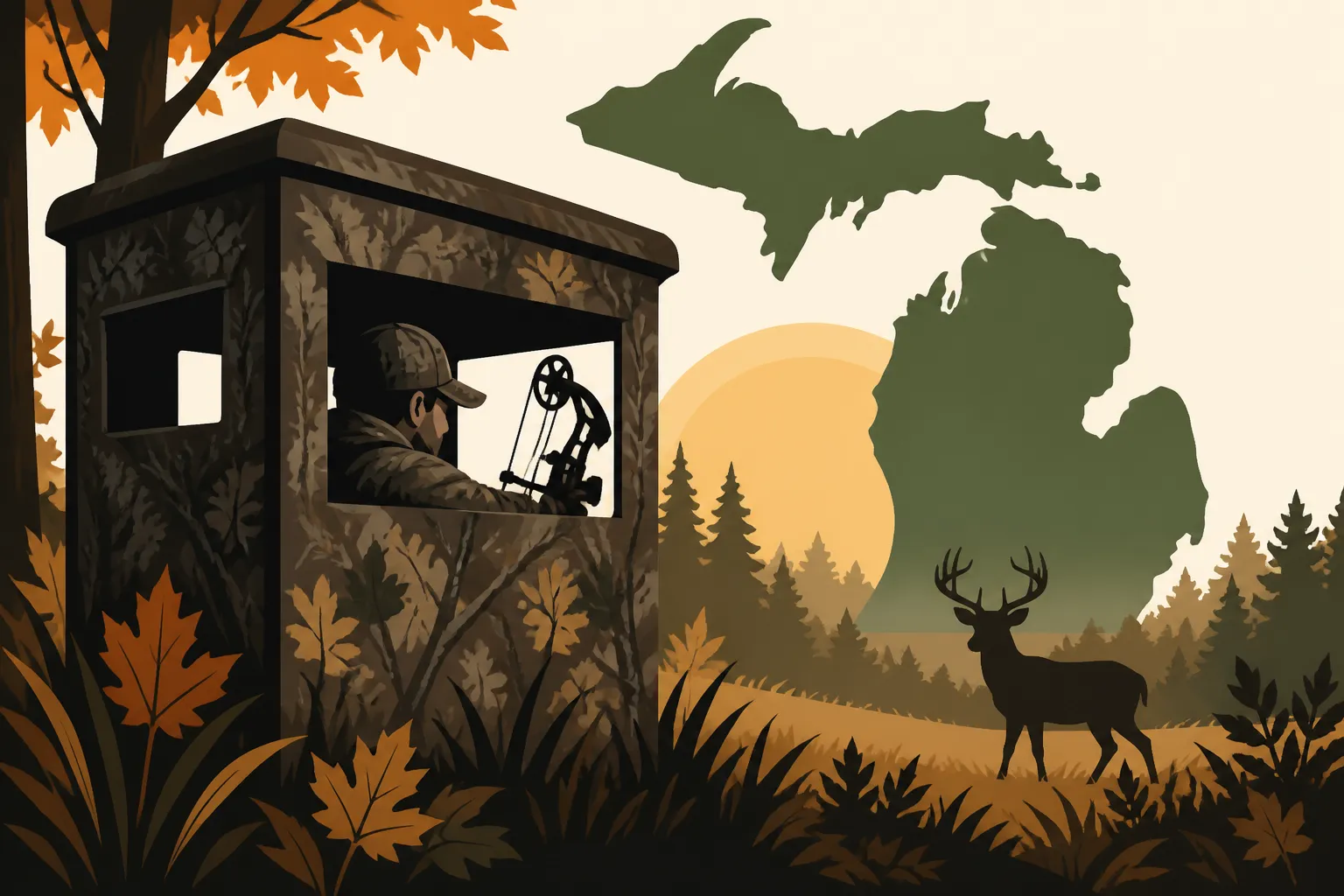
When you're out on Michigan's state land, trying to outsmart a wary whitetail, every advantage counts. Ground blinds, often overlooked in favor of treestands, offer a host of benefits that can significantly boost your success, especially in challenging public land environments. They provide a level of concealment and comfort that's hard to beat, making those long hours in the woods much more tolerable and productive.
Concealment in Open or Pressured Areas
One of the most immediate and profound benefits of a ground blind is the superior concealment it offers. Unlike a treestand, which relies on specific tree placement and natural canopy to break up your outline, a ground blind creates a complete, opaque barrier between you and the game. This is particularly valuable in areas of Michigan state land where mature, well-placed trees are few and far between, or in more open habitats like recent timber cuts, field edges, or sparse young growth. You can literally disappear into the landscape, even if the surrounding cover isn't dense.
Furthermore, this full enclosure helps immensely with managing movement, which is a constant struggle for any hunter. Shifting positions, drawing a bow, or even just scratching an itch can spook deer, especially on public land where they're accustomed to human activity. Inside a blind, these small movements are contained and hidden, allowing you to react more fluidly to an approaching deer without giving away your position. It also masks the tell-tale human silhouette, which deer are incredibly adept at picking out, even against a cluttered background.
This level of concealment is also a huge asset when hunting pressured deer. Michigan's public land can see a lot of foot traffic, and the deer become incredibly cagey. A well-placed and brushed-in ground blind can offer an unexpected advantage, allowing you to set up closer to travel corridors or feeding areas that might be too exposed for other hunting methods. By effectively becoming part of the natural environment, you greatly reduce the chances of being detected by a buck that's seen it all before.
Weather Protection and Comfort
Michigan weather is, to put it mildly, unpredictable. You can start your morning hunt in crisp, clear air and find yourself battling a driving rain or a sudden snow squall by afternoon. Ground blinds provide invaluable protection from these elements, turning what might otherwise be a miserable and short hunt into a comfortable and extended sit. Staying warm and dry isn't just about comfort; it's about staying focused, alert, and ready when that trophy buck finally steps out.
Think about those bone-chilling late-season hunts in Michigan's December cold. Inside a blind, you're sheltered from the biting wind, which can strip away body heat remarkably fast. The enclosed space can even retain a surprising amount of warmth, especially if you're using a small, safe heater designed for blind use. This significantly extends your endurance, allowing you to remain on stand for longer periods, increasing your odds of encountering deer during prime movement times.
Beyond protection from cold, blinds offer respite from rain, sleet, and even bright sunshine, which can cause glare and make spotting game difficult. For hunters who may have mobility challenges, or older hunters who simply appreciate a more comfortable experience, a ground blind allows for a regular chair, offering back support and relief from standing or sitting on small treestand seats. This added comfort means less fidgeting and more patience, leading to a better overall hunting experience.
Versatility and Ease of Setup
The dynamic nature of deer movement and changing conditions on Michigan State Land often demands adaptability from hunters. This is where the versatility of a ground blind truly shines. Unlike fixed treestand setups that are often limited to specific trees and locations, a ground blind can be deployed almost anywhere you find suitable cover and deer sign. This flexibility is a game-changer for scouting new spots or reacting to real-time changes in deer behavior.
Imagine you've been scouting with a tool like GoHunt and notice a fresh scrape line has appeared overnight along a field edge, or a new bedding area has formed due to recent logging. With a ground blind, you can quickly move and set up a prime ambush point within minutes, taking advantage of these fresh developments. You're not tied to a single location for the entire season, allowing you to be much more responsive to where the deer are actually moving and feeding. This mobility is particularly useful on public land, where deer patterns can shift rapidly due to pressure or food source availability.
Moreover, the ease of setup means you can experiment with different spots throughout the season without a major time investment. You can set up a blind for an evening hunt, take it down, and relocate it to a completely different area for the morning, following the deer wherever they lead. This rapid deployment capability, combined with the ability to blend into various environments, makes ground blinds an incredibly practical tool for hunters exploring diverse Michigan landscapes, from dense cedar swamps to open aspen cuts.
Legalities and Considerations for Ground Blinds on Michigan State Land
Before you even think about setting up that brand-new ground blind on Michigan State Land, it's absolutely crucial to understand the rules and regulations. The Michigan Department of Natural Resources (DNR) has specific guidelines to ensure fair access, minimize environmental impact, and maintain safety for all public land users. Ignoring these rules can lead to hefty fines or the loss of hunting privileges, so knowing them inside and out is non-negotiable.
Michigan DNR Regulations
The DNR is very clear about what's allowed on public land when it comes to blinds. Generally, temporary ground blinds are permitted, meaning those that are designed to be portable and easily removable. The key word here is "temporary." If you leave your blind unattended overnight on Michigan State Land, it must have your name and address or your Michigan DNR Sportcard number clearly displayed on it. This helps the DNR identify the owner and ensures accountability.
However, it's also important to note that a ground blind constructed entirely of natural materials (like branches, logs, or brush) can be left longer, but even these have limitations. According to DNR regulations, such natural blinds cannot be placed more than 30 days before the opening day of the season and must be removed within seven days after the close of the season. Any permanent structures or blinds that involve cutting live trees or using artificial fasteners to damage vegetation are strictly prohibited. These rules are in place to preserve the natural integrity of our state lands and prevent clutter or long-term impacts from hunting activities. Always consult the current Michigan Hunting and Trapping Digest or the DNR website for the most up-to-date and specific regulations regarding ground blinds and other structures on public property. This diligent approach will help you avoid any unwelcome surprises or violations.
Respecting Other Hunters and Public Land Ethics
Michigan's state land is a shared resource, and ethical considerations are paramount to ensuring a positive experience for everyone. When placing a ground blind, it's vital to be mindful of other hunters and public land users. Setting up too close to another hunter's established spot, or blocking a common access trail, can create conflict and diminish the quality of the hunt for others. The "first come, first served" principle often applies to specific locations, but common courtesy and respect should always guide your decisions.
Consider the visibility of your blind from a distance, especially if it's placed near a well-used trail or parking area. While you want your blind to be camouflaged from deer, you also don't want it to be a complete surprise to a hiker or another hunter. Avoiding high-traffic areas for blind placement, unless it's an intentional and well-thought-out strategy that accounts for other users, is generally a good practice. Think about how your blind might look to someone else approaching the area. Are you creating an obstruction or an eyesore?
Furthermore, always leave the area cleaner than you found it. This means packing out all your trash, including any flagging tape or other markers you used during scouting or setup. The principle of "leave no trace" is fundamental to public land ethics. While it might be tempting to leave a blind in place for a few days, ensuring it meets DNR requirements for marking and removal is crucial. If you see an abandoned or improperly marked blind, reporting it to the DNR helps keep our public lands clean and accessible for all.
Safety and Visibility
Safety should always be your top priority when hunting, and using a ground blind is no exception. While the blind provides concealment from game, it can also reduce your visibility to other hunters, especially during firearm season. Michigan has specific regulations regarding hunter orange, and these rules apply even when hunting from inside a ground blind, depending on the season and location. For example, during the firearm deer season, hunters are required to wear hunter orange, and this requirement extends to those using ground blinds. It's crucial to ensure at least 50% of your outermost clothing above the waist, including your head, is hunter orange.
Some ground blinds come with hunter orange panels or coverings that can be deployed when required, but it's always best to carry additional orange garments to ensure full compliance. Remember, the goal of hunter orange is to make you highly visible to other human beings, reducing the risk of accidental shootings. Never assume that because you are in a blind, you are somehow exempt from safety color requirements. Ignoring these rules puts both you and others at risk.
Beyond hunter orange, consider the placement of your blind from a safety perspective. Avoid setting up in a spot where other hunters might reasonably expect deer to come from, potentially placing you in a line of fire. Always identify your target clearly and ensure nothing is beyond it before taking a shot. Ground blinds, with their enclosed nature, sometimes present limited fields of view. Take the time to understand your shooting lanes and what lies beyond them, ensuring every shot is safe and ethical.
Strategic Placement and Setup Tactics for Michigan State Land
The difference between a ground blind acting as a deer magnet and a mere glorified tent often comes down to strategic placement and meticulous setup. On Michigan's pressured state land, deer are incredibly sensitive to anything out of place. Mastering the art of making your blind disappear into the environment and positioning it where deer naturally travel is key to consistent success.
Scouting for Key Locations
Successful ground blind placement begins long before the season opens, with thorough and dedicated scouting. You can't just plop a blind down anywhere and expect deer to cooperate. Start by identifying high-percentage areas on your chosen piece of Michigan state land. Look for natural funnels – these could be narrow strips of cover between open fields, pinch points along swamp edges, or saddles between ridges. Deer are creatures of efficiency, and they'll often take the path of least resistance. Identifying these travel corridors is a critical first step.
Next, focus on food sources and bedding areas. What are the deer eating at different times of the season? Is it acorns in the early fall, browse in the winter, or maybe leftover agricultural crops if you're hunting closer to farmlands? Locate these food sources and then work backward to find where the deer are bedding. Often, you'll find thick cover like cedar swamps, dense popple stands, or brushy clearcuts serving as bedding sanctuaries. Your ideal blind location will be along a travel route connecting these two vital areas, or directly overlooking a preferred food source if it's secluded enough. Using digital mapping tools like GoHunt can be a tremendous asset during this phase, allowing you to mark deer sign, identify property lines, and analyze terrain features from the comfort of your home, then verify on the ground.
Don't forget to look for subtle sign: fresh rubs on small saplings, active scrape lines along a two-track, or heavily used game trails that show consistent hoof prints. These indicators tell you where deer are moving and when. Consider prevailing wind directions for your chosen spots; you always want the wind in your favor, carrying your scent away from where you expect deer to approach. Remember, Michigan deer on public land are highly sensitive to human presence, so a well-scouted, wind-appropriate location is paramount.
Brushing In and Scent Control
Once you've identified a prime location, the work isn't over. A ground blind, fresh out of the box, often stands out like a sore thumb. To make it truly effective, you need to brush it in thoroughly. This means using natural vegetation from the immediate surroundings to break up its hard lines and help it blend seamlessly into the environment. Gather dead branches, tall grasses, fallen leaves, and brush piles to strategically place around and on your blind. The goal is to make it look like just another clump of natural cover, not a synthetic structure.
Pay particular attention to the corners and edges of the blind, as these are often the most unnatural-looking parts. Stack brush against the sides, weave branches into the existing loops or mesh of the blind, and even put a few leafy branches on the roof to further break up its profile. Do this a few days, or even a week, before your hunt if possible. This allows the scent of new brush to dissipate and gives any wary deer in the area a chance to get used to the "new" clump of cover. The more time you give it to blend in, the better.
Scent control is another critical factor when hunting from a ground blind, perhaps even more so than from a treestand, as you're at ground level with direct exposure to deer noses. While some hunters debate the efficacy of various scent-elimination products, the core principles remain: shower with scent-free soap, wash your hunting clothes in scent-free detergent, and store them in airtight containers. Dress in your hunting clothes at the truck, not before, and minimize contact with anything that might pick up human odor. Playing the wind is your ultimate scent control strategy; always position your blind so the wind carries your scent away from the anticipated approach of deer. This can sometimes mean forgoing a "perfect" visual setup for a wind-advantageous one.
Entry and Exit Routes
Often overlooked, but just as important as blind placement, are your entry and exit routes. On Michigan's public land, deer quickly learn to associate human scent and noise with certain pathways. If you stomp through a bedding area to get to your blind, or if your truck is visible from a feeding area, you've likely already compromised your hunt. The goal is to get to and from your blind silently and undetected, leaving as little human scent and disturbance as possible.
Before setting up your blind, carefully plan out a low-impact route. This might involve walking along a low-lying ditch, following a creek bed, or skirting the very edge of a dense thicket. Look for routes that are naturally noisy (like crunchy leaves in fall) and try to avoid them, or consider wearing softer-soled boots. If you're using a mapping app like GoHunt, mark your planned routes, and consider alternative paths for different wind directions. Your entry route should typically keep you out of prime deer movement areas until you are very close to your blind, allowing deer to move naturally during dawn and dusk.
Similarly, your exit route needs just as much thought. It's often tempting to bail out of the blind right after legal shooting light, but sometimes waiting a bit longer for the woods to settle, or for the wind to shift, can prevent you from bumping deer off their evening feeding pattern. If you've shot a deer, your exit route will change as you focus on tracking and recovery, but the principle of minimizing disturbance still applies to the other deer in the area. A well-planned, stealthy approach and departure will significantly increase your chances of hunting mature, unpressured deer from your ground blind.
Practical Tips for Maximizing Success with Ground Blinds
Using a ground blind effectively on Michigan State Land goes beyond just setting it up and hoping for the best. It requires attention to detail, a strategic mindset, and an understanding of how to best utilize the blind's advantages while mitigating its potential drawbacks. These practical tips will help you fine-tune your approach for greater success.
Managing Gear and Noise
One of the biggest advantages of a ground blind is the ability to bring more gear and remain comfortable, but this can also lead to a cluttered, noisy environment if not managed properly. Inside the confined space of a blind, every rustle, clink, or bump is magnified. Before each hunt, take the time to organize your gear inside the blind. Use silent zippers on your pack, and consider soft-sided containers for calls, snacks, and other essentials.
Many blinds come with mesh pockets or loops; utilize these to hang rangefinders, calls, or other items you need quick access to, keeping them off the floor and within easy reach. A small mat or carpet on the floor can also help dampen sounds from shifting feet or dropped items. When you're packing your bag, think about the order of items. Place things you'll need first on top, and items you won't need until much later deeper inside. The less you have to dig around, the less noise you'll make.
Crucially, practice drawing your bow or shouldering your firearm inside the blind before your hunt. Make sure you have enough clearance for your limbs or barrel, and identify any points of contact that might create noise. Adjust your chair or shooting sticks to ensure a smooth, silent motion when it's time to take a shot. Remember, deer on public land are hyper-aware, and even a small metallic clang can send them crashing through the timber.
Shot Opportunities and Angles
Hunting from a ground blind fundamentally changes your perspective and shooting angles compared to a treestand. Instead of shooting down, you're shooting horizontally, which requires a different approach to shot placement and lane preparation. When setting up your blind, always consider your primary shooting lanes. Clear any small branches or obstructions that might deflect an arrow or bullet in your intended shooting windows. This doesn't mean clear-cutting the area, but rather strategically trimming small branches that are directly in your line of fire.
Position your blind to take advantage of natural openings or to create effective shooting lanes without undue disturbance. Think about how deer will approach. Will they follow a trail from left to right? Will they pause at a specific tree before entering an open area? Angle your blind slightly to give yourself an advantage for these anticipated shots. For archery hunters, shooting from a seated position can feel different, so practicing these shots is non-negotiable. Ensure your chair is at the right height and distance from the window to allow for a full draw and follow-through without hitting the blind fabric or your knees.
Considering the sun's position throughout the day is also important. You don't want to be staring directly into the sun during prime hunting hours, nor do you want a deer looking straight into a blinding glare when approaching. Position your blind so the sun is at your back or to your side, illuminating the area where you expect deer to appear. This enhances your visibility and makes it harder for deer to spot movement within the blind.
Hunting During Different Seasons
Ground blinds offer distinct advantages across Michigan's diverse hunting seasons, but how you use them should adapt to the time of year and prevailing conditions.
- Early Archery (October): In early October, deer patterns are often food-driven, and bucks are still mostly in bachelor groups. Focus on lush food sources like acorn flats, apple trees, or standing bean fields. The full concealment of a blind is excellent for these periods when leaves are still on the trees, making treestand visibility tricky. The ability to move silently and avoid detection is key during this time. Remember that When Michigan's Archery Season Opens can bring warmer temperatures, so excellent scent control and careful meat handling are critical.
- Firearm Season (November): During Michigan's November firearm season, ground blinds are fantastic for hunting pressured areas or thick cover. If you're hunting the limited firearm zone, they provide excellent concealment in areas where long shots are less common. The weather protection is a huge bonus during this colder, often wetter time. They're also great for the "posting" end of a deer drive, providing a stationary, concealed shooter. Check Michigan's November Firearm Deer Season for specific regulations.
- Late Archery & Muzzleloader (December): As temperatures plummet and snow often covers the ground, late-season hunting becomes a test of endurance. Ground blinds truly shine here, offering crucial shelter from the wind and cold. Deer are often focused on accessible food sources and thick thermal cover. Placing a blind on the edge of a standing cornfield or near a cedar swamp where deer yard up can be highly productive. The ability to stay warm and comfortable for extended periods directly translates to increased success during this challenging time. For those looking to brave the cold, Muzzleloader Tactics in December Cold can offer valuable insights.
| Feature / Consideration | Pros for Michigan State Land Hunting | Cons for Michigan State Land Hunting |
|---|---|---|
| Concealment | Full body concealment, hides movement, breaks human silhouette, effective in open areas. | Can create blind spots; limited visibility if not well-placed. |
| Weather Protection | Shields from wind, rain, snow, and cold; increases comfort and sit duration. | Can get stuffy on warm days; limited air circulation. |
| Versatility | Quick setup/takedown, easily relocated, adaptable to changing deer patterns. | Requires finding level ground; can be bulky to carry long distances. |
| Legalities | Allowed if temporary and marked (name/DNR ID) if left overnight; natural blinds have specific rules. | Permanent blinds prohibited; strict rules on cutting vegetation. |
| Safety | Enclosed space offers a sense of security. | Requires diligent use of hunter orange for visibility to other hunters during firearm seasons. |
| Accessibility | Great for youth, older hunters, or those with mobility issues; allows for comfortable seating. | May not be suitable for extreme uneven terrain. |
| Scent Control | Helps contain some human odor, but wind is still paramount. | Direct ground contact increases scent footprint; more challenging than elevated stands. |
| Cost | Relatively affordable compared to some treestand setups. | Can be damaged by weather or animals if left unattended. |
Remember to always consult the Michigan DNR website or the latest hunting regulations guide for the most current information before heading afield.
Disclaimer
Always check the current Michigan Department of Natural Resources (DNR) hunting regulations before engaging in any hunting activity. Rules and laws can change, and it is the hunter's responsibility to be aware of and comply with all applicable regulations.