Grouse Hunting Michigan Aspen Cover
Grouse hunting in Michigan's aspen covers can be one of the most exhilarating—and often frustrating—pursuits in the uplands. Those explosive flushes that rattle your soul are what we live for, but consistently finding and connecting with birds in the dense thickets requires more than just luck. This comprehensive guide will walk you through everything you need to know, from understanding the habitat and timing your hunts to choosing the right gear and navigating public lands, ensuring you're better prepared to fill your vest.
Understanding Michigan's Aspen Ecosystem for Grouse
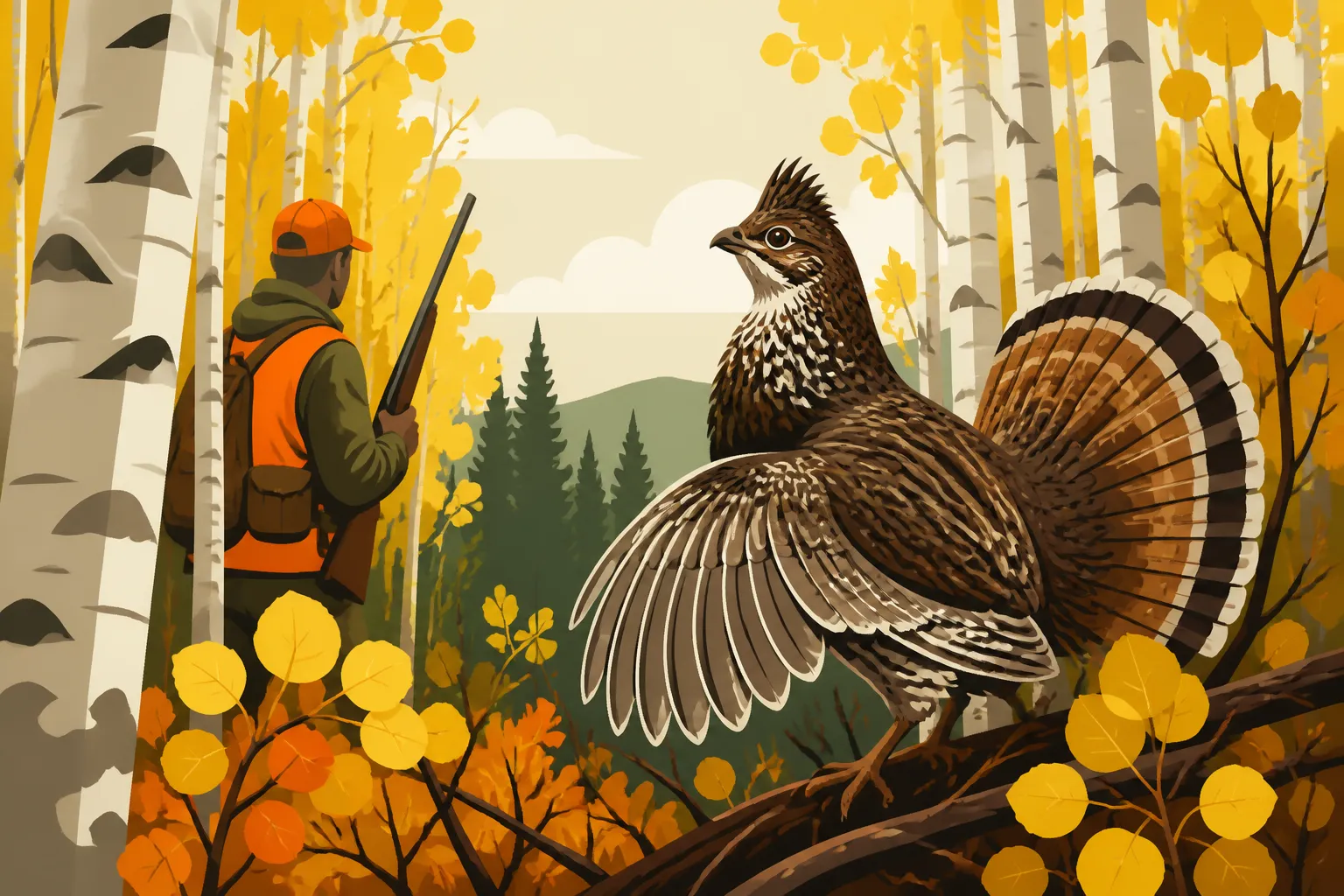
Michigan's diverse landscape is a haven for ruffed grouse, and none is more iconic than the dense, tangled world of aspen cover. These vibrant forests, often painted in brilliant golds and reds in the fall, are the cornerstone of grouse habitat in our state. To truly become a successful grouse hunter, you need to think like a grouse, understanding how these birds utilize different stages of aspen growth throughout the year.
The Life Cycle of an Aspen Stand and Grouse Preference
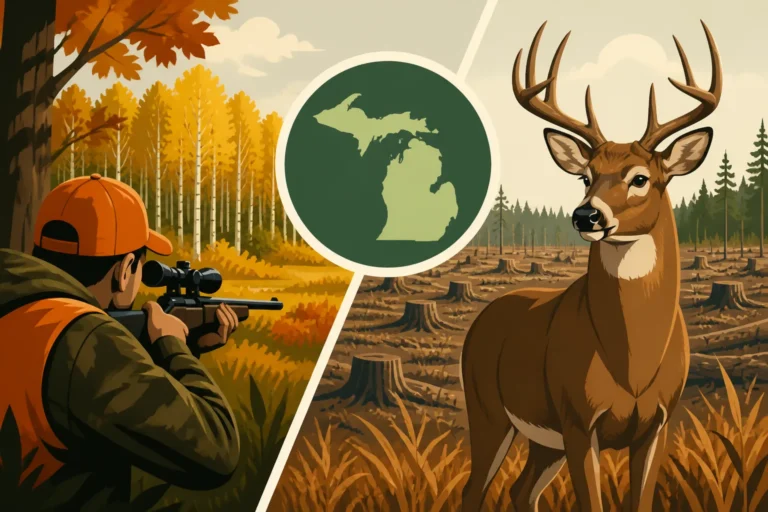
Aspen, particularly trembling aspen and bigtooth aspen, are pioneer species. They're often among the first trees to colonize disturbed areas like clearcuts or burned forests, growing quickly and forming dense stands. For grouse, this rapid growth and the resulting thick cover are absolutely critical for survival. Young aspen stands, typically 5-20 years old, are prime grouse real estate. At this stage, the trees are usually 1-4 inches in diameter and grow so close together that they create an almost impenetrable wall of stems. This incredible stem density offers protection from aerial predators like hawks and owls, as well as ground predators like coyotes and bobcats.
As the aspen stand matures, beyond 20-25 years, the canopy closes, shading out undergrowth and reducing the critical stem density at ground level. While older stands can still provide some food resources like catkins in winter, they lose their primary appeal as secure cover. This is why active forest management, including clearcutting, is so vital for maintaining healthy grouse populations. Without it, the dense, young cover grouse depend on would eventually fade away. Understanding this lifecycle is key to knowing where to focus your efforts. If you're wondering about the specifics, we have an excellent resource detailing How Old a Cut Should Be for Grouse for optimal hunting.
Identifying Productive Aspen Cover
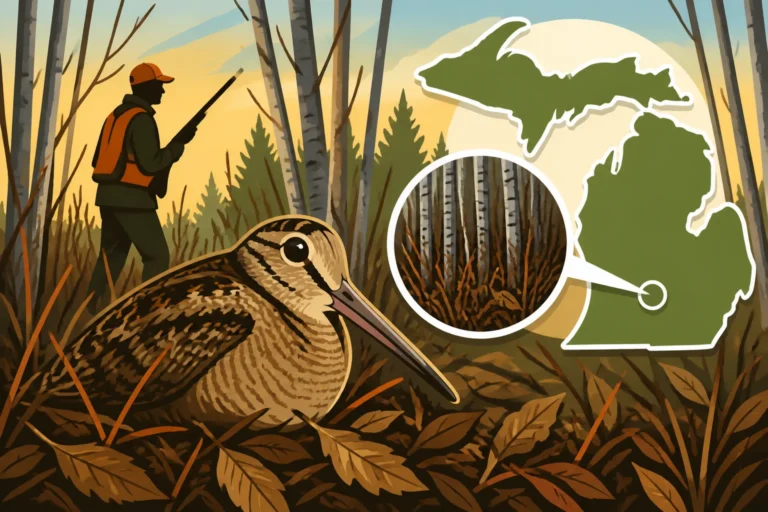
Finding the "right" aspen stand isn't just about spotting a patch of yellow leaves in October. Productive grouse cover often shows specific characteristics. Look for stands that are a mix of different age classes, creating a mosaic of dense young growth adjacent to slightly older, still-dense patches. This provides a variety of food and cover options year-round. Areas with a strong component of conifers, such as spruce or fir, mixed in with the aspen, are goldmines. These evergreens provide crucial thermal cover, especially during cold snaps and deep snow, and offer escape routes. Tag alder bottoms or dense willow thickets often bordering aspen stands also create fantastic cover, particularly for woodcock, but grouse will use them too.
When you're out scouting, either physically before the season or digitally using tools like the Michigan DNR's Mi-HUNT map, pay attention to these transitions. Aspen stands bordering swamps, old logging roads, or agricultural fields are often highly productive because they offer diverse edges and food sources. Satellite imagery, which many digital mapping applications like GoHunt offer, can be invaluable for identifying clearcuts and dense young growth. Look for areas that show a distinct change in canopy texture, often a lighter green or yellowish-green for younger stands, indicating recent disturbance and regeneration. This kind of pre-hunt intelligence will save you countless steps and put you in birds more often. For more general advice on finding good spots, consider checking out our guide on Scouting Michigan Public Land Before Season.
Essential Gear and Dog Work for Aspen Grouse
Chasing grouse through Michigan's aspen is a physically demanding endeavor. The thick cover, uneven terrain, and often unpredictable weather require specific gear and, for many, the invaluable assistance of a well-trained bird dog. Having the right tools for the job not only makes the experience more enjoyable but also significantly increases your chances of success.
Shotguns and Ammunition Choices
When it comes to grouse hunting in the thick stuff, fast-handling shotguns are paramount. You're typically shooting at close range, often through a screen of branches, and reaction time is everything. Many grouse hunters favor lightweight 20-gauge or 28-gauge shotguns for their portability and quick swing, though a 12-gauge with open chokes is perfectly effective. The key is balance and responsiveness. Over-and-under or side-by-side configurations are popular, allowing for two different chokes (e.g., improved cylinder and modified) for varying shot distances, though semi-automatics and pumps are also widely used. The most common chokes are improved cylinder (IC) in the first barrel and modified (Mod) in the second, providing a wider pattern for close, unexpected flushes and a slightly tighter pattern for those birds that give you a bit more space.
For ammunition, typically 7.5 or 8 shot is preferred. These smaller pellets offer a dense pattern, which is crucial for grouse that are often partially obscured or only visible for a split second. Lead shot is still legal for upland birds in Michigan, except in specific waterfowl-related areas. Carrying a mix of loads, perhaps some 7.5s for general use and a few 8s for extremely tight cover, can be beneficial. Remember, grouse hunting is more about getting a shot off quickly and accurately in dense cover than reaching out to long distances. For a deeper dive into shotgun specifics, you might find our article on Upland Guns for Aspen and Alder helpful.
Dressing for the Bush and Navigating Dense Cover
Your clothing and footwear are just as critical as your shotgun. Expect to walk miles through briars, tangled saplings, and wet ground. Durable, briar-proof pants or chaps are non-negotiable to protect your legs from thorns and brush. An upland vest or game bag with plenty of pockets for shells, water, and your harvested birds is essential. Many vests come with a hydration pouch, which is a lifesaver on warm days. Layering is key in Michigan's fall weather, which can range from warm and sunny to cold and damp within hours. Start with a moisture-wicking base layer, add a fleece or wool mid-layer, and finish with a quiet, durable outer layer, preferably in blaze orange for safety. Michigan requires hunters to wear hunter orange during specific seasons, so always check the regulations.
Footwear must be waterproof and supportive. You'll encounter everything from soggy bottoms to rocky ridges. Good quality leather or synthetic hunting boots, preferably 8-10 inches high, will protect your ankles and keep your feet dry. Look for options designed for aggressive traction. Carrying a GPS unit or using a reliable mapping app like GoHunt on your phone is highly recommended. Aspen covers can be disorienting, and it's easy to get turned around, especially when you're focused on flushing birds. Always have a compass and a physical map as a backup, just in case your electronics fail. For more specific footwear advice, read our guide on Boots for Walking Michigan Aspen Cuts.
The Role of a Good Bird Dog
For many, grouse hunting without a dog is simply not the same. A well-trained bird dog is an invaluable partner, enhancing both your success and the enjoyment of the hunt. Dogs help in several critical ways: they locate birds that you might walk past, they hold birds on point or flush them within shooting range, and most importantly, they retrieve downed birds that would otherwise be lost in the thick cover. Grouse, especially when shot, can disappear into the densest tangles, and a dog's keen nose is often the only way to recover them.
Breeds commonly used for grouse include English Setters, Brittanys, German Shorthaired Pointers, and various flushers like English Springer Spaniels and Labrador Retrievers. The choice depends on your hunting style; pointers will "point" a bird, giving you time to walk in for the flush, while flushers will systematically work cover and push birds out. Regardless of breed, training for steadiness, recall, and retrieve is paramount. GPS collars with tracking capabilities have become standard equipment, allowing you to keep tabs on your dog in dense cover and locate them quickly. A dog's ability to scent and follow grouse, especially those that run rather than fly, can turn a tough day into a successful one.
Strategies for Working Aspen Covers
Successfully hunting grouse in Michigan's aspen cover demands a thoughtful approach, as these birds are notorious for their evasive tactics. It's not just about walking through the woods; it's about understanding how grouse use the cover and anticipating their moves.
Grid Patterns and Systematic Approach
When you step into a promising aspen stand, resist the urge to simply wander aimlessly. A systematic approach, often employing a grid pattern, will help you thoroughly cover the area and increase your chances of flushing birds. Start by identifying the boundaries of your chosen cover — perhaps an old two-track, a swamp edge, or a change in timber type. Then, begin walking back and forth across the cover in a pattern, much like mowing a lawn. This ensures you cover all potential hiding spots. Keep your lines relatively close together, perhaps 20-30 yards apart, depending on the density of the cover and whether you have a dog.
Pay close attention to changes in elevation, thicker pockets of cover, and areas where sunlight might penetrate to the forest floor, promoting berry growth. Grouse love edges, so work the perimeter of the aspen stand where it meets different habitat types, like an old field, a conifer patch, or a swamp. The wind can also play a crucial role; try to hunt into the wind if possible, as it helps carry your scent (and your dog's scent) away from the birds, potentially preventing early flushes. Vary your pace, sometimes walking slowly and deliberately, sometimes pausing to listen, and then bursting forward. This unpredictable movement can sometimes cause a nervous grouse to flush.
Flushing Grouse Without a Dog
Hunting grouse without a dog is a challenging but rewarding endeavor, requiring a different set of tactics. Without a dog to pinpoint birds, you become the primary flusher. The "pause and rush" technique is incredibly effective. Walk slowly and quietly through likely cover, pausing frequently for 10-30 seconds. This silence often makes a hiding grouse nervous, and they may flush when you resume walking, especially if you suddenly pick up your pace. Listen intently during these pauses – you might hear the faint rustle of leaves as a grouse moves or even the tell-tale wing beats of an unseen bird.
Focus on the densest pockets of cover, especially those areas with conifers mixed in, which grouse use for thermal protection and concealment. Walk into these thickets, not just around them. If you come across a natural barrier like a downed log or a dense cluster of young pines, use it to your advantage. Walk on one side, then quickly cross to the other, creating a sudden perceived threat that can flush a bird. Remember, grouse will often run before they fly, so if you think a bird is ahead of you, try to cut it off or circle around to get in front of it. We have a dedicated article on Flushing Grouse Without a Dog that offers even more in-depth techniques.
Dealing with Difficult Flushes and Shot Opportunities
One of the defining characteristics of grouse hunting is the sheer chaos of the flush. A ruffed grouse explodes from cover with startling speed and noise, often putting multiple trees between you and the bird within a second or two. This is where practice and quick target acquisition come into play. Don't try to track the bird for too long; instead, pick up its flight path, shoulder your gun, and swing through the bird, maintaining your lead. Focus on an open lane in the trees, no matter how small, and trust your instincts.
It's common to hear the flush but never see the bird, or to get a mere glimpse. Don't dwell on missed opportunities. Reload quickly and stay alert, as a second bird (or even a third) often flushes after the first. Sometimes, grouse will fly a short distance and then dive back into heavy cover. If you mark where it landed, you can often attempt another flush, though they'll usually be even more wary. Always prioritize safety: know your shooting lanes, be aware of your hunting partners (if any), and never shoot until you've positively identified your target and are sure of your background. The dense cover means you often only get one quick chance, so make it count.
Timing Your Hunts and Seasonal Considerations
Just like with deer or turkey, the timing of your grouse hunts can significantly impact your success. Michigan's grouse season stretches across several months, and the tactics that work in October might be completely different from those that produce birds in December. Understanding these seasonal shifts, along with environmental factors like weather and food availability, is crucial for maximizing your time in the woods.
Early Season vs. Late Season Tactics
Michigan's grouse season typically opens in mid-September, coinciding with the peak of fall foliage. The early season is characterized by dense cover – the leaves are still on the trees, and undergrowth is at its thickest. This makes for challenging visibility and tight shooting windows. Grouse are often spread out, as food sources like berries and insects are abundant. Young, less experienced birds (poults) are more common, and they may hold tighter, offering better dog work or a closer flush for foot hunters. Focus on mixed aspen and brushy areas with lots of natural food. For specific opening and closing dates, refer to Michigan Grouse Season Dates.
As the season progresses into late October and November, the leaves drop, opening up the woods. Visibility improves, but grouse become warier and more concentrated in the thickest cover. Food sources shift to tree buds (like aspen and birch catkins) and residual berries. Finding conifers mixed with aspen becomes even more critical, as these stands provide essential thermal and escape cover as temperatures drop. In the late season, birds are often found closer to these conifer pockets, and they tend to flush wilder. This is when patience, systematic walking, and a good dog truly shine.
Weather, Food Sources, and Grouse Movement
Weather plays a significant role in grouse behavior. Mild, dry days in the early season can mean birds are widely dispersed, foraging actively. Rainy or windy days, however, can make birds sit tighter, making flushes more difficult but potentially more predictable if you can get close. As winter approaches and snow begins to fall, grouse will often move to dense conifer cover for shelter. Deep, soft snow can make walking difficult for both hunters and dogs, but it can also concentrate birds in specific areas, especially around food sources that are still accessible.
Food sources dictate where grouse will be. In early fall, they feast on a variety of berries (partridgeberry, wintergreen, hawthorn), green vegetation, and insects. As these disappear, their diet shifts to the buds and catkins of aspen, birch, and hazelnut. Scouting for these food sources is paramount. Look for areas with abundant catkins in late fall and winter, and don't overlook areas with old apple trees or hawthorns, which can be grouse magnets. The presence of food along with dense cover is the winning combination.
Understanding Michigan's Ruffed Grouse Cycles
Michigan's ruffed grouse populations, like those across much of their range, are known to experience natural population cycles, typically peaking every 7-10 years. These cycles are driven by a complex interplay of factors, including weather, habitat quality, and predator populations. When populations are at a peak, you'll generally find more birds and enjoy higher success rates. During a trough, birds are scarcer, making for tougher hunting.
Understanding where Michigan currently sits in this cycle can help manage your expectations. Historically, northern Michigan has experienced strong cycles, though the peaks and troughs can vary regionally. While you can't control the cycle, knowing about it helps you appreciate good years and remain persistent during leaner ones. Conservation efforts, particularly maintaining early successional forest habitat through active timber management, are crucial to ensure grouse populations remain healthy across all phases of the cycle. For a more detailed look at this fascinating phenomenon, be sure to read our article on Michigan Ruffed Grouse Cycles.
Public Land Access and Hunter Ethics
Michigan is blessed with an abundance of public land, offering incredible opportunities for grouse hunters. However, with this access comes the responsibility to understand regulations, respect the land, and practice ethical hunting. Navigating public land effectively is a skill every Michigan hunter should cultivate.
Finding Public Aspen Stands in Michigan
The vast majority of Michigan's prime grouse habitat is found on public land. Our state boasts extensive tracts of State Forest land, numerous State Game Areas, and three National Forests (Huron-Manistee, Ottawa, and Hiawatha). These areas are managed for various purposes, including timber production, which often creates the ideal young aspen clearcuts that grouse thrive in. The Northern Lower Peninsula and the Upper Peninsula are particularly rich in grouse cover. Counties like Gladwin, Kalkaska, Montmorency, and those throughout the U.P. are well-known grouse hotspots.
To effectively find these spots, digital mapping tools are indispensable. The Michigan DNR's Mi-HUNT website is a fantastic resource, allowing you to view various land ownership layers, forest types, and even recent timber harvests. Third-party apps like GoHunt take this a step further, offering detailed satellite imagery, property lines, and topographic maps that you can access right from your phone in the field. Look for areas marked as "young aspen" or recent clearcuts, often visible as bright green patches on satellite views. Some areas, like the Michigan Grouse Enhanced Management Sites (GEMS), are specifically managed to improve grouse habitat and often have walking trails and interpretive signs. For those exploring specific locations, you can find a comprehensive list of Michigan Grouse Enhanced Management Sites. You might also find valuable information about Best Michigan Counties for Public Land Grouse.
Respecting Land and Other Hunters
Hunting on public land means sharing the resource, and practicing good ethics is paramount. Always be aware of safety zones around dwellings and occupied buildings. Park your vehicle responsibly, not blocking two-tracks or access points, and leave no trace of your presence – pack out everything you pack in. While Michigan's grouse season often sees fewer hunters than firearm deer season, popular areas can still experience pressure. If you encounter another hunter or dog handler, give them ample space and courtesy. A friendly wave and a wide berth are always appreciated.
Remember that public lands are multi-use areas. You may encounter hikers, bird watchers, or other recreational users. Be mindful of their presence and always keep safety as your top priority. Using an electronic bell or a bright orange collar on your dog helps alert others to your presence and provides additional safety. Hunting public land is a privilege, and by respecting the land and fellow users, we help ensure these opportunities remain available for generations to come.
Processing Your Bird and Meat Care
Once you've successfully harvested a grouse, proper field care is essential to ensure high-quality table fare. Many hunters opt to simply breast out their birds in the field, which is quick and easy. To do this, simply pluck the breast feathers, make an incision down the breast bone, and peel back the skin. Then, carefully cut the breast meat away from the bone and ribs. This method yields two boneless breasts.
If you prefer to take the whole bird, you'll want to cool it down as quickly as possible. Plucking grouse can be a bit tedious but results in a beautiful whole bird. Alternatively, you can skin the entire bird. Regardless of your method, place the breasts or whole birds in a game bag to protect them from dirt and debris, and get them into a cooler with ice as soon as possible. Grouse meat is lean and delicious, with a delicate flavor that responds well to simple cooking methods. Avoid overcooking, and you'll be treated to one of Michigan's finest wild game meals.
| Season | Typical Conditions | Grouse Behavior | Recommended Tactics |
|---|---|---|---|
| Early Season (Sept – Mid Oct) | Leaves on trees, dense undergrowth, warm temps, abundant natural food (berries, insects) | Spread out, less wary, may hold tighter, young birds common | Work thickets, focus on edges, "pause and rush," dog for finding |
| Late Season (Mid Oct – Dec) | Leaves dropping/down, colder temps, snow possible, food shifts to buds/catkins | Warier, concentrated in dense cover & conifers, flush wilder | Systematically grid, hunt into wind, target conifer pockets, rely on dog for retrieves |
Disclaimer
Please note: Hunting regulations and seasons in Michigan are subject to change. Always consult the most current Michigan DNR Hunting Digest or website for the latest rules, dates, and licensing requirements before heading afield. This guide is for informational purposes only and does not supersede official DNR regulations.