Finding Woodcock in Alder Runs
For many Michigan upland hunters, the American woodcock is a bird of mystery, an enigma that flits through the dense cover of alder runs, seemingly appearing and disappearing like a ghost. Trying to locate these migratory shorebirds in the labyrinthine tangles of northern Michigan's wet woods can be incredibly frustrating, leaving even seasoned hunters wondering if they're in the right spot. This guide will unravel the secrets of finding woodcock in these specific habitats, offering actionable insights and tactics to increase your chances of success and turn those frustrating outings into rewarding hunts.
Understanding Woodcock Habits in Michigan Alder Runs
The key to consistently finding woodcock is understanding their habitat preferences and daily routines, especially within the unique environment of an alder run. These birds aren't just anywhere in the woods; they're in very specific niches.
Why Alder Runs are Woodcock Magnets
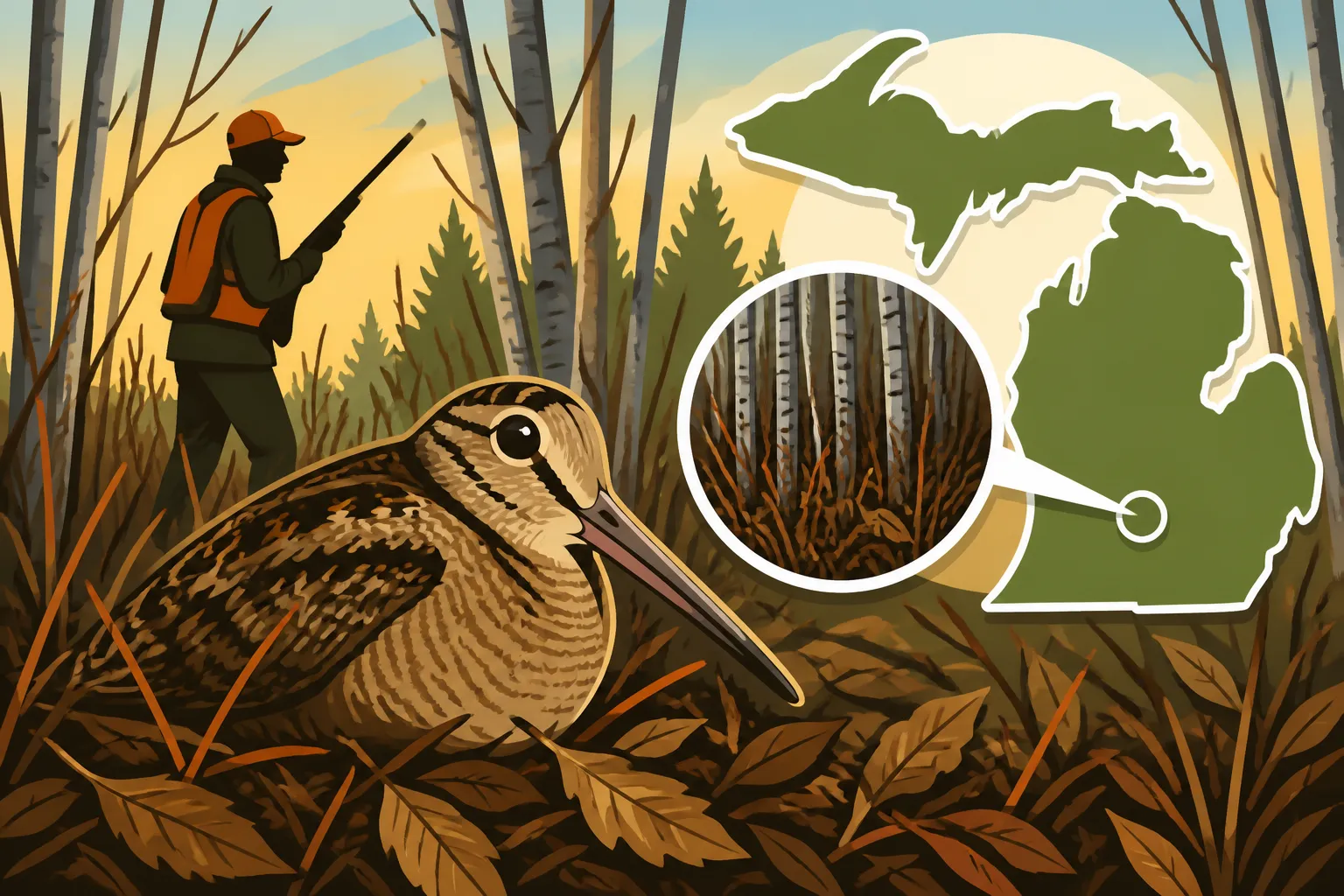
Alder runs are essentially nature's perfect dining rooms and hiding spots for woodcock. These low-lying, often boggy areas are characterized by dense thickets of alder, willow, and other water-loving shrubs, typically found along streams, small rivers, or in depressions where groundwater is close to the surface. The soil in these areas is crucial; it’s consistently moist, soft, and rich in the woodcock's primary food source: earthworms.
Woodcock have long, sensitive bills perfectly adapted for probing soft earth. They can't dig through hard, dry ground, so they seek out environments where the soil is pliable. Alder runs provide this in spades, often retaining moisture even during drier spells that might firm up other parts of the forest floor. The dense canopy and undergrowth of the alder also offer superb camouflage and protection from aerial predators like hawks, making these spots ideal for both feeding and resting. Furthermore, the linear nature of many alder runs creates natural travel corridors, concentrating birds in predictable pathways. These birds also appreciate the proximity to slightly drier, denser cover for roosting, often just steps away from the wet alders.
Reading the Ground for Woodcock Sign
Before you even see a bird, the ground itself can tell you if you're in a prime woodcock location. Learning to read the subtle signs they leave behind is a fundamental skill.
The most common and definitive sign is their droppings, often referred to as "chalk." This appears as small, white, splattered spots, sometimes with a dark center, on leaves, logs, or directly on the soil. Fresh chalk is a vibrant white, indicating a bird was recently there, while older chalk might be duller or washed out. The sheer quantity of chalk can give you an idea of how many birds are using the area.
Another key sign to look for are probe holes. These are tiny, perfectly round holes in the soft earth, about the diameter of a pencil, sometimes grouped together. These are made by the woodcock's bill as it searches for worms. Finding fresh probe holes, especially in abundance, is like hitting the jackpot. You might also find "dusting bowls" – small depressions in dry, sandy soil where woodcock have taken dust baths to preen their feathers, though these are less common in the wet environment of an alder run itself. These dusting bowls often indicate a nearby, slightly drier patch the birds are using for specific behaviors.
Migration Patterns and Timing the Hunt
Woodcock are migratory birds, and their presence in Michigan is seasonal. They breed throughout Michigan, but the real hunting excitement often comes with the fall migration. They start arriving in Michigan in the spring, setting up breeding territories, but by late summer, local birds begin to gather. The big push, however, is when the northern migration begins in earnest, typically from late September through October. This is when birds from further north funnel through Michigan, often following specific migratory routes down river valleys or along major topographical features.
The exact timing of the peak flight can vary year to year depending on weather patterns, particularly cold fronts that push birds south. Generally, the second and third weeks of October offer the best chances to encounter migrating woodcock in good numbers. Too early, and you might only find resident birds. Too late, and a hard freeze can push most of them out of the state quickly. Keeping an eye on weather forecasts and consulting local DNR reports can help you pinpoint the best windows. For more details on when to expect these flights, check out our article on Timing the Michigan Woodcock Flight. Understanding the broader context of Michigan Small Game and Furbearer Seasons can also help you plan your hunts to coincide with prime woodcock activity.
Scouting and Locating Promising Alder Runs
Finding woodcock isn't just about stumbling into them; it's about strategic scouting and knowing where to focus your efforts. This means starting with maps and then getting your boots dirty.
Utilizing Maps and Aerial Imagery
Modern technology has made initial scouting much more efficient. Satellite imagery and topographic maps are invaluable tools for identifying potential woodcock habitat before you ever step foot in the woods. When you're sitting at home planning your hunt, services like GoHunt offer detailed satellite maps that allow you to scan large areas from above.
Look for areas that have a distinct "green line" or darker vegetation along drainages, creek beds, or in low-lying depressions. These often indicate denser, wetter growth, which could be alder. Pay attention to how these linear features connect to other types of cover, such as upland aspen cuts or mature hardwoods. Woodcock often use the alder as primary feeding grounds but might roost or loaf in adjacent, slightly drier cover. Contour lines on topographic maps will confirm low-lying, often wet, areas. You're essentially looking for natural funnels and moisture-rich environments that break up more uniform forest types.
Boots on the Ground Reconnaissance
While maps are a great starting point, nothing beats walking the ground. Even the best aerial photo won't show you the crucial details like fresh chalk or probe holes. When you're physically scouting, your goal is to confirm what the maps suggested and find fresh sign. Walk slowly along the edges of suspected alder runs first. Woodcock often feed right on the fringes, especially if the cover transitions to an aspen stand or a more open area.
Look for thicker, nastier sections within the alder. These birds thrive in dense cover, so don't be afraid to push through it. Pay close attention to areas where the water table is particularly high, perhaps indicated by standing water or very muddy spots, as these will likely hold the most worms. Don't just walk in a straight line; crisscross the run, especially where it widens or bends, to cover more ground and disturb potential hiding spots. This methodical approach will not only help you find current activity but also develop a mental map of high-probability areas for future hunts. Learning to interpret the subtleties of the terrain is a skill that only comes from experience, but maps can certainly shorten the learning curve. If you're looking for broader scouting advice, our guide on Scouting Michigan Public Land Before Season offers valuable context.
Finding Unpressured Spots
Woodcock, like any game bird, can become wary under hunting pressure. Areas that are easily accessible, like those directly off two-tracks or popular trails, tend to get hit hard. If you're finding older sign but no birds, or the birds are flushing wild and quickly, it might be an indication of pressure.
To find unpressured spots, you often have to work a little harder. This might mean walking an extra quarter-mile deeper into a remote section of state forest, or finding alder runs that aren't immediately obvious from the road. Look for smaller, more isolated pockets of alder that might be overlooked by hunters focusing on larger, more prominent coverts. Sometimes, the most frustratingly thick, difficult-to-navigate alder will hold the most birds simply because fewer people are willing to push through it. Using the detailed mapping features on GoHunt, you can often identify these lesser-known, harder-to-reach spots. Remember, a little extra effort can often lead to a more rewarding hunt with less competition. If you're frequently encountering crowds, consider strategies outlined in Finding Ground Others Walk Past to increase your solitude and success.
Effective Hunting Tactics in Alder Runs
Once you've located a promising alder run, the real work begins. Hunting woodcock in this dense cover requires patience, a methodical approach, and quick reflexes.
The Art of the Slow Walk and Flush
Forget rushing through the woods like you're on a mission to cover ground. Woodcock hunting in alder runs is a slow, deliberate affair. The goal is to walk at a pace that allows the birds to hold their position until you are within reasonable shooting range, and then flush them effectively. A good rule of thumb is to walk slower than you think you should.
Move in a zigzag pattern through the densest cover. This erratic movement makes it harder for the bird to pinpoint your exact location and encourages it to hold tight. Pay attention to every rustle and movement. Woodcock will often "timber" – fly straight up through the canopy – before leveling off. You need to be ready for an explosive, close-range flush. When hunting with a partner, maintain visual and auditory contact, spreading out to cover a wider swath but always knowing where the other person is for safety. Don't be afraid to pause frequently; a momentary stop can sometimes unnerve a holding bird, causing it to flush.
Working with a Bird Dog or Without One
A well-trained bird dog is an absolute game-changer for woodcock hunting, especially in dense alder runs. A good pointing dog will lock up on scent, allowing you to walk in, locate the dog, and then flush the bird. This greatly reduces the number of missed opportunities and lost birds. Retrievers are equally valuable, as woodcock can fall into incredibly thick cover, making them nearly impossible for a human to find without canine assistance. Breeds like English setters, pointers, or even flushing breeds like Springer spaniels excel in this environment.
If you don't have a dog, don't despair! Many successful woodcock hunters go without. The key is to be even more methodical and deliberate. Kick at brush piles, walk right through the thickest tangles, and pause often. After a flush, mark the fall zone precisely. Woodcock are small and blend in incredibly well. Once you've marked the spot, walk slowly to it, searching every inch of ground. If you don't find the bird immediately, expand your search in ever-widening circles. For more on this, our guide on Flushing Grouse Without a Dog offers transferable techniques.
Shot Placement and Quick Shooting
Shooting woodcock in alder runs is notoriously challenging. The birds are small, fast, and often obscured by branches and leaves. This is not a long-range shooting game. Your shots will typically be very close, often within 15 to 25 yards. Because of this, an open choke (cylinder or improved cylinder) is generally preferred to allow for a wider shot pattern at close range.
You need to develop the ability to mount your gun quickly, find the bird through a momentary opening in the cover, and swing through for the shot. Often, you'll only get a split second. Don't try to aim; focus on the bird, swing past it, and pull the trigger. Shot size typically ranges from #8 to #9 lead shot, as woodcock are delicate birds and don't require heavy loads. The goal is a quick, clean kill without over-damaging the meat. Practice mounting your gun at home to build muscle memory for these quick, instinctive shots.
Safety Considerations in Thick Cover
Hunting in dense alder runs presents unique safety challenges. Visibility is often severely limited, making communication and awareness paramount.
Always wear plenty of hunter orange. Michigan law requires at least 50% of your outermost clothing above the waist to be hunter orange during firearm seasons, and while it's not always required during archery or small game seasons, it's always a good idea when hunting with partners in thick cover. For specific requirements, see How Much Orange Michigan Requires. If hunting with a partner, use two-way radios or whistles to maintain contact, especially if you get separated. Always know where your hunting partner is before you even consider taking a shot. Be aware of your muzzle and only swing on birds where you have a clear shot and a safe background. Alders can grow tall, but never shoot at a bird silhouetted against the horizon unless you are absolutely certain of what's beyond it. Be mindful of tripping hazards like downed logs and tangled roots. A fall in thick cover can be disorienting and potentially lead to injury, so watch your footing.
Gear and Equipment for Alder Run Hunting
Having the right gear won't guarantee birds, but it will certainly make your hunt more comfortable, safer, and ultimately more enjoyable.
Shotgun and Ammunition Choices
For woodcock, less is often more. A lightweight, fast-handling shotgun is ideal. Most upland hunters prefer a 20-gauge or even a 28-gauge for its maneuverability and reduced recoil, which can be a blessing after a long day of walking. Side-by-side or over/under shotguns are popular choices because they allow for two different chokes (e.g., improved cylinder and modified) to handle varying flush distances. For more on appropriate firearms, our article on 20 Gauge Doubles for Aspen Cover provides excellent insights, many of which apply directly to alder hunting.
As mentioned, open chokes like improved cylinder or cylinder bore are highly recommended for the close-range shots typical of alder runs. For ammunition, #8 or #9 lead shot is standard for woodcock. These smaller pellets create a dense pattern, increasing the likelihood of hitting a fast-moving target without excessive penetration. Always use non-toxic shot if you're hunting in areas where it's required, such as federal lands or some state waterfowl areas, but generally, lead shot is permissible for upland birds in Michigan's alder runs.
Clothing and Footwear for Wet Conditions
Alder runs, by their very nature, are wet and often muddy. Investing in proper footwear is non-negotiable. Waterproof boots, preferably knee-high rubber boots or waterproof leather boots with good ankle support, are essential to keep your feet dry and comfortable. Look for boots designed for walking in rough terrain, as you'll be navigating through tangled roots and uneven ground.
For clothing, brush pants or chaps are a lifesaver. Alders and briars can tear through ordinary hunting pants in a single outing. Durable, water-resistant brush pants made of canvas, Cordura, or similar tough materials will protect your legs from thorns, wet vegetation, and general wear and tear. Layering is also important, as temperatures can vary throughout the day, especially during the fall migration. Start with a moisture-wicking base layer, add an insulating mid-layer, and finish with a durable, water-resistant outer shell. Brands like Filson, Orvis, and LL Bean offer excellent choices that stand up to the rigors of Michigan upland hunting.
Essential Accessories
Beyond the basics, a few key accessories can significantly enhance your woodcock hunting experience:
- Game Vest or Bag: This is essential for carrying your harvested birds, extra shells, water, and other small items. Many vests, like those from GoHunt, also have a hydration pouch or water bottle pockets, which are crucial for you and your dog. See our guide on Upland Vests With Water Capacity for options.
- Navigation Tools: A reliable GPS unit or a smartphone with a mapping app (like GoHunt's mobile application) is invaluable for navigating dense cover and finding your way back to your vehicle. Mark your starting point and any areas where you find significant sign.
- Water: Stay hydrated, especially if you're working hard. Carry enough water for yourself and any canine companion.
- First-Aid Kit: A compact first-aid kit with essentials for cuts, scrapes, and insect bites is always a good idea, particularly when hunting in remote areas.
- Dog Bell (if hunting with a dog): A bell on your dog's collar helps you keep track of its location, especially when it's on point in thick cover.
By combining the right knowledge of woodcock behavior, strategic scouting, effective hunting tactics, and appropriate gear, you'll be well on your way to enjoying some fantastic woodcock hunting in Michigan's abundant alder runs.
| Sign Type | Appearance | What it Indicates |
|---|---|---|
| Chalk | Small, white, splattered droppings (sometimes dark center) on leaves/ground. | Woodcock was recently present here. Fresh = very recent. |
| Probe Holes | Tiny, pencil-diameter, perfectly round holes in soft, moist soil. | Active feeding area for earthworms. Fresh = active feeding. |
| Dusting Bowls | Small, shallow depressions in dry, sandy soil. | Nearby area used for preening; suggests preferred roosting/loafing area nearby. |
| Flush | Sudden, explosive rise from dense cover, often "timbering" vertically. | Bird is present; indicates active hunting area. |
Disclaimer
Always check the latest Michigan Department of Natural Resources (DNR) regulations and local ordinances before hunting. Hunting laws, seasons, and bag limits are subject to change, and it is the hunter's responsibility to be informed and compliant. This guide is for informational purposes only and does not supersede official DNR publications or legal requirements.