20 Gauge Doubles for Aspen Cover
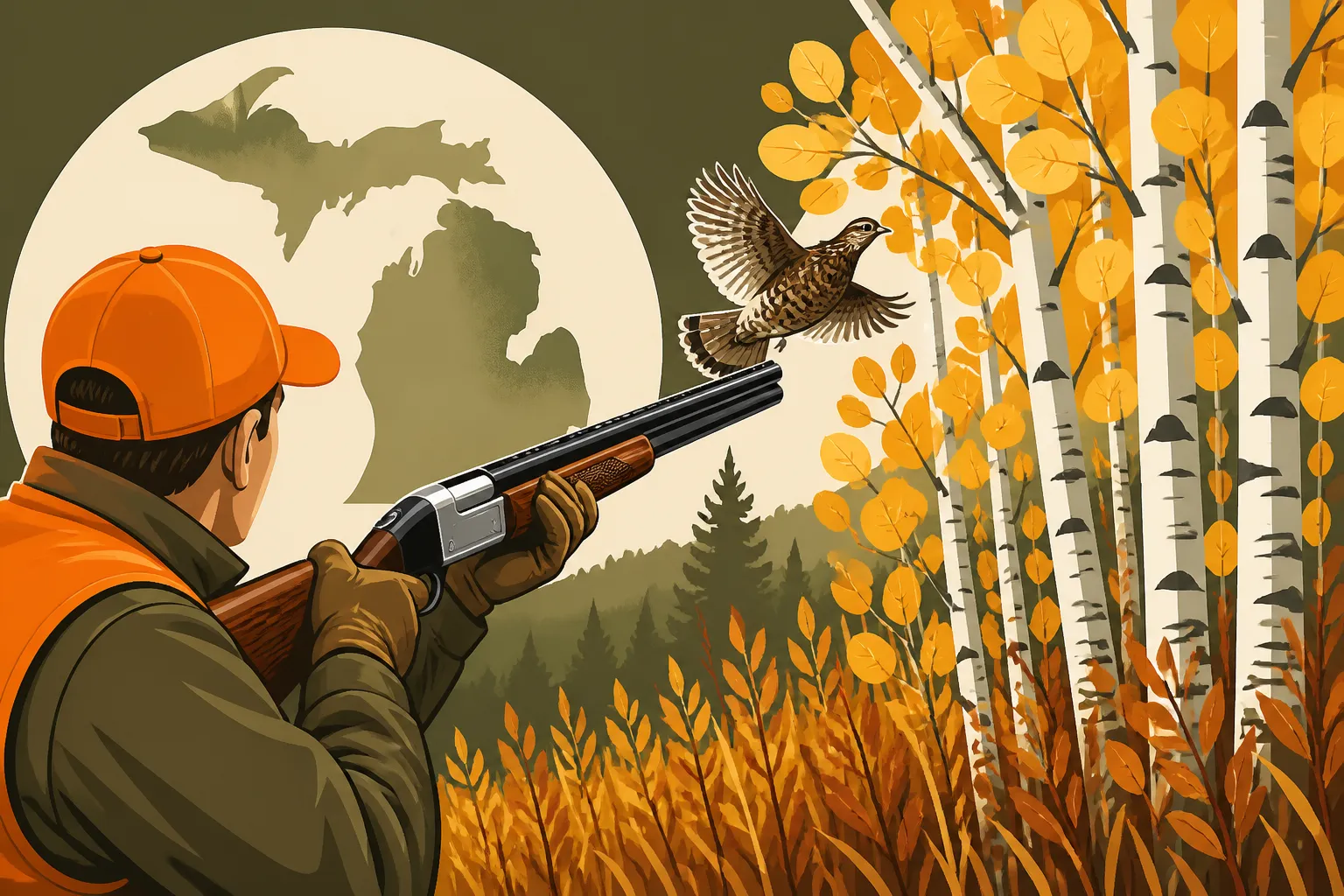
For many Michigan grouse hunters, the frustration of a quick flush in dense aspen cover is a familiar ache. You hear the thunderous wings, swing your shotgun, and before you can properly acquire the bird, it's vanished behind a screen of poplars. This guide is all about why a 20 gauge double-barreled shotgun might just be the perfect companion for those challenging, yet incredibly rewarding, days chasing grouse in Michigan's aspen stands.
Why the 20 Gauge Double Shines in Aspen Cover
When you're walking mile after mile through thick northern Michigan woods, trying to find those elusive ruffed grouse, your gear makes a world of difference. The moment a bird explodes from underfoot or off a low branch, you need a shotgun that's almost an extension of your own instincts. That's where the 20 gauge double truly comes into its own for Grouse Hunting Michigan Aspen Cover.
Quick Handling in Tight Spaces
Think about the environment: tightly packed aspen saplings, a tangle of briars, fallen logs, and sometimes even a thick understory of alder or dogwood. A long, heavy shotgun can feel like swinging a telephone pole in such conditions. This is precisely where the inherent design of a double barrel, especially in 20 gauge, offers a distinct advantage. With two barrels nestled side-by-side or one above the other, these guns tend to have a shorter overall length, even with standard barrels, and a balance point that makes them incredibly lively in your hands.
The quickness isn isn't just about barrel length; it's about the gun's entire profile and how it feels to bring to bear. When a grouse rockets out at 15 yards, often presenting only a momentary window of opportunity before disappearing into the timber, you don't have time for a slow, deliberate swing. A well-balanced 20 gauge double allows for that lightning-fast mount and snap shot, getting on target intuitively. Many veteran grouse hunters swear by this "pointability," feeling that the gun just goes where their eyes are looking, a critical factor when every second counts. The compact nature means less chance of snagging on branches as you bring the gun up, which can cost you precious fractions of a second and a clean shot.
Lighter Weight for Long Walks
Michigan's grouse woods, particularly the sprawling state forests in the northern Lower Peninsula and Upper Peninsula, demand a lot of walking. A typical day of serious grouse hunting can easily involve five, ten, or even more miles of tromping through varied terrain, often off-trail. Every ounce you carry feels like a pound by the end of the day, and a heavy shotgun can quickly turn a fun outing into an exhausting slog.
The 20 gauge platform, by its nature, is lighter than its 12 gauge counterpart. When combined with a double-barrel configuration, which often eschews the heavier mechanisms of some semi-automatics or pump actions, you get a package that is remarkably easy to carry. This reduced weight isn't just about comfort; it directly impacts your effectiveness. A fatigued hunter is a less alert hunter, slower to react, and less accurate. Carrying a lighter gun helps maintain your energy levels, keeping you sharp for those crucial flushes late in the afternoon. It also makes mounting the gun repeatedly throughout the day less strenuous, which can be a real blessing if you're working a cover that's kicking up a lot of birds. This translates to more enjoyable hunts and, often, more birds in the vest. Whether you're navigating tangled bottoms or climbing rolling aspen ridges, a lightweight 20 gauge double reduces the physical toll, allowing you to focus on the hunt itself.
Reduced Recoil for Faster Follow-Up
Grouse hunting is a game of quick, often successive, shots. It's not uncommon for two or even three birds to flush from the same covert, and having the ability to put a second shot on target quickly is a distinct advantage. Recoil, especially from a heavier 12 gauge load, can throw you off target, requiring precious milliseconds to recover and re-acquire.
The 20 gauge, with its lighter payloads and typically lighter guns, delivers significantly less recoil than a 12 gauge. This softer punch means several things for the grouse hunter. First, it's more comfortable to shoot all day, especially if you're practicing frequently to stay sharp. More importantly, the reduced muzzle rise and felt recoil allow for a much faster follow-up shot. With a double barrel, you have that second shell instantly ready to go with just a flick of your finger to the second trigger (or a rapid pull if using a single selective trigger). The combination of milder recoil and immediate second shot availability makes the 20 gauge double a formidable tool for getting two barrels on a pair of flushing birds, or correcting a miss on a single, fast-moving target. This increased control and comfort can boost confidence, leading to better shooting in the field.
Choosing the Right 20 Gauge Double
Selecting the perfect 20 gauge double for Michigan's aspen covers involves more than just picking one off the rack. It's about understanding the nuances of barrel length, choke, and how the gun fits you personally.
Barrel Length and Choke Selection
For the dense, close-quarters environment of Michigan's aspen and alder thickets, shorter barrels are generally preferred. While longer barrels can provide a smoother swing for deliberate shots at longer ranges, they become cumbersome in tight cover, snagging on branches and slowing your reaction time. Most grouse hunters find that barrels in the 26 to 28-inch range offer a good balance of pointability and swing. Some even prefer 24-inch barrels for maximum maneuverability, though this can sometimes make the gun feel a bit too "whippy" for some shooters.
More critical than a few inches of barrel length, however, is your choke selection. Grouse are typically flushed at close ranges, often within 15-25 yards. At these distances, a tight choke like Full or even Modified can result in an overly dense pattern that mangles the bird or makes it very easy to miss completely. This is why open chokes are paramount. The most common and effective combination for a double-barrel grouse gun is an Improved Cylinder (IC) in the first barrel (fired first) and a Modified (Mod) in the second.
- Improved Cylinder (IC): This choke spreads the shot quickly, providing a wide pattern perfect for those close-range, explosive flushes in the thick stuff. It gives you a forgiving pattern at 15-20 yards, maximizing your chances of hitting a fast-moving bird without turning it into a feather pillow.
- Modified (Mod): If you miss with the first shot, or if the bird somehow presents a slightly longer shot as it weaves through the trees, the Modified choke offers a denser pattern with the second barrel. It's still open enough for most grouse situations but provides a bit more reach than the IC.
Some hunters even opt for Skeet 1 in the first barrel, which is even more open than IC, for extremely close cover, pairing it with an IC in the second. The key is to pattern your chosen loads at realistic grouse distances (20-30 yards) to see how they perform. Remember, we're not shooting ducks over open water here; we're trying to hit a small, fast-moving target in a very confined space. Understanding your choke's performance is crucial for success. You can learn more about this in Choke Choice for Fast Flushes.
Action Types: Side-by-Side vs. Over-and-Under
When it comes to double barrels, the classic debate is between side-by-side (SxS) and over-and-under (O/U) configurations. Both have their devotees and distinct characteristics that might appeal to a grouse hunter.
Side-by-Side Shotguns
- Pros:
- Wider Field of View: Many hunters feel the barrels of a side-by-side obstruct less of their peripheral vision, which can be an advantage in dense cover where you're trying to track a flushing bird as it weaves through trees.
- Classic Aesthetics: There's an undeniable charm and tradition associated with a side-by-side. It just looks like a grouse gun to many.
- Pointability: Often, side-by-sides are designed with a very low profile and a natural, intuitive point, almost like pointing your finger.
- Weight Distribution: The wider stance of the barrels can contribute to a different feel of balance in the hands, which some find appealing.
- Cons:
- Different Recoil Impression: Some shooters perceive more lateral recoil, or "muzzle jump," with a side-by-side, though this is often minor with lighter 20 gauge loads.
- Learning Curve: For shooters accustomed to a single sighting plane (like a pump or semi-auto), adjusting to two parallel barrels can take a little practice.
Over-and-Under Shotguns
- Pros:
- Single Sighting Plane: For many, the stacked barrels provide a familiar single sighting plane, similar to a single-barreled shotgun, which can make them easier to shoot accurately for those used to other action types.
- Reduced Muzzle Flip: The inline barrel configuration often results in less perceived muzzle flip, aiding in quicker follow-up shots.
- Durability: Often perceived as being more robust for heavy use, though modern side-by-sides are plenty durable too.
- Ergonomics: Many O/Us have more modern stock designs that some find more comfortable and conducive to quick mounting.
- Cons:
- Peripheral Vision: Some hunters feel the stacked barrels obstruct a bit more of their view compared to an SxS.
- Slightly Higher Profile: Can feel a bit "taller" in the hands compared to the sleek, flat profile of an SxS.
Ultimately, the choice between an SxS and an O/U comes down to personal preference, how each gun feels in your hands, and which one you shoot more naturally. There are excellent options in both styles perfectly suited for Michigan grouse hunting.
| Feature | Side-by-Side (SxS) | Over-and-Under (O/U) |
|---|---|---|
| Field of View | Wider, less obstruction of peripheral vision | Potentially more obstructed by stacked barrels |
| Sighting Plane | Two parallel barrels; can take getting used to | Single, familiar sighting plane; intuitive for most |
| Balance/Feel | Often very nimble, low profile, points intuitively | Can feel more "solid," reduced muzzle flip |
| Aesthetics | Classic, traditional upland hunting look | Modern, sleek, often considered more versatile |
| Recoil | Some perceive lateral recoil/muzzle jump | Generally less perceived muzzle flip |
| Snagging in Cover | Typically less likely to snag due to flatter profile | Slightly higher profile, minimal difference |
Fit and Balance
This is perhaps the most overlooked, yet critical, aspect of choosing any shotgun, especially for fast-paced upland hunting. A gun that doesn't fit you will always be a struggle, regardless of its features. A properly fitting shotgun mounts naturally to your shoulder, with your eye immediately aligning down the rib without having to adjust your head. The balance should feel "between the hands," allowing for smooth, fluid swings that aren't muzzle-heavy or butt-heavy.
When you're trying out a shotgun, close your eyes, bring the gun quickly to your shoulder, and then open your eyes. Does your eye naturally align with the rib? Is the gun pointing where you're looking? Does it feel comfortable to hold at the ready for extended periods? These are all indicators of good fit. If possible, shoot a few different models to get a feel for them. A gun that fits well allows you to focus on the bird, not on wrestling with your equipment. This is where a good gun shop, or even an upland focused outfitter, can be invaluable. Don't be afraid to take your time and find a gun that feels like an extension of yourself. For further research on upland guns, check out Upland Guns for Aspen and Alder.
Ammunition and Accessories for Aspen Hunting
Having the right shotgun is only half the battle. Your ammunition and supporting gear play a crucial role in maximizing your effectiveness and comfort in Michigan's aspen covers.
Shot Size and Loads
For ruffed grouse and woodcock (which you'll often encounter in the same coverts, especially in alder runs), lighter loads with smaller shot sizes are the standard. Given the close ranges, you don't need heavy magnum loads. In fact, they are often detrimental, creating excessively dense patterns and more recoil than necessary.
- Shot Size: 7.5 or 8 shot are the workhorses for grouse and woodcock. Both provide a good balance of pellet count and energy at close ranges. Eight shot offers more pellets in the pattern, increasing your chances of hitting the bird, which is often crucial for these small, fast targets. 7.5 shot carries a bit more energy per pellet, which can be useful on birds that might be a little further out or have thicker feathers. For woodcock, 8 or even 9 shot is perfectly adequate. You can explore more about this in Shot Size for Grouse and Woodcock.
- Load Type: Most hunters opt for light target loads or game loads in 20 gauge. A 7/8 oz or 1 oz load at standard velocities (around 1200-1300 fps) is more than sufficient. These loads keep recoil manageable and provide effective patterns at typical grouse distances. Leave the heavy field loads for pheasants or larger waterfowl.
- Non-Toxic Shot: While lead shot is generally legal for upland hunting on most Michigan lands, it's always good practice to confirm regulations, especially if you find yourself hunting near specific wetlands or managed areas where non-toxic shot might be required. If non-toxic shot is required, bismuth or a high-quality steel load (often with a larger shot size to compensate for steel's lighter weight) are viable options.
Essential Upland Gear
Beyond the gun and ammo, certain gear will make your grouse hunting experience more productive and comfortable.
- Upland Vest: A good upland vest is indispensable. It should have ample capacity for shells, water, a first-aid kit, and most importantly, a large, blood-proof game bag in the back for your birds. Look for vests with comfortable shoulder straps that distribute weight evenly. Many modern vests also incorporate a hydration bladder sleeve, which is a lifesaver on long walks.
- Brush Pants: Michigan's grouse cover can be thick and thorny. Quality brush pants, often reinforced with tough nylon or canvas panels on the front and back of the legs, are essential for protecting yourself from briars, thorns, and wet brush. They'll save your legs from countless scratches and keep you drier.
- Boots: Waterproof, comfortable, and supportive boots are non-negotiable. You'll be walking through wet grass, muddy low spots, and over uneven terrain. Good ankle support is crucial to prevent twists and sprains, and waterproofing keeps your feet dry and warm. Lightweight hiking boots or dedicated upland boots are excellent choices. I talk more about this in Boots for Walking Michigan Aspen Cuts.
- Navigation: While many of us rely on phone apps like GoHunt or other mapping tools, always have a backup. A handheld GPS or a good old-fashioned compass and map can be a lifesaver in remote Michigan forests where cell service is spotty or non-existent. GoHunt offers excellent layered maps that can show public land boundaries, habitat types, and even topographical features, which is incredibly useful for scouting new areas and navigating complex terrain.
- Bird Dog Gear: If you're hunting with a canine companion, a good electronic collar, a sturdy lead, and even a protective vest for your dog are critical. Bird Dog Gear for Michigan Cover delves into this further.
Maintenance in Michigan Weather
Michigan's hunting seasons often feature unpredictable weather – from crisp, dry autumn days to damp, chilly November afternoons, and even early snow. Your shotgun will be exposed to moisture, dirt, and potentially even mud.
- Cleaning After Every Hunt: A quick wipe-down and light oiling after every hunt, especially if the gun got wet, is essential to prevent rust. Pay attention to the action and the inside of the barrels.
- Protecting from Moisture: If hunting in rain or wet snow, consider a lightweight gun sock or case that can offer some protection while walking between spots. Keep a microfiber cloth in your vest to wipe down the gun as needed.
- Regular Deep Cleaning: At the end of the season, or periodically during heavy use, perform a thorough deep clean, disassembling the gun as recommended by the manufacturer. This removes built-up grime, old lubricants, and helps identify any potential issues. Modern double guns are generally quite robust, but proper care will ensure they last a lifetime.
Real-World Scenarios and Tactics
Understanding the theory is one thing, but applying it in the dynamic environment of Michigan's aspen cover is where the true test lies. A 20 gauge double can be a game-changer when combined with the right approach.
Flushing Grouse in Thick Stuff
Imagine this: You're slowly working a dense section of young aspen that's about 15-20 years old – perfect grouse habitat, as discussed in How Old a Cut Should Be for Grouse. The trees are thick, the undergrowth is a mix of bracken fern and fallen logs, and visibility is maybe 20 yards at best. Suddenly, there's that explosive burst of wings to your left, just 10 yards out, and a ruffed grouse rockets straight away, trying to put a tree between you and it immediately. This is the moment a quick-pointing 20 gauge double truly shines.
Your ability to snap the gun to your shoulder, acquire the bird in the fleeting moment it's visible, and get a shot off before it vanishes is paramount. A heavier, longer gun would likely get hung up on a branch, or be too slow to bring around. With your 20 gauge double, loaded with IC/Mod chokes and 7.5 shot, you make that quick mount, swing through the bird, and pull the first trigger. The bird folds. If by chance it kept going, that second barrel is ready instantly for a follow-up, without having to cycle an action. This responsiveness is what makes doubles so loved by upland hunters.
One of the common mistakes hunters make in such scenarios is trying to be too precise. In thick cover, "point and shoot" is often more effective than trying to meticulously align sights. Trust your instincts and the natural pointability of your gun. Also, always be ready. Grouse don't give you a polite warning; they just go. Your gun should be carried in a way that allows for an immediate mount, whether it's at port arms or slightly lower, depending on your preference and the density of the cover.
Hunting with a Dog vs. Without
The experience of hunting grouse with a 20 gauge double changes significantly depending on whether you have a canine partner or are Flushing Grouse Without a Dog.
Hunting with a Bird Dog
If you're fortunate enough to hunt over a well-trained bird dog, your 20 gauge double will likely see more action on flushed birds at slightly different distances. A good pointing dog will "lock up" on a bird, allowing you to walk in, flush the bird, and be ready. This often means the bird will get up a little further out, perhaps 25-30 yards, as it tries to escape the dog.
In this scenario, the quick second shot capability of the double is still crucial, but your initial shot might be at the slightly longer end of the close-range spectrum. The dog's presence helps pin the bird, often making it hold tighter, but when it does flush, it often explodes with even greater urgency. The 20 gauge's lighter weight is a huge benefit when you're following a dog all day, covering vast amounts of ground. You're constantly walking, stopping, moving again, and a light, responsive gun keeps you fresh and ready for the next point. GoHunt can be particularly useful here, helping you identify promising coverts that might hold birds, allowing you to direct your dog efficiently.
Hunting Without a Dog (Still Hunting)
Hunting grouse without a dog is often called "still hunting" or "walking them up." This typically involves slower, more deliberate movement through prime habitat, relying on your eyes and ears to spot birds or anticipate flushes. When hunting without a dog, birds are often flushed much closer, sometimes literally at your feet, making the gun's quick handling even more critical.
Without a dog to "scent" birds ahead of time, flushes can be incredibly jarring and unexpected. The birds might burst out from a tangle of brush just feet away. In these ultra-close encounters, an open choke like an Improved Cylinder in the first barrel is essential. Your reaction time needs to be instantaneous. The light weight of the 20 gauge double means you can carry it "at the ready" more comfortably for extended periods, increasing your chances of getting on a bird quickly. You're less likely to be caught off guard if your gun is already partially mounted and comfortable in your hands. This style of hunting requires patience, stealth, and an intimate knowledge of grouse habitat, which resources like GoHunt can help you scout from home.
Navigating Michigan's Aspen Stands
Michigan's aspen stands are dynamic environments. These trees are often part of a cycle of logging and regeneration, as discussed in Aspen Management and Michigan Grouse. Young cuts, typically 5-20 years post-harvest, are goldmines for grouse. They offer dense cover from predators and abundant food sources. As you navigate these areas, remember a few key things:
- Move Slowly and Deliberately: This isn't a race. Grouse often hold tight, relying on their camouflage. Pause frequently, listen for the tell-tale wing beats, and scan the cover ahead. Many flushes occur right after you've stopped moving.
- Hunt the Edges and Transitions: Grouse love edges – where aspen meets a cedar swamp, a pine plantation, or a logging road. These transition zones offer diverse food and cover. Similarly, look for draws, old two-tracks, or even subtle changes in elevation within the aspen stand.
- Utilize Natural Funnels: Birds, like all wildlife, tend to move through areas of least resistance. Look for slight openings, old deer trails, or sparse sections of timber that create natural funnels. Positioning yourself to intercept birds moving through these areas can be very effective. Tools like GoHunt can highlight these topographical features and cover changes even before you set foot in the woods.
- Be Aware of Your Surroundings: Always know where your hunting partners (if any) are, and be mindful of other hunters, especially on popular state land. Hunter orange rules are important, even for grouse, and being visible is critical for safety. Michigan requires a certain amount of hunter orange during firearm seasons, and it's a good idea to wear it during small game seasons too, especially on public land.
The 20 gauge double-barrel shotgun is a venerable and effective tool for chasing ruffed grouse in Michigan's aspen covers. Its quick handling, light weight, and fast follow-up shots make it perfectly suited for the challenging, yet deeply rewarding, pursuit of these elusive birds. Whether you're hunting with a loyal pointer or navigating the woods solo, embracing the qualities of this classic shotgun will undoubtedly enhance your experience in the field.
Disclaimer
This article is for general informational purposes only and does not constitute professional advice. Laws, prices and regulations vary by location and change over time. Consult a qualified professional for guidance on your specific situation.