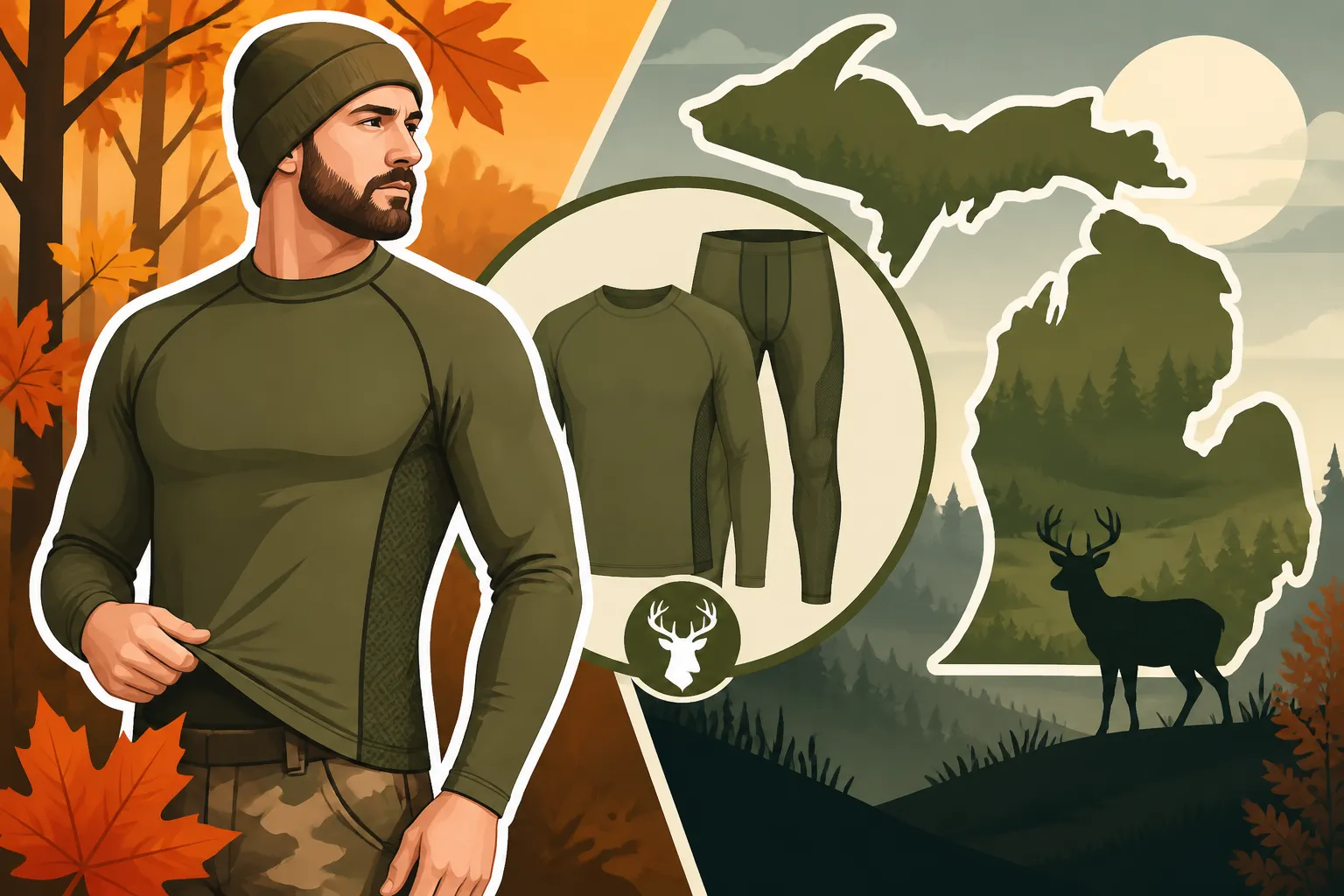
Base Layers for a Michigan November
Oh, November in Michigan. It's that time of year when every hunter dreams of big bucks and crisp mornings, but the reality often involves bone-chilling cold, unexpected rain, or even heavy snow. One minute you're sweating walking to your stand, the next you're shivering uncontrollably. Getting your clothing wrong can absolutely ruin a hunt, sending you back to the truck miserable and empty-handed. This guide is all about nailing that foundational layer of clothing—your base layers—to ensure you stay warm, dry, and focused on the hunt, no matter what Michigan's notoriously fickle weather throws at you.
Why Base Layers Are the Foundation of Your Michigan Hunting Comfort
When we talk about hunting in November, most folks immediately think about the big, bulky outer layers, those heavy coats and insulated bibs. And sure, those are important for stopping the wind and keeping the snow out. But honestly, if you don't have the right base layers on underneath, all that expensive outer gear isn't going to do you a bit of good. Your base layer is the first line of defense against the elements, sitting directly against your skin, and its job is absolutely critical: managing your body's moisture and providing initial insulation.
The Chilling Effect of Moisture on Your Skin
Imagine you've just hauled your stand a quarter-mile through the thick cedar swamp, pushing through brush and climbing over downed logs. You're breathing hard, and despite the cold air, you're probably sweating. Even if it's just a light sheen, that moisture will quickly turn from a warm byproduct of exertion into a cold, clammy enemy once you stop moving and the wind starts to bite. This is the "chilling effect." Water conducts heat away from your body much faster than air does. If your base layer absorbs that sweat and holds it against your skin, you'll feel cold, quickly becoming uncomfortable and potentially unsafe as your core temperature drops. This is especially true if you're out there all day, sitting motionless for hours during Michigan's November Firearm Deer Season.
A proper base layer, whether it's a top, bottom, or both, is designed to actively pull that moisture away from your skin and transfer it to the outer layers of your clothing system, where it can evaporate. This process is called "wicking." By keeping your skin dry, you're maintaining that crucial layer of warm, trapped air next to your body, which is what actually insulates you. It's the difference between a productive, focused hunt and an agonizing sit spent fantasizing about a warm cup of coffee back home.
Regulating Body Temperature Through Active Hunting and Sitting
Michigan hunting, especially during November, often involves a mix of strenuous activity and long periods of stillness. You might be still-hunting through a thick aspen cut, walking slowly, stopping frequently, or you could be hunkered down in a treestand from dawn until dusk. Each scenario presents a different challenge for temperature regulation. When you're moving, your body generates a lot of heat, and you need a base layer that can wick away that sweat efficiently without making you overheat.
Conversely, when you're sitting, your body isn't producing as much heat, and you rely heavily on your clothing's ability to trap and retain warmth. A good base layer acts as a thermal regulator, working to keep you comfortable through these transitions. It helps prevent those extreme swings from being too hot while walking to being too cold once you settle in. This adaptability is key for any successful hunt where you're covering ground or patiently waiting for a deer to appear. When you're planning your hunt, even with detailed scouting tools like GoHunt, remember to consider the physical demands of your chosen location and how that will impact your base layer needs.
Understanding Base Layer Materials: Wool vs. Synthetics
The debate between merino wool and synthetic fabrics for base layers is a long-standing one among hunters. Both have their strong points, and honestly, both can be excellent choices depending on your specific hunting style, the weather forecast, and even your budget. Knowing the pros and cons of each will help you make an informed decision for your Michigan November hunts.
Merino Wool: The Natural Performer
Merino wool has become incredibly popular in recent years, and for good reason. It's a natural fiber known for its exceptional warmth-to-weight ratio and its incredible softness—no scratchiness like the wool sweaters of old. One of merino's biggest advantages for hunting is its ability to retain much of its insulating properties even when wet. This is a game-changer when you consider Michigan's unpredictable November weather, where a quick drizzle can turn to snow, or you might find yourself busting through wet brush. Even if you work up a sweat on the walk in, that merino layer won't leave you feeling instantly chilled once you stop moving.
Furthermore, merino wool is naturally odor-resistant. This is a huge bonus for multi-day hunts or when you don't have the luxury of washing your clothes every evening. The natural structure of the wool fibers traps odor-causing bacteria, which means you can wear it for several days without broadcasting your presence to every whitetail in the woods. While it's generally more expensive than synthetics, many hunters find the comfort, warmth, and odor control well worth the investment. For cold-weather sitting, especially during Muzzleloader Deer Hunting in Michigan or late firearm season, a quality merino base layer can make all the difference.
Synthetics: Durable, Fast-Drying, and Often More Affordable
On the other side of the spectrum are synthetic base layers, typically made from polyester, polypropylene, or a blend of both. These materials are engineered to excel at wicking moisture away from your skin. They dry incredibly fast, which can be a huge advantage if you get caught in a downpour or if you're engaging in high-exertion activities that cause a lot of sweat. Unlike cotton, which absorbs moisture and holds it, synthetics are designed to move it through the fabric to the surface, where it can evaporate quickly.
Synthetics also tend to be more durable than merino wool, often holding up better to repeated washing and hard use in the field. They're typically more resistant to snags and tears, which is a consideration if you're pushing through thick briars or crawling through tight spots. From a cost perspective, synthetics are generally more budget-friendly than merino, making them an accessible option for many hunters. The main drawback for synthetics is often their tendency to retain body odor over time, though many modern synthetic fabrics are treated with antimicrobial agents to help combat this. If you plan on a more active hunt, say a Deer Drives With Three or Four Hunters scenario, synthetics might be a great choice for their quick-drying properties.
The Art of Layering: Integrating Base Layers into Your System
Understanding base layer materials is only half the battle; the other half is knowing how they fit into your entire clothing system. A base layer isn't meant to be worn in isolation; it's the critical first piece of a three-part puzzle: base, mid, and outer layers. Each layer has a specific job, and when they work together, they create an incredibly effective system for warmth and comfort in the field.
The Critical Role of Each Layer
Think of your hunting clothing like a well-oiled machine, where each component has a vital function. Your base layer, as we've discussed, is responsible for managing moisture and providing initial warmth. It's the closest layer to your skin. The mid-layer (or insulation layer) goes over your base layer and is designed to trap warm air and provide the bulk of your insulation. This could be a fleece jacket, a puffy vest, or a heavier wool sweater. Its job is purely about warmth.
Finally, your outer layer (or shell layer) is your protection from the external elements – wind, rain, and snow. This is typically a waterproof and windproof jacket and pants. The magic happens when these layers are chosen correctly and work in harmony. If your base layer fails to wick moisture, that sweat will get trapped, making your mid-layer damp and significantly reducing its insulating ability. If your outer layer isn't breathable, sweat can't escape, building up inside your system. Using tools like GoHunt to check detailed weather forecasts, including wind chill and precipitation chances, will help you decide which weights and combinations of layers to pack for your hunt. This system allows you to adapt to changing conditions by adding or removing layers as needed, ensuring you're never too hot or too cold. This modular approach is essential for any hunter spending long hours in a Treestand Setups in Michigan Hardwoods.
Adapting Your Layering for Michigan's Variable Conditions
Michigan weather in November can be incredibly unpredictable. One morning might be mild and damp, while the next could bring a surprise blizzard. The beauty of a well-planned layering system, starting with your base layer, is its adaptability. For example, if you're planning an active hunt like Still-Hunting Michigan Cedar Swamps early in the day when temperatures are climbing, you might opt for a lighter-weight merino or synthetic base layer to prevent overheating. As the day progresses and you settle into a stationary position, you can add a mid-layer for extra warmth.
Conversely, if the forecast calls for truly brutal cold and you're anticipating a long sit during Cold Weather Sitting Strategy, you might choose a heavier-weight merino base layer and a robust mid-layer, knowing that moisture management is still key but maximum insulation is paramount. Having a pack large enough to carry extra layers is always a smart move. I always recommend having a thin merino base layer paired with a mid-weight synthetic or wool option in my pack so I can adjust if the temperatures swing or if I find myself moving more than anticipated. This dynamic approach, facilitated by smart base layer choices, means you're prepared for whatever Mother Nature throws at you.
Choosing the Right Weight and Fit for Your Base Layers
Once you've decided on your preferred material—merino or synthetic—the next crucial steps are selecting the correct weight and ensuring a proper fit. These factors directly impact how effectively your base layer performs its job of wicking moisture and providing insulation. Get these wrong, and even the best material won't keep you comfortable.
Light, Mid, and Heavy: Matching Weight to Activity and Temperature
Base layers come in various weights, generally categorized as light, mid, and heavy (or expedition) weight. Each is designed for different levels of activity and specific temperature ranges.
- Lightweight Base Layers: These are ideal for high-exertion activities in cool-to-cold weather, or as a very thin layer for mild-to-moderate temps. They excel at wicking sweat quickly. Think of them for those longer walks to your stand or during an active Deer Drives on Michigan State Land where you'll be constantly moving and generating a lot of body heat. They offer minimal insulation but maximize moisture transfer.
- Midweight Base Layers: This is often the most versatile choice for Michigan's November hunting. Midweight layers offer a good balance of warmth and moisture-wicking capability. They're excellent for moderate activity in cold weather, or for stationary hunting in cool conditions. If you're unsure which weight to choose, a good midweight often serves as a great all-around option for Hunting the Michigan Rut in November when you might experience a wide range of temperatures.
- Heavyweight (Expedition) Base Layers: These are for very cold conditions and low-activity hunting, such as long sits in a treestand during the late season or in the brutal cold of the Upper Peninsula. They prioritize maximum insulation while still maintaining decent wicking properties. If you're going to be Hunting Michigan's Late Archery Season or simply not moving much, a heavyweight base layer is your best friend.
It's not uncommon for hunters to layer different weights of base layers or to pack multiple options to swap out depending on the day's hunt and predicted weather.
| Base Layer Weight | Activity Level | Typical Temperature Range | Primary Benefit | Ideal Michigan Scenario |
|---|---|---|---|---|
| Lightweight | High exertion | Cool to mild | Max Wicking | Long walk to stand, active tracking |
| Midweight | Moderate exertion | Cold | Balance of Warmth/Wick | Standard treestand hunt, still-hunting |
| Heavyweight | Low/No exertion | Very Cold | Max Insulation | All-day sit in extreme cold, late-season hunting |
The Importance of a Snug, But Not Constricting, Fit
The fit of your base layer is just as important as its material and weight. For a base layer to effectively wick moisture away from your skin, it needs to be in direct contact with it. This means a snug fit is crucial. If your base layer is too loose, there will be air gaps between the fabric and your skin, reducing its ability to pull moisture away efficiently. These air gaps can also trap cold air, making you feel chillier.
However, "snug" does not mean "constricting." Your base layer should allow for a full range of motion without feeling tight or restricting your circulation. You'll be climbing, walking, drawing a bow, or raising a rifle, and your clothing shouldn't hinder any of these movements. A good base layer feels like a second skin, comfortable and barely noticeable. Try on different sizes and brands to find what feels right for your body type. Remember, a well-fitting base layer is the unsung hero of a successful and comfortable hunt, allowing you to focus on the task at hand, not on being cold or wet. For more insights on layering in general, check out Layering for a Michigan Deer Stand to refine your entire system.
Care and Maintenance of Your Base Layers
Just like any other piece of critical hunting gear, your base layers need proper care to maintain their performance and longevity. Neglecting them can lead to a decrease in their wicking capabilities, odor retention, and premature wear, ultimately costing you comfort in the field and money in the long run.
Washing and Drying Best Practices
When it comes to washing your base layers, always follow the care instructions on the garment's label. This is particularly important for merino wool, which can shrink or get damaged with improper washing. Generally, for both merino and synthetics, it's best to use a gentle cycle with cold water and a mild detergent. Avoid harsh detergents, bleach, or fabric softeners. Fabric softeners, in particular, can clog the pores of technical fabrics, reducing their wicking ability. If you're looking for gear that stands up to rugged use, many hunting gear companies design their items to handle repeated washing, and a quick check on sites like GoHunt might offer reviews on durability.
Drying is another critical step. For merino wool, laying it flat to air dry is often recommended to prevent shrinking or stretching. Synthetics can usually be tumble dried on a low heat setting, but air drying is always the safest bet to prolong their life and prevent damage to elastic fibers. Avoid high heat at all costs, as it can degrade the fabric and its performance features. Proper washing and drying ensure your base layers retain their shape, wicking power, and insulating properties, ready for your next hunt.
Extending the Lifespan of Your Performance Clothing
Taking a few extra steps in care can significantly extend the life of your base layers. One simple trick is to turn your base layers inside out before washing. This protects the outer surface from abrasion, especially if it's a more delicate fabric like fine merino wool. Another tip is to wash them separately from items with zippers, buttons, or rough textures that could snag or damage the fabric.
When not in use, store your base layers properly. Keep them folded neatly in a drawer or hung, away from direct sunlight or extreme temperatures. If you've invested in quality merino, consider using cedar balls or sachets to deter moths, which can be a real problem for woolens. Regularly inspecting your base layers for small tears or worn spots can also help. Catching a small hole early means you can repair it before it becomes a large, hunt-ruining problem. After all, a dependable base layer is an investment in your comfort and success in the Michigan woods, so treating it right ensures it will perform season after season.
Disclaimer
This article is for general informational purposes only and does not constitute professional advice. Laws, prices and regulations vary by location and change over time. Consult a qualified professional for guidance on your specific situation.