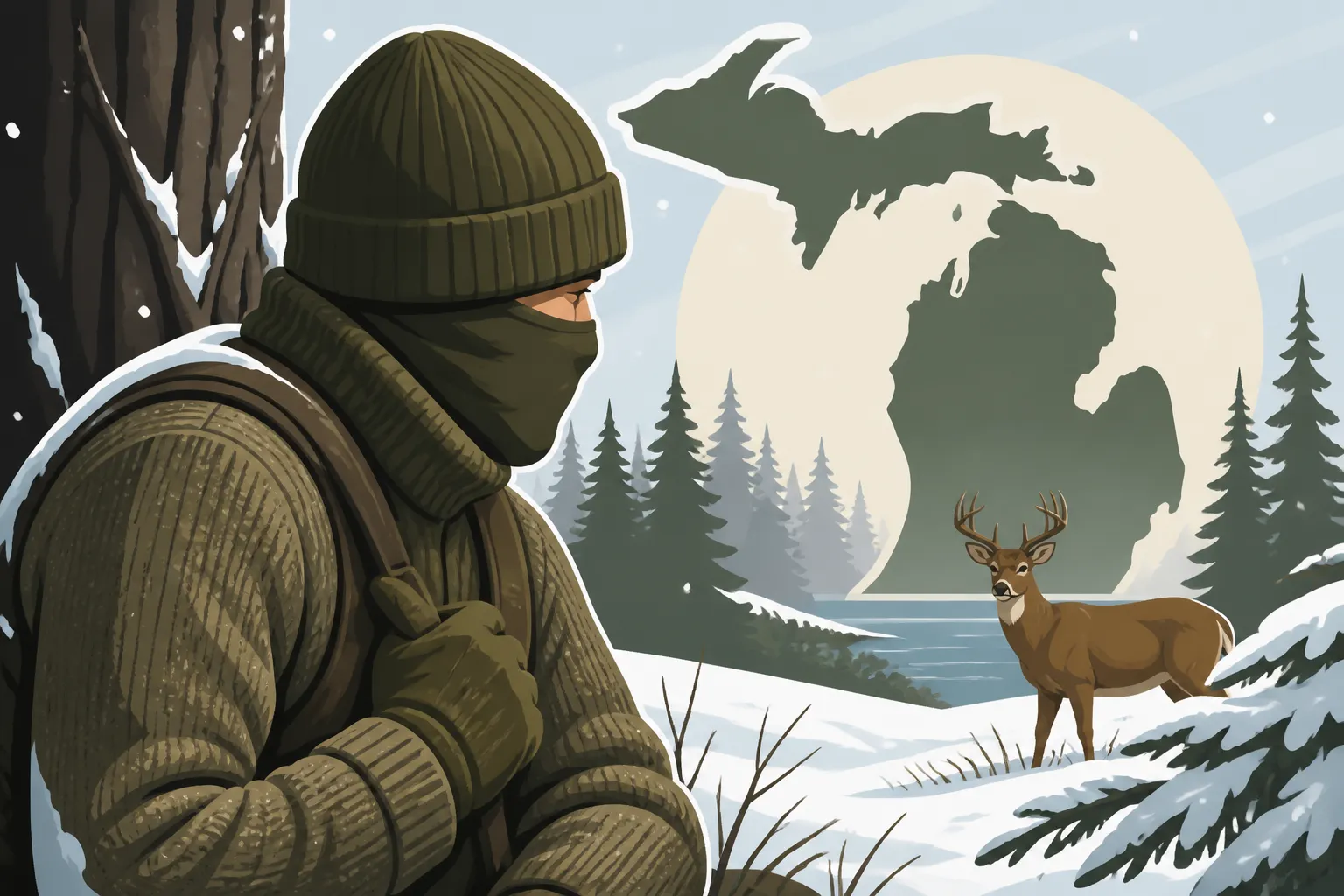
Wool for Wet Snow and Quiet Movement
One of the biggest frustrations for Michigan hunters is the weather. One minute it's crisp and cool, the next, a wet snow rolls in, soaking you to the bone. You're trying to slip quietly through the hardwoods, only to find your jacket rustling like a bag of chips with every step. This guide is all about tackling those exact challenges, showing you how wool clothing can be your best friend when faced with wet snow and the absolute need for quiet movement in Michigan's diverse hunting landscapes.
The Michigan Hunter's Dilemma: Staying Warm, Dry, and Silent
We've all been there, standing on a ridge or tucked into a pine thicket, trying to melt into the landscape. Then the Michigan weather does its thing. A beautiful, crisp morning can quickly turn into a damp, spitting mess, with heavy, wet snow clinging to every branch, saturating your clothes, and chilling you to the bone. It's a tale as old as time for those of us who chase deer, turkeys, or small game across our state.
The Challenge of Michigan Weather
Michigan's hunting seasons, particularly from late October through December, are a veritable roulette wheel of atmospheric conditions. You might start your morning with a heavy frost, then by mid-day, the sun is out and it feels downright mild, only for a lake effect snow squall to blow in, bringing a heavy, wet snow that melts as soon as it hits your outer layer, or worse, soaks right through. This isn't the dry, powdery stuff you might see out west; often, it's that heavy, slushy snow that has a knack for making you feel miserable. The problem with many modern synthetic fabrics is that while they might be great at shedding light rain or snow for a short period, once they get truly wet, they lose much of their insulating properties. That damp chill seeps right in, and your core temperature starts to drop, making a long sit in a Treestand Setups in Michigan Hardwoods or a still-hunt through a Michigan Cedar Swamp unbearable.
The Need for Quiet Movement
Beyond staying warm and dry, silence is absolutely golden in the Michigan woods. Whether you're trying to sneak into your stand before dawn, still-hunting a deer bedded down in a clearcut, or calling a gobbler in close, every rustle, every swish of fabric, can be the difference between a successful encounter and an alerted animal bounding away. Many popular synthetic hunting clothes, especially when they're cold and stiff, can sound like sandpaper rubbing together with every movement. Imagine trying to draw your bow on a wary buck that's just a few yards away, only to have the noise of your sleeve against your chest give you away. It's a common, heartbreaking scenario that can leave you questioning your gear choices. When you're trying to be stealthy, particularly during the Hunting the Michigan Rut in November or when tracking during Michigan Muzzleloader Season Tactics, noisy clothing can ruin an otherwise perfect setup.
Validating Hunter Frustrations
If you've spent countless hours shivering in a stand, trying to ignore the constant swish of your pants as you walk, you know the frustration firsthand. It's disheartening to feel underdressed or to have your approach compromised by noisy gear. We head to the woods for the peace, the challenge, and the connection with nature, but battling discomfort and giving away your position with sound can truly detract from the experience. It's not just about being uncomfortable; it's about diminishing your chances of success. No one wants to cut a hunt short because they're too cold or feel like a walking wind chime. We want gear that performs, allowing us to focus on the hunt, not on our shivers or the symphony of our clothing.
Why Wool Stands Out in Michigan's Woods
For generations, hunters relied on wool, and for good reason. It’s not just an old-school fabric; it’s a high-performance material that still outshines many modern synthetics in the unique challenges Michigan hunting presents. When you're looking for that perfect blend of warmth, quietness, and durability, wool really shines.
Incredible Warmth, Even When Wet
This is perhaps wool's most legendary superpower, and it's absolutely crucial for Michigan's damp, unpredictable weather. Unlike cotton, which becomes a chilling liability the moment it gets wet, and many synthetics that lose a significant amount of their insulating power when compressed or soaked, wool continues to provide warmth. The natural crimp and complex structure of wool fibers are designed to trap air, creating countless tiny insulating pockets. When wool gets wet, these fibers don't collapse entirely, maintaining much of that trapped air. Furthermore, wool has a unique characteristic called "heat of sorption" or an exothermic reaction: as the wool fibers absorb moisture vapor, they actually release a small amount of heat. This isn't to say you'll be toasty warm in soaking wet wool, but you'll be significantly warmer and less susceptible to hypothermia than you would be in other damp fabrics. This makes it ideal for those nasty days when Michigan's November Firearm Deer Season delivers sleet or heavy, wet snow.
Superior Scent Control
Deer are masters of scent. Their noses are incredible tools, and any foreign odor can send them fleeing. This is where wool offers another significant advantage over synthetic fabrics. Synthetics are essentially plastic, and bacteria, which cause human body odor, love to colonize on them, making them notoriously difficult to truly de-scent. Wool, however, has a natural resistance to odor-causing bacteria. Its complex fiber structure, combined with its ability to manage moisture, creates an environment less hospitable for bacterial growth. The lanolin in natural wool also plays a role in this. While no clothing can make you completely scent-free, wearing wool can dramatically reduce your human odor signature, giving you a tangible edge, especially when stalking or sitting on a well-used deer trail where every little bit of scent control counts.
Unmatched Silence and Durability
Picture trying to stalk a wary buck through frosted woods. Every step is calculated, every movement deliberate. The last thing you want is for your clothing to betray you. Many synthetic fabrics, especially those designed to be waterproof or windproof, can be stiff and make a distinct "swish" or "crinkle" sound with movement, particularly in cold temperatures. Wool, on the other hand, is inherently soft and pliable. It moves with you silently, gliding against itself without producing those tell-tale sounds. This quiet movement is invaluable for still-hunting, slipping into a stand, or making that final draw on a close-range animal. Beyond silence, wool is surprisingly durable. Its fibers are strong and resilient, resisting tears and abrasions from busting through thick brush, crawling through blowdowns, or climbing into a tree. A good wool outer layer can withstand years of abuse in the Michigan woods, proving its worth over and over again.
Breathability and Temperature Regulation
One of the often-overlooked benefits of wool is its exceptional ability to regulate body temperature. It's not just about keeping you warm; it's also about preventing you from overheating when you're exerting yourself, like hiking to a remote stand, dragging a deer, or doing some active Deer Drives With Three or Four Hunters. Wool fibers are naturally breathable and excel at wicking moisture (sweat) away from your skin, moving it to the outer layers where it can evaporate. This evaporative cooling helps prevent you from getting clammy and chilled when you stop moving. When you're stationary, those same trapped air pockets work to insulate you and hold in your body heat. This active temperature regulation means less layering fuss throughout the day, allowing you to adapt to Michigan's fluctuating temperatures and activity levels without constantly adding or shedding layers.
Choosing the Right Wool for Your Michigan Hunt
Not all wool is created equal, and understanding the different types can make a huge difference in optimizing your hunting clothing system. From the silky feel of merino to the ruggedness of traditional blends, there's a wool solution for every layer and every Michigan hunting scenario.
Merino Wool for Next-to-Skin Layers
When it comes to base layers, Merino wool is the undisputed champion for hunters. Unlike the coarser wool that might make you think of itchy sweaters from your grandma, Merino sheep produce incredibly fine, soft fibers that feel fantastic against the skin. This means no itch, even for those with sensitive skin. The magic of Merino for base layers lies in its superior moisture-wicking properties and its ability to regulate temperature. A good Merino base layer will pull sweat away from your skin, keeping you dry and preventing that clammy chill that often comes with synthetics once you stop moving.
For Michigan hunting, you'll want to consider different weights based on the season and your activity level. A lightweight (150-200 gram) Merino base layer is perfect for early season archery or as a foundational layer when you expect to be moving a lot. For colder conditions, like Hunting the Peak Rut Week in Michigan or Cold Weather Sitting Strategy, a mid-weight (250-300 gram) or even heavy-weight (300+ gram) Merino base will provide more insulation and warmth directly against your skin. Brands like Smartwool, Icebreaker, and Sitka offer fantastic Merino options that are designed to handle the rigors of hunting, giving you that crucial first layer of defense against Michigan's cold and damp.
Traditional Wool for Outer and Mid-Layers
While Merino excels against the skin, traditional wool, often made from coarser sheep breeds or even blends, truly shines as a durable, quiet, and warm mid or outer layer. Think of the classic wool shirts, vests, or even heavier coats and pants that generations of hunters have worn. These garments are often denser, offering excellent wind resistance and remarkable durability against thorns, brush, and general abuse in the woods. Many traditional wool garments are also "felted," meaning the fibers are matted together to create an even denser, more wind-resistant and water-resistant fabric.
For a mid-layer, a traditional wool sweater or vest can provide incredible warmth without excessive bulk. When it comes to outer layers, a sturdy wool jacket or pair of pants will not only keep you warm and quiet but also provide excellent protection from the elements. They might not be as lightweight or packable as some modern synthetics, but their performance in terms of warmth when damp, quietness, and ruggedness is hard to beat. This type of wool is especially good when Still-Hunting Michigan Cedar Swamps where you're constantly brushing against wet foliage and need something tough and quiet.
Understanding Wool Blends and Treatments
The world of wool isn't just pure Merino or traditional coarse wool anymore. Many modern hunting garment manufacturers combine wool with synthetic fibers to enhance specific properties. You might find blends that add a small percentage of nylon or spandex for increased durability, stretch, or faster drying times. These blends can offer a "best of both worlds" scenario, retaining much of wool's core benefits while adding some of the advantages of synthetics.
Additionally, some wool garments are treated with durable water repellent (DWR) finishes. While wool itself is naturally somewhat water-resistant (thanks to lanolin and its fiber structure), a DWR treatment can significantly improve its ability to shed light rain and wet snow before it has a chance to soak into the fibers. It's important to remember that these treatments are not permanent and will need to be reapplied over time. When considering blends or treated wool, always check the composition. The higher the wool content, generally the more you'll benefit from wool's unique properties. These innovations make wool an even more versatile choice for Michigan hunters who need robust performance in varying conditions.
Integrating Wool into Your Michigan Hunting System
Switching to or incorporating wool into your hunting setup isn't just about buying a single piece; it's about building a system that leverages wool's strengths. A thoughtful layering strategy, proper care, and understanding the value proposition will ensure your wool gear performs for years to come.
Layering with Wool for Maximum Effectiveness
The key to staying comfortable in Michigan's highly variable weather is a smart layering system, and wool can be the hero of every layer. You want to be able to add or subtract insulation as your activity level changes or as the temperature fluctuates throughout the day.
- Base Layer (Next-to-Skin): Start with a lightweight or mid-weight merino wool for next-to-skin layers. This layer is crucial for wicking moisture away from your body. It keeps you dry, which is the first step to staying warm. Even if you sweat climbing a hill or dragging a deer, the Merino will manage that moisture and reduce chilling once you stop.
- Mid Layer (Insulation): This is where traditional wool sweaters, vests, or heavier Merino fleece can shine. This layer provides the bulk of your insulation. A wool mid-layer will trap warm air close to your body. Depending on how cold it is, you might layer one or two mid-layers. A classic wool anorak or a heavy Merino hoodie works wonders here.
- Outer Layer (Protection): For your outer layer, you're looking for wind and weather protection. While a heavy, felted wool coat can provide excellent protection and warmth, especially if it's treated for water resistance, you might also consider a windproof/water-resistant shell over your wool mid-layers for truly nasty conditions. The wool underneath continues to insulate even if the outer shell gets breached, and most importantly, it remains quiet. This system allows you to adapt from a brisk Hunting the Pre-Rut in Late October morning to a wet, snowy afternoon chasing deer during Michigan's November Firearm Deer Season. Remember, the goal is to be able to adjust your warmth level without making a racket. For more on this, check out Layering for a Michigan Deer Stand.
Care and Maintenance of Wool Gear
One of the misconceptions about wool is that it's difficult to care for. While it requires a little more thought than throwing everything into a hot wash and tumble dry, proper care is straightforward and will extend the life of your valuable wool gear.
- Washing: For most Merino base layers, machine wash on a gentle cycle with cold water. Use a mild detergent specifically designed for wool, or a gentle, non-biological detergent. Avoid hot water, as it can cause shrinking. Turn garments inside out to protect the outer surface. For traditional wool outerwear, hand washing or dry cleaning might be recommended, or specialized wool wash cycles on newer machines.
- Drying: Never put wool in a hot dryer. The heat and agitation will almost certainly cause shrinking and damage the fibers. Instead, lay wool garments flat on a clean towel to air dry, reshaping them as needed. You can also hang them, but be mindful of stretching, especially with heavier items. Air drying might take longer than with synthetics, but it's essential for preserving your wool's integrity.
- Storage: Before storing your wool for the off-season, make sure it is completely clean and dry. Moths love dirty wool, so a thorough wash is crucial. Store wool in sealed bags or containers with cedar balls or lavender sachets to deter pests. Proper care means your investment will last for many seasons to come, becoming a reliable part of your Michigan Deer Camp Traditions.
Cost vs. Value: An Investment in Comfort and Success
Let's be real: quality wool hunting gear can come with a higher price tag than many synthetic alternatives. This can be a hurdle for some hunters. However, it's crucial to view wool as a long-term investment, not just another purchase.
Consider the longevity of wool. With proper care, a well-made wool jacket or set of base layers can last for a decade or more, often outperforming and outlasting several cheaper synthetic replacements. Over time, the cost per wear or per season often ends up being competitive, if not lower, than constantly replacing worn-out or underperforming synthetics.
Beyond durability, there's the intangible value of comfort and increased success. Being truly warm, dry, and silent in the woods enhances your focus, extends your time afield, and significantly improves your chances of encountering game undetected. When you're not shivering or worrying about making noise, you can fully immerse yourself in the hunt. For many Michigan hunters, that added confidence and comfort is well worth the upfront investment. It’s about being prepared for whatever the Michigan wilderness throws at you, from Boots for Michigan Swamps and Snow to the right layers for Hunting Michigan's Late Archlerly Season, and knowing your gear won't let you down.
| Feature | Wool (Merino / Traditional) | Synthetics (Fleece / Polyester) |
|---|---|---|
| Warmth When Wet | Excellent (retains insulation) | Poor to Fair (loses insulation) |
| Scent Control | Superior (naturally odor-resistant) | Poor (holds odor, needs treatment) |
| Quietness | Excellent (soft, pliable) | Variable (can be noisy, stiff) |
| Breathability | Excellent (wicks, regulates temp) | Good (wicks, but can feel clammy) |
| Durability | Good (resilient, abrasion resistant) | Variable (pills, snags, can melt) |
| Weight | Moderate to Heavy | Light to Moderate |
| Drying Time | Slow | Fast |
| Cost | Higher upfront | Lower upfront |
Disclaimer
This article is for general informational purposes only and does not constitute professional advice. Laws, prices and regulations vary by location and change over time. Consult a qualified professional for guidance on your specific situation.