Field Dressing Knives Worth Carrying
There's nothing quite like the satisfaction of a successful hunt in the Michigan woods, but that feeling can quickly turn to frustration if you're not properly equipped for the next crucial step: field dressing. Fumbling with a dull, flimsy, or ill-suited blade can turn an exciting moment into a messy, inefficient, and even dangerous ordeal. This guide will walk you through what truly makes a great field dressing knife, exploring different styles and essential features to help you choose the right tool to make quick, clean work of preparing your game for the journey home.
The Unsung Hero: Why Your Field Dressing Knife Matters More Than You Think
When we talk about hunting gear, often the rifle, bow, or scope gets all the glory. But for any hunter who's spent time in the field, they know the importance of a reliable knife. Your field dressing knife isn't just a tool; it's an extension of your preparedness and respect for the animal. A good knife makes the process faster, cleaner, and ultimately, safer for you and better for the meat.
Think about it: after the shot, especially in Michigan's variable weather, time is often of the essence. You need to get that deer or bear cooled down as quickly as possible to preserve the quality of the meat. A knife that snags, dulls quickly, or is hard to handle slows you down, exposing the meat to undesirable temperatures longer. Plus, a dull knife is far more dangerous than a sharp one because it requires more force, increasing the chance of a slip and a serious injury. Many hunters, myself included, have learned this lesson the hard way. It’s a moment that demands focus, precision, and the right tool for the job. You've done the hard work of Tracking a Deer in Michigan Snow or executing your Cold Weather Sitting Strategy, don't let a poor knife undermine the final steps.
Essential Features of a Top-Notch Field Dressing Knife
Not all knives are created equal, and what makes a great everyday carry knife might not cut it for field dressing. When you're looking for a knife that will serve you well when processing game, there are several key features to consider. These aren't just fancy add-ons; they're practical elements that directly impact performance and safety.
Blade Shape and Grind
The shape of your knife's blade is paramount for efficient field dressing. Most hunters gravitate towards a few tried-and-true designs. A drop point or a clip point blade with a slight belly is often preferred. The belly helps with skinning, allowing for long, smooth cuts. The point, whether drop or clip, needs to be strong enough for piercing but not so fine that it's prone to breaking or snagging unnecessarily. For example, a fine clip point can be useful for precision work around the anus or for opening the abdominal cavity without puncturing intestines, but if it's too thin, it could be fragile.
The grind of the blade also matters. A Scandinavian or saber grind is incredibly strong and excels at splitting bone (like the sternum) or cartilage, but might be harder to sharpen for some. A hollow grind, while making for a very sharp edge, can be less durable for tougher tasks. Many quality field dressing knives feature a flat grind, offering a good balance of sharpness and durability for the variety of cuts required.
Blade Steel and Edge Retention
The type of steel used in your knife's blade dictates its edge retention (how long it stays sharp), ease of sharpening, and corrosion resistance. In Michigan's often wet and cold environment, corrosion resistance is a huge plus. Nobody wants to pull out a rusty knife when they need it most. Stainless steel alloys are popular for this reason.
High-carbon stainless steels offer a fantastic balance. They hold an edge well, meaning you won't be stopping to sharpen halfway through field dressing, and they resist rust. Premium steels will cost more, but they often translate to less time on the sharpener and more confidence in the field. There are also knives with replaceable blades, which we'll discuss later, that completely bypass the sharpening concern in the field. Whether you prefer a traditional fixed blade or a modern replaceable system, the quality of the edge is non-negotiable.
Handle Design and Grip
Your hands will likely be wet, bloody, and cold during field dressing, so a secure grip is absolutely critical for safety. Look for handles made from materials like G-10, Micarta, Kraton, or even textured rubber. These materials offer excellent traction even when wet. Avoid smooth, polished handles – they might look nice, but they're a recipe for disaster in the field.
Ergonomics are equally important. A handle should fill your hand comfortably, allowing for a firm, controlled grip without causing hotspots or fatigue. Finger grooves can be helpful for some, while others prefer a more neutral handle shape. A guard or choil is also a smart feature, preventing your hand from sliding forward onto the sharp blade, especially during powerful thrusting motions. When planning your hunt, whether you use tools like GoHunt for mapping or just your trusty compass, remember that good gear extends to every part of the experience, including the grip on your knife.
Sheath Quality
For fixed-blade knives, the sheath is an extension of the knife itself. It needs to securely hold the blade, protect the edge, and allow for easy, safe access. Kydex, rigid nylon, or quality leather are common materials. A good sheath will have a retention system that prevents the knife from falling out during movement but allows for a smooth draw when needed.
Consider how you'll carry the knife. A belt loop, Molle compatibility, or even neck carry options (for smaller knives) might be important depending on your hunting style and vest setup. A poorly designed sheath can lead to a lost knife or, worse, an accidental cut.
Popular Knife Styles for Michigan Field Dressing
With a solid understanding of key features, let's dive into the different types of knives commonly used for field dressing in Michigan. Each has its pros and cons, and the "best" choice often comes down to personal preference and how you intend to use it.
Fixed Blade Knives
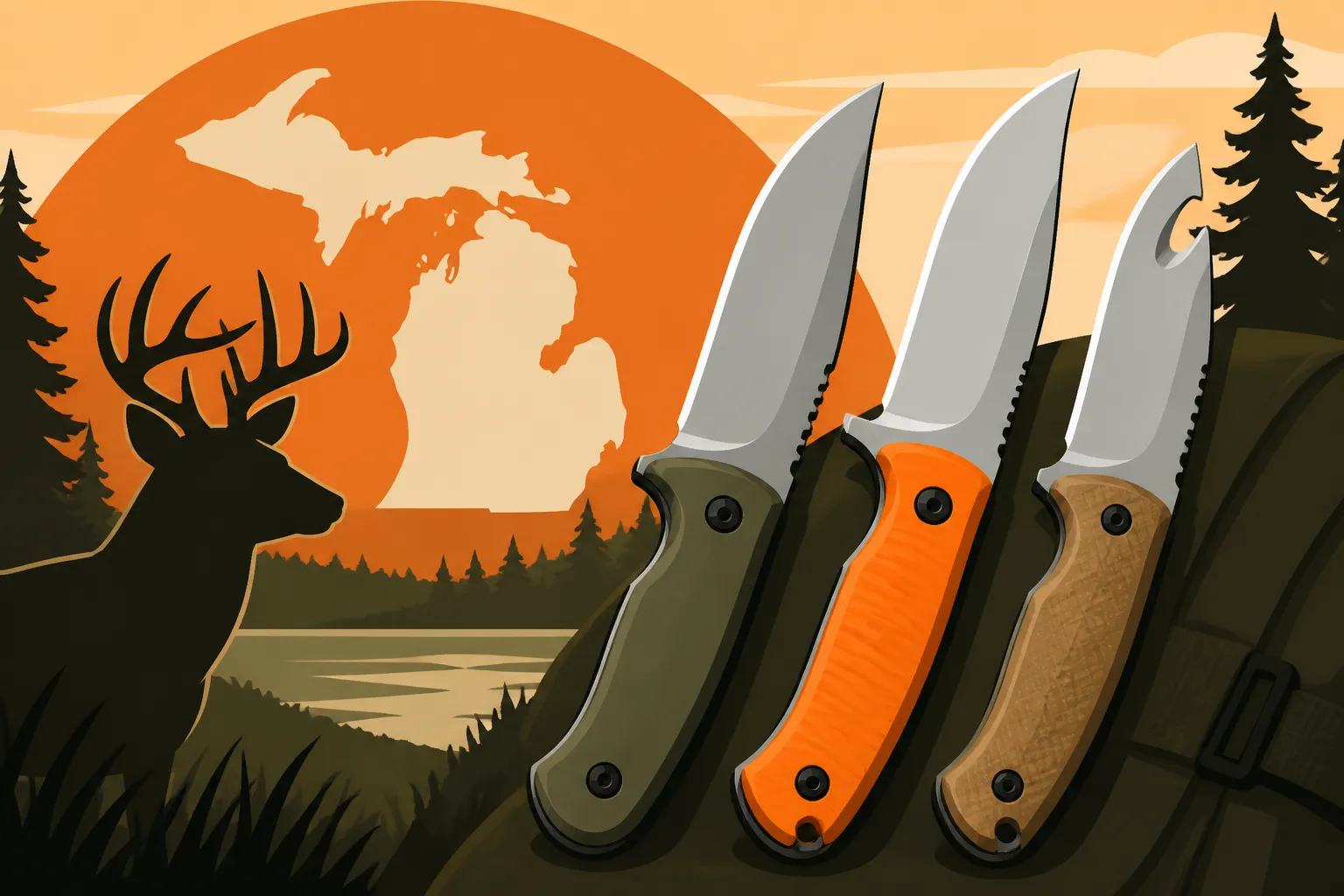
The classic fixed blade hunting knife remains a perennial favorite for good reason. These knives feature a blade that extends through the entire handle (full tang), making them incredibly strong and durable. There's no hinge to fail, no moving parts to get gunked up, and they're typically easier to clean thoroughly after use.
A sturdy fixed blade can handle everything from making the initial cuts to splitting the sternum or pelvic bone (if allowed by your method, though many opt for gutless methods or specialized tools for bone). They often have a thicker spine and a more robust tip, giving you confidence in tough situations. Many hunters carry a fixed blade as their primary field dressing tool, relying on its strength and consistent performance. However, they do require regular sharpening, which means carrying a small sharpening stone or rod with you, or ensuring your knife is razor-sharp before you ever leave camp. When I'm packing for a hunt in the Hunting the Michigan Upper Peninsula for Deer or Southern Michigan Farm Country Deer Hunting, a sharp fixed blade is always the first knife in my pack.
| Feature | Fixed Blade Knife |
|---|---|
| Pros | Extremely strong, durable, easy to clean, reliable |
| Cons | Requires sharpening in the field, bulkier to carry |
| Best Use | Primary field dressing, heavy-duty tasks |
| Handle | Full tang for maximum strength |
| Maintenance | Regular sharpening, thorough cleaning |
Folding Knives
While not as common for primary field dressing, a robust folding knife can be a valuable secondary tool or a primary for smaller game. Modern folding knives are incredibly strong, especially those with sturdy lock-back or frame-lock mechanisms. Their main advantage is portability; they fold down, making them compact and easy to carry in a pocket or pack.
However, folding knives present a few challenges for field dressing. The pivot point and handle scales can create crevices where blood and tissue can accumulate, making them harder to clean thoroughly and potentially less hygienic. The blade can also be less robust than a full-tang fixed blade, though many high-quality folders are more than capable. If you opt for a folder, make sure it has a strong lock that won't fail under pressure, and be prepared for a more meticulous cleaning process post-hunt. A folding knife might be great for general camp tasks or opening a box of snacks, but for the messy work of Field Dressing a Deer in Cold Weather, a fixed blade often feels more secure.
Replaceable Blade Knives
This category has gained significant popularity in recent years, and for good reason. Replaceable blade knives offer razor-sharpness every single time you need it, without the hassle of field sharpening. They use surgical-grade scalpel blades or utility knife blades that can be easily swapped out. This means you can use one blade for the initial cuts, swap it out if it dulls or gets gunked up, and have a fresh, surgically sharp edge for the delicate work.
The primary advantage is consistent sharpness, which translates to cleaner cuts and less effort. This can be a huge benefit for inexperienced hunters or those who simply prefer not to sharpen knives in the field. The blades are usually very thin, making them excellent for skinning and fine work. The downside is that these blades are often not as robust as a traditional fixed blade. They can snap if twisted or used for prying, so you need to be mindful of their limitations. Carrying extra blades is a must, and ensuring the blade retention mechanism is secure is vital. For quick and clean work, especially if you're practicing the gutless method of field dressing, these knives are hard to beat. Just remember they aren't for hacking or prying.
Beyond the Blade: Sharpening, Care, and Other Tools
Having the right knife is only half the battle; knowing how to maintain it and understanding complementary tools will complete your field dressing kit.
Sharpening in the Field and At Home
For fixed-blade and traditional folding knives, sharpening is an ongoing process. Before every hunt, ensure your blade is razor-sharp. A dull knife is dangerous and inefficient. In the field, a small diamond sharpener, ceramic rod, or even a compact pull-through sharpener can bring an edge back to life. Practice at home so you're proficient when it counts. A truly sharp knife should effortlessly slice through paper, not tear it. This practice is as fundamental as Scouting Michigan Public Land Before Season with your maps.
At home, a more comprehensive sharpening system will keep your knives in top condition. Stones, guided sharpeners, or even electric sharpeners can all achieve excellent results. The key is to maintain a consistent angle.
Cleaning and Hygiene
This cannot be overstated: clean your knife thoroughly after every use. Blood and tissue are breeding grounds for bacteria, and a dirty knife is unsanitary. Hot, soapy water and a good scrub brush are your best friends. Pay special attention to the pivot points on folding knives. After cleaning, dry the knife completely and apply a light coat of food-grade oil to prevent rust, especially if you're putting it away for an extended period. Proper hygiene protects you and ensures the meat you worked so hard for remains clean and edible. This is as important for meat care as Handling Bear Meat Safely or ensuring your coolers and game bags are clean.
Gut Hooks and Other Specialized Tools
While a good field dressing knife is versatile, some hunters opt for specialized tools. A gut hook, often integrated into the back of a knife blade or as a separate tool, is designed to open the abdominal cavity without puncturing intestines. This can be especially useful for beginners or those who prefer a cleaner initial cut.
Another tool that's gaining traction, particularly for larger game or those employing the gutless method, is a game saw. This small, often folding saw makes quick work of cutting through the sternum, pelvis, or even limbs if you're quartering in the field. It’s far safer and more efficient than trying to force a knife through bone. Remember, you can consult resources like GoHunt to plan your entire hunt, but the physical tools you carry are just as vital for success.
Carrying Your Field Dressing Kit
Consider a small pouch or separate compartment in your pack for your field dressing kit. This should include your primary knife, extra blades (if using a replaceable blade system), a field sharpener (for fixed blades), a small roll of paper towels or wipes, and perhaps a pair of latex or nitrile gloves. Gloves are a simple yet incredibly effective way to maintain hygiene and keep your hands clean during the process, especially when you're Butchering a Deer at Camp or just field dressing quickly on public land.
Final Thoughts on Choosing Your Blade
Ultimately, the best field dressing knife for you is the one you trust, that fits comfortably in your hand, and that you've practiced using. Spend some time handling different styles, read reviews, and talk to other hunters in Michigan. What works for one person hunting Michigan's November Firearm Deer Season might not be ideal for another stalking turkeys in Spring Turkey Hunting in Michigan.
Invest in quality. A good knife is not just a tool; it’s an investment in efficiency, safety, and respect for the game. It will serve you faithfully for many seasons, making those hard-earned moments in the field as smooth and rewarding as possible.
Disclaimer
This article is for general informational purposes only and does not constitute professional advice. Laws, prices and regulations vary by location and change over time. Consult a qualified professional for guidance on your specific situation.