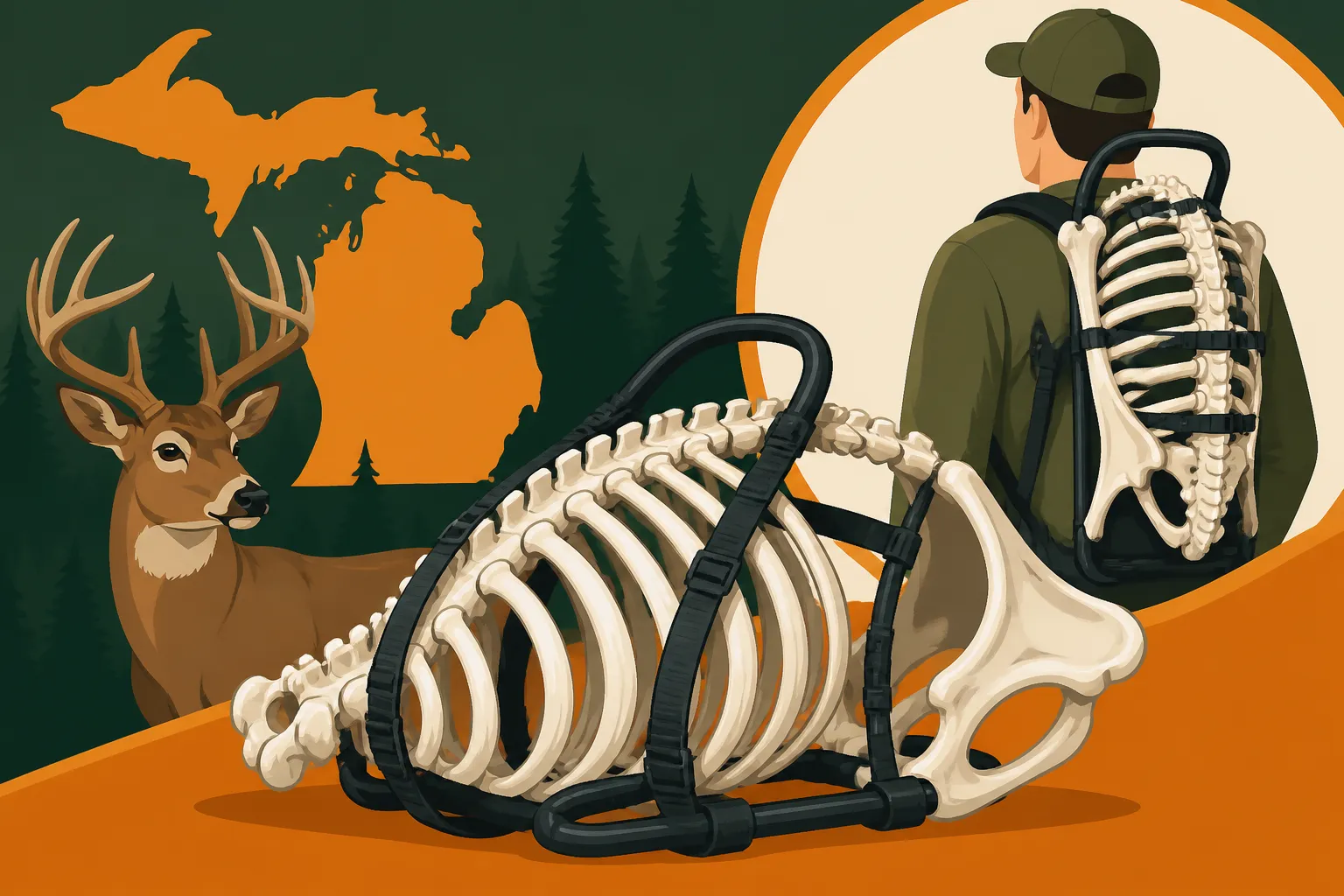
Frame Packs for Boning Out a Deer
There’s a moment every Michigan deer hunter knows: that triumphant feeling after a successful shot, quickly followed by the sinking realization of the long, arduous drag back to the truck. Whether it's through a gnarly cedar swamp, over unforgiving logging slash, or across miles of undulating hardwoods, getting a whole deer out of the woods can turn a celebration into a grueling test of endurance. This guide is all about making that experience manageable, even enjoyable, by exploring how a frame pack, paired with the art of boning out a deer, can revolutionize your Michigan hunting trips.
Why a Frame Pack is a Game Changer for Michigan Hunters
Michigan's diverse hunting landscape, from the dense conifer swamps of the Upper Peninsula to the rolling hills and thickets of the northern Lower, presents unique challenges when it comes to game retrieval. Dragging a whole deer, especially a mature buck, can be a back-breaking, sweat-drenched affair that leaves you exhausted and possibly even injured.
The Reality of Michigan's Terrain
Picture this: you've just taken down a beautiful Michigan whitetail deep in a swamp, maybe a mile off the nearest two-track. The ground is soft, spongy, and covered in tangled roots and downed timber. Every step is an effort, and trying to pull 150-plus pounds of dead weight through that muck feels impossible. The notion of Getting a Deer Out of a Michigan Cedar Swamp often conjures images of endless struggle. Or perhaps you're hunting one of the extensive clearcuts in northern Michigan, where young aspens and pines form an impenetrable wall, and dragging means constantly snagging on sharp branches and fallen logs. Even in open hardwoods, an unexpected change in elevation can turn a simple drag into a colossal undertaking.
Michigan's terrain is rarely flat, open, or easy. Rivers, creeks, beaver ponds, and elevation changes are common, forcing you to navigate obstacles with a heavy load. Add in the elements—rain, mud, or deep snow during Michigan's November Firearm Deer Season—and dragging becomes exponentially harder. For many of us who hunt public land or deep in the big woods, getting a vehicle close to a downed deer simply isn't an option.
The "Boning Out" Advantage
This is where boning out your deer comes into play, transforming a seemingly insurmountable task into a series of manageable loads. Boning out, essentially, means field dressing the animal, removing the hide, and then carefully separating the muscle groups (the meat) from the bone structure right there in the woods. You leave the heavy bones, skull (unless it's an antlered deer you want to cape out), and hide behind, significantly reducing the weight you need to transport.
By boning out, you convert several hundred pounds of ungainly carcass into compact, heavy, but ultimately backpack-friendly portions of meat. This strategy is not just about weight reduction; it’s about efficiency and keeping your meat clean and cool. Instead of struggling for hours to drag a carcass, you can spend a focused hour or two processing the animal on site, then make one or more trips with a comfortable, well-distributed load on your back. This method aligns perfectly with strategies for Field Dressing a Deer in Cold Weather, allowing you to quickly process the animal and get the meat cooling, especially important during warmer early archery seasons.
Legalities and Practicalities of Transport
When it comes to transporting game in Michigan, regulations primarily focus on the requirement to validate and report your harvest. As long as you maintain proof of sex and antlers (if applicable) for antlered deer, and keep all parts of the deer that are required for identification and reporting until it's processed, boning out is a perfectly legal and practical approach. Typically, this means carrying out the validated kill tag attached to a portion of the meat, along with evidence of sex. Always double-check the latest Michigan DNR regulations, but the general principle is that the "proof of sex" (e.g., antlered head or an attached unskinned portion of the hindquarter showing sex organs) needs to be retained until final processing or storage.
Practically speaking, boned-out meat takes up less space in a cooler and is easier to handle once you get back to camp. It allows you to transport meat in game bags, which protect it from dirt, insects, and debris during your trek. This method can save you significant time, energy, and potential frustration, especially if you're Hunting the Michigan Upper Peninsula for Deer where vast, rugged wilderness often means long distances from roads.
Key Features to Look for in a Michigan Deer Hunting Frame Pack
Not all backpacks are created equal, especially when you're talking about hauling hundreds of pounds of deer meat out of the Michigan wilderness. A dedicated frame pack is designed specifically for heavy loads, offering features that a traditional daypack simply cannot.
Capacity and Load Shelf Design
The core of any good frame pack for meat hauling is its robust external frame and integrated load shelf. A typical Michigan whitetail can yield between 40-70 pounds of boned-out meat, sometimes more for a very large buck. You need a pack that can comfortably handle at least that much, plus your day hunting gear. Look for a pack with a strong, rigid aluminum or carbon fiber frame that can bear substantial weight without collapsing or shifting. The load shelf, often a fold-out or integrated platform at the bottom of the frame, is crucial. It allows you to place heavy items like meat directly on the frame, transferring the weight to your hips and legs, rather than just your shoulders.
Consider packs that offer a gap between the main pack bag and the frame, allowing you to sandwich your game bags directly against the frame and cinch them down securely. Some popular brands offer excellent systems for this, often highlighted in reviews on sites like GoHunt for their robust designs. Having the option to carry a full load of meat (or even a full deer quarter) wrapped in game bags, separate from your other gear in the main bag, helps prevent contamination and keeps your hunting essentials clean for the next outing.
Comfort and Adjustability
You might be carrying a heavy load for hours, potentially over uneven terrain. Comfort is paramount. A good frame pack will feature a highly adjustable suspension system, including shoulder straps, a hip belt, and a sternum strap, all designed to distribute weight efficiently and reduce hot spots or pinching. The hip belt should be substantial and well-padded, as it will carry the majority of the weight. Lumbar support is also key to preventing back fatigue.
Look for packs that offer a wide range of torso length adjustments. This allows you to custom-fit the pack to your body, ensuring the weight is correctly distributed and preventing the pack from riding too high or too low. Many serious hunters, as discussed in Packs for a Day on State Land, invest in packs that allow for precise fitting, often adjusting them seasonally depending on their layering system. When reading reviews on a platform like GoHunt, pay close attention to user feedback regarding comfort under heavy loads. A pack that feels great with 20 pounds can be a torture device with 80.
Durability and Weather Resistance
Michigan's woods are not kind to gear. Your frame pack needs to be built tough to withstand snags from brush, abrasions from rocks, and the general wear and tear of being dragged, thrown, and loaded. Look for packs constructed from durable, high-denier fabrics like Cordura or ripstop nylon. Reinforced stitching at stress points and heavy-duty zippers are also indicators of quality construction that will hold up season after season.
Weather resistance is another critical factor. While game bags protect the meat, a water-resistant pack will keep your other gear—extra layers, phone, compass, food—dry in case of a sudden Michigan downpour or wet snow. While few packs are fully waterproof, many offer excellent water resistance or come with integrated rain covers. When you're out Still-Hunting Michigan Cedar Swamps, you know moisture can seep in everywhere, so having a pack that repels it is a huge advantage. You want a pack that can handle the inevitable moisture from processing a deer, as well as the unpredictable weather that Michigan often throws at hunters.
| Feature | Importance for Michigan Hunting | Key Considerations |
|---|---|---|
| Frame Material | Must handle heavy, shifting loads over rough terrain. | Carbon fiber (lighter, more rigid) or aluminum (durable, slightly heavier). |
| Load Shelf | Essential for carrying boned-out meat or quarters directly on the frame. | Integrated or adjustable shelf; allows weight to transfer to hips, separating meat from main pack bag. |
| Capacity | Sufficient room for boned-out meat and day hunting gear. | 4000-7000 cubic inches (expandable options are a plus); consider total load volume. |
| Adjustability | Critical for comfortable, efficient weight distribution. | Torso length, shoulder strap, hip belt, and sternum strap adjustments; ensure a custom fit for your body. |
| Padding | Prevents hot spots and fatigue during long, heavy hauls. | Thick, comfortable padding on shoulder straps, hip belt, and lumbar area; breathable materials for sweat. |
| Fabric Durability | Withstands snags, abrasions, and rough handling in dense cover. | High-denier nylon (500D+), Cordura, ripstop; reinforced stitching at stress points. |
| Weather Resistance | Protects gear and meat from rain, snow, and wet conditions. | Water-resistant coatings, durable zippers, integrated rain covers; essential for Michigan's unpredictable weather. |
Field Techniques for Boning Out and Loading Your Pack
Having the right frame pack is only half the battle; knowing how to efficiently bone out a deer and load that meat correctly is equally important for a successful retrieval. This isn't just about speed; it's about cleanliness and preserving your harvest.
The Gutless Method for Speed and Cleanliness
The "gutless method" is a fantastic technique that pairs perfectly with a frame pack, especially when you're deep in the woods or don't want to deal with gut pile mess. Instead of opening the body cavity, you skin one side of the animal, remove the quarter, then flip it over and repeat. Start by carefully skinning one side of the deer, separating the hide from the muscle. Once one side is skinned, you can begin removing the muscle groups: the front shoulder, the hindquarter, and the backstraps and tenderloins. The process can be quite quick once you get the hang of it, often taking experienced hunters less than an hour.
The key is to work carefully to keep the meat clean. Lay the deer on a tarp or clean surface if possible, or use the hide itself as a clean mat. Have sharp knives and game bags ready. Many hunters find step-by-step videos helpful for learning this method, but the basic idea is to separate the large muscle groups, then carefully remove the backstraps (the large muscles running along the spine) and the tenderloins (the smaller muscles inside the body cavity, against the spine). Once one side is deboned, you can roll the carcass and repeat on the other side. This method significantly reduces the chance of contaminating your meat with gut contents, which is a major advantage when considering Meat Care Gear for Michigan Hunters.
Packing the Meat for Transport
Once you've got your boned-out meat, proper packing is crucial. High-quality, breathable game bags are non-negotiable. They protect the meat from dirt, leaves, and insects while allowing it to cool. Place each muscle group in its own game bag. For instance, put each hindquarter in a separate bag, each front shoulder, and the backstraps/tenderloins together. This helps organize the load and keeps it cleaner.
When loading your frame pack, distribute the weight as evenly as possible. Place the heaviest items—typically the hindquarters—low and close to your back, on the load shelf if your pack has one. This centers the weight over your hips, which are designed to carry heavy loads, rather than your shoulders. Use compression straps to cinch everything down tightly against the frame, eliminating any shifting or swaying. A shifting load is a fast way to lose your balance, especially when navigating tricky terrain like that found in Hunting Michigan Swamp Edges for Deer. Ensuring your game bags are secure will also prevent them from snagging on branches as you move.
Safely Hauling Your Load Out
With a heavy pack on your back, every step becomes more deliberate. Take your time, especially on uneven or slippery ground. Use trekking poles if you find them helpful for balance and to reduce strain on your knees, especially on descents. If you're hiking out in the dark, a reliable headlamp is essential, allowing you to see your footing and avoid obstacles. When planning your route, refer to resources like Scouting With Michigan's Mi-HUNT Map to identify the most direct and safest path back to your vehicle, avoiding areas of extreme elevation or overly dense cover if possible.
It's common to take short breaks, especially when new to hauling heavy loads. Shedding the pack for a few minutes can provide much-needed relief. Hydration is also crucial; carrying a water bladder or bottle in an easily accessible pocket will allow you to sip water as you go, preventing fatigue and muscle cramps. Remember, getting your game out safely is the priority, so don't rush the process. If the distance or weight is too much for one trip, be prepared to make two, or even three, especially if you're hiking a long way from the truck with an exceptional animal.
Integrating a Frame Pack into Your Michigan Hunting Strategy
A frame pack isn't just a piece of gear; it's a strategic choice that can profoundly impact how you approach hunting Michigan's diverse landscapes. Thinking about how it fits into your overall plan can make all the difference.
Pre-Season Training and Practice
You wouldn't run a marathon without training, and you shouldn't expect to comfortably haul a heavy pack out of the woods without some preparation. Start exercising and doing weighted hikes in the off-season. Gradually increase the weight in your pack, simulating the kind of load you might carry on a successful hunt. This will build the necessary strength and endurance in your legs, core, and shoulders. Many hunters use a platform like GoHunt to find training tips and gear recommendations to get themselves ready for physically demanding hunts.
Practice wearing your pack with a simulated heavy load over varied terrain that mimics your hunting grounds. Walk up and down hills, through thick brush, and over obstacles. This helps you get accustomed to how the pack moves, how it distributes weight, and allows you to fine-tune the fit. Identifying any hot spots or areas of discomfort during practice, rather than when you have 80 pounds of precious venison on your back, is invaluable. This preparation ensures that when the moment comes, your body is ready for the challenge of Dragging a Deer Through Michigan Snow or carrying it out in pieces.
Essential Complementary Gear
A frame pack is just one part of the boning-out equation. You'll need other critical items to make the process smooth and successful:
- Sharp Knives: At least two, a primary one and a backup. A good fixed-blade knife for field dressing and a smaller, sharper blade (often a replaceable blade knife) for precise work are ideal.
- Game Bags: As mentioned, these are essential for keeping meat clean, cool, and protected. Bring enough for all four quarters, backstraps, and tenderloins. Consider synthetic, breathable options that resist tears and are reusable. You can find many options recommended on a site like GoHunt.
- Gloves: Latex or nitrile gloves protect your hands from blood and help maintain hygiene during processing.
- Cordage/Para-cord: Useful for hanging meat to cool, securing game bags, or creating improvised shelters.
- First-Aid Kit: Always, always carry a comprehensive first-aid kit, especially when venturing deep into remote areas. Cuts and scrapes are common when handling knives and processing game.
- Headlamp: Essential for working in low light or hiking out after dark. Make sure it has fresh batteries.
- Water/Hydration: Staying hydrated is critical, especially when expending significant physical effort.
This combination of gear ensures you’re prepared not just for the hunt, but for the crucial aftermath of retrieval and initial meat care, aspects often overlooked until you're faced with a big animal.
When a Frame Pack Might Not Be Your First Choice
While the frame pack and boning-out method offer significant advantages, there are certainly scenarios where it might not be the most practical approach. If you drop a deer within 100-200 yards of your vehicle, especially on relatively flat, open ground, a traditional deer drag or deer cart might be quicker and easier. Deer Carts on Michigan Two-Tracks can be incredibly efficient in these situations.
Similarly, if you're hunting with a group and conducting a Deer Drives With Three or Four Hunters, the collective effort of dragging a single deer might be less arduous than each hunter boning out their own. However, even in these cases, having a frame pack can offer flexibility. If a deer goes down in thick, inaccessible cover after a drive, the option to bone it out rather than fighting to drag it could save hours of struggle. Ultimately, understanding your hunting location, group dynamics, and personal physical capabilities will help you decide when to reach for the drag rope versus when to pull out the game bags and frame pack. It's about having the right tool for the job.
Disclaimer
This article is for general informational purposes only and does not constitute professional advice. Laws, prices and regulations vary by location and change over time. Consult a qualified professional for guidance on your specific situation.