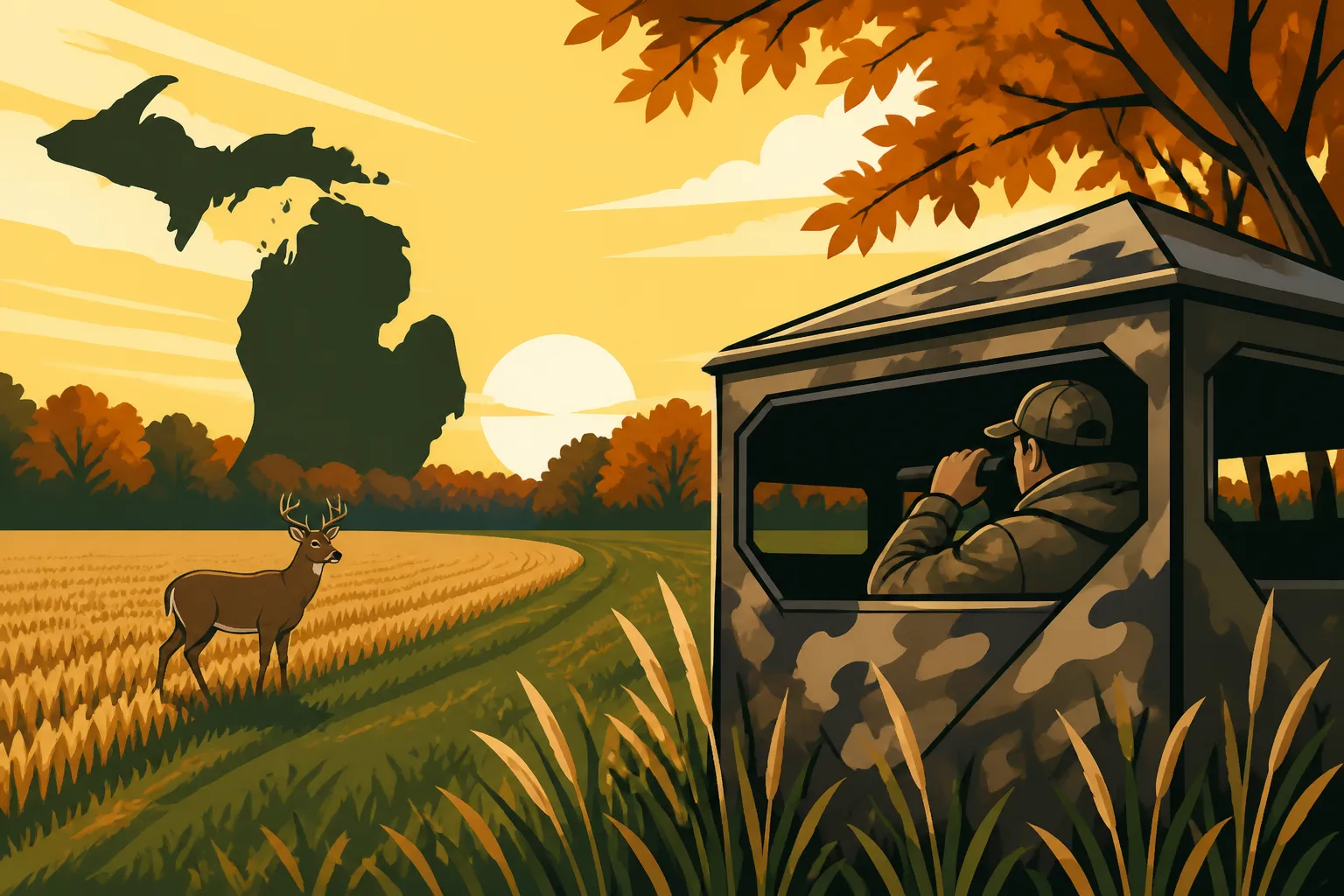
Ground Blinds on Michigan Field Edges
Hunting Michigan’s vast farmlands and open areas can feel like a totally different ballgame than slipping through dense timber. You’ve likely spent hours tucked into a tiny sliver of cover or shivering on a freezing treestand only to watch deer casually feed a hundred yards out in the field, completely oblivious, or worse, spot your silhouette. It’s frustrating when you know the deer are there, but getting close enough for a shot without being busted feels impossible. This guide is all about mastering the art of hunting Michigan field edges with ground blinds, offering practical advice to transform those wide-open frustrations into successful hunts.
Why Ground Blinds Shine on Michigan Field Edges
Let’s be honest, trying to hide in a spindly sapling or a lone fence row in an open field is a recipe for getting picked off by keen deer eyes. When you’re hunting those big Michigan agricultural fields or sprawling food plots, traditional treestands, while excellent in dense woods, can often leave you exposed. This is where a well-placed and properly brushed-in ground blind becomes your secret weapon, offering a level of concealment and comfort that’s hard to beat in these specific environments.
The Advantage Over Treestands in Open Terrain
Think about the typical Michigan field edge. You might have a line of mature hardwoods, a thick fencerow, or even just a ditch. A treestand demands a suitable tree, and often, the best trees aren't in the perfect spot for a shot, or they might silhouette you against the sky. Ground blinds, on the other hand, offer incredible flexibility. You can set them up almost anywhere – at the corner of a cornfield, along a CRP grass border, or tucked into a small clump of brush that a treestand couldn't use. This flexibility is huge. You can orient your blind to take advantage of prevailing winds, sun angles, and the deer’s most likely travel corridors without being dictated by the nearest sturdy oak. Plus, a ground blind offers full concealment from the moment you step inside. You can move, stretch, grab a snack, or quietly adjust your gear without the fear of being seen, which is a massive psychological advantage during a long sit.
Another often-overlooked benefit is comfort. Michigan weather, especially during the later deer seasons, can be brutal. Freezing rain, biting wind, or even a late-season snow squall can make a treestand sit utterly miserable and shorten your hunt significantly. Inside a ground blind, you're shielded from the elements. This means you can stay out longer, remain more focused, and ultimately increase your chances of success. I've spent countless hours in a blind during late November, and the ability to stay warm and dry has often been the difference between packing up early and waiting out that cruising buck. This comfort also extends to hunters with physical limitations or those hunting with youth, making the experience much more accessible and enjoyable. The full enclosure also means you can often bring more gear, like a heater, a larger thermos, or extra layers without feeling cramped or exposed.
Adapting to Changing Conditions
Michigan deer, especially those older bucks, are creatures of habit until pressure or environmental factors change their routine. However, field edges are dynamic. Crop rotations, harvest schedules, and even just daily changes in wind direction can drastically alter how deer use these areas. A ground blind allows you to adapt. If the deer suddenly switch from entering your alfalfa field from the north to the south because of a new wind pattern or a change in feeding preference, moving a lightweight ground blind a few hundred yards is often a much simpler task than relocating a cumbersome treestand setup. You’re not locked into one spot for the entire season. You might scout a particular field early season and identify a perfect corner, but a late-season snow might push deer to a different food source or a more sheltered entry point. Being able to quickly move your blind to a new pinch point or a fresh food source is a game-changer.
Furthermore, Michigan’s weather can be notoriously unpredictable. One day it’s sunny and calm, the next it’s a gale-force wind with horizontal sleet. While you can't hunt every condition, a ground blind makes hunting in marginal weather much more tolerable. When those deer are hungry after a long cold snap, they're often still going to hit those field edges, even if the wind is howling. Being able to sit comfortably inside your blind, out of the direct assault of the wind, means you can take advantage of those deer movements when other hunters might be packing it in. This adaptability isn't just about comfort; it's about maximizing your time in the field during prime hunting hours, regardless of what Mother Nature throws at you. For effective scouting before these changes, mapping tools like those offered by GoHunt can really help you visualize the landscape and predict deer movement, aiding in optimal blind placement.
Choosing the Right Ground Blind for Michigan Fields
Picking out a ground blind isn't like grabbing a tent off the shelf. There are specific features and considerations that make some blinds far more effective than others for hunting Michigan's field edges. You want something robust enough to handle the elements, camouflaged enough to disappear, and practical enough to hunt from comfortably.
Size and Capacity Considerations
The first thing to think about is how much space you truly need. Are you a solo hunter who travels light and values a compact setup? Or are you planning to hunt with a youth hunter, a partner, or perhaps need extra room for a heater, a dog, or a camera setup? Standard ground blinds typically range from about 55-65 inches tall and offer a footprint large enough for one person and essential gear. These smaller blinds are often lighter and quicker to set up, making them ideal if you anticipate needing to move your setup frequently or if you're hiking a good distance to your spot. For a solo archer, a compact blind gives you enough room to draw your bow without hitting the walls.
However, if you're introducing a young hunter to the sport, or you simply appreciate having more elbow room, a larger blind, often labeled as a "two-person" or "hub-style" blind, is a much better choice. These can measure 70 inches or more in height and offer a wider footprint, allowing for two adults or one adult and a child to sit comfortably with plenty of gear. The extra space is invaluable for minimizing accidental bumps, providing room for a larger cooler or pack, and making those long waits much more bearable. When you’re trying to keep a youngster engaged, being able to move a bit, whisper quietly, or even have a small snack without feeling utterly cramped can make all the difference. Remember, the larger the blind, generally the heavier it will be to carry, so balance capacity with your transportation method. You might consider using a deer cart if you have a larger blind and a longer walk to your preferred spot. Deer Carts on Michigan Two-Tracks can be a lifesaver.
Camouflage Patterns and Materials
The right camouflage pattern is absolutely critical for success on Michigan field edges. Unlike deep timber where dark patterns blend into shadows, field edges often require patterns that mimic agricultural stubble, fall grasses, or deciduous brush. Look for patterns with a good mix of browns, tans, and dull greens that won't stand out against dried cornstalks, soybean fields, or the dormant vegetation along a fencerow. Avoid patterns with too much stark black, which can create unnatural dark blobs in brighter light. Some blinds come with external loops or straps specifically designed for adding natural vegetation, which is an excellent feature we'll discuss more in brushing in.
Beyond the pattern, consider the material itself. You want a durable, weather-resistant fabric that won't rip easily or fade quickly in the sun. Many blinds are made from a polyester blend. More importantly, look for a "blackout" interior. This is a crucial feature that prevents your silhouette from being visible through the blind from the outside, even in bright sunlight. Without a blackout interior, deer can easily spot your movements within the blind, rendering your camouflage useless. The fabric should also be relatively quiet, resisting rustling noises in the wind or when you brush against it. Some higher-end blinds use thicker, more robust fabrics that also offer better insulation, which can be a real plus when you're hunting during Michigan's November Firearm Deer Season or even colder late-season archery.
Window Configurations and Shooting Lanes
The windows on your ground blind are your eyes and your shooting lanes, so their design is paramount. Most modern blinds feature multiple window options, from large zippered panels to smaller shoot-through mesh windows. For rifle hunters, large, clear openings are often preferred for maximum field of view and easy target acquisition. For archery hunters, smaller, strategically placed windows or vertical shooting slits are essential to allow for an unobstructed bow draw and release. You need to be able to make a clean shot without your arrow hitting the blind fabric.
The best blinds offer a variety of window configurations, allowing you to customize them based on your hunting style, the wind direction, and the expected approach of the deer. Some blinds feature a 270-degree or 360-degree viewing system, allowing you to open multiple panels for an expansive view. Shoot-through mesh is a popular feature, especially for archery, as it allows you to keep the windows completely closed for maximum concealment while still being able to shoot an arrow or bullet through the mesh. However, it's vital to test your broadheads or bullets with the mesh beforehand, as some can deflect slightly or create noise. Always ensure your blind has quiet window fasteners – silent zippers, magnetic closures, or bungee cords are far superior to noisy Velcro, which can spook deer in a quiet field. Consider also the height of the windows. When sitting on a low hunting chair, can you comfortably see and shoot out of all relevant openings?
| Feature | Solo Hunter Focus | Partner/Youth Hunter Focus |
|---|---|---|
| Size | Compact, 1-person | Roomy, 2-3 person |
| Weight | Lightweight for portability | Heavier, but stable |
| Camo Pattern | Mimics local foliage/crops | Mimics local foliage/crops |
| Interior | Blackout lining (essential) | Blackout lining (essential) |
| Windows | Quiet, diverse config (mesh for archery) | Quiet, diverse config (larger openings for view) |
| Durability | Tear-resistant, weather-proof | Heavy-duty, robust frame |
| Set-up Time | Quick, single-person setup | May require two people, slightly longer setup |
Strategic Placement and Brushing In Your Blind
A ground blind is only as good as its placement and how well it's integrated into the environment. You can have the fanciest blind on the market, but if it sticks out like a sore thumb or is in the wrong spot, it's going to be a bust. This is where scouting, careful planning, and a bit of elbow grease come into play.
Reading the Landscape for Optimal Blind Sites
Before you even think about setting up your blind, you need to scout. This means walking the field edges, looking for deer sign like tracks, droppings, and rub lines. Pay close attention to where deer are entering and exiting fields. Are they crossing at a particular low spot, using a specific corner, or following a fencerow that provides cover? These are your prime locations. Mapping tools, like those found on GoHunt, can be incredibly helpful here. You can identify natural funnels where deer movement is concentrated, such as narrow strips of timber connecting two larger woodlots, or pinch points along a creek or ditch line. Reading Aerial Photos for Swamp Deer principles can also apply to agricultural landscapes, helping you identify these key travel corridors.
Corners of fields are often excellent choices, especially if they offer an intersecting line of woods or a thick brushy area. Deer feel safer hugging these edges, giving them cover on at least two sides. Consider areas where different types of cover meet – perhaps a standing cornfield next to a CRP field, or a soybean field bordering a hardwood forest. The intersection of these habitat types often creates natural feeding and bedding transitions that deer exploit. Remember that deer often stage in cover before entering an open field, especially older, wiser bucks. Look for thicker vegetation 20-50 yards back from the immediate field edge where you can tuck your blind, giving you shots at deer entering or exiting the field, but also those hanging up in the transition zone. Don't be afraid to put in the leg work during the off-season to truly understand the patterns of deer on your hunting ground.
The Art of Brushing In for Maximum Concealment
Simply popping up a blind in the middle of a field edge is rarely effective. Deer are incredibly wary of new objects in their environment. The key to successful ground blind hunting is to "brush it in," making it disappear into the natural surroundings. This means using local vegetation to break up the blind's outline and make it look like a natural part of the landscape. Start by positioning your blind in front of existing cover – a dense hedge, a fallen log, or a clump of tall grasses. This provides a natural backdrop and helps to hide the blind's profile.
Next, gather natural materials from the immediate area. Cut branches from nearby trees (ask permission if on private land!), gather cornstalks, hay, or other field debris. Use the loops or straps on your blind (if it has them) to attach this vegetation. If not, zip ties or bungee cords work well. The goal isn't to create a solid wall, but to break up the hard lines and rectangular shape of the blind. Think about creating depth and texture, allowing some light to pass through the brushing. It should look organic, like a natural pile of debris or a dense thicket. Many seasoned hunters will even use a small hand saw or pruners to cut small limbs to secure to the blind's exterior, especially when hunting during Michigan's Late Archery Season where snow can sometimes make natural cover sparse. If you can, set up your blind and brush it in several days, or even weeks, before you plan to hunt it. This gives the deer time to get accustomed to its presence, making them less likely to be alarmed.
Mind the Wind and Sun: Crucial Factors for Success
No matter how well you brush in your blind, if you don't account for wind and sun, your hunt can quickly go south. Deer have an incredible sense of smell, and hunting with a swirling or unfavorable wind is almost a guaranteed bust. Always position your blind so that your scent is blowing away from the likely approach paths of the deer. This often means placing your blind on the downwind side of the field or travel corridor. For instance, if deer generally enter a field from the west, and the prevailing wind is from the north, you'd want your blind on the north side of their approach, letting your scent blow harmlessly away. Tools like GoHunt can provide wind forecasts and even visualize scent cones, which are invaluable for strategic placement.
The sun's position is equally important, especially for morning and evening hunts. You never want to have the sun at your back, shining directly into your blind. This creates a silhouette effect, making you or the blind easily visible. Instead, try to position your blind so that the sun is in front of you (though perhaps a little to the side), shining into the deer’s eyes. This makes it harder for them to see movement inside your blind and helps to melt the blind into the shadows. For example, during a morning hunt, a blind on the west side of a field, facing east, will have the rising sun in front of it. Conversely, for an evening hunt, a blind on the east side, facing west, will use the setting sun to its advantage. Paying attention to these subtle details can drastically increase your odds of remaining undetected. Always be aware of the exact Michigan Legal Shooting Hours for the specific season you're hunting.
Setting Up and Hunting from a Field Edge Blind
Once you've done your scouting, chosen your blind, and meticulously brushed it in, the real work begins: the hunt itself. This involves not just sitting still, but actively managing your scent, entry/exit, and patience to capitalize on those hard-earned opportunities.
Acclimatization and Scent Control
One of the biggest challenges with ground blinds, especially if you set it up just before a hunt, is getting deer to accept it as a natural part of their environment. As mentioned, deploying your blind well in advance is ideal. If that's not possible, be extra diligent with your scent control. Deer are naturally curious, but any foreign smell or unnatural object will put them on high alert. Use scent-eliminating sprays on your clothing and gear, wear clean hunting clothes, and store them in airtight containers. Hunting Deer Without Bait in Michigan often means deer are relying more on natural forage and their senses, so your scent becomes an even bigger factor.
When you approach your blind, try to do so with minimal disturbance. If possible, walk to it in the dark before sunrise or after sunset, minimizing your presence during deer activity hours. When you enter the blind, close the windows quietly and settle in. Avoid unnecessary movement or noise inside. Even though the blind offers concealment, sudden movements or loud noises can still be picked up by wary deer. If you're using a brand new blind, it might have a slight "new plastic" smell. Setting it up a few days early and letting it air out can help. Some hunters will even spray down their blind with natural attractants or cover scents, though the efficacy of these can vary. The goal is to make the blind as non-threatening and invisible as possible.
Managing Your Entry and Exit Routes
Your approach to and departure from your ground blind is just as important as the blind's placement. Many hunts are spoiled before they even begin because a hunter carelessly walks through a deer's feeding or bedding area. Plan your entry and exit routes meticulously using terrain features to your advantage. This means walking the long way around if necessary to avoid open areas where deer might be feeding or traveling. Use ditches, tree lines, or the cover of darkness to sneak in and out. If you're hunting a morning sit, try to approach from the opposite direction of where deer are likely to bed. For an evening hunt, approach from the opposite side of their likely feeding area. Entry Routes on Flat Michigan Ground can be tricky, so utilize every bit of available cover.
Always try to hunt with the wind in mind, both for your setup and your travel. If the wind shifts unexpectedly during your hunt, you might need to adjust your exit plan to avoid blowing your scent directly into a bedding area. Consider waiting until well after legal shooting hours, or even until full darkness, to exit your blind if you know deer are still in the field. This allows them to move off naturally without being spooked. The last thing you want is to educate a mature buck about your presence and make him even more nocturnal or wary of that field edge. Planning multiple entry and exit points for various wind conditions is a smart strategy, making you more adaptable throughout the season.
Patience and Shot Opportunities
Sitting in a ground blind, especially when you can see vast open fields, can test your patience. It's easy to get antsy when you haven't seen anything for hours, or conversely, when deer are just out of range. Remember, hunting field edges often means waiting for deer to commit to entering the open or passing through a specific funnel. This might mean watching deer for a long time before they present a shot. Avoid the temptation to take a marginal shot, especially when bowhunting. Wait for the deer to be broadside, calm, and well within your comfortable shooting range.
For rifle hunters, a solid rest is crucial for accuracy. Most ground blinds offer multiple shooting rests, or you can bring a bipod or shooting sticks. Practice shooting from your blind before the season to understand your sight lines and limitations. For archery hunters, ensure you have a clear path for your arrow. Sometimes, even a small branch or a piece of mesh can deflect an arrow. Take your time. Scan the edges of the field, looking for flicking ears, a glimpse of an antler, or subtle movements in the distant cover. Deer often materialize silently from the woods. If deer are hesitant, subtle grunt calls or doe bleats can sometimes draw them closer, especially during Hunting the Peak Rut Week in Michigan. But use them sparingly and realistically. The longer you can remain still and undetected, the better your chances of encountering that mature Michigan whitetail.
Maintenance, Regulations, and Advanced Tips
Hunting from a ground blind on Michigan field edges is a highly effective strategy, but it requires understanding the rules, keeping your gear in top shape, and sometimes incorporating other tactics to truly maximize your success.
Public Land Rules and Temporary Setups
Michigan offers an incredible amount of public land for hunting, including vast state forests and numerous state game areas. However, the rules for ground blinds on public land can be different than on private property. While temporary ground blinds are generally allowed, they often need to be removed at the end of the hunting season, or within a specified timeframe (e.g., within 24 hours after the close of the season, or they cannot be left overnight). This is to prevent litter, abandoned property, and to keep public lands accessible to all users. Always check the specific regulations for the area you plan to hunt, as rules can vary by state land unit or managed area. Treestand Rules on Michigan Public Land often apply to ground blinds as well regarding dates of placement and removal.
Permanent blinds, or those left out for extended periods, are usually prohibited on public land unless specifically allowed by special permit. If you're planning to leave your blind out for more than a day or two, it’s a good idea to clearly label it with your name and hunting license number, even if not explicitly required, as this can help deter theft or confusion. Some hunters use small, inexpensive blinds for public land hunts that they don't mind getting a bit weathered or even stolen, as retrieving them can sometimes be a hassle. Remember to be respectful of other hunters and shared resources when choosing a spot on public land.
Keeping Your Blind Ready Season After Season
A good ground blind is an investment, and like any hunting gear, it benefits from proper care and maintenance. After each season, or even after a particularly wet hunt, make sure to thoroughly clean your blind. Remove all dirt, leaves, and debris. If it's been exposed to rain or snow, set it up in your yard or garage to allow it to air dry completely before packing it away. Storing a damp blind is a surefire way to encourage mold and mildew growth, which will not only smell terrible (and spook deer) but also degrade the fabric.
Inspect your blind for any rips, tears, or broken poles. Small tears can often be repaired with patching kits specifically designed for tent or blind fabrics. Zippers are often the first point of failure; keep them clean and lubricated with a silicone spray. Store your blind in a cool, dry place, ideally in its carry bag. If your blind has hub mechanisms, occasionally check that they are still functioning smoothly. Taking these few extra steps will extend the life of your blind, ensuring it’s ready to go When Michigan's Archery Season Opens or whenever you need it for those crucial field edge hunts next year.
Integrating Other Tactics
Ground blinds on field edges are fantastic on their own, but they become even more effective when combined with other proven hunting tactics. For instance, using decoys, especially doe or buck decoys (depending on the season), can draw deer closer to your blind and distract their attention from your position. Place decoys facing your blind, as if they are feeding or looking away, making deer approach from an angle that gives you a good shot. Just be mindful of other hunters, especially on public land, and use hunter orange when transporting decoys.
Calling can also be very effective. Grunt tubes, rattling antlers, and doe bleat calls can entice curious deer, particularly during the rut. If deer are moving through a distant funnel, a few soft grunts might just be enough to pull them within range of your blind. Rattling and Grunting in Michigan requires practice and knowing when to use which call. Another tactic is to create a mock scrape within view of your blind, especially under an overhanging branch. Deer are naturally drawn to these communal communication hubs, and refreshing it with scent can make your setup irresistible. Finally, consider using food plots or mineral sites (where legal and permissible by Michigan Baiting and Feeding Rules) in conjunction with your blind placement. While baiting is banned in most of Michigan, a well-managed food plot adjacent to your blind can concentrate deer activity and provide consistent opportunities from your concealed position.
Disclaimer
This article is for general informational purposes only and does not constitute professional advice. Laws, prices and regulations vary by location and change over time. Consult a qualified professional for guidance on your specific situation.