Rattling and Grunting in Michigan
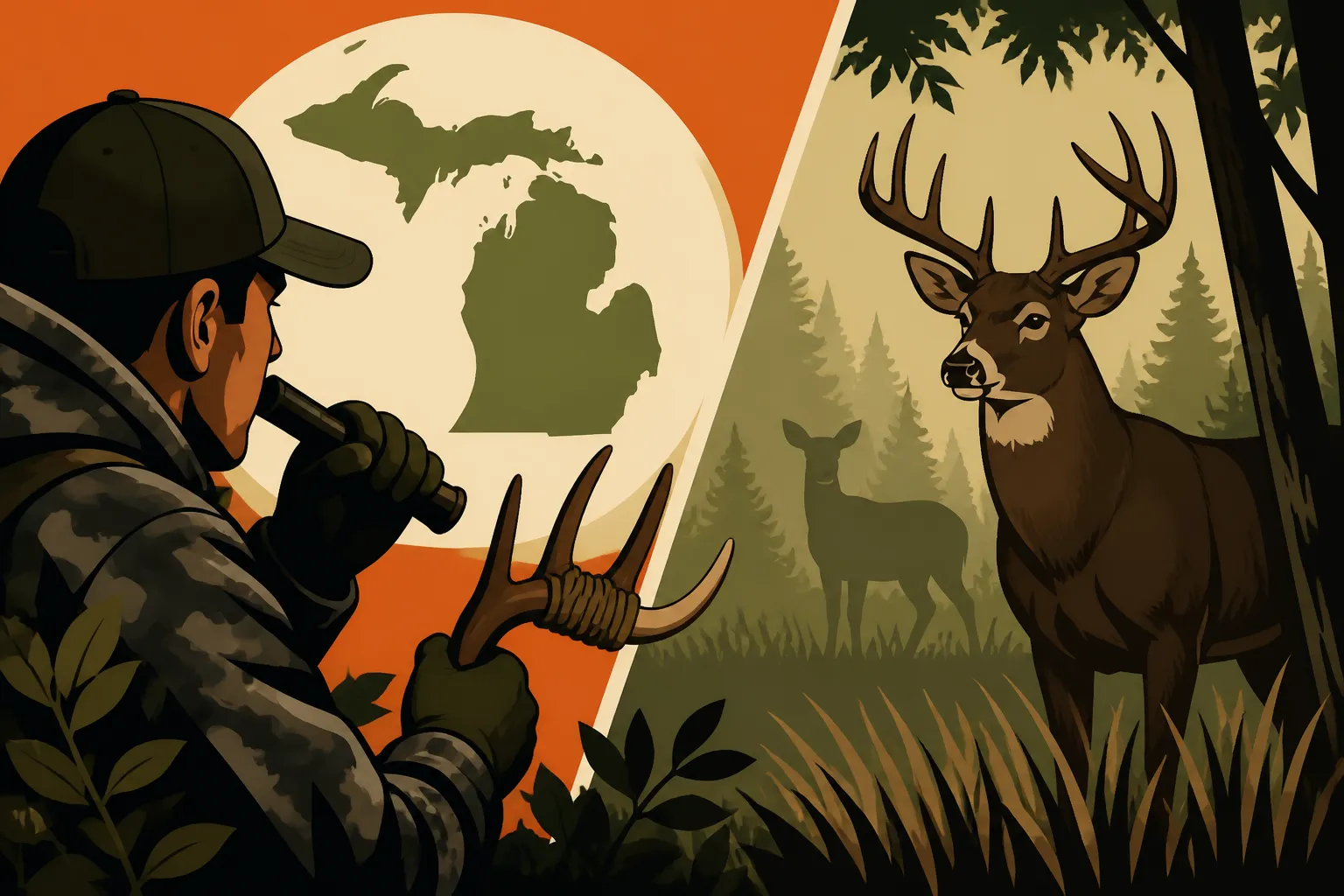
One of the most thrilling and, let's be honest, often frustrating aspects of Michigan deer hunting is trying to call in a buck. We've all been there: blowing into a grunt tube with hopeful enthusiasm, only to be met with silence or, worse, a snort-wheeze from a deer already busting us. This guide is dedicated to demystifying rattling and grunting techniques, helping you understand when, where, and how to use these calls effectively to bring those elusive Michigan whitetails into range.
Understanding Deer Vocalizations and Behavior
Before you start banging antlers together or grunting like a rut-crazed buck, it's crucial to understand why deer make these sounds in the first place. Deer are incredibly communicative animals, and their vocalizations serve many purposes beyond just attracting a mate. Grasping these nuances will make your calling efforts much more natural and, ultimately, more successful in the diverse Michigan landscape.
Why Deer Vocalize: Communication is Key
Deer don't just randomly make noise; every grunt, bleat, and snort has a specific meaning within their social structure. Think of it as their complex language for survival, reproduction, and herd cohesion. Bucks, particularly during the pre-rut and rut, use vocalizations to establish dominance, challenge rivals, and attract does. Does, on the other hand, rely on bleats and maternal grunts to communicate with their fawns, signal their receptiveness to breeding, or express distress. Fawns, of course, are masters of the bleat, seeking attention or expressing fear.
Understanding this foundational communication framework is essential. When you mimic a deer sound, you're essentially speaking their language, attempting to tap into their instincts and elicit a response. A poorly executed call at the wrong time can be utterly meaningless to a deer, or worse, can scare them off if it sounds unnatural or out of place. Conversely, a well-timed and realistic series of calls can tap into that primal curiosity or aggression, drawing them right to your stand. It’s about more than just making noise; it’s about sending the right message.
Recognizing Different Deer Sounds
To effectively mimic deer, you first need to recognize the various sounds they make and what each signifies. The most common vocalizations hunters attempt to replicate are grunts, bleats, and the sounds of a buck fight (rattling). However, there's a whole spectrum of other calls that can be useful, even if less frequently used.
Buck grunts are perhaps the most recognized. These can range from a soft "urp" of contentment or curiosity to an aggressive, drawn-out "grrrraaahhh" when chasing a doe or challenging another buck. A tending grunt is often heard when a buck is actively pursuing a receptive doe. The snort-wheeze is a definitive sign of an aggressive buck, usually used to warn off rivals. Doe bleats, particularly the estrous bleat, are designed to attract bucks, signaling she is ready to breed. Fawn bleats, as mentioned, are high-pitched cries for their mother or expressions of distress. Learning to differentiate these audibly will help you understand the deer you're trying to communicate with and what message they're sending back.
Seasonal Changes in Calling Behavior
Deer vocalizations aren't static; they change dramatically throughout the hunting season, reflecting the animals' shifting priorities. During the early archery season in September and early October, before the main rut kicks in, deer are more focused on food and establishing social hierarchies. Soft grunts might work to pique curiosity, but aggressive rattling is usually premature and can easily spook deer that aren't yet in a fighting mood.
As we move into the pre-rut, typically in late October, things start to heat up. Bucks become more active, sparring, making scrapes, and beginning to search for does. This is often the prime window for both rattling and grunting, as bucks are becoming more aggressive and responsive to challenges or the sound of a receptive doe. This period, leading into the peak rut, can be one of the most exciting times to be in the woods, especially when you're actively trying to influence deer movement. The later parts of the season, during the post-rut, see a decrease in aggressive calling responses as bucks become more worn out and focused on recovery.
The Art of Rattling Antlers
Rattling is one of those techniques that, when it works, feels like pure magic. You hear the clashing of antlers, and suddenly a Michigan bruiser appears, muscles tensed, ready for a fight. But there’s an art to it, and simply smashing two antlers together isn’t going to cut it. It’s about creating a believable auditory illusion of a buck fight to draw in curious or territorial bucks.
Choosing Your Rattling Antlers or Device
The foundation of effective rattling starts with your equipment. You have a few options: natural antlers, synthetic rattling bags, or realistic rattling horns. Natural antlers, especially from a mature buck, offer the most authentic sound due to their density and structure. Typically, you'll want at least a 120-130 inch set of shed antlers for a good "clash" sound, ideally with some mass to them. The tines create the clicking and scraping sounds, while the main beams provide the deeper thumps.
Synthetic rattling devices, like rattling bags or molded plastic horns such as the RattleBag or Rattling Fork, are incredibly convenient. They are lighter, quieter to carry, and won't poke you in the leg. While some hunters swear by natural sheds for authenticity, modern synthetic options have come a long way in replicating the complex sounds of a real fight. Experiment with different ones to find what you're most comfortable with and what produces the most realistic sounds for you. The key is to produce a variety of sounds – clicks, scrapes, and bone-on-bone collisions – not just a continuous, dull thud.
Mimicking a Buck Fight: The Sequence
A real buck fight isn't one continuous brawl; it's a sequence of events: some pushing, some clashing, some breaking apart, and some scraping the ground. Your rattling sequence should mimic this dynamic. Start with some light sparring – gentle clicks and scrapes of the antlers, like two young bucks testing each other out. After 30-60 seconds, escalate the intensity.
Crash the antlers together vigorously, grind them, and create the sounds of a full-blown fight. Incorporate periods of silence, sometimes 30 seconds to a minute, to simulate the bucks pushing and shoving, or perhaps one trying to gain an advantage. You can even scrape the ground with a shed or your boot to mimic a buck tearing up the earth during the skirmish. End your sequence with a few softer clicks, then silence. The entire sequence, from light sparring to intense crashing and back, might last 1-3 minutes. Remember, deer might circle downwind, so be patient and ready.
Common Rattling Mistakes to Avoid
Many hunters make common mistakes when rattling that can deter deer rather than attract them. One of the biggest is rattling too loudly or too aggressively, especially early in the season or in areas with younger deer. A violent, drawn-out brawl might sound great to you, but if the bucks in your area are mostly two or three-year-olds, they're likely to run away from such an intense confrontation. Tailor your rattling volume and intensity to the deer you expect to encounter.
Another mistake is rattling too often or for too long. If a buck doesn’t respond within 5-10 minutes, repeating the same aggressive sequence immediately might not be the best approach. Give the woods time to settle. Also, neglecting your setup is a critical error. Rattling can draw deer in from a distance, and often they'll try to circle downwind to scent-check the "fight." Always position yourself with the wind in mind, and be ready to shoot in any direction. Ignoring the natural cadence of a fight, making it sound too artificial, or even letting your metal grunt tube clank against your rattling antlers are subtle but significant errors.
Mastering Grunt Calls
While rattling mimics a physical confrontation, grunt calls tap into a different set of deer instincts: curiosity, dominance, and the primal drive to breed. Mastering the grunt call can be incredibly effective, often more so than rattling in certain situations or at specific times in the season. These calls are all about projecting a believable deer presence without needing visual confirmation.
Types of Grunt Calls and When to Use Them
Just like rattling devices, there's a wide variety of grunt calls on the market, each with its own advantages. Open-reed calls offer more versatility in tone and volume but require more practice to master. Adjustable-tube calls, which often have a slider or O-ring to change the pitch, are generally easier for beginners to use and can quickly switch between buck, doe, and fawn vocalizations. Brands like Primos and Flextone offer popular and effective options that many Michigan hunters rely on.
Understanding when to use each type of grunt is key. A deep, guttural buck grunt is most effective during the pre-rut and rut, when bucks are actively searching for does and establishing dominance. A tending grunt, often a softer, drawn-out "grrrraaahh" with a higher pitch, mimics a buck actively trailing or tending a hot doe and can be highly effective at pulling in other curious bucks. Doe bleats and fawn bleats have their place too, especially during the early season or when trying to locate a doe. Carry a versatile call or a couple of different ones to adapt to the situation.
The Art of the Single Grunt and Grunt Series
A single, well-placed grunt can often be more effective than a lengthy, aggressive series. Many hunters, eager for a response, over-call. A single buck grunt, perhaps a "urp" of curiosity or a slightly more drawn-out "uhn," can be enough to stop a walking buck, make him turn his head, and investigate. This is especially true when still-hunting through thick cover or when a deer is close but out of sight.
When a single grunt doesn't work, a short grunt series can be employed. This typically involves 2-4 grunts in quick succession, mimicking a buck walking through the woods and letting his presence be known. It's not a challenge yet, just a statement. Vary the volume and cadence to keep it sounding natural. Imagine a buck looking for a doe or asserting his general dominance in the area. This method works well when trying to pull deer out of thickets or across open areas, enticing them to come closer and investigate the "new" buck in their territory. Remember that Grunt Calls in Mature Timber might need to be louder to carry.
Fawn Bleats and Doe Bleats: Adding Variety
While buck grunts steal the show during the rut, don't underestimate the power of doe and fawn bleats. A fawn bleat, especially a distress bleat, can trigger a maternal response in does and sometimes even draw in a curious buck looking for an easy meal or a lost doe. This can be particularly effective during the early archery season when fawns are still with their mothers.
The doe estrous bleat is another potent call during the rut. This is a longer, more drawn-out "maaaaaaah" sound, signaling that a doe is receptive to breeding. Bucks, with their intense drive to find a mate during this period, can respond incredibly well to this call. Using it in conjunction with light buck grunts can paint a very convincing picture of a hot doe being tended by a buck, which can infuriate a dominant buck or pique the interest of a searching one. Think of these bleats as adding depth and realism to your overall calling strategy.
Combining Rattling and Grunting Techniques
The true magic often happens when you combine vocalizations with rattling. Just as in nature, buck fights are rarely silent affairs; they're often accompanied by grunts, snort-wheezes, and the sounds of pushing and shoving. By orchestrating a symphony of sounds, you can create an incredibly realistic and enticing scenario for Michigan whitetails.
The Aggressive Buck Sequence
This is your go-to strategy for the peak rut and pre-rut, especially when targeting mature, dominant bucks. Start with aggressive rattling – loud, bone-crushing clashes, simulating two dominant bucks going at it. During and immediately after the rattling, intersperse deep, guttural buck grunts. You might even throw in a snort-wheeze if you have a call that can produce one, which is the ultimate challenge to another buck.
The sequence should simulate a dynamic fight: periods of intense rattling mixed with grunts, followed by moments of pushing and shoving (represented by silence or softer antler clicks), then more crashing. The key is realism. Don’t rush it. This scenario is designed to infuriate a dominant buck, making him believe there's an intruder in his territory challenging his authority, or to draw in a subordinate buck hoping to catch a receptive doe after the fight. Ensure your Treestand Setups in Michigan Hardwoods offer good sight lines for deer approaching from various angles.
Subtle Dominance: Grunts and Light Rattling
Not every buck wants a full-blown brawl, and not every situation calls for it. Sometimes, a more subtle approach works best, especially if you're hunting more pressured deer or if the rut isn't in full swing. This sequence focuses on establishing a buck's presence without necessarily challenging every other buck in the woods.
Start with a few soft to medium buck grunts, signaling a buck moving through the area. After a minute or two, incorporate some light sparring sounds – gentle clicks and scrapes of the antlers, simulating two younger bucks testing each other or a dominant buck rubbing his antlers on brush. You can also mix in a tending grunt, making it sound like a buck is working a scrape line or shadowing a doe. This strategy aims to pique curiosity rather than aggression, making it effective for those periods when bucks are still establishing territory and are less prone to all-out fights. This approach can be particularly effective when Hunting the Pre-Rut in Late October.
Responding to Deer Behavior: Adjusting Your Calls
The most crucial aspect of combining calls is knowing when to adjust based on the deer's response. It’s not a one-size-fits-all approach. If you start with aggressive rattling and a buck charges in, continue with the intensity, perhaps adding a few more grunts to keep him coming. If a buck hangs up at a distance, looking confused or hesitant, switch to softer grunts or even a doe bleat to try and draw him the rest of the way.
If a buck starts walking away, try a fawn distress bleat or a desperate estrous bleat to re-engage his interest. The goal is to have a conversation, not a monologue. Watch their body language: laid-back ears, hair bristled, head high in curiosity, or a tense, ready-to-fight posture. Each signal should inform your next calling decision. Sometimes, silence is the best response if a buck is approaching cautiously. Knowing when to stop calling and let the deer come to you is just as important as knowing when to call.
Timing and Location for Effective Calling
You can have the best calls and perfect technique, but if you're calling at the wrong time or in the wrong place, your efforts will likely be fruitless. Michigan's diverse terrain and varying deer activity levels demand careful consideration of both the clock and the map.
Best Time of Day and Season for Calling
The prime time for rattling and grunting in Michigan typically aligns with the pre-rut and peak rut, which generally runs from late October through mid-November. This is when bucks are most susceptible to calls due to their heightened testosterone levels and relentless search for does.
- Pre-Rut (Late October): Bucks are starting to cruise, establish scrape lines, and spar. Aggressive rattling might be too early, but light sparring combined with grunts can work wonders. This is an excellent time for Rattling Volume in Thick Cover or a few well-placed Grunt Calls in Mature Timber.
- Peak Rut (Early to Mid-November): This is the sweet spot. Bucks are actively chasing and breeding. Aggressive rattling and grunting sequences are often most effective, as bucks are highly competitive. This period perfectly aligns with Hunting the Peak Rut Week in Michigan.
- Post-Rut (Late November into December): Calling success generally declines. Bucks are exhausted and focused on recovery. However, a late estrous doe can still pull in a searching buck, so don't completely abandon calls. Muzzleloader hunters might still get a response, especially around Late-Season Food Sources for Whitetails.
Regardless of the season, the best times of day are usually dawn and dusk. Deer are most active during these low-light periods, making them more receptive to calls. Midday can also be productive during the peak rut, as bucks will often continue to cruise and chase throughout the day.
Ideal Habitat and Terrain for Calling Setups
Choosing the right location for your calling setup is paramount. You want areas where deer naturally travel and where your calls can carry effectively.
- Funnels and Chokepoints: These are natural travel corridors that concentrate deer movement. Think about a narrow strip of woods between two open fields, a saddle in a ridge, or a pinch point between a swamp and a clearcut. A Funnel Between Two Swamps is an ideal location where deer are funneled into a predictable path.
- Thick Cover Edges: Bucks often cruise the edges of thick cover like cedar swamps, dense popple stands, or logging clearcuts, scent-checking for does. Setting up on the downwind side of such an edge allows you to call deer out without being easily detected.
- Scrape Lines and Rub Lines: If you find fresh sign, especially active scrape lines with overhanging licking branches, you're in a prime spot. Calling near these areas can draw in the buck that made them, as he's already asserting dominance.
- Food Sources: During the early and late season, calling near primary food sources (oak flats, standing corn, food plots) can be effective. Bucks will be passing through these areas regularly.
When Scouting Michigan Public Land Before Season, pay close attention to these types of terrain features. Look for areas with good visibility but also enough cover for a buck to feel comfortable approaching.
Wind Direction and Noise Control
Ignoring wind direction is perhaps the fastest way to ruin a calling setup. Deer will almost always try to approach a call from downwind to scent-check the source. If the wind carries your scent directly to them, they'll bust you every time. Always set up with the wind in your favor, positioning yourself so that any approaching deer will have to pass broadside or upwind of your shooting lane before hitting your scent cone. This often means facing into the wind or having a crosswind.
Beyond scent, noise control is critical. Any unnatural sounds can alert deer. Be mindful of rattling antlers clanking against your stand, your grunt tube scraping your zipper, or even the rustle of your clothing. Dress in quiet layers, especially for the colder Michigan mornings. When rattling, make sure your body language is concealed. Deer have excellent hearing and can pinpoint sounds with surprising accuracy. If they hear a fight but see nothing, or see you fumbling with your calls, it's game over.
Advanced Calling Strategies and Troubleshooting
Even with the best preparation, deer can be unpredictable. Sometimes, the tried-and-true methods just don't work. That's when it's time to dig into your bag of tricks and try some more advanced techniques or troubleshoot what might be going wrong.
Calling in Pressured Deer
Michigan public lands, especially in the Southern Lower Peninsula, can see significant hunting pressure, particularly during the firearm season. Deer on these lands become wary of unnatural sounds and human presence. Aggressive calling that works on unpressured deer might send these "educated" bucks running.
For pressured deer, subtlety is your friend.
- Soft and Infrequent: Use softer grunts, perhaps just a single "urp" or two, delivered infrequently. Mimic a buck quietly moving through the woods, not making a big fuss.
- Doe and Fawn Bleats: Sometimes, a well-placed doe estrous bleat or a fawn distress bleat can work better than buck calls, as it's less confrontational.
- Limited Rattling: If you do rattle, keep it very light and brief – just a few clicks and scrapes, like very young bucks sparring. You're trying to pique curiosity, not challenge them.
- Longer Lulls: Give longer pauses between your calling sequences. Pressured deer are often slow to respond and might take 15-20 minutes to commit.
- Strategic Entry/Exit: Always focus on quiet entry and exit to your stand. Even before you call, your presence can spoil the hunt. Knowing Where Big Woods Bucks Bed in Michigan can help you position yourself quietly and effectively away from their core bedding areas.
Using Decoys with Calls
Adding a decoy to your calling setup can drastically increase your success rate, especially when rattling aggressively during the rut. A visual stimulant can convince a hesitant buck to come the rest of the way, as it provides confirmation of the sounds he's hearing.
- Buck Decoys: A full-size buck decoy can be very effective, but it can also be intimidating. Position it facing away from your stand, mimicking a buck that is either tending a doe or has just won a fight. This presents a less confrontational image. If you have a subordinate buck decoy, that can also work well, signaling a less threatening presence.
- Doe Decoys: A doe decoy, especially an estrous one, can be incredibly alluring when combined with tending grunts and light buck rattling. Position it in an open area where it's visible, and ensure it's facing in a way that allows a buck to approach for a broadside shot.
- Fawn Decoys: A fawn decoy, paired with a fawn distress bleat, can sometimes draw in a doe (which might have a buck trailing her) or even a curious buck.
Always consider wind direction when placing decoys. A buck will circle downwind of the decoy, just as he would with a real deer. Make sure your stand is positioned for a shot before he gets into your scent cone. Also, practice safety; hunter orange is crucial, and be mindful of other hunters if you’re on public land, especially when using realistic decoys.
When to Call It Quits (or Try Something New)
Knowing when to stop calling, or when to change your strategy, is a skill developed over time. There's no hard-and-fast rule, but some indicators suggest it's time for a change.
- No Response: If you've tried several different sequences (aggressive, subtle, bleats) over an hour or two with no response, it might be time to move.
- Negative Response: If deer are blowing, snorting, or stomping their feet, they've either winded you or are spooked by your calls. Either way, continuing to call will only educate them further.
- Too Much Pressure: If you see other hunters constantly walking through your area, or hear lots of calling from elsewhere, the deer might be too pressured to respond positively. Consider a different tactic, like Still-Hunting Michigan Cedar Swamps or trying a Deer Drives With Three or Four Hunters in a more remote area.
Sometimes, the best strategy is simply to be patient and observe. Deer movement in Michigan can be notoriously slow, especially outside the peak rut. Don't be afraid to experiment with different calls, different volumes, and different locations. The key is to be adaptable and persistent, always learning from the deer's reactions (or lack thereof).
| Call Type | Primary Use Case | Best Season/Timing | Sound Description | Expected Response |
|---|---|---|---|---|
| Buck Grunt | Curiosity, Assert Presence, Tending Doe | Pre-Rut, Peak Rut, Post-Rut | Short "Urp", Longer "Uhn", Aggressive "Grraaah" | Curious approach, stop & listen, challenge/investigate |
| Rattling Antlers | Mimic Buck Fight, Challenge Rivals | Pre-Rut, Peak Rut | Clashing, grinding, clicking, scraping | Aggressive approach, curiosity, circling downwind |
| Doe Bleat | Attract Bucks, Signal Receptiveness | Peak Rut | Longer "Maaaaaah", sometimes higher pitched | Bucks searching for doe, curiosity |
| Fawn Bleat | Distress, Maternal Call, Curiosity | Early Season, Post-Rut | High-pitched "Meeeeeh" (distress) | Does (maternal response), curious bucks |
| Snort-Wheeze | Aggression, Warning off Rivals | Peak Rut, Pre-Rut | Short blow followed by wheezing sound | Dominant bucks approach to confront, others avoid |
Disclaimer
Hunting is an inherently dangerous activity. Always prioritize safety, understand and follow all Michigan hunting regulations, and be aware of your surroundings. This information is for educational purposes and should be used responsibly. Conditions in the field can change rapidly, and hunters should always exercise their best judgment.