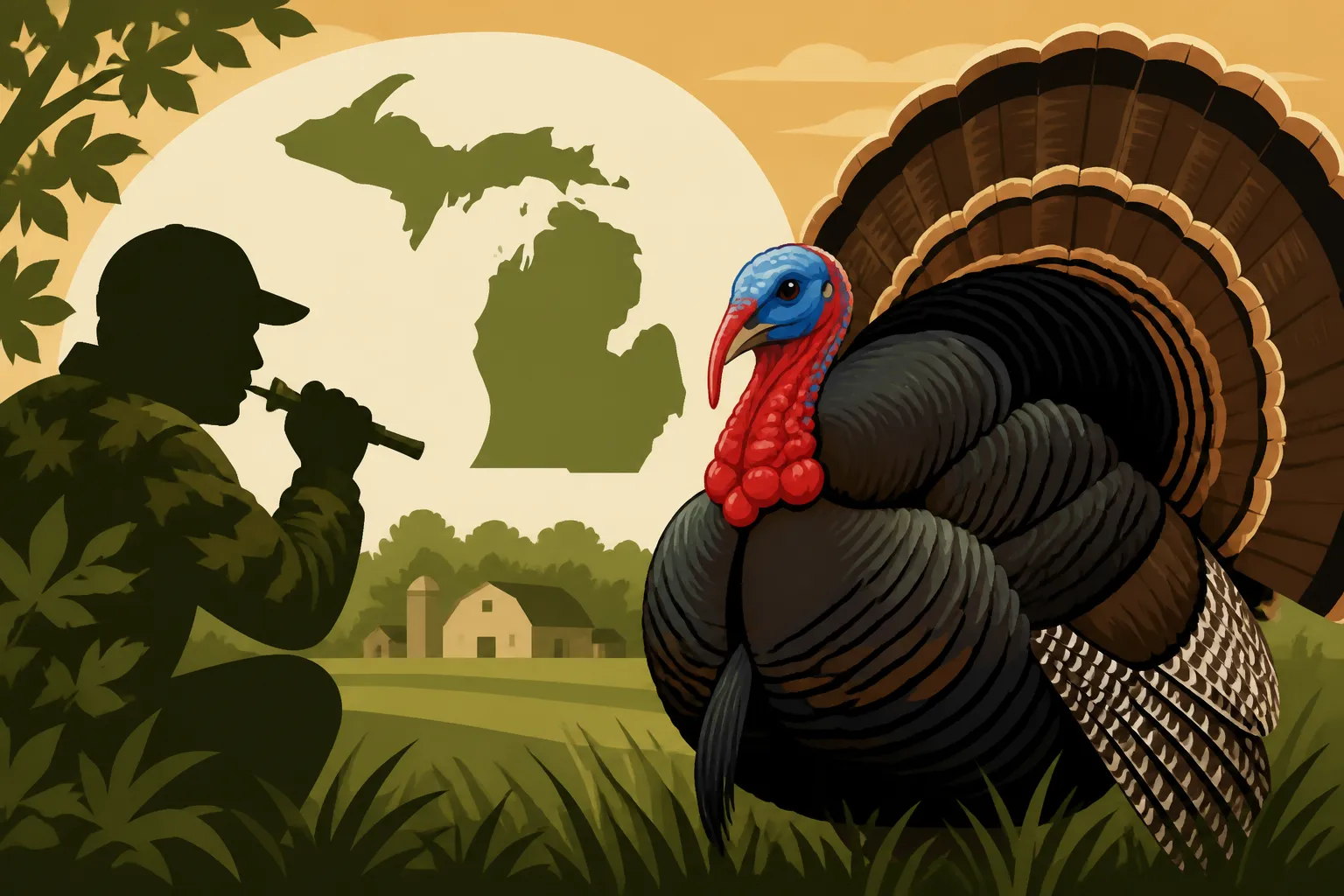
Turkey Tactics for Southern Michigan Farms
Hunting wild turkeys in Southern Michigan farm country can feel like a game of cat and mouse where the mouse often has the upper hand. Those vast, open agricultural fields, coupled with often fragmented woodlots and significant hunting pressure, make for some seriously challenging gobblers. If you've ever felt frustrated by birds hanging up at 100 yards, or disappearing into a standing cornfield, this guide is for you. We're going to dive deep into understanding these wary birds and equip you with the specific tactics needed to fill your tag in Michigan's agricultural heartland.
Understanding the Southern Michigan Farm Landscape for Turkeys
Southern Michigan's landscape is a patchwork quilt of cash crops, small woodlots, creek bottoms, and winding fence rows. This isn't the big timber of the Upper Peninsula or the sprawling state forests up north. Here, turkey hunting requires a different mindset, one focused on precision, patience, and adapting to a bird that lives in close proximity to human activity and often, other hunters.
Typical Habitat Features and Turkey Behavior
Turkeys in Southern Michigan farms are masters of using every piece of cover available. They thrive on the abundance of food provided by agricultural fields, yet they rely heavily on the scattered timber for roosting, loafing, and escape cover.
You'll find gobblers and their hens moving between these distinct habitat types with predictable, yet sometimes frustrating, patterns. In the early morning, they'll fly down from roost trees – often mature oaks or cottonwoods in woodlots, creek drainages, or even isolated farmyard trees. From there, their primary goal is typically food. They'll fan out into freshly tilled fields, pastures, or pick through last year's corn stubble. As the day progresses, especially after a successful breeding encounter or feeding session, they might move back into the shaded woodlots to dust, loaf, and strut in a more secure environment. Creek bottoms and river corridors are often hidden gems, providing excellent travel corridors, roosting sites, and a consistent water source, making them natural highways for turkeys. Don't underestimate the role of fence rows and hedgerows, either; these linear features offer subtle concealment for a bird making its way across an otherwise open field. Understanding these daily movements is absolutely critical, as it informs every aspect of your hunting strategy.
Pressure and Access Considerations
One of the biggest hurdles for turkey hunters in Southern Michigan is the sheer amount of hunting pressure and the often-limited access to prime hunting grounds. Unlike vast public land tracts where you might only bump into another hunter once or twice, farm country can see multiple hunters working the same properties, especially on opening weekend.
This constant human presence makes turkeys incredibly wary. They learn quickly to associate vehicle sounds, human voices, and even certain calling sequences with danger. This means they are far less likely to commit to aggressive calls and more prone to "hanging up" just out of range, using the sparse cover to their advantage. Furthermore, a significant portion of the best turkey habitat is on private land. Gaining permission to hunt these properties is often the key to consistent success. Building relationships with landowners, offering to help with chores, and always being respectful are paramount. The more land you can access, the more opportunities you create for yourself, especially when birds get pressured off smaller parcels. Always remember that securing permission is a privilege, not a right, and treating the land and the landowner with the utmost respect ensures future opportunities. It's not uncommon to find that Michigan Hunter Orange Rules might still apply in certain areas, particularly if other firearm seasons overlap or specific local ordinances are in place, so always double-check.
Scouting Strategies for Farm Country Gobblers
You can't just show up on opening morning in Southern Michigan farm country and expect to find turkeys easily. These birds demand diligent scouting, both digitally and on the ground. Your preparation before the season opens will directly correlate with your success rate.
Pre-Season Digital and On-the-Ground Reconnaissance
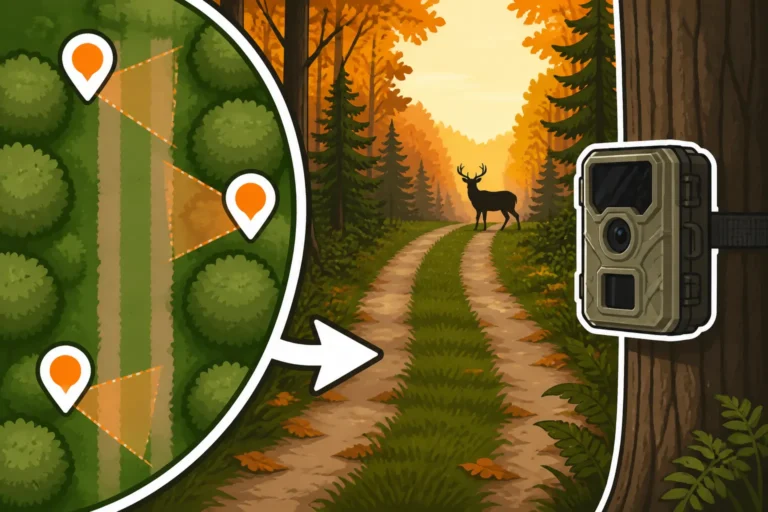
Before you even step foot in the woods, the best tool you have is your computer or phone. Start by utilizing online mapping tools to identify potential hotspots. Look for isolated woodlots, fingers of timber extending into fields, creek beds, and areas where different habitat types converge. Think about pinch points and funnels that turkeys might use to cross open ground. You can often see historical roosting areas by identifying older, larger trees near water sources or field edges.
Digital mapping apps, such as GoHunt, are invaluable for overlaying aerial imagery with property boundaries, showing you public land access points and helping you visualize how turkeys might travel between different features. Once you've identified promising areas, it's time for on-the-ground reconnaissance. This involves driving around slowly, scanning fields with binoculars during the early morning or late evening hours to spot birds feeding or moving to roost. Pay close attention to subtle clues: tracks in soft dirt, droppings under potential roost trees, and feathers snagged on fences. Even a quick drive-by can reveal if birds are actively using a particular area. The goal isn't to disturb them, but to confirm their presence and narrow down your focus.
Locating Roost Sites and Travel Corridors
Pinpointing exact roost sites is perhaps the most critical piece of scouting information you can gather in farm country. If you know where birds are spending the night, you can position yourself strategically for a morning setup. This often involves very early morning trips before the season to listen for gobblers sounding off from the roost. Get out well before first light, position yourself on a high point or a quiet road, and listen intently. You might need to use a crow call or owl hooter to elicit a shock gobble, but sometimes just waiting for their natural wake-up calls is enough.
Once you hear a gobble, mark the location on your map. Try to determine the exact tree or woodlot. Then, mentally (or physically) trace the most likely fly-down path. Where will they land? What's the shortest, safest route to their preferred feeding area? These routes become your key travel corridors. Look for signs of consistent use along these paths – worn trails, fresh tracks, and droppings. Knowing these routes allows you to set up well in advance of fly-down, often positioning yourself between the roost and their breakfast buffet. This kind of detailed information is far more valuable than simply knowing birds are "in the area" and significantly increases your chances of success. Understanding Where Michigan Gobblers Roost is foundational to any successful hunt in these environments.
Effective Hunting Tactics in Open Farm Environments
Hunting in Southern Michigan's open farm environments demands a flexible and often subtle approach. Unlike calling birds across vast tracts of timber, farm country requires careful consideration of visibility, decoy placement, and strategic positioning to overcome the wariness of pressured birds.
Decoy Setups for Farm Fields
Decoys are absolutely indispensable when hunting turkeys in open farm fields. In areas with limited cover, decoys provide a visual focal point that can draw a gobbler across a significant distance, often preventing those frustrating hang-ups. The key is to make your setup look as natural and appealing as possible.
A classic and often highly effective setup is a single hen decoy, or a pair of hens, positioned where they are highly visible from potential strut zones or travel corridors. Many hunters find success placing a jake decoy with one or two hen decoys. A jake can often infuriate a dominant gobbler, making him commit more aggressively to run off the competition. However, be cautious with full-strut gobbler decoys, especially on public land or heavily pressured private land, as they can sometimes intimidate wary birds or attract other hunters' attention. Position your decoys facing away from your setup, so that an incoming gobbler will likely approach the decoys from the front, presenting a broadside or slightly quartering-away shot as he attempts to breed or fight. Always consider the sun's position for maximum visibility and to prevent glare. Understanding Decoy Placement for Pressured Birds is vital; often, less is more in high-pressure areas.
Here's a simple guide for decoy placement in common farm country scenarios:
| Scenario | Decoy Setup | Placement/Rationale |
|---|---|---|
| Early Morning Fly-Down | 1-2 Hens | 20-30 yards from your blind, in line with the likely fly-down path. Offers comfort to descending birds. |
| Mid-Morning Field Crossing | 1 Hen, 1 Jake | Visible from a distance, where birds are likely to enter the field. The jake challenges a dominant gobbler. |
| Hung-Up Gobbler Situation | 1 Laying Hen (subtle) | Closer to you (10-15 yards), less visible, to coax the gobbler the last few yards without alarming him. |
| Scattered Woodlot Edge | 1 Hen | Just inside the field edge, drawing birds out of the woods into shooting range. |
| Heavy Pressure Area | None or 1 Hen (conservative) | Sometimes no decoys are best if birds are overly wary. If using, place well within shooting range for a quick shot. |
Calling Strategies for Educated Birds
The turkeys in Southern Michigan farm country have heard it all. Aggressive, loud calling might work on unpressured birds in some regions, but here, it often leads to silent departures or birds "hanging up" frustratingly far away. Subtle, realistic calling is usually your best bet.
Start with soft tree yelps and clucks from your setup before fly-down, mimicking a hen just waking up. Once birds are on the ground, use simple hen yelps, clucks, and purrs. Listen intently to the gobbler's response. Is he gobbling enthusiastically or just making a courtesy gobble? If he's hot, you can increase the intensity slightly, but never overcall. If he's not responding well or is moving away, often the best call is no call at all. Let him wonder where that hen went. Silence, coupled with realistic decoys, can often pique a gobbler's curiosity enough to make him investigate. Locator calls, like crow calls or owl hoots, can be useful for getting a bird to shock gobble and reveal his position, especially if he's being quiet otherwise. This is particularly effective in the expansive, open areas of farm country where sound can travel far. Knowing Calling a Michigan Gobbler Off the Roost requires a blend of subtle coaxing and precise timing. For those looking to refine their vocalizations, consider exploring Turkey Calls Worth Carrying in Michigan for different options.
Ambush Points and Blind Hunting
Given the lack of natural cover in many farm fields, ground blinds become an essential tool for hunting Southern Michigan gobblers. A well-brushed-in ground blind provides crucial concealment, allowing you to move, call, and draw your bow or shoulder your shotgun undetected.
Set up your blind along known travel corridors, field edges, or pinch points where turkeys are likely to pass. Fence lines, hedgerows, and the edges of creek bottoms are prime locations. Position the blind so you have a clear shot at your decoy spread and any approaching birds. Make sure to brush in your blind thoroughly with natural vegetation from the area to help it blend seamlessly into the environment. Don't be afraid to leave the blind set up for a few days before you hunt, allowing the birds to get accustomed to its presence. For situations where a blind isn't feasible, consider still-hunting through smaller woodlots or creek bottoms. This involves moving incredibly slowly and deliberately, scanning constantly, and pausing frequently to listen and call softly. The goal is to intercept a bird moving through these strips of cover, or to surprise one loafing there. Often, Setting Up Against a Big Oak or other large timber can provide natural back cover for a more impromptu setup.
Adaptability and Overcoming Farm Country Challenges
Hunting Southern Michigan turkeys means always being ready to adapt. These birds are smart, the landscape is challenging, and conditions can change in an instant.
Dealing with "Hang-Up" Gobblers
This is perhaps the most common and frustrating challenge in farm country: the gobbler that struts and gobbles his heart out, but just won't commit. He's at 80-100 yards, just out of range, showing off for your decoys but staying safely out of your shooting lane.
When a gobbler hangs up, patience is your first line of defense. Don't overcall. Sometimes, going completely silent can make him curious enough to take those last few steps. If he still holds his ground, try a subtle, soft purr or cluck, almost as if the hen is losing interest. If you have a jake or full strut decoy, try adjusting its position slightly to make it look more inviting, or even less threatening. If you're in a ground blind and have the flexibility, sometimes crawling a few yards closer while remaining completely out of sight can bridge the distance. Another tactic, if you're hunting with a partner, is to have one hunter back out slowly and circle, trying to get behind the gobbler and push him gently towards the shooter. However, this is a risky move and requires excellent communication and knowledge of the terrain. Remember that sometimes, despite your best efforts, a bird simply won't come in, and you'll have to consider repositioning or trying again later in the day.
Weather and Time of Day Adjustments
Weather plays a huge role in turkey behavior, especially in open farm country. A beautiful, calm spring morning is ideal, but Michigan weather is rarely that cooperative.
- Rain: Turkeys generally dislike heavy rain. During a light drizzle, they might still move, but often seek the relative shelter of woodlots or dense cover. Calling can be less effective as sound doesn't carry as well, so focus more on ambush points. In heavy rain, they'll often hold tight to roosts or simply wait it out.
- Wind: Strong winds are a turkey hunter's nemesis. Wind makes it difficult to hear gobblers, and it makes turkeys more wary as their natural alarms are hampered. On windy days, focus on protected areas like creek bottoms, ravines, or the downwind side of woodlots. Birds will often be more vocal on less windy days or during calm periods. Your decoys also need to be anchored well in windy conditions.
- Time of Day: Early morning, from fly-down until mid-morning, is generally the most productive. Gobblers are actively looking for hens. However, don't overlook late morning or early afternoon. Birds might be loafing, dusting, or re-entering fields to feed. Sometimes, a quiet afternoon hunt can surprise a gobbler that has been pressured off prime spots earlier. Michigan Spring Turkey Season Dates show that May offers plenty of opportunities, and birds can be receptive throughout the day.
Respecting Landowners and Ethical Hunting
Hunting in Southern Michigan farms often means hunting on private property, which makes landowner relations absolutely paramount. Your access is a privilege, and treating it as such ensures future opportunities for yourself and other hunters.
Always, always get explicit permission before stepping foot on private land. Confirm property boundaries and stick to them religiously. Leave gates as you found them, avoid driving on wet fields, and pick up any trash, even if it's not yours. If you're successful, consider offering some wild turkey meat to the landowner as a thank you. Building a strong, respectful relationship can open doors to more hunting opportunities and make your experiences much more enjoyable. Beyond landowner relations, ethical hunting is non-negotiable. Ensure you have a clean, lethal shot on a legal bird. Practice with your Turkey Shotguns and Chokes before the season to ensure your pattern is tight and effective. If you make a bad shot, commit to tracking that bird responsibly and thoroughly. The goal is always a quick, clean kill and respectful recovery of the game. Adherence to rules about Michigan Hunter Orange Rules during shared seasons is also critical for safety, even if technically not required for spring turkey in all scenarios.
Disclaimer
Please remember that hunting regulations and seasons can change. Always consult the latest Michigan Department of Natural Resources (DNR) hunting guide before heading into the field. This guide is for informational purposes only and does not supersede official DNR regulations.