Where Big Woods Bucks Bed in Michigan
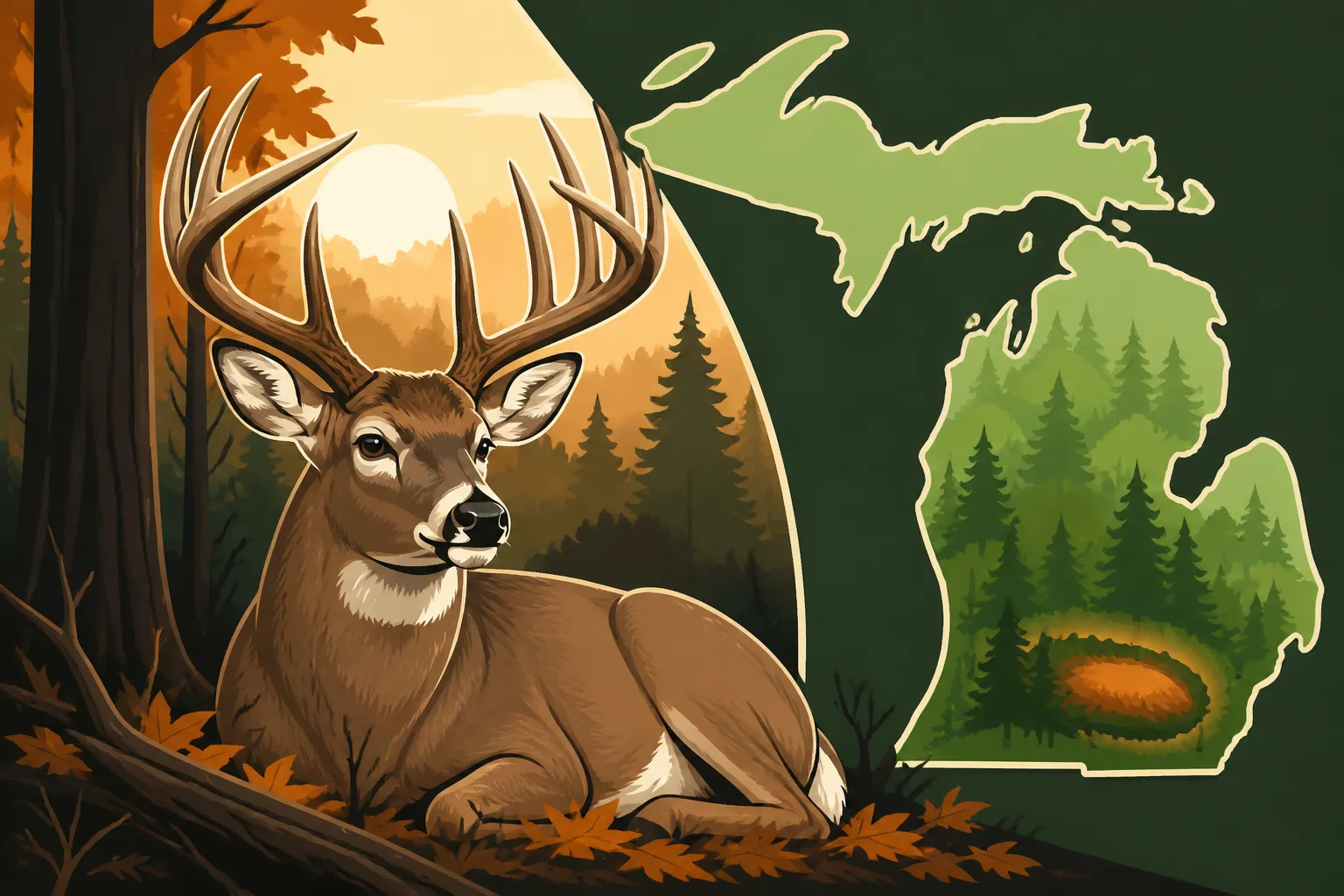
Trying to pinpoint where a mature whitetail buck beds down in Michigan's sprawling big woods can often feel like searching for a needle in a haystack made of endless trees and thick cover. The vastness of our state forests and national lands provides a seemingly limitless canvas for deer to roam, making it incredibly challenging to consistently locate those older, wiser bucks. This guide aims to demystify the art of finding big woods buck bedding, helping you understand the subtle cues and specific habitats that these elusive animals prefer in Michigan.
Understanding Michigan's Big Woods Environment
Michigan's "big woods" aren't just a generic term for large tracts of timber. They represent a complex tapestry of varied terrain, vegetation, and deer densities that demand a different approach than hunting farmland edges or small woodlots. Understanding these unique characteristics is the first step in unraveling the mystery of mature buck bedding.
Topography and Cover Types
Our big woods areas, particularly in the Upper Peninsula and the northern Lower Peninsula, are defined by a mix of rolling hills, lowlands, swamps, and vast expanses of forest. You'll find everything from dense conifer stands—cedar, spruce, balsam fir—to mature hardwoods like oak, maple, and beech, as well as regenerating aspen and pine plantations. Each of these cover types plays a role in how a buck perceives security and comfort. For instance, a gnarly cedar swamp offers incredible thermal protection from harsh winter winds and deep snow, a vital consideration for deer survival. Meanwhile, a regenerating clearcut provides thick, impenetrable tangles that offer visual security year-round. Bucks aren't just looking for any cover; they're looking for the best cover available that meets their current needs for safety, thermal regulation, and proximity to food and water.
The subtle changes in elevation, even just a few feet, can create significant advantages for a bedding buck. A small knoll within a swamp, a ridge overlooking a lowland, or even a slight rise in a flat plain can offer a buck a vantage point to see or smell danger before it's on top of him. These micro-topographical features are often overlooked by hunters rushing through the woods, but they are absolutely critical to a mature buck seeking an edge. Think about how a deer's keen senses allow them to exploit even the slightest advantage in the landscape. When you're trying to figure out where the big boys lay down, you've got to start thinking like them.
Food Sources and Water
While security is paramount, a buck also needs reliable access to food and water, especially as the seasons progress. In Michigan's big woods, food sources can be far more scattered and seasonal than in agricultural areas. Early fall might see bucks heavily utilizing acorns in oak ridges or munching on lush forbs in recent clearcuts. As winter approaches, they'll shift to browse like aspen regeneration, dogwood, or even cedar tips in a pinch, often yarding up in dense conifer stands where food is concentrated and snow is shallower.
Water is usually abundant in Michigan, with countless swamps, creeks, and small lakes. While bucks don't bed directly on water, their bedding areas will almost always be within easy striking distance of a reliable water source. The closer a buck can be to food and water while maintaining maximum security, the less energy he expends, and the safer he feels. This creates specific zones of preference. If you're scouting, look for those natural transitions where dense bedding cover meets a good food source and has readily available water nearby. It's often at these convergence points that you'll find those elusive big woods bucks making their home.
Key Bedding Areas for Mature Bucks
When you start peeling back the layers of Michigan's vast timber, certain patterns emerge for where those cagey old bucks decide to lay their heads. These aren't just random spots; they're chosen with calculated precision for security, comfort, and survival.
Thick Thermal Cover Cedar Swamps and Conifer Stands
Hands down, dense thermal cover, especially a good cedar swamp, is a prime candidate for where big woods bucks bed in Michigan. Think about the brutally cold, windy days of November and December, or even the biting winds of early spring. A mature buck needs to conserve energy, and nothing does that better than bedding in a thick stand of conifers. These areas, whether they're sprawling cedar swamps, dense spruce thickets, or mature pine plantations, act like natural blankets, trapping warmth and blocking wind.
A buck in a cedar swamp isn't just seeking warmth; he's seeking near-impenetrable visual security. He knows few hunters will willingly bust through the tangled web of branches, standing water, and often deep snow or muck to get to him. Often, these areas are found along the edges of larger swamps, where higher ground meets the lower, wetter sections. The buck can bed on a slight rise, often facing downwind into the thickest cover, allowing the wind to bring him scent from behind while he watches his backtrail. Learning to read a Michigan cedar swamp for deer is an essential skill for any big woods hunter. These aren't places you just walk through; they're places you meticulously dissect on a map and then approach with extreme caution.
Remote Ridges and Knolls
While swamps offer excellent security, not all big woods areas have extensive lowlands. In more rolling or mountainous terrain, especially in parts of the Upper Peninsula, mature bucks will gravitate towards remote ridges and secluded knolls. These aren't necessarily the highest peaks, but rather strategic bumps or spines that offer a distinct advantage. A buck bedding on a ridge can often see a long way in multiple directions and use thermals to his advantage.
During daylight, especially in the mornings, cooler air will flow downhill, carrying scent down into valleys. A buck bedded near the top, but not directly on the crown, can detect anything approaching from below. In the evenings, as the air cools, the thermals reverse, flowing uphill, once again allowing the buck to use his nose. These bedding sites are often characterized by some form of dense cover—perhaps a stand of thick young timber, a dense patch of hemlock, or even just a particularly gnarled section of mature woods. The key is "remote." These are often a significant walk from any main road or two-track, in areas that see less human traffic. Hunting the Michigan Upper Peninsula for deer often means understanding these subtle elevation changes.
Logging Slash and Blowdowns
In areas that have seen recent timber harvesting, logging slash piles and natural blowdowns can become fantastic, albeit temporary, bedding areas for big woods bucks. These are often messy, tangled nightmares for humans to navigate, which is precisely why bucks love them. A mature buck can literally crawl into a dense pile of logging debris or a massive tree that’s fallen and created a natural fortress.
These locations offer supreme visual security from all angles and often provide a slight thermal benefit as well, especially if the piles are large and insulate against the ground. While they might not be traditional bedding locations in the sense of a swamp edge or a ridge, they are undoubtedly chosen by bucks looking for immediate, impenetrable cover. These are particularly valuable in areas where other dense cover is sparse or heavily pressured. When you’re scouting new public land, especially if you're using tools like GoHunt’s satellite imagery, look for those patches of recent disturbance or natural chaos. These can be goldmines for finding a buck that feels utterly secure.
Scouting Strategies for Identifying Bedding
Finding these specific bedding spots isn't about aimlessly wandering; it's a strategic process that combines modern technology with old-fashioned boots-on-the-ground effort.
Utilizing Aerial Imagery and Topo Maps
Before you ever step foot into the woods, your scouting begins with maps. High-resolution aerial imagery is your best friend here. Services like GoHunt offer incredibly detailed satellite views that allow you to identify key features from the comfort of your home. Look for the darkest green patches which often indicate dense conifer stands—potential thermal cover. Trace the edges of swamps and note any higher ground, small islands, or fingers of timber extending into the wet areas. These are prime candidates for secure bedding.
Topo maps are equally critical, especially when dealing with ridges and knolls. Look for contour lines that "pinch" together, indicating steep terrain, or those that form small isolated bumps within flatter areas. These subtle elevation changes, even just 10-20 feet, can be significant to a deer looking for a strategic advantage. You can even identify areas that might funnel deer movement between bedding and feeding, or those that allow for ideal wind currents. Learn to read aerial photos for swamp deer and apply that knowledge to the broader big woods landscape. The more detail you can extract from the maps, the more targeted and efficient your ground scouting will be, saving you countless hours of unproductive walking.
Boots-on-the-Ground Reconnaissance
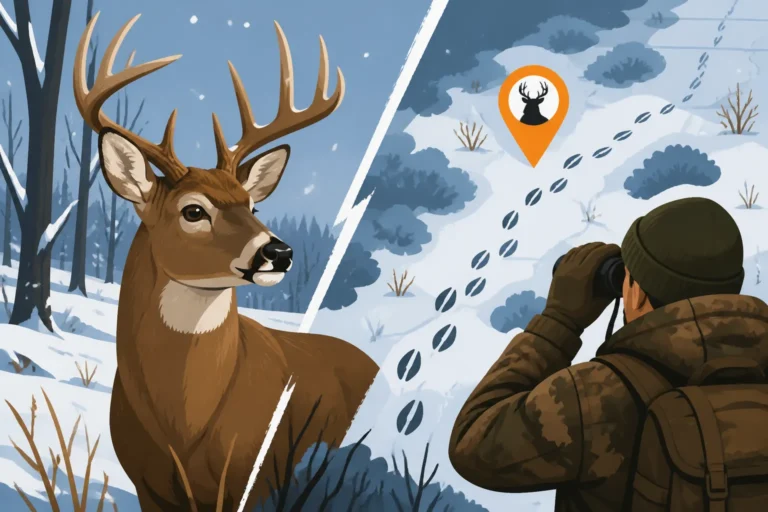
No amount of digital mapping can replace the intelligence gathered by actually putting your boots on the ground. This isn't about crashing through known bedding areas; it's about systematically approaching and investigating potential spots identified on your maps. Your goal is to find sign that confirms a mature buck is using a particular area for bedding. Look for large, deep deer tracks heading into and out of thick cover, especially those that look like they belong to a heavier animal. Pay close attention to rubs and scrapes along the edges of these cover patches. A distinct scrape line along a two-track or the entrance to a thicket is a huge clue.
You're looking for older, more mature rubs—the kind that indicate a buck has been there repeatedly. Finding heavily used trails that lead directly into dense, otherwise uninviting cover is another key indicator. When you find these trails, resist the urge to follow them directly into the core. Instead, circle downwind and try to get a glimpse of the interior without blowing your cover. Sometimes, finding ground others walk past means looking at the unappealing, dense spots that most hunters avoid. Remember, your intrusion can ruin a spot for weeks or even an entire season. Be stealthy, be patient, and let the deer reveal their habits through their sign. This kind of thorough Scouting Michigan Public Land Before Season is invaluable.
Approach and Hunting Tactics Near Bedding
Once you've identified potential bedding areas for big woods bucks, the real challenge begins: how do you hunt them effectively without spooking the deer into another county? This requires meticulous planning and a deep respect for the elements.
Wind, Thermals, and Entry/Exit Routes
The wind and thermals are your absolute most important considerations when hunting near a buck's bedding area. A big woods buck relies almost entirely on his nose for security. You must ensure that your scent cone never drifts into his bedding area, both on your approach and during your hunt. This means understanding how wind swirls in varied terrain and how thermals shift throughout the day. In the mornings, cool air flows downhill; in the evenings, warm air rises. A buck will almost always bed in a position where the wind and thermals allow him to smell approaching danger, typically from behind or to his sides, while he can visually observe the most likely approach routes in front of him.
Your entry and exit routes must be planned with extreme care. You need to identify paths that keep you completely out of the deer's nose and sight. This might mean walking well out of your way, using natural barriers like creeks, ravines, or ridges to mask your approach. Avoid walking directly through what you suspect are feeding or active travel corridors. Instead, approach from the side, utilizing a crosswind if possible, to put yourself in a position to intercept the buck as he leaves or returns to his bed. This often means being set up long before daylight or staying until well after dark. Understanding Wind and Thermals on Michigan Ridges is crucial for effective hunting.
Hunting the Edges and Transition Areas
Mature bucks are incredibly sensitive to pressure. Crashing directly into a bedding area is almost always a losing proposition. Instead, focus your efforts on hunting the edges, pinch points, and transition zones immediately adjacent to confirmed or suspected bedding. These are the areas where a buck will feel secure enough to start moving during daylight, but before he's fully exposed himself to open timber or food sources.
Think of it as setting up on the porch of his house, not in his living room. Look for subtle funnels of cover leading out of a thicket, the convergence of multiple deer trails, or a natural barrier that forces deer movement into a predictable lane. If you've identified a dense cedar swamp as a bedding area, consider setting up on a small hardwood ridge that borders it, especially if there's a food source nearby. This allows you to catch the buck as he transitions from bed to feed in the evening, or from feed to bed in the morning. For those hunting the northern Lower Peninsula, this might mean a treestand setup along a subtle ridge leading to a swamp edge. The goal is to ambush the buck at the exact moment he feels safe enough to move, but before he's detected your presence.
| Bedding Cover Type | Primary Benefit | Typical Location | Difficulty of Access | Best for Scouting |
|---|---|---|---|---|
| Cedar Swamps | Thermal & Visual Security | Lowland edges, islands within swamps | High (Wet, Dense) | Aerial, Ground (Edges) |
| Remote Ridges | Visual Vantage, Thermal Advantage | Undulating terrain, away from roads | Moderate (Long Walk) | Aerial, Topo Maps |
| Logging Slash | Impenetrable Visual Security | Recent clearcuts, timber operations | High (Tangled) | Aerial, Ground |
| Conifer Stands | Thermal & Visual Security | Dense pines, spruce, balsam fir | Moderate (Dense) | Aerial, Ground |
Disclaimer
Hunting is an inherently dangerous activity. Always prioritize safety, understand and follow all Michigan Department of Natural Resources regulations, and obtain proper licensing before heading afield. This guide provides general information and should not replace professional instruction or your own diligent research and scouting. Conditions in Michigan's big woods can change rapidly, and personal judgment is always required.