Finding Deer After a Severe Winter
After a brutally long and cold Michigan winter, it's completely disheartening to think about how our deer herds might have fared. You spend countless hours in the woods, scouting, observing, and hunting, and when a severe winter hits, it can feel like all that effort might be for naught if the deer just aren't there anymore. This guide is here to walk you through exactly how to approach finding and understanding deer populations in Michigan after they've been through a tough winter, helping you adapt your scouting and hunting strategies for the coming seasons.
Understanding Winter's Toll on Michigan Deer
Let's face it, Michigan winters can be brutal. We love our snow and ice for certain activities, but for our whitetail deer, a severe winter can be a death sentence, especially in the more unforgiving landscapes of the Upper Peninsula or even parts of the northern Lower Peninsula. It's not just about the cold; it's the combination of deep snow, persistent cold, and the resulting lack of accessible forage that truly impacts the herd. Understanding these dynamics is the first step to knowing where to look when spring finally breaks.
The Winter Severity Index and Its Implications
The Michigan Department of Natural Resources (DNR) uses something called the Winter Severity Index (WSI) to gauge just how hard a winter has been on deer, particularly in the Upper Peninsula. It’s a simple but effective tool, calculated by counting the number of days with 18 inches or more of snow and the number of days where temperatures dip below 0 degrees Fahrenheit. Each of these counts adds a point to the index. A mild winter might see a WSI in the single digits, while a severe one can easily push past 100 points.
What does a high WSI actually mean for deer? It means increased energy expenditure just to move through deep snow, less access to critical browse, and a higher chance of hypothermia for weakened animals. Fawns, especially those born late the previous spring, are always the most vulnerable. Does carrying fawns also suffer greatly, impacting fawn survival rates and the overall health of the herd for the following year. You'll often see a direct correlation between a high WSI and a decrease in deer numbers, particularly in areas like the Upper Peninsula, where deep snow can persist for months. It's an important metric to keep in mind when you're trying to figure out if your hunting grounds might have taken a significant hit. If you're seeing news reports about a high WSI, it's a good indicator that you might need to adjust your expectations and scouting efforts. More information on this can be found by researching the specific impact of the Winter Severity Index and What It Means.
Impact on Deer Behavior and Movement
A harsh winter fundamentally changes how deer behave and where they'll be. During the depths of winter, deer will congregate in "deer yards" – these are typically dense cedar swamps, conifer stands, or other areas that offer thermal cover and some protection from the elements. These yards become critical survival zones. After a severe winter, even once the snow recedes, deer might be slow to disperse from these core areas. Their energy reserves are depleted, and they're looking for the easiest path to recovery.
This means their normal travel patterns, their preferred feeding areas, and even their bedding sites might shift in the immediate aftermath of a tough winter. They might prioritize calorie-rich foods over their usual varied diet, and they’ll conserve energy by limiting unnecessary movement. Understanding this post-winter behavior is key. Instead of spreading out immediately, they might stick to areas adjacent to these traditional wintering grounds, slowly expanding their range as their physical condition improves and new green-up provides sustenance. You might find a higher concentration of deer in these transitional zones than you would typically expect for that time of year, as they're reluctant to venture too far from the safety and cover they relied on. For a deeper dive into these patterns, look into Upper Peninsula Deer Yarding and Winter Movement.
Recognizing Winterkill Signs
It's a grim reality, but after a severe winter, you might encounter signs of winterkill. This is never easy to see, but understanding what to look for can help you assess the herd's health. You might find carcasses, particularly of fawns or older, weaker deer, in or near wintering areas. Often, these won't be pristine remains but rather scattered bones or hides, as scavengers like coyotes and ravens will have done their work.
Beyond direct observation of deceased animals, look for indirect signs of stress. Deer trails might show excessive wear, indicating a high concentration of animals confined to a small area, which further depletes available browse. Browse lines on trees and shrubs will be exceptionally pronounced, with everything edible within reach picked clean. This over-browsing is a clear indicator of a struggling herd that has exhausted its food supply. You might also notice deer that appear noticeably gaunt or slow-moving, even into the spring, indicating a prolonged period of nutritional stress. These visual cues, though somber, provide important context for your hunting efforts in the subsequent season. It's a tough truth, but recognizing these signs helps you gauge the recovery process, which can sometimes take a surprisingly long time. How Long a Deer Herd Takes to Recover can provide further context.
| Winter Severity Index (WSI) | Impact on Deer Herd (General) | What to Expect in Following Seasons |
|---|---|---|
| 0-20 (Mild) | Minimal impact, good fawn survival. | Healthy, growing herd. |
| 21-50 (Moderate) | Some fawn mortality, limited adult impact. | Stable herd, potential for growth. |
| 51-80 (Severe) | Significant fawn mortality, some adult losses. | Reduced numbers, slower recovery. |
| 81+ (Very Severe) | High fawn and adult mortality, widespread stress. | Significantly reduced herd, multi-year recovery needed. |
Note: WSI is most commonly used in the Upper Peninsula, but the principles of winter severity apply statewide.
Key Areas to Focus Your Search Post-Winter
So, the snow is finally melting, and you're itching to get back into the woods. Where do you even begin looking for deer after they’ve been through such a challenging time? The key is to think about survival and recovery. Deer will be looking for comfort, security, and, most importantly, easy food as they try to regain their strength.
Preferred Winter Cover and Survival Zones
As mentioned, cedar swamps and dense conifer stands are prime wintering habitat. Even after the snow melts, these areas remain critical. Deer that survived the winter will be familiar with these thermal cover strongholds and will likely linger nearby or use them as a secure travel corridor for longer than usual. When you're out scouting in the spring or early summer, don't ignore these spots just because the deep snow is gone. Look for trails leading in and out of these areas. Sometimes, a well-worn path from a deer yard to a newly greened-up field or forest opening will be a super obvious indicator of recent deer movement.
These thick cover areas also provide excellent protection from predators, which is even more important for weakened deer. Focus your scouting on the edges of these cedar swamps or pine thickets. Deer will be reluctant to venture far from safety until they’ve had a chance to build back their strength. Pay attention to how the sun hits these areas as well; south-facing slopes adjacent to thick cover will warm up and green up faster, offering prime early foraging opportunities that deer will quickly exploit. You might find bedding areas right on the edge, allowing deer quick access to both cover and sun. If you want to refine your approach, consider topics like Reading a Michigan Cedar Swamp for Deer for more insights.
Identifying Crucial Spring Food Sources
After a severe winter, a deer's primary goal is to replenish its fat reserves. This means they'll be seeking out the most nutritious and easily digestible food sources as soon as they become available. Think about the earliest green-up: tender new shoots of grass, emerging forbs, and any remaining mast crops from the previous fall that weren't covered by snow. Aspen regeneration areas and clearcuts, which provide ample new growth, can be hot spots. Farmers' fields, especially those with winter wheat or early spring plantings, will also be magnetic for hungry deer.
Often, areas with a mix of evergreen cover and deciduous hardwoods will be particularly attractive. The evergreens provide the shelter, while the hardwoods offer budding trees and shrubs that provide much-needed nutrients. Don't overlook soft mast sources like wild berries later in the spring and early summer; these are carbohydrate powerhouses that deer will actively seek out. Even subtle differences in soil type or elevation can lead to earlier green-up in certain pockets, and you can bet deer will find these first. For more on what deer are looking for during these critical times, check out Late-Season Food Sources for Whitetails.
Water Sources and Post-Thaw Movement
Water is always important, but after a severe winter, the availability and distribution of water sources can influence deer movement. As snow melts, small ephemeral streams and puddles can form, providing easy access to water without deer having to travel to larger rivers or lakes. Deer that have been heavily stressed might also seek out mineral licks or areas with specific soil compositions to replenish electrolytes.
As the ground thaws and water becomes more abundant, deer will start to disperse more widely. However, their initial movements will still often be dictated by travel corridors that offer the easiest access between bedding cover, food, and water. Look for well-used trails leading from wintering cover to spring food sources, especially if they pass near a reliable water source. Understanding how these three elements – cover, food, and water – intertwine after a tough winter is crucial for predicting where deer will concentrate their efforts. Creeks, swamp edges, and even low-lying areas that collect meltwater can become key travel routes and congregation points.
Advanced Scouting Techniques for Post-Winter Deer
Now that you know what kind of areas to prioritize, how do you actually pinpoint deer activity? You can't just blindly wander through the woods anymore; after a tough winter, efficiency in your scouting is more important than ever. You need to leverage every tool at your disposal.
Utilizing Mapping Tools and Aerial Photography
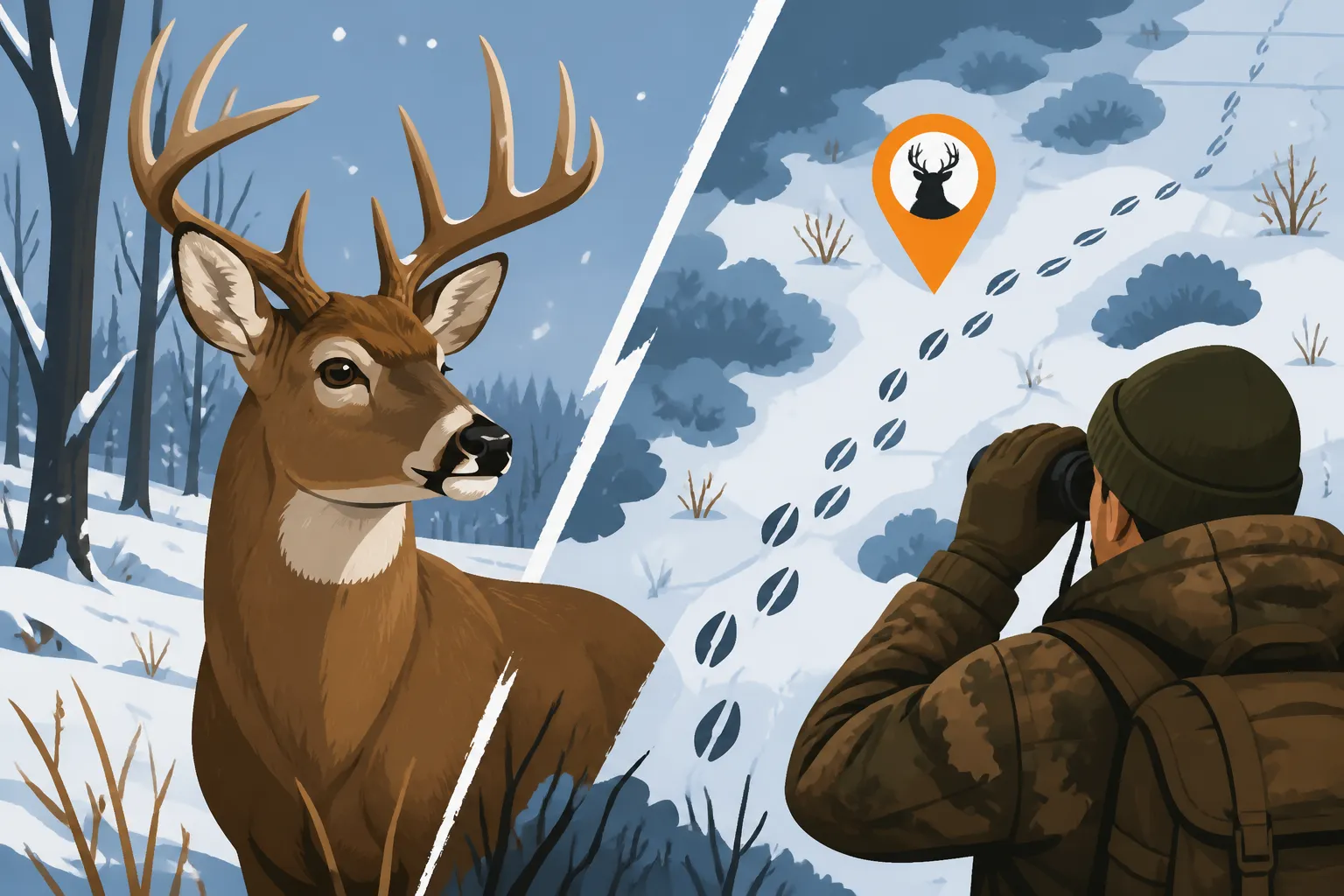
In today's hunting world, digital mapping tools are invaluable, and they're particularly useful when trying to understand post-winter deer patterns. Platforms like GoHunt provide incredibly detailed aerial and topographic maps that can help you identify key features from the comfort of your home. You can easily spot those dense conifer stands, locate potential early green-up areas on south-facing slopes, and mark out travel corridors along ridge lines or swamp edges.
Use the layers on these apps to your advantage: public land boundaries, habitat types, and even historical satellite imagery can reveal changes in the landscape over time, like new clearcuts or areas of dense regeneration that might now be holding deer. You can plan your boots-on-the-ground scouting routes based on what these maps suggest. Identify pinch points, funnels, and potential bedding areas that offer both thermal cover and proximity to emerging food sources. By using tools like GoHunt, you can literally "walk" the terrain virtually, making your actual time in the woods much more productive. It’s a game-changer for understanding the lay of the land, especially when trying to assess changes brought on by severe weather. Another excellent resource for this is the Scouting With Michigan's Mi-HUNT Map, which offers specific public land insights.
Boots-on-the-Ground Sign Reading
While technology is great, nothing beats actually walking the woods and reading the sign firsthand. After a harsh winter, fresh deer sign is a golden ticket. Look for fresh tracks in the soft earth near thawing areas, browse marks on new growth, and even deer hair caught on low branches in travel corridors. Pay close attention to droppings; their freshness can tell you how recently deer have been in an area.
Concentrate your efforts on the transition zones between winter cover and spring food sources. As you walk, consider the easiest path a deer would take – what's the least energy-intensive route? These will be the primary travel corridors. If you find multiple sets of fresh tracks or heavy browsing in a specific area, you've likely found a post-winter hotspot. Don't be afraid to put in the miles. Sometimes, the deer that survived a tough winter are the ones that found the least pressured, most secure pockets, and those often require a bit more effort to locate. Look for rub lines from the previous fall (they'll still be visible) that might indicate where bucks were traveling before the winter, and then try to connect those to current food sources. Further information can be found on Finding Sign in Big Timber.
Strategic Trail Camera Placement
Trail cameras are your silent scouts, and after a severe winter, they are indispensable for confirming deer presence and assessing herd health. Don't just set them randomly; place them strategically based on your mapping and ground scouting. Focus on those transition areas we've talked about: funnel points between dense cover and emerging food, along well-used trails leading from wintering grounds, or near reliable water sources.
Consider using mineral sites or legal attractants (check Michigan's baiting regulations carefully, as they are very strict in many areas) to draw deer in and get a better count and assessment of their health. A severe winter can mean a skewed buck-to-doe ratio or a noticeable absence of fawns. Your trail camera photos can provide visual evidence of this. Look for deer that appear healthy and are actively feeding. If you're consistently getting photos of gaunt or struggling animals, it’s a clear sign of significant winter impact. GoHunt often integrates with various trail camera systems, allowing you to manage your photos and data efficiently, helping you keep tabs on deer movement even when you can't be in the woods. This data helps you verify if the deer are truly bouncing back or if numbers are still low.
Adjusting Your Hunting Strategy for Impacted Herds
Even with the best scouting, you might find that the deer numbers just aren't what they used to be. A severe winter can have long-lasting effects. It's important to adjust your hunting strategy not just for your own success, but also with conservation and herd recovery in mind.
Hunting Ethics and Conservation Considerations
After a severe winter, the ethical hunter's role becomes even more crucial. While it's tempting to want to fill a tag, remember that the herd might be vulnerable. This doesn't mean you shouldn't hunt, but it does mean being more selective and mindful. You might choose to pass on younger bucks or focus solely on antlerless tags (if available and needed for management) to help the herd rebound.
Consider the long-term health of the local deer population. If you notice a significant decline in fawn numbers or overall deer health, it might be a good year to prioritize enjoying the experience over harvesting. This kind of conservation mindset ensures that future generations of hunters will also have healthy deer populations to pursue. It's a balance between enjoying the sport and being a responsible steward of the resource, something all Michigan hunters cherish. The Michigan DNR also monitors deer herd health, so keeping an eye on their annual reports can provide valuable context for your specific area.
Adapting to Reduced Deer Density
When deer numbers are down, you simply can't hunt the same way you would in a year with high populations. Your hunting areas might need to expand, or you might need to become even more patient and strategic in smaller, concentrated pockets of activity. Still-hunting, where you move slowly and deliberately through the woods, becomes a more effective tactic than sitting in a stand for hours if deer movement is sparse.
Focus on connecting the dots between those identified cover, food, and water sources. Deer in a reduced population will likely use the most efficient and secure travel routes, making these pinch points and funnels even more critical. You might need to cover more ground, or spend more time scouting, to find those few remaining pockets where deer are concentrated. Patience is key. If your typical hunting spot isn't producing, don't be afraid to pack up and try a new area entirely, even if it means driving a little further. Consider looking at Still-Hunting Michigan Cedar Swamps for some advanced tactics.
Prioritizing Healthier Deer Movement Patterns
Even in a struggling herd, deer will still exhibit patterns, albeit perhaps less frequently. Your goal is to identify and capitalize on these consistent movements. After a severe winter, deer will be focused on survival and recuperation, meaning their movements will be primarily between secure bedding and reliable food sources. This makes mornings and evenings, when deer are most actively feeding, particularly important.
As the season progresses and deer regain strength, you might see their patterns normalize somewhat, but the impact of a severe winter can linger for years. Always be on the lookout for fresh sign, adapt your stand locations, and use your observations to fine-tune your strategy. If you consistently see deer moving along a specific ridge or through a particular swamp edge during daylight hours, that's your sweet spot. Don't waste time on old, cold sign. Focus on where the deer are and how they are trying to thrive despite the challenges. This adaptability is what makes a successful hunter.
Disclaimer
Always consult the latest Michigan DNR hunting regulations and local ordinances before heading afield. Hunting laws and conditions can change, and it is your responsibility to be informed and compliant.