Upper Peninsula Deer Yarding and Winter Movement
Michigan’s Upper Peninsula is a truly wild and stunning place, but those breathtaking landscapes come with a brutal reality for its whitetail deer population: incredibly harsh winters. For hunters, this translates into a unique set of challenges, as deer patterns shift dramatically from the fall rut to a crucial survival mode. This guide is dedicated to helping you unravel the mysteries of deer yarding and winter movement in the U.P., equipping you with the knowledge to understand where deer go, why they go there, and how you can adapt your hunting strategies to these formidable conditions.
The Harsh Reality of Upper Peninsula Winters
Anyone who has spent a winter in the U.P. knows it's no joke. The sheer volume of snow, coupled with relentlessly cold temperatures, creates an environment where survival is a daily struggle for whitetails. Unlike their southern Michigan counterparts, U.P. deer face a true test of endurance, and their behavior is entirely dictated by the need to conserve energy and find whatever limited resources are available. Understanding this fundamental struggle is the first step to truly comprehending deer movement in these northern reaches.
Snow Depth and Duration: Impact on Deer Mobility and Food Access
Imagine trying to walk through chest-deep snow every single day, trying to find food that's buried underneath. That's the reality for a U.P. whitetail. The Upper Peninsula regularly experiences snow depths that can reach several feet, sometimes lingering from November well into April. This deep, persistent snow severely restricts a deer's ability to move, especially fawns and smaller does. Every step becomes an energy drain, forcing them to expend precious calories they desperately need for warmth and survival. They become incredibly vulnerable to predators and simply cannot travel far for food.
Beyond mobility, snow depth directly impacts food availability. Most of the succulent browse and mast crops that deer rely on in the milder months become inaccessible. Ground forage is buried, and even low-hanging branches can be covered or out of reach if the snow piles up enough. This forces deer to switch their diet to less nutritious, often woody browse, further stressing their systems. The deeper and longer the snow cover, the more critical the need for specific winter habitats becomes, driving deer to congregate in areas that offer at least some relief from the elements. This is precisely why understanding phenomena like the "Winter Severity Index and What It Means" is so vital for predicting herd health.
Extreme Cold and Energy Demands: How Deer Conserve Energy
Snow might be the visible challenge, but the extreme cold is the silent killer. Sub-zero temperatures, often exacerbated by biting winds, force deer to constantly burn calories to maintain their body temperature. They're literally fighting to stay warm, and every calorie spent moving or shivering is one less calorie available for survival. This is why deer movement in cold conditions often slows dramatically. You won't see them running around aimlessly; every action is calculated to conserve energy.
Deer adapt to this cold in several ways. They grow incredibly thick winter coats, much denser than deer further south, providing a natural insulation layer. They also change their behavior, seeking out thermal cover that blocks wind and traps what little solar radiation is available. This leads to them "yarding" up – a critical survival strategy where deer congregate in dense conifer stands, which we'll delve into next. Their metabolic rate slows, and they prioritize lying down in sheltered spots during the coldest parts of the day. For hunters, this means deer activity during daylight hours can be minimal, often peaking only during short, low-energy foraging excursions.
Understanding Deer Yarding Behavior
Deer yarding is not just a casual gathering; it's a vital, instinctual survival mechanism that has evolved over millennia to help whitetails endure the punishing northern winters. It’s a remarkable testament to their resilience and adaptation, creating concentrated pockets of deer that can be both frustratingly elusive and, if understood, surprisingly predictable for hunters.
What is a Deer Yard?
At its core, a deer yard is simply a winter congregation area where whitetails seek refuge from deep snow, brutal cold, and relentless wind. These aren't just random spots; they are specific habitats characterized by dense overhead cover, typically conifer stands, that provide crucial thermal protection and easier travel. Think of it as a natural deer shelter, a place where they can escape the worst of winter's wrath. While they'll still venture out to feed, the yard itself becomes their home base for months.
These yards are often found in low-lying areas, along river bottoms, or in vast swamp complexes, places that might be nearly impenetrable during other seasons. The sheer density of deer in these areas can be astounding, sometimes hundreds of animals packed into a relatively small geographic footprint. This density can lead to heavy browsing pressure within the yard, as deer quickly deplete available food sources. This often forces them to make short, calculated trips out of the yard perimeter for better foraging, offering brief windows of opportunity for diligent hunters. This intense pressure can make it feel like you're trying to find "Finding Ground Others Walk Past" even on public land.
The Critical Role of Conifer Cover
When we talk about deer yards in Michigan’s U.P., we are almost exclusively talking about conifer cover, and specifically, cedar swamps. Eastern white cedar (Thuja occidentalis) is the absolute king in these wintering areas. The dense, interlocking branches of cedar trees act like a natural roof, intercepting snowfall before it reaches the ground. This results in significantly shallower snow depths underneath the cedars compared to surrounding hardwood forests or open areas. Less snow means easier movement, which translates directly into less energy expenditure for the deer.
But it’s not just about snow. The thick canopy of conifers also provides exceptional thermal cover. It blocks bitter winds, radiates some warmth back down, and traps what little solar energy might penetrate on a sunny winter day, making the ambient temperature within the yard noticeably warmer than outside it. Furthermore, cedar itself provides a critical food source. While not the most nutritious, deer will heavily browse cedar twigs and needles when other food is scarce. Hemlock, balsam fir, and spruce also play a role, offering similar benefits. These areas are not just hunting grounds; they are survival grounds, and understanding their importance to the deer explains why deer are so reluctant to leave them once winter sets in. If you're really interested in these vital habitats, you might want to delve into "Reading a Michigan Cedar Swamp for Deer" to understand their nuances.
Locating Deer Yards for Hunting Success
Finding deer yards is less about luck and more about diligent scouting and understanding the landscape. It requires a different mindset than hunting the rut or early archery season, focusing on survival habitat rather than transient feeding or breeding areas. For many U.P. hunters, knowing where the historical yards are is paramount, but confirming their current use takes boots-on-the-ground effort.
Scouting for Historical Yards: Using Maps and Local Knowledge
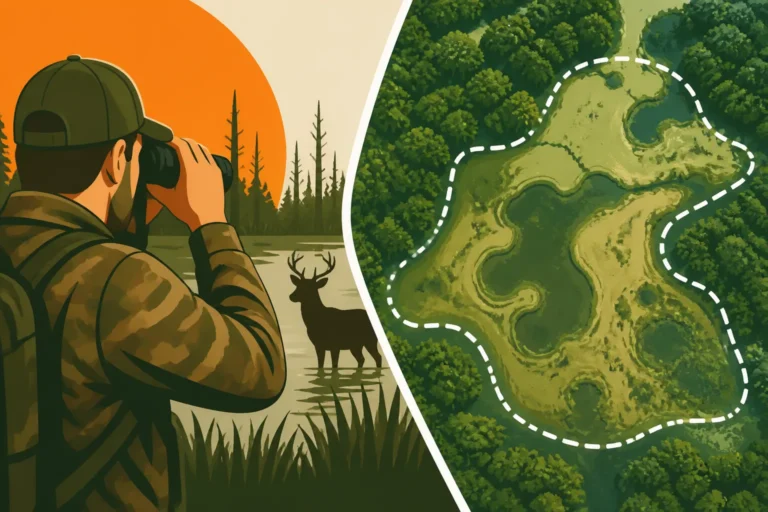
One of the most valuable resources for locating deer yards are maps, particularly detailed topographical and aerial imagery. Look for expansive areas of dense conifer cover, especially those labeled as "cedar swamp," "conifer swamp," or low-lying areas adjacent to major river systems. The Michigan DNR maintains records of known historical deer wintering complexes, and a quick search or a chat with a local biologist can often point you in the right direction. Furthermore, old logging maps can be incredibly useful, highlighting areas that have been consistently managed for timber over the decades, often indicating persistent stands of conifers.
Don't underestimate the power of local knowledge. Talk to seasoned U.P. hunters, loggers, or even snowmobilers who frequent the backcountry. They often have firsthand experience with areas that consistently hold deer in winter. While they might not give up their exact honey holes, they can provide general areas or characteristics to look for. Online mapping tools, like those offered by GoHunt (though traditionally more Western-focused, the mapping principles apply to any state, including Michigan), or even basic Michigan Mi-HUNT maps, allow you to overlay different habitat types and satellite imagery, helping you pinpoint those dark green patches of conifers that scream "deer yard."
Reading the Landscape for Current Movement: Identifying Trails and Browse Lines
Once you've identified potential yarding locations on a map, it's time to put boots to the ground (or skis, or snowshoes!). Winter scouting is absolutely essential to confirm active deer yards. Look for well-worn deer trails that converge and crisscross within the conifer stands. These trails will be packed down, almost like miniature highways, indicating heavy use. The deeper the snow outside the yard, the more defined these trails will be within. You'll often see distinct entry and exit points where deer transition from the hardwoods into the conifers.
Another undeniable sign of an active deer yard is the presence of a "browse line." This is where deer have eaten all available palatable vegetation up to the height they can reach, often 4-6 feet off the ground, leaving a distinct line of browsed-off branches and stripped bark. White cedar, balsam fir, and even maple are common browse species. The more severe the winter and the higher the deer density, the more pronounced this browse line will be. Look for fresh droppings, especially if they are numerous and concentrated, and even pawed-out areas where deer have dug through the snow to find ground forage. These signs tell you not just where a yard is, but that deer are currently using it heavily. Keep an eye out for these subtle clues when you're "Scouting Michigan Public Land Before Season".
Deer Movement Patterns Within and Near Yards
Even when confined to a yard, deer are not static. They have daily routines and respond to environmental changes, creating predictable (and sometimes unpredictable) patterns that a smart hunter can learn to exploit. Understanding these movements is key to intercepting a U.P. buck in his winter retreat.
Daily Routines and Foraging Habits: Short Excursions for Food
Within an active deer yard, especially during periods of deep snow and extreme cold, deer movement tends to be incredibly efficient and purposeful. They prioritize thermal cover, spending the majority of their time bedded down in the densest parts of the conifer swamp, conserving precious energy. Their daily routine often involves short, low-energy excursions from these bedding areas to nearby foraging grounds. These foraging spots might be within the yard itself if enough browse remains, or they might be just outside the perimeter, perhaps in an adjacent clearcut, hardwood ridge, or even a standing cornfield if available.
These feeding forays are typically brief and occur during the warmest parts of the day, often mid-morning or late afternoon, but they can be sporadic based on weather. A sunny day, even if cold, might see more activity as deer soak up what little warmth they can. Cloudy, bitter days will often result in minimal movement. The trails leading to and from these feeding areas will be well-defined, and these are often the prime locations for stand placement or strategic still-hunting. The key is to remember that these aren't long-distance treks; they're short, deliberate movements from safety to sustenance. Knowing where to look for these micro-movements is crucial for successful hunting, especially when considering "Entry Routes on Flat Michigan Ground".
Mid-Winter Shifts and Secondary Yards: Adaptations to Changing Conditions
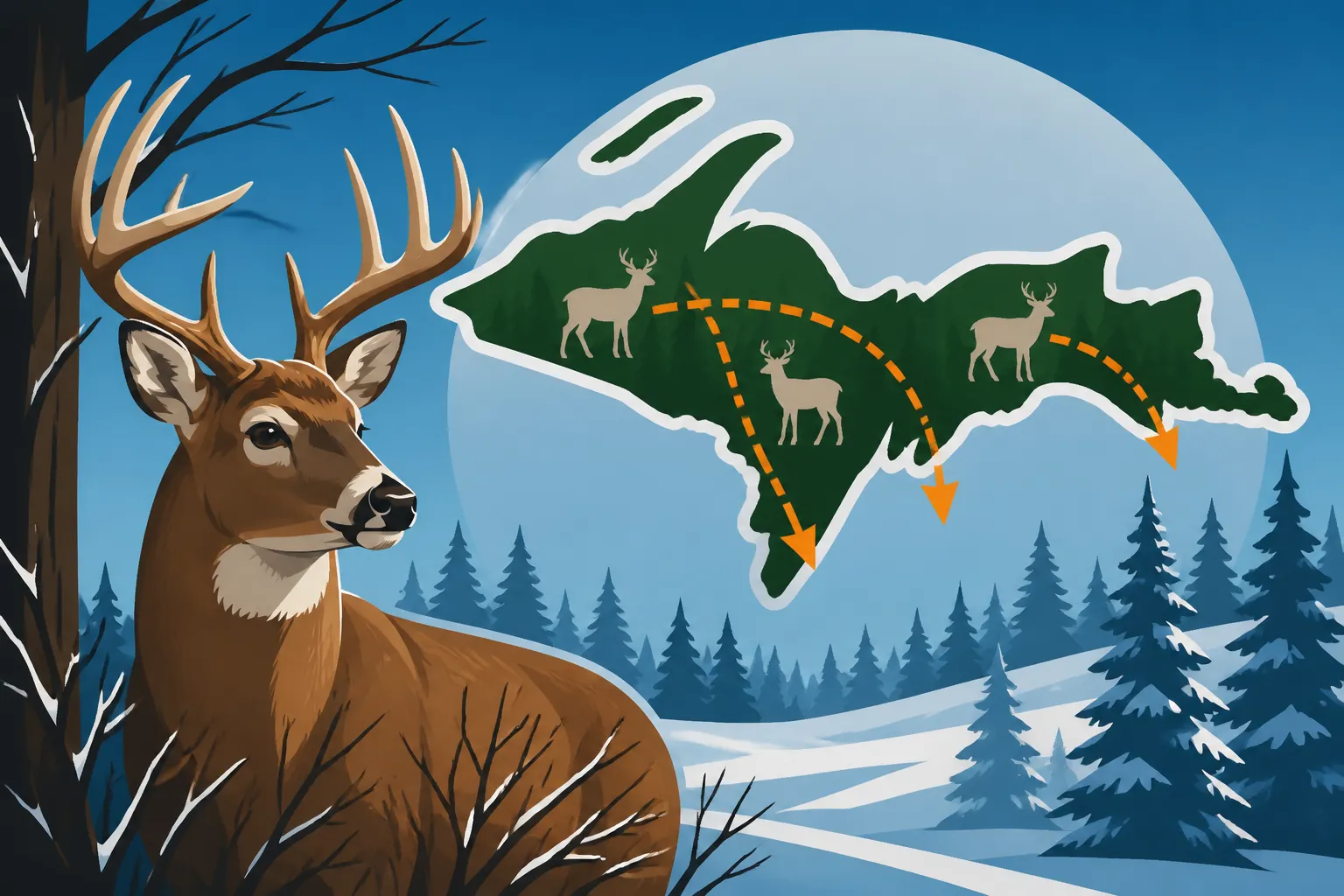
While deer yards provide essential refuge, they are not always permanent throughout the entire winter. Deer, especially larger herds, can and will deplete the browse within a primary yard over time. As winter progresses and food becomes scarcer, or if the snow conditions temporarily ease, deer may make calculated shifts to "secondary yards" or expand their foraging territory. These secondary yards might be less ideal in terms of cover but offer a fresh supply of browse.
Severe weather can also trigger shifts. A sudden thaw followed by a deep freeze can make travel difficult, or a period of intense predator pressure might cause deer to shift to an even more secluded part of the swamp. Hunters need to be aware that while deer will remain in wintering complexes, their exact location within those complexes can be fluid. Continuous scouting, even during the season, can help identify these shifts. New tracks, fresh browse, or a sudden increase in activity in a previously quiet section of a large conifer block can signal a shift. This adaptability is part of what makes hunting these animals such a challenge, but also incredibly rewarding when you finally connect the dots.
Hunting Strategies for Yarding Deer
Hunting deer in their winter yards requires a completely different approach than chasing rutting bucks in October. It's often a game of stealth, patience, and understanding the environment. The dense cover and often limited visibility mean close-range encounters are common, and disrupting the yard can have long-lasting negative impacts.
Still-Hunting the Edges and Funnels: Approaching Carefully
Still-hunting is perhaps the most effective tactic for deer in their winter yards. This involves moving incredibly slowly and deliberately, pausing frequently to observe, listen, and scan your surroundings. The goal is to blend into the environment, using the dense cover to your advantage, and to spot deer before they spot you. Focus your efforts on the edges of the yard, where the conifers transition into hardwoods or other open areas. Deer will often use these transition zones to stage before entering or leaving the dense cover.
Look for natural funnels – narrow strips of cover, pinch points created by terrain features, or sections of the swamp that deer are forced to travel through. These can be excellent ambush points. When still-hunting, pay close attention to the wind, as deer in their winter cover will rely heavily on their sense of smell. Move into the wind or with a slight crosswind. Each step should be calculated to minimize noise, and be prepared for quick, close-range shots. Remember, this isn't about covering miles; it's about covering feet, but covering them effectively. For those who embrace this methodical approach, consider mastering "Still-Hunting Michigan Cedar Swamps".
Strategic Stand Placement and Entry/Exit: Minimizing Disturbance
While still-hunting is effective, a strategically placed stand can also be lethal, especially for those who prefer to sit in extreme cold. However, stand placement around deer yards is critical and requires careful planning. Unlike other seasons, you often want to be on the edges of the yard, or within transition areas, rather than deep inside the densest cover. Placing a stand too deep within an active yard can create too much disturbance, potentially pushing deer out of the area altogether. Identify those primary travel corridors, especially trails leading from deep cover to known feeding areas, or those connecting different parts of the yard.
Your entry and exit routes are paramount. Deer are highly sensitive to intrusion in their winter refuges. Approach your stand from a direction that minimizes your scent and noise, and ideally, one that doesn't push deer deeper into the core of the yard. Avoid walking directly down major deer trails to your stand. Use topographical features, slight ridges, or even frozen swamps to your advantage. Try to get in well before daylight and stay until well after dark to capitalize on those brief windows of deer movement. Disturbing a yard can scatter deer for days, making subsequent hunting much tougher. This level of detail in planning is also critical when executing "Deer Drives on Michigan State Land" to ensure deer move predictably.
| Feature | Typical Winter Habitat (Hardwoods/Open) | Deer Yarding Habitat (Conifer Swamps) |
|---|---|---|
| Snow Depth | Deep, unimpeded accumulation | Significantly shallower due to canopy |
| Thermal Cover | Minimal, exposed to wind | Excellent, blocks wind and traps heat |
| Food Availability | Mostly buried, limited reach | Some accessible browse (cedar, fir), less diverse |
| Mobility | Highly restricted, energy-intensive | Easier movement within packed trails |
| Predator Exposure | Higher, easier for predators to spot | Lower due to dense cover and visibility |
| Deer Density | Low, scattered | High, concentrated |
| Primary Use | Transit, temporary feeding | Long-term survival, refuge |
Post-Winter Dispersal and Spring Scouting
The end of winter doesn't mean the end of learning from deer yards. The break-up of these crucial wintering areas marks a significant shift in deer behavior, offering new insights and opportunities for the observant hunter, especially when you're looking to understand "Finding Deer After a Severe Winter".
The Break-Up and Movement to Spring Browse
As the snow finally recedes and temperatures rise, deer begin to disperse from their winter yards. This "break-up" isn't instantaneous but rather a gradual process. The first deer to leave are often the strongest and healthiest, typically bucks and independent does, as they seek out the earliest emerging green-up. They’re looking for high-quality, nutritious forage to replenish the calories lost during the long winter. This initial movement can be slow and methodical, as deer are still recovering from the harsh conditions.
Their movements will often follow traditional migration corridors from the yards to their summer ranges, which might be many miles away. These routes often follow ridges, river bottoms, or other connective cover that provides security. Fawns and weaker deer will stay in or near the yards longer, as the yards often offer the last vestiges of protection and accessible forage before other areas green up. Understanding these post-winter dispersal patterns can provide critical clues for next fall’s hunting, especially if you're trying to figure out "How Long a Deer Herd Takes to Recover" after a tough winter.
Finding Sheds and Summer Patterns: Clues for Next Season
The post-winter period is prime time for shed hunting, and it's particularly effective around the edges of former deer yards and along those dispersal corridors. Bucks, weakened by the rut and the winter, will often drop their antlers as they start to recover. By walking these areas, you can not only find sheds but also confirm the presence of specific bucks, gain an understanding of their travel patterns, and identify potential bedding and feeding areas for the upcoming seasons. A large shed from a mature buck indicates that animal survived the winter and offers hope for future encounters.
Furthermore, observing where deer move after the yards break up helps you pinpoint their summer ranges and potential early season haunts. Look for areas with lush, early-season browse, regenerating clearcuts, or agricultural fields bordering good cover. These areas become crucial food sources as deer recover and does prepare for fawning. By paying attention to these post-winter movements, you're not just scouting for sheds; you're building a comprehensive understanding of deer behavior that spans the entire year, giving you a significant edge for future hunts.
Disclaimer
Hunting is an inherently dangerous activity. Always prioritize safety, adhere to all Michigan Department of Natural Resources regulations, and obtain proper licenses and permits before heading afield. Wildlife behavior can be unpredictable, and conditions in Michigan's Upper Peninsula can change rapidly. This information is for educational purposes and should not replace professional guidance or personal judgment.