Entry Routes on Flat Michigan Ground
Hunting deer on Michigan's flat ground can feel like a game of pure luck, often leaving you frustrated when deer bust you before you even reach your stand. Without the obvious funnels of ridges, steep creek banks, or drastic elevation changes, it's incredibly challenging to plan a consistent, undetectable approach. This guide will dive deep into understanding these unique challenges and provide you with actionable strategies to master your entry routes on Michigan's often-level terrain, helping you consistently get to your setup without alerting the local whitetails.
Understanding Flat Terrain's Unique Challenges
When you think about classic deer hunting, images of rugged mountains, rolling hills, or deep river valleys often come to mind. Michigan certainly has its share of those, especially in the Upper Peninsula and parts of the northern Lower. But a vast amount of our prime hunting ground, particularly in the sprawling state forests and many private land parcels in the Lower Peninsula, is remarkably flat. This lack of distinct topographical features presents a whole different set of puzzles that can really make or break a hunt.
The Problem of Visibility and Movement
On flat ground, whether it's mature timber with minimal undergrowth or vast agricultural fields bordered by woodlots, visibility is a double-edged sword. You might be able to see farther, which sounds great, but it also means the deer can see you farther. Every step you take, every silhouette you cast against the morning or evening sky, is magnified. Without gullies, steep banks, or thick, broken terrain to hide your approach, you become a very obvious anomaly in the landscape. This is why so many hunters on flat ground report deer "just appearing" or being busted from seemingly out of nowhere; often, the deer saw or heard them first, long before they even got close to their intended hunting spot. The lack of natural cover to break up your outline or muffle your footsteps means that traditional, straight-line approaches are often a recipe for failure.
Navigating Wind and Scent Control Without Topography
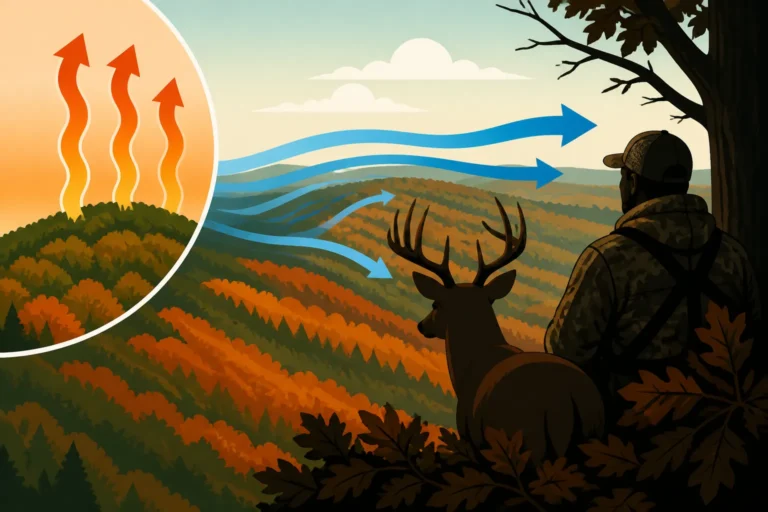
Wind is arguably the hunter's most important tool and greatest adversary, and on flat ground, it can feel downright unpredictable. On hilly or mountainous terrain, thermals often create predictable updrafts and downdrafts that you can plan your entry and exit around. But on flat parcels, the wind can swirl unexpectedly, especially at ground level or around small pockets of cover. A steady 10 mph breeze might seem consistent at 20 feet up in a tree, but down on the ground, just a few feet from a thicket or a slight depression, it can eddy and carry your scent in directions you didn't anticipate. This makes meticulous Wind and Thermals on Michigan Ridges planning even more critical, and often more frustrating, as there are fewer "hard" wind breaks to rely on. You have to be hyper-aware of subtle shifts, and your scent cone can spread across a much broader area, alerting deer in unexpected places.
The Illusion of Featurelessness
Perhaps the biggest mental hurdle for hunters on flat Michigan ground is the illusion that the land is "featureless." It’s easy to look at a topo map or walk through a seemingly endless stand of hardwoods and think, "There's nothing here to use." But this couldn't be further from the truth. While you won't find dramatic cliffs or canyons, flat ground often holds a treasure trove of subtle, overlooked features that deer key into. These might be old logging roads, slight rises (even just a foot or two), drainage ditches, fence lines, small swampy pockets, or changes in timber type that create cover. The key is to shift your perspective and actively scout for these micro-features. What looks like a monotonous forest to the untrained eye is, to a deer, a complex network of travel corridors, bedding nooks, and feeding areas. Our goal is to find those subtle distinctions and use them to our advantage.
Scouting for Subtle Clues on Level Terrain
The secret to success on flat Michigan hunting ground isn't about finding big, obvious features; it's about meticulously dissecting the landscape to reveal the subtle, hidden details that deer rely on. This requires a different kind of scouting, one that combines modern technology with old-fashioned boot leather.
Leveraging Mapping Tools and Satellite Imagery
Before you even step foot in the woods, the best scouting begins at home, often on your computer or phone. Tools like the Michigan DNR's Mi-HUNT Map are invaluable for identifying public land boundaries and general topography. However, for truly dissecting flat ground, you need high-resolution satellite imagery, which mapping apps like GoHunt excel at providing. Zoom in and out, paying close attention to slight changes in vegetation density, subtle elevational differences (even half-foot contours can be significant), and water features.
Look for:
- Old Logging Roads and Two-Tracks: These are often overgrown but still visible from above. Deer frequently use these as travel corridors because they offer easier walking. They also provide natural linear features to plan your entry along.
- Swampy Pockets and Drainage Ditches: Even small, wet areas can create natural barriers or edges that deer will skirt. Look for greener, denser vegetation that signifies these spots. They often act as mini-funnels or cover for bedding. You can learn more about Reading Aerial Photos for Swamp Deer.
- Changes in Timber Type: A shift from mature hardwoods to younger pines, or from dense cedar swamp to open oak stands, creates edges that deer love to cruise. These can be excellent places to focus your scouting.
- Subtle Contour Lines: On GoHunt, you can often add contour lines. While they might be few and far between on flat ground, even a one-foot change in elevation can create a "bench" or a slight ridge that deer prefer to walk, giving them a better vantage point or simply drier ground. These barely perceptible rises can also create subtle windbreaks or funnels that are critical for planning your approach.
Ground Scouting for Micro-Features and Deer Sign
Once you've poured over the maps, it's time to hit the woods. This is where you connect the satellite imagery with reality and find the truly subtle clues. Remember, deer on flat ground are often reacting to the slightest changes.
- Elevational Bumps: Walk the areas you identified from the map as having slight elevation changes. You'll be amazed at how often deer trails follow the highest, driest ground, even if it's only a foot or two above the surrounding area. These small "ridges" become de facto travel corridors.
- Thickets and Blowdowns: On flat land, any significant cover becomes a magnet for bedding deer. Look for dense cedar swamps, young aspen cuts, thick pine plantations, or areas with heavy blowdowns. These spots offer security. Plan your entry around these areas, never directly through them.
- Water Edges: Rivers, creeks, even small seasonal drainages or beaver ponds create natural edges. Deer will often travel parallel to these water features, using the bank for cover and easy movement. A deep, brushy creek can be a perfect feature to sneak along, masking your sound and breaking up your silhouette.
- Identifying Funnels and Choke Points: Even without drastic topography, flat ground has funnels. These could be narrow strips of cover between open fields, the intersection of two distinct timber types, or the point where a thick bedding area bottlenecks into a travel corridor. Look for concentrated deer sign – multiple tracks, heavy browsing, rubs, and scrapes. If you're Hunting Without Bait in the Lower Peninsula, understanding these natural funnels becomes even more critical for anticipating deer movement. These subtle funnels are the absolute sweet spots for setting up a stand or ground blind.
Crafting a Stealthy Entry Plan
Once you've identified your potential hunting spots and the subtle features deer are using, the next critical step is to design a foolproof entry plan. On flat Michigan ground, this plan needs to be meticulous, accounting for every detail to avoid detection.
Utilizing Natural Cover for Approach
The best entry routes on flat terrain leverage every bit of natural cover available to you. Think of yourself as moving through the landscape like a shadow, taking advantage of every opportunity to break up your outline and muffle your sound.
- Timber Edges: If your stand is near an open field or a clear-cut, use the edge of the mature timber for your approach. Stick to the darkest, densest part of the tree line. This breaks up your silhouette and keeps you out of sight longer.
- Drainage Ditches and Creek Beds: These are often overlooked highways for stealth. Walking in a shallow ditch, even if it's dry, puts you below the deer's primary line of sight and helps contain your sound. Just be mindful of crossing points that deer might be using.
- Thick Brush Lines: Look for linear strips of dense brush, briars, or young saplings. These can provide excellent visual cover, allowing you to slip in undetected. Move slowly, taking care to avoid snapping branches.
- Still-Hunting In: Sometimes, the best entry is the hunt. Instead of rushing to a static stand, consider still-hunting into your chosen area. This highly effective method for Still-Hunting Michigan Cedar Swamps allows you to move deliberately, stopping frequently to observe, listen, and scan for deer. This slower approach reduces your chances of busting deer and increases your awareness of their immediate presence. It also gives you the flexibility to adapt your final setup if you spot a deer unexpectedly.
Mastering Wind Direction and Scent Control
On flat ground, without the benefit of consistent thermals, wind becomes the absolute governing factor for your entry. Even the slightest swirl can spell disaster.
- Check the Forecast, Then Check Again: Always know the prevailing wind direction for your chosen hunting time. Use multiple weather apps if necessary to confirm.
- Plan a Loop or "L" Approach: Never walk directly into your spot with the wind at your back, pushing your scent ahead of you. Instead, plan a wide loop that brings you in crosswind or upwind of your target area. This often means walking significantly farther, but it's worth it to keep your scent out of the deer's primary detection zone.
- Use the Downwind Side of Cover: If you're walking along a thicket or a creek, try to stay on the downwind side of it. This creates a buffer between your scent and any deer using the cover.
- Strict Scent Elimination Protocol: This is non-negotiable on flat ground. Use scent-free detergents, store your hunting clothes in airtight containers, shower with scent-eliminating soap, and spray down thoroughly before heading out. Don't forget your boots – they're constantly picking up and leaving scent. Rubber boots, like those often recommended for Rubber Boots for Swamp Walking, are excellent for minimizing ground-level scent transfer. Every step you take can be compromised if you're not meticulous.
Quiet Movement and Timing
Noise on flat ground carries. Every snapped twig, every rustle of clothing, every heavy footfall echoes in the stillness.
- Slow Down: This is probably the hardest rule to follow, but it's the most important. Move at a snail's pace, especially as you get closer to your hunting location. Take one or two steps, then pause, listen, and scan. Repeat.
- Foot Placement: Be deliberate with where you put your feet. Avoid crunchy leaves, dry sticks, and noisy ground cover. Lift your feet rather than dragging them.
- Gear Silence: Ensure all your gear is quiet. Loose buckles, clanging treestand parts, or jangling calls will give you away. Secure everything in your pack and on your person. A good day pack, like those discussed in Packs for a Day on State Land, can help keep your gear organized and silent.
- Optimal Timing: For morning hunts, arrive at your parking spot well before civil twilight. This gives you ample time to walk in slowly, allowing the woods to settle down before the deer start moving. For evening hunts, plan your entry for mid-afternoon, giving you time to set up and let the area calm down before prime time.
Adapting Your Approach to Changing Conditions
Even the most well-laid plans can fall apart if you don't account for the unpredictable nature of Michigan's weather and hunting pressure. Successfully hunting flat ground requires a dynamic approach, constantly adjusting to what the environment throws at you.
Impact of Weather on Entry Routes
Weather isn't just about comfort; it profoundly influences how deer move and how effectively you can sneak in.
- Rain and Wet Conditions: A light rain or wet ground can be your best friend on flat terrain. The moisture muffles footsteps and helps wash away scent, making for incredibly quiet and stealthy entries. If you have a rainy day forecast, prioritize hunting those flat, open woods where quiet movement is usually a challenge. However, prolonged heavy rain can create new temporary water features or make low-lying areas impassable, so always be aware of the actual conditions.
- Snow Cover: A fresh blanket of snow provides a clean slate. It quiets your footsteps immensely, much like rain. However, snow also makes your tracks incredibly visible, and deer will often quickly spot you if you're moving across an open snowy landscape. Use standing timber, thickets, and large snow-covered blowdowns to your advantage for cover. Deer will also be more visible against the white backdrop, so slow down and scan even more diligently. Knowing Still-Hunting After a Michigan Snow tactics can really make a difference here.
- Extreme Cold: In frigid temperatures, everything gets brittle and noisy. Leaves crunch louder, branches snap with more authority, and even your clothing can make more noise. This is when slow, deliberate movement is absolutely paramount. Cold weather also makes deer seek out the densest thermal cover, like cedar swamps, so focus your entry routes around these areas without directly disturbing them.
Dealing with Hunting Pressure and Other Hunters
Flat public land in Michigan, particularly during the firearm season, often sees significant hunting pressure. Your entry strategy needs to acknowledge this reality.
- Early Birds and Late Departures: Many hunters hit the woods at first light and leave shortly after dark. This means the deer often get pushed around throughout the day. Consider entering later in the morning or staying in your stand until after dark, well after other hunters have left. This can give deer a chance to relax and move into areas they perceive as safe.
- Walking Deeper: On popular state land, most hunters don't venture far from established parking areas and two-tracks. To find unpressured deer, you often need to Finding Ground Others Walk Past, which means planning longer, more remote entry routes. This strategy requires carrying essential gear in a comfortable pack, perhaps even a frame pack if you anticipate boning out a deer.
- Using Pressure to Your Advantage: While you don't want to be the one creating pressure, you can sometimes use other hunters' movements to your benefit. If you know a deer drive is happening in a neighboring block, position yourself on a common escape route or travel corridor where deer might be pushed. This takes careful planning and knowledge of the area, but it can pay off. Effective Deer Drives With Three or Four Hunters depend on knowing how deer will react to pressure.
- Employing Mapping Apps like GoHunt for Pressure Analysis: GoHunt, with its parcel data and public land layers, can help you identify areas that might see less pressure due to difficult access or being further from roads. While it won't show you real-time hunter locations, it can inform your decision about which entry routes are least likely to be disturbed by others.
Adapting to Changing Deer Behavior
Deer aren't static; their patterns change based on food sources, breeding cycles, and pressure. Your entry route needs to be flexible enough to adapt.
- Food Source Shifts: If the primary food source changes – for instance, acorns dry up, or a cornfield is harvested – deer will adjust their travel patterns. Your entry route, which might have been perfect for an oak stand, may need to shift if deer are now focused on a different area. Keep an eye on Late-Season Food Sources for Whitetails to anticipate these changes.
- The Rut: During the rut, bucks are less cautious and more focused on does. This can make them easier to intercept, but also means their movements can be more erratic. Does, however, will still be highly alert. Your stealthy entry remains critical, especially if you're targeting a mature buck cruising for does.
- Mid-Season Lulls: After the initial flurry of opening week, deer often become nocturnal or move more cautiously. This is when your silent, scent-controlled entry strategies become even more vital. Long, circuitous routes that avoid known bedding areas are essential to catch these pressured deer off guard. Remember, many deer on Michigan State Forest Hunting property will go completely nocturnal if the pressure is too high.
Always remember that every hunt is a learning experience. Pay attention to what works and what doesn't. Did you spook deer on your way in? Why? Was it wind, noise, or visibility? Adapt your next entry route based on those observations. On flat Michigan ground, persistence, meticulous planning, and an adaptive mindset are your greatest assets.
| Entry Strategy | Best Conditions | Advantages | Disadvantages |
|---|---|---|---|
| Using Timber Edges | Early morning/late evening, low undergrowth | Breaks up silhouette, quiet walking on duff | Exposed to open areas, limited cover within timber |
| Drainage/Creek Beds | Wet ground, light rain, sufficient depth for cover | Excellent visual and sound cover, natural funnel | May be too noisy if dry, limited crossing points |
| Thick Brush Lines | Any time, especially with crosswind | Dense visual cover, good scent barrier | Can be noisy if not careful, slow movement |
| Still-Hunting In | Light wind, rain/snow, highly observant hunter | Extremely stealthy, adaptive, doubles as scouting | Very slow, requires constant focus, not for all setups |
| Wide Looping Routes | Any wind, especially strong, around bedding areas | Keeps scent clear of target, avoids direct approach | Increases walk distance, more time required |
Disclaimer
Hunting is an inherently dangerous activity. Always prioritize safety, understand and follow all Michigan hunting regulations, and consider taking a hunter safety course. The information provided here is for educational and informational purposes only and should not replace professional guidance or personal judgment. Be aware of your surroundings, carry appropriate safety gear, and always let someone know your hunting plans.