Crow Hunting Seasons and Tactics
When you think about hunting in Michigan, deer, turkey, or even bear might be the first things that spring to mind. But for many hunters, the wily American crow offers a challenging and often overlooked opportunity to hone their skills, enjoy the outdoors, and even contribute to wildlife management. If you've ever felt frustrated by their keen eyesight, incredible intelligence, or wondered when and how you can legally pursue them, this guide is for you. We're going to dive deep into Michigan's crow hunting seasons, effective tactics, and the gear you'll need to outsmart these sharp-witted birds.
Understanding Michigan Crow Hunting Seasons
Crow hunting might not get the same fanfare as deer season, but it offers some fantastic opportunities, especially when other seasons are closed or you're looking for a different kind of challenge. Unlike many game species with very specific, often short seasons, crow hunting in Michigan has a unique structure that provides a lot of flexibility for hunters.
The Open Seasons and Their Logic
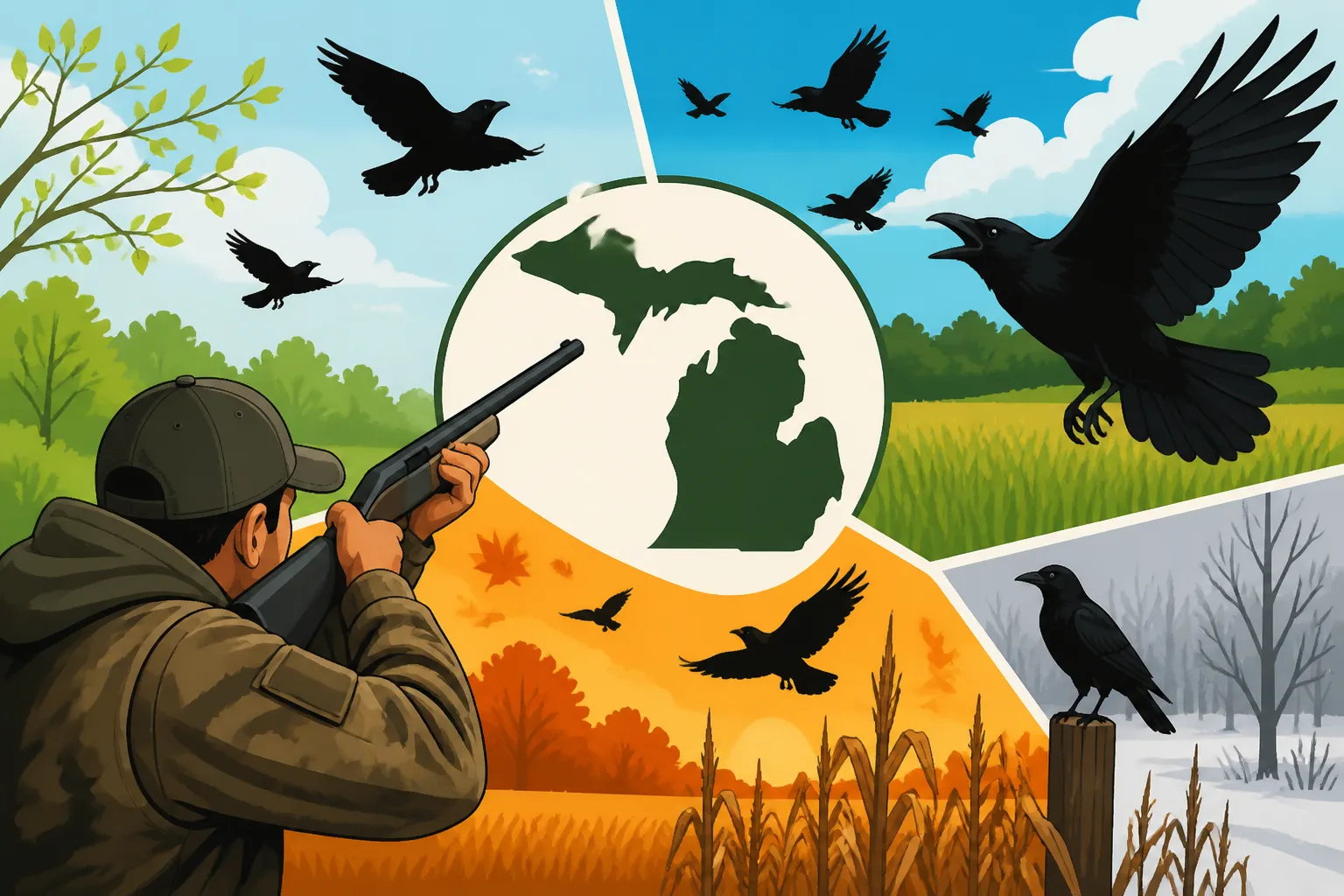
Michigan's crow hunting season is surprisingly generous, often stretching for several months out of the year. Historically, the Michigan Department of Natural Resources (DNR) has structured crow seasons to allow for consistent hunting pressure while still protecting the species during their primary nesting periods. This usually means an open season that runs for a good chunk of the year, with a noticeable closure during the late spring and early summer months when crows are nesting and raising their young.
For example, a typical season might begin in late summer, run through the fall and winter, and then close around April, only to reopen again in August. This long season gives hunters ample opportunity to pursue crows. It's really designed to allow farmers and landowners to mitigate crop damage, as crows can be quite destructive to agricultural fields, and it provides a valuable recreational opportunity for hunters. Always check the current Michigan DNR hunting digests for the precise dates each year, as they can shift slightly. You can find these details alongside other information on Michigan Small Game and Furbearer Seasons.
Daily Limits and Legal Considerations
When you're out chasing crows, it's important to know the rules, and Michigan keeps it pretty straightforward. There's usually no daily bag limit or possession limit for crows in Michigan. This means if you have a great day and manage to call in a large flock, you're not restricted in how many you can harvest, which is a major difference from regulated game birds like pheasants or ducks. This flexibility makes crow hunting an excellent way to get a lot of shooting practice in.
However, don't mistake the lack of a bag limit for a lack of rules. You still need a valid Michigan base hunting license to hunt crows. Furthermore, all standard hunting regulations apply, such as observing legal shooting hours. Generally, crows can be hunted from one-half hour before sunrise until one-half hour after sunset, aligning with most small game regulations. Always double-check the exact Michigan Legal Shooting Hours for the current year. And of course, just like any hunting, safety zones around occupied dwellings still apply, and you must adhere to all firearm safety rules.
Essential Tactics for Successful Crow Hunting
Crows are incredibly intelligent birds, often described as the "black ghosts of the woods." They have phenomenal eyesight and an uncanny ability to learn and adapt to hunting pressure. Because of this, successful crow hunting isn't just about showing up with a shotgun; it requires strategy, patience, and often, a good dose of stealth.
Scouting for Roosts and Feeding Areas
Before you even think about setting up a blind or deploying decoys, you need to understand crow behavior. Crows are creatures of habit. They'll typically have communal roosts where hundreds, sometimes thousands, gather at night, and then they'll spread out to feeding areas during the day. Scouting is absolutely critical.
Start by observing crows in your area. Look for flight patterns in the early morning as they leave their roosts, and again in the late afternoon as they head back. These "flight lines" are golden tickets. You might notice them congregating in large groups in agricultural fields, picking through stubble, or near food sources like roadkill. Sometimes, they'll even hang out near landfills or cattle feedlots. A good strategy is to use tools like the Using Michigan's Mi-HUNT Map to identify potential agricultural areas, woodlots, or even public land parcels that might offer good crow habitat. I've found that early morning drives, just as the sun is coming up, can reveal major flyways and give you a good idea of where large numbers of crows are headed. Once you locate a consistent flight path or feeding ground, you've found your potential hunting spot.
Effective Calling Strategies
Calling is the heart of crow hunting, and it's where the art really comes in. Crows have a wide vocabulary, and learning to mimic their calls is key. The basic "distress call" is your bread and butter – it sounds like a crow in trouble, and it can draw other crows in, often aggressively, to investigate or mob a perceived predator. Electronic callers are incredibly effective for this, especially high-quality ones that can cycle through a variety of calls, including a "crow fight" or "owl attack" sequence. Many hunters swear by brands like Foxpro for their realism and volume.
However, don't underestimate the power of a good hand call. Learning to make a "come here" call (a series of excited caws) or even a "rally call" can be incredibly effective, especially for wary birds that have heard electronic calls before. The key is knowing when to call aggressively and when to be subtle. If you hit the call too hard right off the bat, you might spook nearby birds. Often, a few softer "discovery" caws can bring in a few curious individuals, and once they commit, you can ramp up the intensity. I've had incredible success calling in a few lone crows with a hand call, then switching to an electronic distress call once they're in range to really bring in the flock. It's a skill that develops with practice, and crows are surprisingly responsive when you get it right.
Decoy Spreads and Concealment
Even the best calling in the world won't work if the crows see you. Their eyesight is legendary, and if they spot anything out of place – a hunter's silhouette, a glint of sun off a gun barrel – they'll flare and vanish. Concealment is paramount. A good ground blind is almost essential for crow hunting. Look for one that blends naturally into the environment, especially if you're hunting field edges or wooded fringes. Be sure to check Ground Blind Rules on Michigan State Land if you're on public land, as there can be specific regulations.
Decoys are also incredibly effective. Realistic crow decoys, especially full-bodied flocked ones, can make a huge difference. Set them up to mimic a feeding flock or a group mobbing a perceived predator. I like to place a few decoys on the ground, some on fence posts or low branches, and even one or two on a decoy pole to give the spread some height. Adding an owl or hawk decoy in the middle of your crow spread, with several crow decoys "mobbing" it, can be a particularly potent setup. This taps into their protective and aggressive instincts, drawing them in close for a look. The combination of good calling, realistic decoys, and absolute concealment will dramatically increase your success rate. Remember, the goal is to make them believe what they see and hear is completely natural.
Gear and Setup for Michigan Crow Hunters
Having the right gear makes all the difference when you're targeting intelligent birds like crows. You don't need a massive investment, but smart choices in firearms, concealment, and calls will significantly improve your odds.
Firearms and Ammunition Choices
For crow hunting, speed and spread are generally more important than knockdown power. Most hunters opt for a 12-gauge or 20-gauge shotgun. A fast-swinging, semi-automatic shotgun is often preferred because it allows for quick follow-up shots on multiple birds. When you get a flock working, things can happen fast, and having the ability to put several rounds downrange quickly is a huge advantage.
As for ammunition, high-brass loads with smaller shot sizes are ideal. #6, #7.5, or even #8 shot are excellent choices. These smaller pellets create a dense pattern, which is exactly what you need for hitting fast-flying, relatively small targets like crows. Many hunters prefer a modified or improved cylinder choke to get a good balance of spread and range. Remember, crows aren't heavily armored, so a dense pattern of small shot is far more effective than trying to hit them with larger, less numerous pellets. Always carry plenty of shells, as sometimes you'll burn through a box or two in a single hot stand.
Blinds and Camouflage
As mentioned earlier, concealment is non-negotiable. A good portable ground blind is probably the most crucial piece of gear after your shotgun and calls. Look for blinds that are easy to set up and take down, and that offer good visibility out while keeping you completely hidden. Brands like Ameristep or Primos make excellent blinds suitable for this type of hunting.
Beyond the blind, your personal camouflage should match the environment. If you're hunting in a cut cornfield, a brown or tan pattern will work best. If you're in a wooded edge, a leafy green pattern is more appropriate. Face paint or a face mask is absolutely essential to break up the outline of your face, as crows are notoriously good at spotting human faces. I've found that even a slight shimmer on exposed skin can spook them. Think about all angles of approach and make sure you're hidden from every direction. I sometimes bring a small pruning saw to cut fresh branches and "brush in" my blind even further, making it look like a natural part of the landscape. This extra effort really pays off, especially when dealing with savvy birds that might have been pressured before.
Calls and Other Essential Equipment
Beyond your firearm and blind, a good set of calls is what brings the crows in. An electronic caller is almost a must-have for serious crow hunting. They can produce loud, realistic sounds that carry a long distance and allow you to mix up your calling sequences with ease. Look for models that are durable, have a good remote range, and offer a variety of crow-specific sounds. When I'm in the field, I often use a GoHunt app on my phone paired with a Bluetooth speaker for some calling, but a dedicated electronic caller is usually more robust and reliable in hunting conditions.
In addition to your electronic caller, always have a good hand call or two. Sometimes, a subtle hand call can finish a wary bird that's hanging up, or you can use it to pinpoint the location of a specific crow that's answering your electronic calls. A small bag for your spent shells, a comfortable seat cushion for the blind, and perhaps a small pair of binoculars to spot incoming birds are also good additions. Don't forget your hunting license and safety glasses, too!
Beyond the Shot: Ethics and Regulations
Hunting crows, like any other game, comes with a responsibility to uphold ethical practices and respect the regulations. While they might be considered a "nuisance" species by some, they are still wild animals that deserve our respect.
Ethical Hunting Practices
Ethical crow hunting is about more than just legalities; it's about good sportsmanship and responsible interaction with the environment. One key ethical consideration is ensuring a quick, clean kill. This means using the right firearm and ammunition, practicing your shooting, and only taking shots within your effective range. Wounding birds unnecessarily is never acceptable.
Another aspect of ethical hunting is respecting non-target species. Be absolutely sure of your target before you shoot. Crows are distinctively black, but in low light or at long distances, it's easy to mistake them for other birds. Always identify your target positively. Furthermore, try to retrieve all birds you harvest. While you might not be eating them (though some hunters do prepare them!), leaving game in the field is generally frowned upon. If you're on public land, remember that Hunting Pressure on Michigan State Land can be high, and acting responsibly sets a good example for all hunters.
Respecting Property and Reporting Harvest
Respect for landowners and their property is paramount, whether you're hunting crows or deer. If you're hunting on private land, you absolutely must have permission from the landowner. What Michigan Trespass Law Requires is very clear on this. Even if you're hunting along a fence line and think crows are flying over public land, make sure you know where you stand. A good land ownership app like GoHunt can be invaluable for identifying property boundaries.
Unlike deer or turkeys, Michigan does not require hunters to report their crow harvest. This can make it feel a bit less "official," but it doesn't diminish the importance of responsible hunting. Be mindful of your surroundings, especially if you're hunting near residential areas or livestock. While legal, continuously shooting near someone's home can create a disturbance and reflect poorly on hunters in general. It's always best to be a good neighbor and ambassador for hunting. If you ever witness someone acting unethically or illegally while hunting, don't hesitate to report it to the Michigan DNR; it helps protect our resources and our hunting privileges.
Michigan Crow Hunting Season at a Glance
For a quick reference, here's a general overview of Michigan's typical crow hunting seasons and rules. Always consult the current Michigan DNR hunting digest for precise, up-to-date information as dates and regulations can change annually.
| Category | Typical Season Dates (Approximate) | Daily Bag Limit | Possession Limit | Required License | Legal Shooting Hours |
|---|---|---|---|---|---|
| Crow Hunting | Sept 1 – Apr 15 (Closed May-Aug) | None | None | Michigan Base License | 1/2 hour before sunrise to 1/2 hour after sunset |
Note: The specific dates are illustrative and can vary each year. Always check the official DNR regulations.
Disclaimer
Please note: The information provided in this guide is for general informational purposes only and is based on common regulations and practices in Michigan. Hunting regulations, season dates, and license requirements are subject to change by the Michigan Department of Natural Resources (DNR). It is the hunter's responsibility to consult the most current official Michigan Hunting and Trapping Digest or the Michigan DNR website before engaging in any hunting activities. Adherence to all local, state, and federal laws is mandatory. Safety should always be your top priority in the field.