Hunting Pressure on Michigan State Land
It’s a tale as old as time for Michigan hunters: you pull into a state land parking lot well before dawn, full of hope, only to find it packed with other trucks. That sinking feeling in your gut confirms what you already suspected – this spot is going to be pounded. Dealing with hunting pressure on Michigan public land is a frustrating reality for many of us, but it doesn't have to ruin your season. This guide is all about equipping you with the knowledge and tactics to find success, even when the woods feel crowded.
The Harsh Reality of Hunting Pressure on Michigan State Land
Let’s be honest, Michigan is home to an incredible number of passionate hunters, and much of our public land is easily accessible. This combination inevitably leads to significant hunting pressure, especially during the early archery season and, of course, the opening week of November firearm season. It’s not just the sheer number of hunters; it’s the cumulative effect on deer behavior.
Michigan boasts millions of acres of public land, from sprawling state forests to more condensed state game areas. While this offers immense opportunity, the most convenient spots, those with clear parking, easy trail access, or close proximity to population centers, get hit hard. Deer quickly learn where hunters congregate and where they feel safe. They become more nocturnal, they bed in the thickest, nastiest cover they can find, and they often become masters of avoiding detection by using subtle terrain features or holding tight until darkness provides cover. You might think you're going deep, but if ten other hunters had the same idea and left a scent trail, those mature bucks are already clued in. It’s a constant chess match, and understanding how deer react to this pressure is the first step in outsmarting them.
Strategic Scouting to Uncover Hidden Public Land Gems
The key to overcoming hunting pressure isn't just hunting harder; it's hunting smarter. And that starts long before opening day with meticulous scouting. Forget driving around the day before the season; pressured deer demand a year-round commitment to understanding their movements and preferred hideouts.
Digital Scouting for Overlooked Pockets
In today's world, digital mapping tools are your best friend. Services like GoHunt allow you to pore over satellite imagery, topo maps, and even public land ownership layers from the comfort of your home. You can identify potential bedding areas, travel corridors, and escape routes without ever stepping foot in the woods, minimizing your own pre-season disturbance. Look for thick, dark green areas on satellite maps that indicate dense cover – especially those surrounded by water, steep terrain, or far from obvious access points. Use topography to find natural funnels, saddles, and benches that deer might use to travel undetected. It’s amazing what you can uncover by virtually "walking" the property lines and zooming in on every little detail.
Michigan's Mi-HUNT Map is another invaluable tool, providing detailed information on state-managed lands, including forest types, recent timber cuts, and even recreational trails. Combining this with GoHunt or similar apps can give you an edge in finding those lesser-known parcels or areas within larger tracts that might be overlooked. Pay close attention to areas that require a significant walk, a river crossing, or navigating particularly dense vegetation; these are often the places hunters avoid, and deer gravitate toward. Remember, the further you get from easy access, the less competition you'll likely face. If you want to dive deeper into preparation, read our guide on how to prepare for Scouting Michigan Public Land Before Season.
Boots-on-the-Ground Verification
Digital scouting gets you in the ballpark, but nothing beats actual boots on the ground. Once you've identified a few promising spots digitally, it's time to visit them, ideally during the off-season. Walk those proposed travel corridors, search for old rubs and scrapes from previous seasons, and locate potential stand trees or ground blind setups. This physical exploration helps you understand the nuances of the terrain that maps can't fully convey – the density of the undergrowth, the firmness of the swamp edge, or the steepness of a ridge.
When you're out there, think like a pressured deer. Where would you go to escape hunters? Look for areas that offer the "three essentials" for a mature buck: food, water, and most importantly, security cover. This often means finding a patch of thick pines, a dense cedar swamp, or an isolated island in a marsh that other hunters simply won't bother with. Even on heavily hunted state land, there are always these small pockets of refuge that hold deer. When scouting, minimize your footprint; wear rubber boots, avoid disturbing bedding areas, and only go in when winds are favorable. Knowing exactly where deer feel safe is half the battle won. You'll also want to familiarize yourself with Treestand Rules on Michigan Public Land and Ground Blind Rules on Michigan State Land before you set anything up.
In-Season Tactics to Outsmart Pressured Michigan Whitetails
Once the season kicks off, your scouting intel becomes gold. But knowing where to hunt is only part of the equation; how you hunt those pressured deer is equally critical.
Timing and Persistence
One of the simplest ways to avoid crowds is to hunt when others aren't. Weekday hunts, especially mid-week, often see significantly less pressure than weekends. If you can swing it, take a vacation day or two during the peak of the rut in November. You'll be amazed at the difference it makes. Additionally, consider hunting during less "comfortable" weather conditions. A steady rain, a heavy snow, or even high winds can deter many hunters, leaving you with quieter woods. Deer are still moving in these conditions; they just might be doing it more cautiously.
Another tactic is persistence. Don't just hunt the first hour and bail. Pressured deer often move at odd times. They might not step out until midday, especially if hunters have bumped them from primary bedding areas. Staying on stand longer, especially in areas bordering heavy cover, can pay dividends. Your willingness to sit through uncomfortable weather or long hours is often what separates successful public land hunters from the rest. You can learn more about this crucial time of year in our guide on Hunting the Michigan Rut in November.
Going Deeper and Thinking Differently
It sounds cliché, but often, the most effective strategy is to simply go further than everyone else. While many hunters stick to trails or within a quarter-mile of their vehicle, a willingness to push another half-mile or mile into truly remote sections of public land can get you into unpressured deer. This might mean donning chest waders to cross a small creek, navigating a dense clearcut, or still-hunting through a thick cedar swamp. These are the places deer go to escape, and that's where you need to be. Our article on How Far to Walk From a Two-Track can offer more insights here.
Consider hunting from the "inside out." Instead of setting up on field edges or travel corridors that everyone else hits, try to position yourself closer to bedding areas, especially those offering thick security cover. This requires careful entry and exit, minimizing noise and scent, but it puts you in a prime position for early morning or late evening movements as deer transition to and from their beds. On a map, GoHunt allows you to mark these bedding zones and plan your approach routes meticulously, helping you skirt the high-traffic areas and slip into places where deer feel secure. For example, if you're looking at a large tract of state land, look for areas with dense wetlands or topographical breaks that other hunters might bypass.
Harnessing Overlooked Terrain and Access for Success
Michigan's diverse landscape offers numerous opportunities to find unpressured deer, even on public land, if you know what to look for and are willing to put in the effort.
Swamp Edges and Wet Areas
Michigan has an abundance of swamps, bogs, and marshy areas, particularly in the northern Lower Peninsula and throughout the Upper Peninsula. While these can be difficult to navigate, they are often overlooked by less determined hunters. Deer, especially mature bucks, absolutely love these wet, thick areas for bedding and security. Hunting the edges of these swamps, or even daring to venture inside them with proper gear (think knee boots or chest waders), can put you on unpressured animals. Look for higher ground within the swamp, like small islands or humps, where deer will bed. These spots provide excellent visibility and scent control advantages. For detailed strategies on this, check out Still-Hunting Michigan Cedar Swamps and Reading Aerial Photos for Swamp Deer.
Dense Clearcuts and Logging Areas
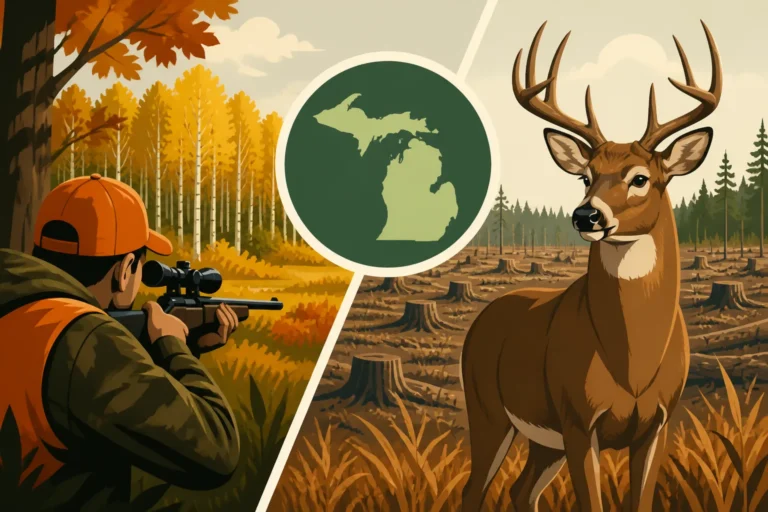
Recent timber cuts, while sometimes messy and challenging to walk through, offer incredible deer habitat. The thick regrowth provides both excellent bedding cover and abundant browse. Hunters often avoid these areas due to the difficulty of navigating them, but this is precisely why deer flock to them. Focus on the fringes of these clearcuts, especially where they transition into mature timber, or look for small, less disturbed pockets within the cut itself. Deer will often stage in these thick edges before moving into more open feeding areas. Our article on Hunting Michigan Clearcuts and Aspen Cuts can give you more targeted advice.
River Bottoms and Remote Access Points
Rivers and large creeks that traverse public land can act as natural barriers, creating "islands" or inaccessible pockets of land that see minimal human disturbance. If you're willing to use a canoe, kayak, or even just some serious waders, you can access areas that most hunters will never touch. These river bottoms also often provide a consistent water source and unique vegetation, making them attractive to deer. Look for areas where the river creates sharp bends or oxbows, which can form isolated patches of timber or brush.
Beyond water access, scout for obscure two-tracks, old logging roads that are barely visible, or even power line easements that might provide a slightly less obvious entry point. Sometimes, just parking a mile down the road from the main lot and walking a less-used path can make all the difference. The goal is to get into areas that require more effort, as that effort often translates to less competition. You might also find success by identifying a good Hunting a Funnel Between Two Swamps that others ignore.
Here's a quick guide to understanding various public land features and how deer react to pressure:
| Public Land Feature | Typical Pressure Level | Deer Behavior Under Pressure | Strategies for Success |
|---|---|---|---|
| Easily Accessible Woodlots | High | Mostly nocturnal, move away from trails | Hunt edges at dawn/dusk, go deep at midday. |
| Open Hardwood Stands | Medium | Use thickets for bedding, move through them | Focus on transition areas, hunt after rain/snow. |
| Cedar Swamps / Wet Areas | Low-Medium | Use as bedding, escape cover | Still-hunt slowly, hunt edges, use rubber boots. |
| Steep Ridges / Ravines | Low | Travel corridors, bedding on leeward sides | Hunt saddles, benches, focus on wind. |
| Deep Clearcuts | Low | Excellent bedding, thick browse | Hunt entry/exit points, look for trails inside. |
| River Bottoms / Islands | Very Low | Ultimate escape cover, food sources | Use waders/kayak for access, hunt undisturbed areas. |
Ultimately, hunting pressured deer on Michigan state land comes down to diligence, a bit of discomfort, and a willingness to explore. The deer are there; you just have to be smarter and more dedicated than the average hunter to find them. Remember, success often lies in those overlooked corners and those extra miles. If you're looking for more general information on where to find huntable land, our comprehensive guide on Public Hunting Land in Michigan is a great place to start. And for late-season opportunities, understanding Late-Season Food Sources for Whitetails will be critical for success.
Disclaimer
Hunting is an inherently dangerous activity. Always follow all Michigan Department of Natural Resources regulations, wear appropriate safety gear, and prioritize ethical hunting practices. The information provided here is for educational purposes and should not replace professional guidance or personal judgment.