Hunting Michigan Clearcuts and Aspen Cuts
Michigan’s landscape is a patchwork of forests, farms, and wetlands, but among the most dynamic and often misunderstood hunting grounds are the clearcuts and aspen stands. Many hunters, myself included, have stood on the edge of a seemingly impenetrable tangle of young growth and felt a mix of awe and bewilderment. It looks like a deer haven, but how do you even begin to hunt it effectively? This guide is going to strip away the mystery and show you how to read these unique environments, understand why they attract game, and implement strategies that put you in the right place at the right time.
Understanding the "Why" Behind Clearcuts and Aspen Cuts for Wildlife
It might look like a mess to the untrained eye, but a recent clearcut or a vibrant aspen stand is an absolute buffet and sanctuary for a host of Michigan wildlife, especially white-tailed deer. These areas aren't just random patches of trees; they're vital parts of an ecological cycle that provides necessary resources for game to thrive. Ignoring them means missing out on some of Michigan's best hunting opportunities.
The Life Cycle of Aspen and its Value
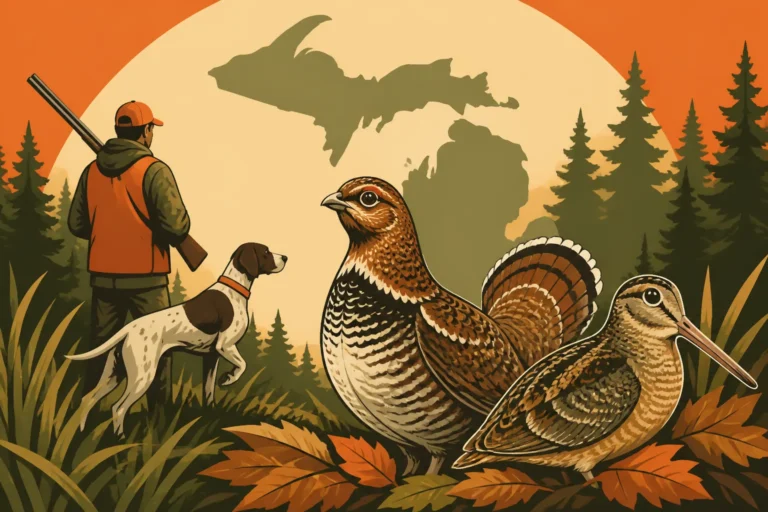
Aspen trees, particularly quaking and bigtooth aspen, are like the fast-food joints and cozy motels for Michigan's deer, grouse, woodcock, and even bear. They're pioneer species, meaning they're among the first to colonize an area after a major disturbance, like a fire or, more commonly in modern forestry, a clearcut. What makes them so special? Their lifecycle is incredibly dynamic. When a mature aspen stand is cut, the root system sends up thousands of new shoots, sometimes as many as 10,000 to 20,000 per acre! This creates an incredibly dense, young forest. For deer, this thick regeneration provides unparalleled thermal cover and security, especially during harsh Michigan winters. The young bark and buds are also a crucial browse source when other foods are scarce. You'll often find deer literally living in these areas, even during the deepest snow. This habitat is also prime for wildlife like ruffed grouse, which depend on different age classes of aspen for drumming sites, nesting cover, and food. To really understand the nuances of these areas, knowing how to interpret them during your off-season visits is key. You can find more insights by checking out our guide on Scouting Michigan Public Land Before Season.
How Clearcuts Mimic Natural Disturbances
Forestry practices, especially clearcutting, often get a bad rap from a purely aesthetic standpoint, but ecologically speaking, they often mimic natural disturbances that have shaped Michigan's forests for millennia. Think about wildfires or massive wind events that used to sweep through vast tracts of timber. These events would open up the canopy, allowing sunlight to hit the forest floor, which in turn spurred the growth of early successional plants – exactly what deer and other wildlife crave. A clearcut creates this same effect. Within a year or two, the exposed soil bursts with life: various grasses, forbs, shrubs, and the aforementioned aspen regeneration. This explosion of new growth provides an incredible amount of accessible forage and cover that mature, closed-canopy forests simply cannot offer. Instead of seeing a clearcut as an empty space, visualize it as a massive, open-air pantry that's constantly restocking with fresh, nutritious food sources and a secure hideout for game animals. This dynamic ecosystem is far more attractive to deer than a stagnant, mature timber stand, especially as winter approaches and natural food becomes scarcer. Knowing what Late-Season Food Sources for Whitetails are available in these areas can drastically improve your odds.
Nutritional Benefits for Deer and Other Game
The dense, diverse vegetation that springs up in clearcuts and young aspen stands is an absolute powerhouse of nutrition for deer. Unlike the limited browse found in mature timber, these areas offer a smorgasbord of tender shoots, leaves, and buds that are highly digestible and packed with essential nutrients. Young aspen, maple, oak, and various shrubs all contribute to a varied diet that supports antler growth and overall herd health. Deer don't just eat more in these areas; they eat better. Beyond deer, many other game species also benefit. Ruffed grouse thrive on the buds of aspen, while woodcock probe the soft, moist soils of clearcut edges for worms. Rabbits and snowshoe hares find refuge and food in the dense understory. Even black bears will utilize clearcuts for berries and other forage during certain times of the year. It’s a complete ecosystem where various species find what they need, making these areas highly productive hunting grounds if you know how to approach them.
Reading the Landscape: Identifying Key Areas Within the Cut
Walking into a clearcut can feel like stepping into a labyrinth of thick brush, but just like any other habitat, there are patterns and key features that game animals utilize. Learning to identify these spots from a distance or during careful scouting can mean the difference between seeing nothing and connecting with a mature buck.
Edges, Funnels, and Thermal Cover
When you look at a clearcut, don't just see a block of cut-over land. Instead, focus on the nuances, particularly the edges. The transition zone where the young growth meets mature timber is often an incredibly productive area. Deer love to stage along these edges before moving into open areas or simply use them as travel corridors, benefiting from the security of the thick stuff while being close to the mature woods. These edges also often create natural funnels, especially where the clearcut narrows between two blocks of standing timber or where it follows a natural contour. These are pinch points where deer are forced into predictable travel paths, making them prime spots for a stand. Moreover, within the clearcut itself, look for pockets of thicker, slightly taller regeneration or areas with a higher concentration of conifer saplings. These provide exceptional thermal cover, shielding deer from biting winds and heavy snow, making them ideal bedding areas during cold weather. If you're wondering about Setting Up on an Aspen Cut Edge, these are precisely the features you'll want to target.
Scouting for Sign in Young Growth
Scouting a clearcut effectively requires a different approach than typical timber. You won't find perfectly manicured trails, but you will find tunnels, runways, and beds woven deep within the dense growth. The key is to get in there and get your boots dirty. Look for deer trails that resemble tunnels, pushing through the thickest parts of the regeneration. Pay close attention to rub lines and scrapes, particularly along the edges or where slightly older timber borders the cut. These signify buck activity and travel patterns. Fresh droppings and clusters of beds, often just barely big enough for a deer to lie down, will tell you that deer are using the area for security and rest. The sheer density of cover means deer often don't move far from their bedding areas within a clearcut, making it critical to identify these core zones. Using a mapping app like GoHunt can be incredibly helpful here, allowing you to mark observed sign and potential stand locations, creating a virtual breadcrumb trail to guide your future hunts. This type of detailed scouting is invaluable, and it often involves a lot of walking and pushing through cover.
Topography and Its Impact
Even in seemingly flat clearcuts, subtle changes in topography can significantly influence deer movement. A slight rise, a hidden ridge, or a small depression can provide an advantage for deer in terms of wind currents, thermal protection, or escape routes. For instance, deer might bed on the leeward side of a small knoll within the cut to escape the wind, or they might use a slight ridge as a travel corridor, offering them a better vantage point or simply easier walking. Pay attention to how the clearcut intersects with drainages or low-lying areas that might hold water. These can also create natural funnels or provide unique forage opportunities. In the Michigan landscape, even a few feet of elevation change can be a game-changer. During your scouting, make sure to consider how wind and thermals will interact with these subtle changes, as deer certainly do. For a deeper dive into how these elements affect movement, consider reading up on Wind and Thermals on Michigan Ridges which applies even to less dramatic elevation changes found in clearcuts.
Strategic Hunting Approaches for Clearcuts and Aspen Stands
Once you've identified the hotspots within a clearcut or aspen stand, the next challenge is choosing the right hunting strategy. The dense cover and often challenging terrain demand different tactics than hunting open hardwoods or food plots. Flexibility and an understanding of deer behavior in thick cover are paramount.
Still-Hunting and Stalking the Thickets
Still-hunting is perhaps the most effective, albeit demanding, method for navigating and hunting dense clearcuts. It's not about sitting and waiting; it's about slow, deliberate movement, taking one or two steps, then stopping for several minutes to observe, listen, and scan. The key is to blend with the environment, moving at a snail's pace, often taking an hour to cover only a couple hundred yards. In such thick cover, deer often won't flee immediately; they'll often hold tight, relying on their camouflage. This gives you a chance to spot a flicker of an ear, a patch of hide, or the tell-tale horizontal line of a deer's back against the vertical lines of the brush. You'll need to be incredibly patient, utilize the wind to your advantage, and keep your movements fluid and quiet. Sometimes, bumping a deer that then circles back or holds tight can even present an opportunity later in the hunt. This method allows you to cover ground and find deer that might be bedded deep within the impenetrable parts of the clearcut. If you enjoy the challenge of working through dense cover, you might also find our discussion on Still-Hunting Michigan Cedar Swamps insightful, as many of the principles translate well to clearcuts.
Elevated Stands vs. Ground Blinds
Deciding between an elevated stand and a ground blind in a clearcut depends heavily on the specific situation.
Elevated Stands (Treestands or Saddles):
- Pros: Provide a much better vantage point over the dense vegetation, allowing you to see deer that might otherwise be completely hidden. They also help distribute your scent above the primary travel lanes of deer. With the right Treestand Setups in Michigan Hardwoods, you can often find a suitable tree along the edge of a clearcut or even an isolated tree within it.
- Cons: Finding a suitable tree for a traditional hang-on or climber stand can be difficult deep within a young clearcut. Even if you do, shooting lanes can be extremely limited, making archery shots nearly impossible and even rifle shots tricky. Entry and exit routes need to be carefully planned to avoid spooking deer below.
- Best Use: Best suited for clearcut edges where they meet mature timber, or on isolated "islands" of standing trees within the cut. They shine when you need to observe larger sections of the clearcut or identify travel corridors from above.
Ground Blinds:
- Pros: Offer incredible concealment and allow you to blend directly into the thick environment. They are perfect for areas where suitable trees are scarce or non-existent. You can set them up to optimize shooting lanes in specific spots, and they provide excellent protection from the elements, which is crucial for a Cold Weather Sitting Strategy.
- Cons: Scent control becomes even more critical, as your scent will be at ground level, directly in the deer's nose. Your field of view is often extremely limited, forcing deer to be much closer for a shot.
- Best Use: Ideal for hunting deep within the clearcut, especially near bedding areas or established runways. They are also excellent for hunting small openings or along subtle funnels where deer movement is concentrated. Brushing in a blind effectively is key for success.
| Feature | Elevated Stand (Treestand/Saddle) | Ground Blind |
|---|---|---|
| Visibility | Excellent, wide view over dense cover | Limited, focused view, deer must be close |
| Concealment | Elevated profile reduces ground-level scent & visibility | Excellent, blends into surroundings, good for movement |
| Scent Control | Advantageous, scent disperses higher | Critical, scent at ground level, careful management needed |
| Mobility | Can be moved, but finding suitable trees is tough | Can be quickly deployed/relocated, if small enough |
| Shooting Lanes | Often limited by surrounding brush | Can be optimized for specific lanes |
| Comfort/Weather | Exposed to elements | Offers protection from wind/rain, good for long sits |
| Ideal Locations | Clearcut edges, isolated mature trees within cut | Deep within clearcut, dense bedding areas, pinch points |
Understanding Wind and Thermals in Dense Cover
The dense, broken canopy of a clearcut or aspen stand significantly alters how wind and thermals behave compared to open timber. Instead of a steady breeze, you'll often encounter swirling winds and pockets of calm air within the thickets. This makes scent control and wind direction even more critical. During the morning, as the sun warms the ground, thermals will tend to rise, carrying your scent upward. In the evening, as temperatures drop, thermals will fall, carrying your scent downward into low-lying areas. However, the irregular terrain and varied heights of vegetation in a clearcut can cause these thermals to eddy and swirl, making them unpredictable. Always play the wind, but be prepared for it to shift unexpectedly. Use multiple scent checkers and try to position yourself where your scent cone is least likely to cross active deer trails or bedding areas. If you're still-hunting, constant awareness of wind direction is your best friend, adjusting your approach as needed.
Timing Your Hunt: Best Seasons and Conditions
Clearcuts and aspen stands are productive throughout Michigan's hunting seasons, but their appeal and how deer use them can change dramatically with the time of year and prevailing weather conditions. Understanding these shifts is vital for maximizing your success.
Early Season Food and Cover
When Michigan's archery season kicks off in October, clearcuts and young aspen stands are buzzing with life. The early season is all about food and security, and these areas offer both in spades. The initial flush of vegetation from spring and summer is still green and palatable, providing ample browse. Deer will often bed deep within the security of the thick growth, only emerging briefly to feed or travel short distances. Look for areas with a good mix of young saplings, berry bushes, and other forbs. These are often preferred bedding sites during the warmer weather, allowing deer to escape insects and heat while staying hidden. Early season hunting in these thickets often means shorter shot opportunities, so stealth and careful shot placement are paramount. Consider scouting these areas well before the season opens to identify key Entry Routes on Flat Michigan Ground that will allow you to get in and out undetected.
The Rut in Thickets
The rut transforms clearcuts and aspen stands into a dynamic playground for Michigan bucks. As bucks begin to cruise for does, these dense areas become prime locations. Does, seeking refuge from the persistent attention of bucks, often retreat into the thickest cover, and the bucks follow. This means that instead of just traveling through, mature bucks will actively search and chase does within the clearcut itself. Look for fresh rubs and scrapes that suddenly appear deeper in the regeneration or along the dense edges. These indicate that bucks are establishing their presence. Hunting during the rut in these areas often involves a combination of still-hunting and setting up on key funnels or pinch points where deer are forced to move predictably. Don't be afraid to use rattling and grunting calls, as the thick cover can make visual contact challenging, and sounds can carry effectively within the dense canopy. The rut makes these areas incredibly exciting, as a mature buck could emerge from anywhere.
Late Season Security and Browse
As Michigan barrels into the late season with colder temperatures and often snow, clearcuts and aspen stands become even more critical for deer. The mature woods begin to lose their leaves, stripping away much of the available cover, but the young growth in clearcuts remains a dense, impenetrable sanctuary. This provides essential thermal cover against the biting winds and cold, allowing deer to conserve energy. Furthermore, the young bark and dormant buds of aspen and other regeneration become a vital food source when most other browse has disappeared or is buried under snow. Deer will yard up in these thickets, especially during periods of heavy snow, and will spend the majority of their time feeding and bedding within their confines. Hunting late season in clearcuts requires patience and persistence. Focus on the thickest, most protected sections, and pay close attention to fresh tracks in the snow. Deer movement will often be concentrated, making even small clearings or transitions zones extremely productive. Understanding What Replaced Bait Piles for Michigan Hunters is crucial in these areas, as natural browse becomes the primary draw.
Essential Gear and Preparation for Dense Cover
Hunting clearcuts and aspen stands in Michigan isn't like sitting in a food plot. The challenging terrain, dense vegetation, and sometimes unpredictable weather demand specific gear and meticulous preparation. Being properly equipped will not only make your hunt more comfortable but also significantly increase your chances of success and safety.
Clothing and Footwear for Tough Terrain
Your clothing and footwear choices are paramount when tackling Michigan's clearcuts. Forget anything that snags easily or makes a lot of noise. Durable, quiet fabrics are essential. Consider brush pants or chaps to protect your legs from thorns and briars, which are abundant in these regenerating areas. Layering is always key in Michigan, but particularly here. You'll be exerting a lot of energy pushing through cover, so you need to be able to shed layers to prevent sweating, which can quickly lead to a chill once you stop moving. Look for outer layers that are water-resistant and windproof, as clearcuts can be surprisingly exposed despite their density. For footwear, a sturdy pair of waterproof boots with excellent ankle support is non-negotiable. You'll be walking over uneven ground, fallen logs, and potentially through wet, muddy areas. Rubber boots are often a great choice as they are waterproof and help reduce scent, which is important when Hunting Deer Without Bait in Michigan. Invest in good quality socks to prevent blisters, as you'll be doing a lot of walking.
Navigational Tools and Retrieval Gear
Getting lost in a dense clearcut is a very real possibility, especially as dusk approaches. The uniform nature of the young growth can make it disorienting, and landmarks are scarce. A reliable GPS unit or a smartphone with a robust mapping app (like GoHunt, which many Michigan hunters use for public land mapping) is absolutely essential. Mark your vehicle, your stand locations, and any significant sign you find. Don't rely solely on your phone; a backup power bank or a physical compass and map are always wise precautions. Beyond navigation, think about game retrieval. If you're successful, dragging a deer out of a clearcut can be an arduous task. A quality deer drag or a game cart, if the terrain permits, can be a lifesaver. Even a simple rope can make a huge difference. For deep snow, a deer sled is invaluable. You'll want to review your Getting a Deer Out of a Michigan Cedar Swamp strategy, as the challenges are quite similar in thick clearcuts.
Firearm and Archery Considerations
The dense nature of clearcuts dictates specific considerations for your weapon choice.
Firearms:
- Rifles: If hunting in the Lower Peninsula's "Limited Firearm Zone" or in counties where rifles are restricted, straight-wall cartridge firearms (like a .450 Bushmaster or .350 Legend) are excellent choices. They offer significant knockdown power for close-range shots and are legal. If hunting where centerfire rifles are allowed, calibers that perform well in brush and offer good close-to-medium range accuracy, like a .30-30 or a .308, are often favored. Regardless of caliber, focus on a scope with a wide field of view and lower magnification for quick target acquisition in tight quarters.
- Shotguns: Slug guns remain a popular choice, especially in the southern Lower Peninsula. Modern sabot slugs fired from a rifled barrel can be surprisingly accurate out to 150 yards, which is often more than enough for clearcut hunting.
Archery:
- Compound Bows/Crossbows: In thick cover, shot opportunities are often close and fleeting. Ensure your bow is tuned, and you are proficient with quick, quiet draws. Fixed-blade broadheads are often preferred by some hunters in dense cover for their robust construction, though mechanicals can also perform well with proper placement. Practice shooting at odd angles and through small openings, as these will be common scenarios. For crossbow hunters, the compact nature can be an advantage when navigating thick brush. Consider our article on Hunting Michigan's Archery Split Works for more archery tips.
No matter your weapon, consider a durable sling for easier carrying through the dense undergrowth, leaving your hands free for balancing or pushing brush aside. Always ensure your firearm or bow is protected from moisture and debris that can easily accumulate in thick cover.
Disclaimer
Please note that hunting regulations, season dates, and specific land access rules in Michigan are subject to change. Always consult the latest Michigan Department of Natural Resources (DNR) hunting guide or website before planning any hunting activity to ensure compliance with all current laws and regulations. This guide is for informational purposes only and does not supersede official DNR guidance.