Squirrel Hunting a Beech Ridge in October
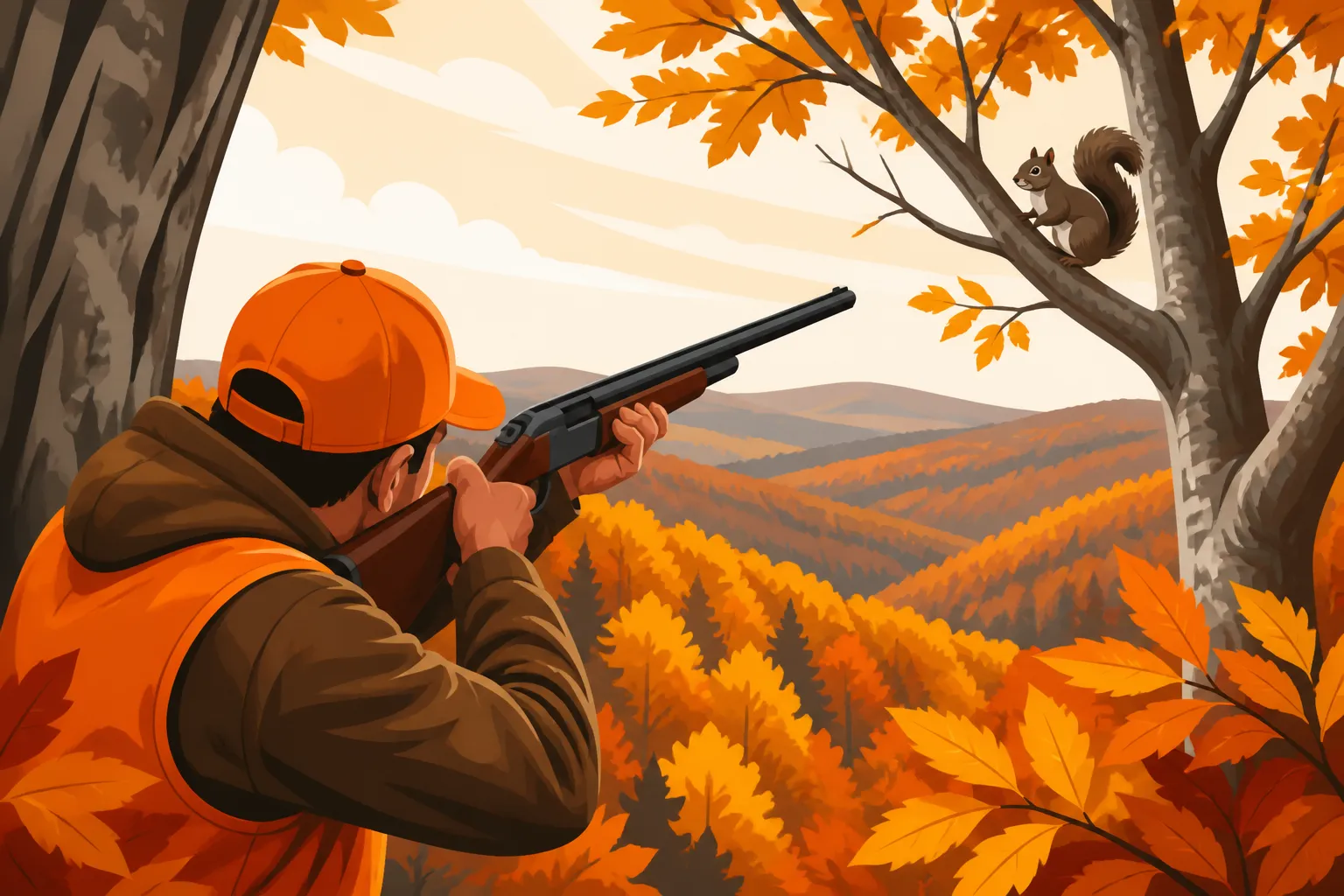
October in Michigan. For many, that conjures images of vibrant fall colors, crisp mornings, and the anticipation of deer season. But tucked away in the shadows of those towering oaks and maples, often overlooked, is an incredibly rewarding pursuit: squirrel hunting. There's a particular magic to being out in the woods during this time, especially when you can key into a rich food source like a beech ridge. Too many hunters spend their time agonizing over deer without realizing the pure joy and skill involved in pursuing these clever bushytails. This guide is all about helping you unlock that experience, showing you exactly how to approach a beech ridge in October for a truly satisfying squirrel hunt.
Why Beech Ridges Are a Squirrel Hunter's Goldmine in October
When you think about prime squirrel habitat, your mind might first jump to oak stands with their bounty of acorns. And while acorns are certainly a staple, the often-underestimated beech ridge offers a unique and highly productive hunting opportunity, especially as October deepens. Beech nuts are a high-fat, high-energy food source that squirrels absolutely crave, and finding a good beech crop can feel like hitting the jackpot.
Understanding Michigan's Beech Crop Cycle
Beech trees, with their smooth, gray bark, are a distinct feature of many Michigan forests. What makes them so special for squirrel hunters, particularly in October, is their mast crop. Beech nuts are a prized commodity for many wildlife species, but squirrels seem to have an almost obsessive drive to gather them. These small, triangular nuts are packed with energy, making them ideal for squirrels to fatten up before winter.
The catch? Beech trees, like many mast-producing species, don't produce a heavy crop every single year. They operate on a cyclical nature, often having "mast years" where they produce an abundance of nuts, followed by years of lighter production. This makes scouting absolutely critical. You can't just assume a beech ridge will be productive every fall. You need to hit the woods in late summer or early fall, even before the leaves turn, to physically inspect the trees. Look for small, spiny burrs on the branches. As October progresses, these burrs will open, revealing the shiny, dark brown nuts within. Finding a ridge with a heavy beech nut drop is like discovering a secret pantry for squirrels. This is when you know you're in the right place at the right time. The prime window for these nuts is usually early to mid-October, before heavy leaf fall buries them too deeply or other critters clean them out.
Identifying Productive Beech Habitat
Not all beech trees are created equal, and not all ridges hold the same promise. When you're searching for that squirrel hunting goldmine, you're looking for specific characteristics. A productive beech ridge often has good elevation and drainage, meaning the soil is less prone to standing water, which beeches generally prefer. You'll often find them as part of a mixed hardwood forest, perhaps interspersed with oaks and maples, but the dominant feature should be the beech trees themselves.
The age and maturity of the beech trees also play a role. While younger trees might produce some nuts, the mature, towering beeches are usually the heaviest producers. Their smooth, elephant-hide bark is a dead giveaway. In Michigan, you can find excellent beech stands across the northern Lower Peninsula and portions of the Upper Peninsula. Areas within the Huron-Manistee National Forest Hunting or even some of the more remote parts of state forest land can hold fantastic beech ridges. Use tools like the Michigan DNR's Mi-HUNT map or a hunting app like GoHunt to identify potential public land tracts with significant beech components. Look for contour lines that suggest ridges and then zoom in on satellite imagery to try and discern tree types. It's not foolproof, but it's a great starting point for Scouting Michigan Public Land Before Season. Once you're on the ground, confirm your suspicions. Freshly opened burrs on the ground, coupled with the tell-tale smooth bark, are strong indicators you've found a honey hole.
Essential Tactics for Hunting Beech Ridge Squirrels
Hunting squirrels on a beech ridge in October is a completely different experience than, say, deer hunting. It's often more relaxed, but still requires keen observation, patience, and a nuanced approach. You're not just waiting; you're actively engaging with the forest.
The Art of Still-Hunting and Stalking
Still-hunting is perhaps the most effective method for squirrels on a beech ridge. This isn't about sitting in one spot all day (though that can work too, we'll get to that). Still-hunting is a slow, methodical dance with the woods. Think of it as moving through the forest at a snail's pace, taking one or two steps, then stopping for several minutes to scan, listen, and observe. Your eyes should constantly be raking the branches, the trunks, and the forest floor for any sign of movement. Squirrels are masters of camouflage, especially when they flatten themselves against a beech trunk.
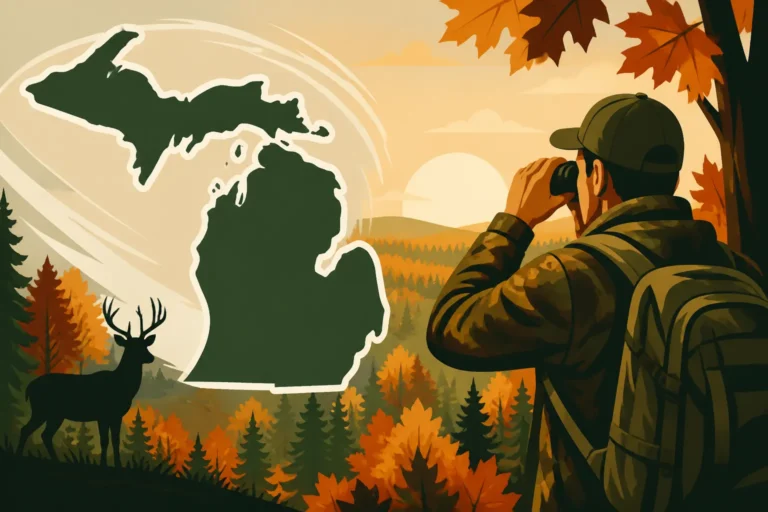
Using a good pair of binoculars is almost non-negotiable for this. An 8×42 or 10×42 pair can make all the difference in picking out a twitching tail or a flattened form high in a tree. You can read more about 8×42 Versus 10×42 in the Woods to help with your choice. When you stop, don't just stand there. Find a comfortable, quiet spot, maybe lean against a tree, and let your eyes do the work. Listen for the distinct sound of squirrels gnawing on nuts (often described as "cuttings"), or the tell-tale bark that signals alarm or communication. After a light rain, the woods become incredibly quiet, as the damp leaves cushion your footsteps. This is a fantastic time for still-hunting, as your approach will be far stealthier. The key is patience; move slowly, stop often, and let the squirrels reveal themselves.
Setting Up a Productive Ambush
While still-hunting is excellent for covering ground, sometimes the best tactic is to find a truly productive spot and set up an ambush. This works particularly well if you've done your scouting and found an area with an exceptionally heavy concentration of beech nuts and fresh cuttings. Look for areas where several large beech trees are dropping nuts, creating a "hot zone" on the forest floor.
Find a spot with good visibility, allowing you to see squirrels on the ground, in the lower branches, and even high up in the canopy. Good cover is equally important, whether it's a thick cluster of brush, a large downed log, or the base of a wide tree. Settle in quietly, and then just wait. Let the woods settle down after your arrival. Squirrels are often active right at dawn and again in the late afternoon, so these are prime times for an ambush. What you're looking for aren't just the squirrels themselves, but the evidence of their activity: fresh beech nut cuttings scattered on logs or stumps, small excavated holes where they've buried nuts, or worn paths along a ridge. Some hunters even use squirrel calls – barks, chatters, or distress calls – to entice curious bushytails closer, though this usually works better for the more aggressive fox squirrels than the shyer gray squirrels.
Gear Considerations for October Squirrels
One of the great joys of Michigan Small Game and Furbearer Seasons for squirrels is that you don't need a truckload of specialized gear. Simple, effective tools are all you require.
- Firearms: The classic choice for squirrel hunting is a .22 caliber rifle. Its low report and pinpoint accuracy make it ideal for headshots, which saves meat. A good quality .22, whether it's a Ruger 10/22 or a Marlin Model 60, will serve you well. For those who prefer a shotgun, a small gauge like a .410 or 20 gauge with small shot (like #6 or #7.5) can be effective, especially for fast-moving squirrels in thick cover, though it does damage more meat. Air rifles, particularly high-powered PCP models, are also gaining popularity for their quietness and accuracy.
- Ammunition: For a .22 rifle, standard velocity or sub-sonic rounds are often preferred for their quieter report, which can prevent spooking other squirrels in the vicinity. For shotguns, stick to light field loads.
- Optics: As mentioned, binoculars are crucial for spotting. For your rifle, a low-power scope (1-4x or 2-7x) is excellent for timber hunting, providing a clear sight picture without being overkill. Some hunters prefer open sights for a traditional challenge.
- Clothing: October in Michigan can be unpredictable. Layering is key. Start with a moisture-wicking base layer, add a fleece or wool mid-layer, and finish with a quiet, durable outer layer. Wool is fantastic for its warmth even when wet and its quiet movement through the brush. Given that deer season is often in full swing by late October, it's wise to wear Michigan Hunter Orange Rules to ensure you're visible and safe, especially on public land.
- Pack Essentials: A small daypack should carry water, a snack, a small first-aid kit, and a game bag or mesh sack for your squirrels. A knife for field dressing and a compass or a GPS app (like the one in GoHunt) are also important for navigation, especially if you're exploring new public land.
Common Challenges and Solutions on the Beech Ridge
No hunt is ever without its unique set of challenges, and squirrel hunting on a Michigan beech ridge in October is no exception. Understanding these potential roadblocks beforehand can help you navigate them successfully and make your hunt more enjoyable.
Dealing with Leaf Noise and Visibility
One of the biggest frustrations for an October squirrel hunter is the crunchy carpet of fallen leaves. Every step can sound like a cannon shot, making a stealthy approach feel impossible. This is particularly true on drier days.
One of the best solutions, as mentioned earlier, is to hunt after a good rain. Damp leaves are significantly quieter, allowing for much more discreet movement. If rain isn't in the forecast, focus on areas with softer ground, such as mossy patches, pine needle beds, or wet depressions. You might also consider slowing your pace even further, almost to a crawl, and really concentrating on placing your feet softly. Another strategy is to embrace the noise. Instead of trying to be completely silent, move in short bursts, make a bit of noise, then freeze. Squirrels will often pause their activity, trying to locate the source of the sound. If you remain still for a minute or two, they'll often resume their feeding, giving you a chance to spot them.
Visibility can also be tricky. Even with some leaf fall, the high canopy of mature beech trees can make spotting squirrels difficult, especially when they're in the upper branches. Hunting during the early morning or late afternoon can help, as the lower angle of the sun can silhouette squirrels against the sky or illuminate them better in the trees. Utilize your binoculars constantly to pick apart shadows and dense foliage.
Species Identification and Behavior
Michigan is home to both fox squirrels and gray squirrels, and while both are fair game, understanding their subtle differences can influence your tactics.
- Fox Squirrels: These are generally larger, with a reddish-orange tint on their bellies and tails. They tend to be more ground-dwelling and are often found in more open, mature hardwood forests, frequently venturing into agricultural edges. They're usually a bit bolder than their gray cousins. When hunting fox squirrels, you'll often find them foraging on the ground for nuts, burying them, or scampering up and down larger trees. Their barks are deeper and more guttural.
- Gray Squirrels: Smaller and, as their name suggests, predominantly gray, these squirrels are more arboreal (tree-dwelling). They prefer denser, more interconnected canopy forests. They are often shyer and more prone to "treeing" – flattening themselves on the far side of a tree trunk to avoid detection. When hunting grays, you'll need to circle trees slowly, always trying to keep the trunk between you and the squirrel. Their barks are higher-pitched and more of a chattering sound.
Both species will flock to a good beech crop, but their preferred travel routes and escape tactics might differ. It's good to be aware of the state's hunting limits and regulations for Michigan Small Game and Furbearer Seasons, though daily bag limits for squirrels are usually quite generous.
Sharing the Woods with Deer Hunters
October is prime time for Michigan's Archery Split Works and often leads right into the early firearm seasons. This means you'll very likely be sharing the woods with deer hunters. This isn't a bad thing, but it demands extra vigilance and safety.
Safety Considerations: The most important rule is to wear plenty of hunter orange. Even if you're still-hunting with a .22, during any firearm deer season, Michigan law requires a certain percentage of your outer clothing above the waist to be hunter orange. This is for your safety and the safety of others. Make sure you understand How Much Orange Michigan Requires. Always assume there are other hunters around, even if you don't see them.
Choosing Less Pressured Areas: If you're hunting public land, focus on areas that are less appealing to the typical deer hunter, or that require more effort to access. This might mean walking a bit farther from established parking areas or two-tracks. Squirrels are abundant, so there's usually good hunting even in areas that don't look like prime deer spots.
The Benefit as a Scouting Method: Ironically, squirrel hunting can be a fantastic, low-pressure way to scout for deer. As you quietly still-hunt a beech ridge, you're observing the woods in detail. You might stumble upon fresh deer sign, learn about travel corridors, or even spot deer moving through. It allows you to be in the woods, honing your observational skills, without the high stakes or noise associated with active deer hunting. You're covering ground that deer might frequent anyway, looking for those same prized nut crops.
Michigan Squirrel Hunting At a Glance (October Beech Ridges)
To help you quickly reference the key points for a successful October squirrel hunt on a Michigan beech ridge, here's a handy table summarizing the essentials:
| Aspect | Key Considerations for Beech Ridges in October |
|---|---|
| Why Hunt Them Here? | Beech nuts are a high-energy, coveted food source, peaking in early to mid-October. Squirrels concentrate heavily in productive areas to fatten up before winter. |
| Scouting | Critical. Look for heavy burr development in late summer/early fall. Find ridges with mature beech trees and evidence of fresh nut drops (opened burrs, cuttings). Utilize apps like GoHunt for identifying potential areas. |
| Primary Tactics | Still-hunting: Slow, methodical movement with frequent stops to scan and listen. Ambush: Find a "hot zone" with heavy nut drop and fresh cuttings, then sit quietly and wait. |
| Optimal Conditions | Post-rain conditions for quiet movement. Early morning and late afternoon are prime activity times. |
| Recommended Gear | .22 rifle (or small-gauge shotgun/air rifle), quality binoculars (8×42 or 10×42), low-power rifle scope, layered quiet clothing, hunter orange, small daypack with essentials (water, snacks, game bag, navigation). |
| Challenges | Crunchy Leaves: Hunt after rain, move slowly, utilize quiet ground. Visibility: Use binoculars, hunt during good light. Deer Hunters: Always wear hunter orange, choose less pressured areas, be aware of surroundings. |
| Species | Fox Squirrels: Larger, reddish, more ground-dwelling, bolder. Gray Squirrels: Smaller, gray, more arboreal, shyer, prone to circling trees. Both will be on beech ridges. |
| Internal Links | Consider using your GoHunt app or Using the Michigan Mi-HUNT Map to find state forest or state game areas in areas like the Huron-Manistee National Forest. Remember to check Michigan Hunter Orange Rules when sharing the woods with deer hunters. After a successful hunt, you'll find squirrels are among the Best-Eating Game in Michigan. |
Disclaimer
Please remember that hunting regulations in Michigan can change. Always consult the most current Michigan Department of Natural Resources (DNR) hunting guide before heading afield to ensure you are in compliance with all seasons, bag limits, and licensing requirements. Safety should always be your top priority when hunting.