Huron-Manistee National Forest Hunting
Many Michigan hunters dream of venturing into vast, wild spaces, but the sheer scale of a national forest like the Huron-Manistee can feel overwhelming and intimidating. Knowing where to start, how to navigate, and what species to target effectively in such a sprawling landscape is a common challenge. This comprehensive guide will break down everything you need to know to confidently plan and execute successful hunting trips in the diverse and rewarding Huron-Manistee National Forest.
Unveiling the Huron-Manistee National Forest for Hunters
The Huron-Manistee National Forest isn't just one contiguous block of timber; it's a massive, interwoven tapestry of public lands spread across the northern Lower Peninsula. Many hunters, especially those new to Michigan or public land, often feel lost before they even step out of the truck. This forest, encompassing nearly a million acres, offers incredible opportunities but demands a different approach than hunting smaller state game areas or private parcels. Understanding its unique characteristics is the first step to unlocking its potential.
A Landscape of Diverse Habitats
Within the Huron-Manistee's vast expanse, you'll find an incredible array of habitats. Imagine wandering through towering red pine plantations, their needles thick underfoot, before emerging into an aspen clear-cut teeming with new growth. You might follow a winding river corridor lined with mature hardwoods, then transition into a sprawling marsh or cedar swamp. This ecological diversity is precisely what makes the forest so rich in wildlife. Different species thrive in different environments, meaning your hunting strategy needs to adapt to the specific habitat you're in.
For instance, whitetail deer will utilize dense conifer stands for thermal cover in winter and security cover year-round, while keying into oak ridges for acorns in the fall. Grouse, on the other hand, are inextricably linked to young, regenerating aspen stands. Aspen Management and Michigan Grouse details just how crucial this specific habitat is. Understanding these relationships, even on a broad scale, helps you narrow down potential hunting spots in an otherwise immense forest. It's not just "woods" out there; it's a mosaic of different food sources, cover types, and travel corridors.
Accessibility and Key Entry Points
One of the biggest hurdles for hunters in such a large national forest is simply figuring out where to park and how to access huntable land. The Huron-Manistee is crisscrossed with a network of two-track roads, forest service roads, and county roads, many of which are unpaved. Some areas offer developed campgrounds, while others are truly remote with minimal access. Don't expect paved parking lots with trailhead signs everywhere you go. Often, the best hunting spots are a good walk from the nearest vehicle access.
It’s not uncommon to find yourself miles from the nearest blacktop, deep on a gravel road that eventually narrows to a two-track, then just a hiking trail. Identifying legal parking, understanding which roads are open to vehicles versus ORVs, and knowing where you can safely set up camp or even just step into the woods is paramount. Look for areas adjacent to lesser-used roads or trails, as these often hold less hunting pressure. Don't be afraid to pull out your maps (more on that soon) and identify potential access points that others might overlook, even if it means a longer walk in.
Principal Game Species You'll Encounter
The Huron-Manistee National Forest is a diverse habitat that supports a wide range of game animals, making it a fantastic destination for various hunting pursuits. For many, deer are the primary draw. The forest holds a healthy population of whitetail deer, though densities can vary widely depending on habitat quality and winter severity. While the northern Lower Peninsula doesn't have the same reputation for giant bucks as some southern Michigan farm counties, impressive deer are certainly present, especially if you're willing to put in the effort to find them away from pressure. Upper Peninsula Versus Lower Peninsula Deer offers a good comparison, though the Huron-Manistee often presents a middle ground.
Beyond deer, black bear are a significant presence, especially in the more remote areas. Michigan Black Bear Hunting outlines the challenges and rewards of pursuing these elusive animals. The forest is also renowned for its upland bird hunting, particularly ruffed grouse and American woodcock. Grouse and Woodcock Hunting in Michigan is a must-read if you're interested in these fast-flying birds. You'll also find abundant small game like cottontail rabbits and various squirrel species, offering fantastic opportunities for a quieter hunt or for introducing new hunters to the sport. Predators like coyotes and bobcats also roam the forest, providing year-round hunting options.
Essential Tools and Techniques for Navigating the Expansive Forest
Successfully hunting the Huron-Manistee hinges on your ability to navigate its vastness. Without proper planning and the right tools, it's easy to get disoriented, waste precious hunting time, or even get lost. This isn't your backyard woodlot; it's a truly wild space where preparation is key.
Harnessing Digital Mapping for Success
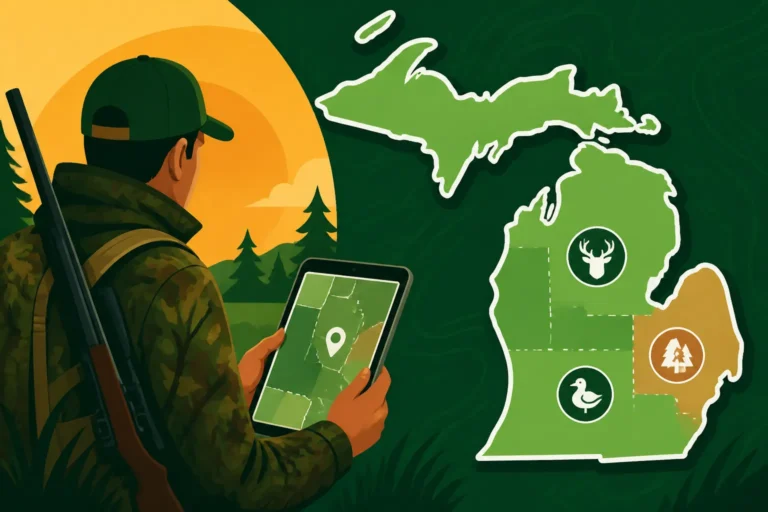
Gone are the days when a paper map and compass were your only reliable options (though they should always be part of your backup plan!). Modern digital mapping applications have revolutionized public land hunting, and for a forest as sprawling as the Huron-Manistee, they are invaluable. Apps like onX Hunt provide detailed property boundaries, showing you exactly where public land ends and private land begins – a critical feature when hunting large, checkerboarded areas. This eliminates the anxiety of accidental trespass.
These apps often include satellite imagery, topographical maps, and layers showing timber cuts, forest types, and even historical burn areas. Before you even leave home, you can "scout" potential hunting spots, identify funnels, bedding areas, and pinch points from your couch. You can drop waypoints for promising sign, planned stand locations, or even your vehicle, making it easy to navigate directly to your destination in the dark. Remember to download your maps for offline use before heading into areas with no cell service – a common occurrence deep in the Huron-Manistee. While a service like GoHunt is excellent for western big game applications, for Michigan public land, onX Hunt is particularly strong due to its detailed land ownership data.
Mastering Topography and Terrain Features
A mapping app is only as good as your understanding of the terrain it depicts. Learning to read contour lines on a topographic map is a fundamental skill for hunting the Huron-Manistee. These lines reveal subtle elevation changes, indicating ridges, valleys, and benches that deer and other game often use as travel corridors or bedding areas. A slight dip in a ridge might create a saddle where deer naturally funnel, while a steep bluff overlooking a swamp could be a secluded bedding area.
Consider how elevation affects wind currents and thermals, particularly in the mornings and evenings. A deer moving up a draw at first light will often use the rising thermals to scent check ahead. Conversely, in the evening, cooling air will pull scent downhill. Understanding these nuances helps you position yourself effectively. Moreover, recognizing natural funnels created by terrain – a narrow strip of high ground between two swamps, for example – can be a game-changer for intercepting moving animals. This kind of detailed analysis is essential for Scouting Michigan Public Land Before Season.
Planning Strategic Entry and Exit Routes
Hunting the Huron-Manistee isn't just about finding game; it's about getting to and from your hunting spot quietly and efficiently, especially when dealing with long walks or limited light. Planning your entry and exit routes meticulously on your digital map, perhaps using onX Hunt to mark your path, can make all the difference. Think about prevailing winds, noise reduction, and minimizing disturbance to the area you intend to hunt.
For example, if you're planning to hunt an oak ridge, your entry route should ideally be downwind of that ridge and avoid any known bedding areas. Utilize natural cover like creek bottoms, ditches, or dense pine stands to mask your approach. It's often beneficial to have a different exit route than your entry, especially if you're still-hunting or driving deer, to keep pressure fresh. Always consider how you will retrieve your game. Dragging a deer miles through rough terrain in the dark is a daunting task, so knowing your path and potential challenges beforehand is critical.
| Feature | Digital Mapping Apps (e.g., onX Hunt) | Traditional Paper Maps/Compass |
|---|---|---|
| Real-time Position | Yes (with GPS signal) | No (requires manual plotting) |
| Property Boundaries | Highly detailed, clearly marked | Often generalized or absent |
| Offline Access | Yes (pre-downloaded maps) | Always available |
| Habitat Layers | Satellite imagery, timber cuts, contours | Topographic lines, general forest cover |
| Marking Waypoints | Easy, digital, shareable | Manual marking, less precision |
| Battery Dependence | High (carry spares!) | None |
| Learning Curve | Moderate (tutorials available) | Moderate to high (practice needed) |
Pursuing Whitetails and Bear in the Big Woods
For many, the draw of the Huron-Manistee lies in the opportunity to pursue Michigan's iconic big game animals in a true "big woods" setting. While the hunting can be challenging, the rewards of harvesting a deer or bear in this expansive national forest are immense.
Deer Hunting Strategies for Forested Cover
Hunting whitetails in the vast, unbroken timber of the Huron-Manistee requires different tactics than hunting agricultural fringes. Forget sprawling food plots or easily identifiable field edges for the most part (though some smaller openings exist). Here, deer often rely on natural browse, acorns, and small clearings for forage, and dense cover for security. Focus your efforts on identifying natural funnels where deer movement is concentrated, such as narrow strips of timber between swamps, saddles on ridges, or transitions between different timber types.
Still-hunting can be incredibly effective in these big woods, especially after a fresh snowfall. Moving slowly, stopping frequently to glass ahead, and paying close attention to every sound and subtle movement allows you to cover ground while remaining stealthy. For stand hunters, identifying subtle indicators like old logging roads, bench cuts, or areas with an abundance of rubs and scrapes can pinpoint productive areas. Remember, deer here are often accustomed to human presence, so minimizing your scent and movement is always vital. Michigan Deer Seasons and Tags will guide you on when you can legally pursue these animals.
Understanding Black Bear Opportunities
The Huron-Manistee National Forest supports a healthy black bear population, particularly in its northern reaches and more remote sections. Hunting bear in Michigan often involves specific permit drawings and preference points. Michigan Bear Licence Drawing details the application process. Once you have a tag, you'll need to decide on your hunting method. While baiting is a common and effective technique in some areas of Michigan, it requires significant time and effort to establish and maintain a productive bait site, and it's important to verify current baiting regulations for the specific area within the national forest, as rules can vary.
Another method is spot-and-stalk or still-hunting, which relies on covering ground in areas known for bear activity – often near dense swamps, oak ridges (for acorns), or areas with berry bushes. This requires immense patience and keen tracking skills. Bear sign, such as scat, claw marks on trees, or overturned logs, can indicate a productive area. Remember that bears are incredibly intelligent and have an excellent sense of smell, so wind direction and stealth are even more critical than with deer.
Special Considerations for Big Game Success
Hunting big game in the Huron-Manistee means being prepared for anything. The weather can change rapidly in northern Michigan, turning a crisp fall day into a cold, wet slog. Layered clothing is crucial, as is reliable rain gear. Carry enough food and water for longer hunts, and always have a way to purify water or access clean sources. A reliable headlamp with extra batteries is non-negotiable for navigating in the dark.
Furthermore, consider how you will recover your animal. If you're fortunate enough to harvest a deer or bear miles deep in the forest, you'll need a plan. Game carts can be useful on two-tracks, but if you're in truly remote, swampy, or heavily timbered areas, you might need to consider quartering the animal for an easier pack out. Understanding the regulations for tagging and Reporting a Michigan Harvest in 72 Hours is also a critical part of the process.
Embracing Upland Bird and Small Game Hunting
While big game often takes center stage, the Huron-Manistee National Forest offers phenomenal opportunities for upland bird and small game hunters. These pursuits can be less physically demanding (though a good walk is still involved!) and offer a fantastic way to enjoy the forest's beauty.
Finding Ruffed Grouse and Woodcock Haunts
The Huron-Manistee is a prime destination for ruffed grouse and woodcock. These birds thrive in early successional habitats. For grouse, this means young aspen stands (typically 5-20 years old), dense conifer pockets, and transition zones between mature timber and brushy clearings. Look for areas that have been clear-cut within the last couple of decades; these are often grouse magnets. Grouse Hunting Michigan Aspen Cover dives deeper into this specific strategy.
Woodcock, on the other hand, prefer moist, brushy areas, often along alder thickets near rivers, streams, or low-lying areas. Timing your woodcock hunt with their fall migration can lead to incredible days afield. Both species benefit greatly from a well-trained bird dog, but can certainly be hunted by walking slowly through cover, pausing frequently, and being ready for a sudden flush. The dense cover means fast shooting, so an open-choke shotgun is often preferred.
Rabbit and Squirrel Hunting Adventures
For a more relaxed hunt, or as a fantastic way to introduce new hunters to the field, the Huron-Manistee offers excellent rabbit and squirrel hunting. Cottontail rabbits can be found in brushy areas, thickets, and along the edges of clearings, especially where there's dense undergrowth for cover. A pack of beagles can turn a rabbit hunt into an exciting chase, but still-hunting through cover or slowly walking brush piles can also be productive. Rabbit Hunting With Beagles in Michigan showcases the fun of this classic pursuit.
Squirrels – both fox and gray – are abundant throughout the forest, particularly in hardwood stands with mature oak and beech trees. In the fall, focus on areas with visible mast crops, such as acorns or beechnuts. Look for "cuttings" (gnawed nut shells) under trees, indicating active feeding. A quiet walk through the woods, pausing often to listen and look up, can often yield a limit of squirrels. This is a great way to hone your stalking skills and spend time in nature. Squirrel Hunting Michigan Hardwoods provides more insight into finding these agile creatures.
The Thrill of Predator and Furbearer Hunting
The Huron-Manistee National Forest also presents opportunities for hunters interested in predators and furbearers. Coyotes are prevalent throughout the forest and offer a challenging hunt. Calling coyotes, particularly in the winter months when their fur is prime and they're more actively searching for food, can be an exhilarating experience. Understanding their movements and vocalizations is key. Coyote Calling in Michigan Winter offers valuable tips for success.
Bobcats, while more elusive, also inhabit the dense cover of the forest. Obtaining a bobcat permit requires specific application processes and often involves preference points, similar to bear. Trapping, for species like beaver, otter, fox, and raccoon, is another furbearer pursuit available in the Huron-Manistee for those with the proper licenses and experience. Always ensure you are familiar with current regulations and season dates for these species, as they can differ from other game animals.
Adhering to Regulations and Ethical Hunting in the National Forest
Hunting in any national forest comes with a particular set of responsibilities. It’s not just about following Michigan's general hunting laws, but also understanding specific rules that apply to federal lands, as well as practicing ethical behavior to ensure the forest remains a wild and productive resource for everyone.
Understanding Forest-Specific Rules
While the Huron-Manistee generally adheres to Michigan's hunting regulations, there are often additional rules specific to national forests. For example, rules regarding vehicle use on forest roads, target shooting, or the use of specific types of equipment might vary. Always consult the current year's Michigan Hunting and Trapping Digest for state regulations, but also check the U.S. Forest Service website for the Huron-Manistee National Forest to be aware of any supplemental federal rules or temporary closures.
This is especially true for things like Treestand Rules on Michigan Public Land, as some national forest regulations might be stricter than state forest land. You might find restrictions on cutting shooting lanes, using screws into trees, or leaving stands unattended for extended periods. Familiarize yourself with these details before you head out, and a call to the local forest service ranger district office can often clarify any ambiguities.
Camping and Dispersed Overnight Stays
For many, hunting the national forest isn't just a day trip; it's an immersive experience that includes camping. The Huron-Manistee offers designated campgrounds, but also allows for dispersed camping throughout much of the forest, providing a true backcountry experience. Dispersed camping typically means setting up your camp away from developed sites, with minimal impact. There are usually rules about how far you must be from roads, water sources, and developed areas, and restrictions on the duration of your stay.
When dispersed camping, practice Leave No Trace principles: pack out everything you pack in, bury human waste, and avoid disturbing vegetation. Fires are often permitted, but always check for current fire restrictions, especially during dry periods. A quiet, responsibly managed camp can be a huge asset for early morning starts or late evening returns, allowing you to be closer to your hunting grounds without the travel time.
Sharing the Forest Responsibly
The Huron-Manistee National Forest is a multi-use area. This means you'll share it with hikers, campers, anglers, birdwatchers, mushroom foragers, and ORV enthusiasts. Practicing good outdoor etiquette and respecting other users is crucial. Always be aware of your surroundings, especially when moving through popular recreational areas. Wear plenty of hunter orange during firearm seasons, as required by How Much Hunter Orange Michigan Requires, even if you're just hiking in and out.
When encountering others, be courteous and offer a friendly greeting. Make sure your calls and shooting don't disturb campers or hikers unnecessarily. If you're using an ORV, stick to designated trails and respect noise limits. Remember, we all share these precious public lands, and positive interactions help foster a better understanding and appreciation for hunting. Leaving gates as you found them, not blocking access points, and generally being a good steward of the land contributes to a positive image for all hunters.
Disclaimer
This article is for general informational purposes only and does not constitute professional advice. Laws, prices and regulations vary by location and change over time. Consult a qualified professional for guidance on your specific situation.