ORV Rules on Michigan State Forest Roads
It's incredibly frustrating, isn't it? You've found what looks like a perfect two-track leading into prime deer habitat on Michigan public land, but then a little voice in your head screams, "Is this even legal to drive on?" The rules surrounding Off-Road Vehicles (ORVs) on Michigan State Forest roads can feel like a tangled mess, leaving many hunters confused about how to legally and ethically access their favorite hunting spots. This guide is here to untangle that knot, walking you through the ins and outs of Michigan's ORV regulations specifically for hunters, so you can focus on the hunt, not the worry.
Navigating the Labyrinth: Understanding Michigan's ORV Regulations for Hunters
Michigan boasts an incredible amount of public land, including millions of acres of state forests. This is a blessing for hunters, but with all that ground comes a complex network of roads and trails, each with its own set of rules for vehicle use. It's not always as simple as "if there's a road, I can drive on it," and understanding the nuances is key to a successful, compliant hunt.
The Jumble of Trails, Routes, and Forest Roads
When you look at a map, or even just drive through the woods, you'll see a variety of pathways. There are clearly marked, designated ORV trails, which are often groomed and signed. Then there are those seemingly endless two-tracks and old logging roads that weave through the timber, some maintained, some barely visible. The state also has official "forest roads," which might look like gravel or dirt roads but are still subject to specific regulations. The confusion arises because these different classifications dictate who can drive what and where. A full-sized truck might be fine on one, an ATV on another, and nothing but your boots on a third. For a hunter trying to get to a remote stand, knowing the difference is paramount.
Many of us remember a time when nearly every two-track felt fair game, but those days are largely behind us as the state balances access with environmental protection and multiple user groups. What looks like an old, overgrown path might actually be a designated non-motorized trail, or even a critical wildlife corridor. Ignoring these distinctions can lead to citations, or worse, damage to the very habitat we cherish. It's a tricky balance to strike, especially when you're just trying to get your gear to a distant ridge before dawn.
Why These Rules Exist: Protecting Our Wild Places and Wildlife
You might sometimes feel like these rules are designed just to make your life harder, but there's a lot more to it. The state implements ORV regulations for several critical reasons, all aimed at preserving Michigan's natural resources and ensuring everyone can enjoy them safely. First and foremost is resource protection. Uncontrolled ORV use can cause significant erosion, damage fragile ecosystems, and spread invasive species. It can also disrupt wildlife, especially during sensitive times like nesting or fawning seasons. The deep ruts you leave can become erosion channels, ruining small streams and wetlands.
Another major factor is safety. With so many different activities happening on public land – hiking, biking, horseback riding, camping, and hunting – clear rules help prevent conflicts and accidents. Imagine trying to still-hunt a cedar swamp only to have a group of dirt bikes tear through it, or setting up a Treestand Setups in Michigan Hardwoods only to have it surrounded by recreational riders. Noise pollution from ORVs can also degrade the outdoor experience for others seeking quiet solitude. These rules are an attempt to create a framework where everyone can coexist, even if it sometimes feels restrictive to us as hunters.
Your Wheels in the Woods: Specific ORV Rules for Hunting Access
Alright, let's get down to the brass tacks of what you can and can't do with your ORV when you're heading out to hunt in Michigan's public forests. This is where most of the confusion, and potential for accidental violations, tends to lie.
Designated ORV Trails and Routes: Accessing the Backcountry
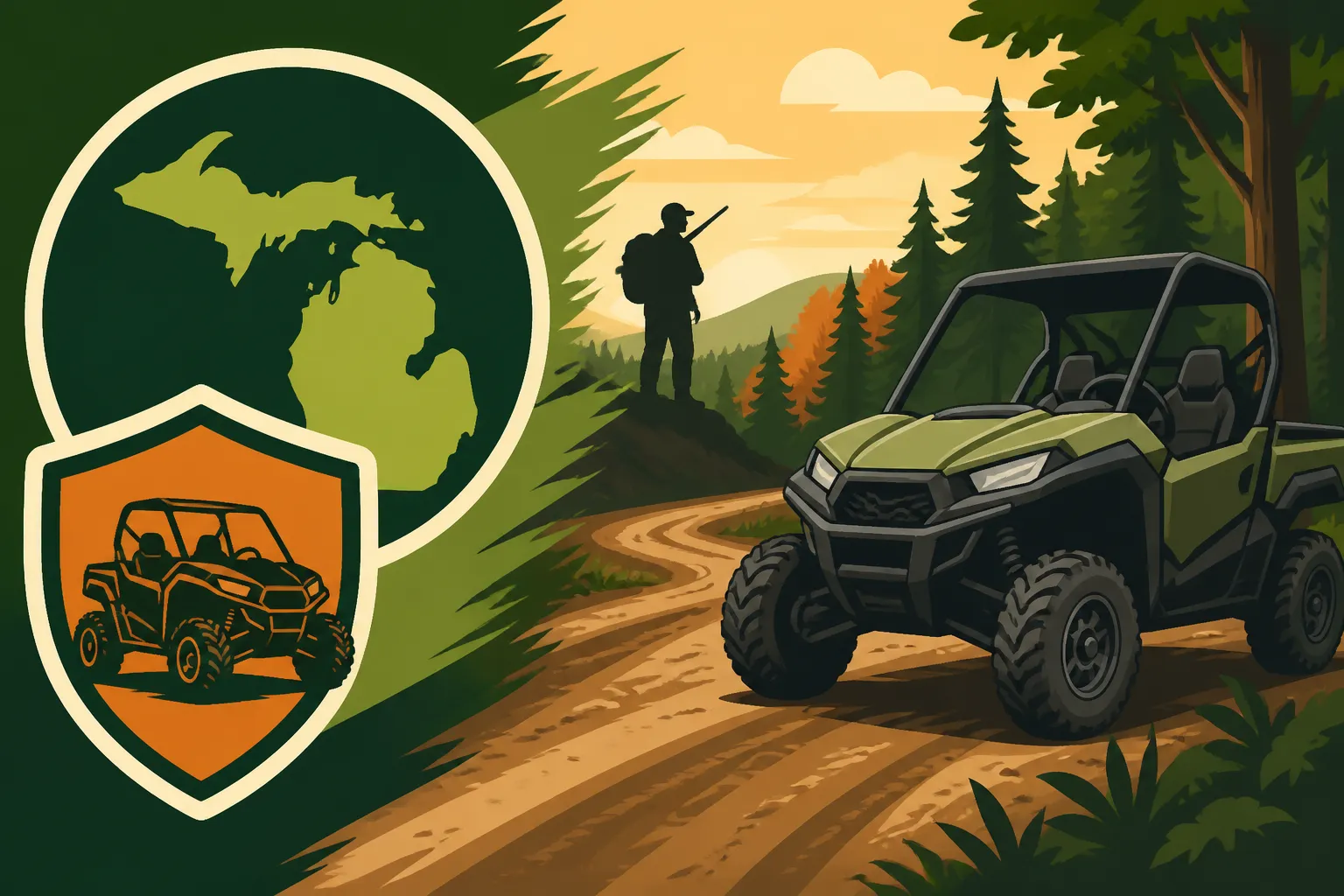
Michigan has an extensive network of designated ORV trails and routes. These are generally marked with specific signage, sometimes color-coded, and are managed for recreational ORV use. To ride on these trails, you typically need an ORV license and a trail permit sticker, which you attach to your vehicle. These trails are fantastic for getting deep into public land quickly, and a hunter can absolutely use them to access certain areas.
However, there's a crucial distinction for hunters: these trails are primarily for recreational riding, not necessarily for hunting from. You can drive your ORV on a designated trail to get closer to your hunting location, but you generally cannot shoot from your ORV, pursue game with it, or drive off the designated trail within the immediate vicinity of your hunting spot. Think of them as a means to an end – a way to reduce your walking distance – not a hunting platform itself. Always remember that while you might be on a multi-use trail, other users like mountain bikers or hikers will also be present, so courtesy and caution are essential. ORV Rules on Michigan State Forest Roads covers this in more detail.
Driving on State Forest Roads: What's Open, What's Not
This is often the trickiest part for hunters. Michigan's state forest roads are a sprawling network, ranging from well-maintained gravel roads to barely perceptible two-tracks. The general rule of thumb is that unless posted closed, designated, or restricted, state forest roads are open to licensed vehicles for purposes like hunting access. This means your truck, SUV, or even a street-legal ORV can typically use these roads.
However, "licensed vehicles" is the operative term. Your typical ORV (ATV, UTV, dirt bike) needs to be street-legal to operate on these roads if they are also open to conventional vehicles, or they must be operated on specifically designated ORV routes. Some state forest roads are designated ORV routes where only ORVs with the proper permits are allowed, and other vehicle types might be excluded. It's a complex system, and many roads are unmarked. This is where mapping tools become absolutely invaluable. You can use platforms like onX Hunt or GoHunt, which often have layers indicating public land boundaries, ORV trail networks, and state forest road classifications. These tools can help you discern whether that enticing two-track is a legal access point or a closed pathway. Without such detailed maps, you're essentially driving blind, risking a ticket or inadvertently trampling a protected area. Using Michigan's Mi-HUNT Map is another excellent resource for this.
Remember that "road" implies something distinguishable and established. Driving directly through undeveloped forest, even to retrieve a deer, is generally not permitted and can cause significant environmental damage. The intent is to provide access along existing infrastructure, not to create new paths.
ORVs During Hunting Season: Getting Your Gear and Game
During hunting seasons, the temptation to use an ORV to minimize effort is strong, especially when dealing with heavy gear or the successful recovery of game. As mentioned, using an ORV to access hunting areas via open state forest roads or designated ORV trails is permissible, provided you have the necessary licenses and permits for your ORV. However, the critical rule is that you cannot hunt from an ORV. This includes shooting at game while on the vehicle, or pursuing game with it. The ORV is a mode of transportation, not a hunting platform.
When it comes to retrieving game, the rules can be a bit more nuanced. If you've downed an animal in a location accessible by an open state forest road or designated ORV trail, you can generally use your ORV to retrieve it along those established paths. The trickier situation arises when your deer, bear, or turkey falls far off any established path. While it's understandable to want to get your animal out efficiently, Michigan law is generally clear: you cannot drive off-road through undeveloped areas just to retrieve game. You'll need to field dress your animal and pack it out by hand. There are exceptions sometimes granted for hunters with disabilities, but for the general hunter, patience and a good deer cart or sled for snow country are your best friends. Dragging a Deer Through Michigan Snow can be a real workout, but it's part of the experience and ensures you stay on the right side of the law.
| Road/Trail Type | ORV Legality for General Use | Typical Hunter Use | Permit/License Requirements |
|---|---|---|---|
| Designated ORV Trail | Yes, specific ORV types only | Accessing remote hunting areas; no hunting from vehicle. | ORV License, ORV Trail Permit (Sticker) |
| Open State Forest Road | Yes, licensed vehicles (including street-legal ORVs) | Primary access to hunting land; no hunting from vehicle. | Standard vehicle registration/license; ORV License if applicable |
| Closed/Restricted Road/Trail | No | Foot traffic only for hunting access. | None (for foot traffic) |
| Undeveloped Forest | No | Foot traffic only. Game retrieval by hand/cart. | None |
Smart Scouting and Safe Riding: Tools and Best Practices
Navigating Michigan's public land system with an ORV for hunting access requires more than just knowing the rules; it demands preparation, the right tools, and a responsible mindset. Without these, you risk not only a hefty fine but also damaging the very resource you seek to enjoy.
Mapping Your Route: Digital Aids and Physical Maps
One of the absolute best investments a Michigan hunter can make, especially one utilizing an ORV for access, is a reliable mapping system. While traditional paper maps are still excellent for big-picture planning and as a backup, digital mapping apps have revolutionized how we navigate public land. Platforms like onX Hunt provide incredibly detailed topographical maps with layers that show land ownership, public/private boundaries, and crucial ORV trail and road designations. This means you can scout from your couch, identifying legal forest roads and ORV routes that will get you closest to your hunting ground without trespassing or breaking the law.
Before you even leave home, you can plot your intended route, mark potential parking areas, and confirm the legal status of the roads you plan to use. This foresight saves valuable time and prevents missteps in the field. Having an app like GoHunt on your phone means you can verify your location in real-time against these maps, ensuring you stay on the right side of the line. Make sure to download maps for offline use, as cell service can be spotty, especially in the remote northern Lower Peninsula or the Upper Peninsula. Pairing your digital maps with a physical map and compass as a backup is always a smart move.
Avoiding Fines and Frustration: Common ORV Mistakes
Even with the best intentions, it's easy to make mistakes. Here are some common pitfalls hunters encounter with ORVs on Michigan public land:
- Driving on Closed Roads/Two-Tracks: This is probably the most frequent violation. An old two-track might look like a road, but if it's not clearly marked as open, or if it has a gate, berm, or "No Motorized Vehicles" sign, it's off-limits. Always err on the side of caution. Finding Ground Others Walk Past often means going beyond where vehicles can travel.
- Lack of Proper Permits: For designated ORV trails, you need both an ORV license and a trail permit. Just having one isn't enough. Make sure they are current and properly displayed.
- Operating an Unregistered ORV: All ORVs in Michigan need to be registered, even if only used on private land. If you plan to use it on public trails or roads, ensure it's registered.
- Disturbing Habitat: Driving through wetlands, mudding in sensitive areas, or creating new trails off existing ones is not only illegal but also incredibly damaging to the environment. Stick to the established paths.
- Excessive Speed/Reckless Operation: While less common for hunters, fast or careless driving on multi-use roads and trails creates safety hazards for other users and can lead to property damage or accidents. Remember, you're sharing the woods.
Being a Good Steward: Respecting the Land and Fellow Hunters
Ultimately, legal ORV use for hunting access boils down to being a responsible steward of Michigan's natural resources. We all want to enjoy these wild places, and that means taking care of them. When you're using an ORV, think about the impact you're having. Stay on designated paths, avoid making excessive noise, and always pack out everything you pack in.
Beyond the environment, consider your fellow outdoors enthusiasts. The vastness of Michigan's public land means many different groups are out enjoying it. A mountain biker doesn't want to choke on your dust, and a bowhunter certainly doesn't want their silent morning broken by a roaring engine. Slow down, be courteous, and understand that you are one user among many. This includes being mindful of noise levels, especially around popular campsites or known hunting areas during peak seasons. By following the rules and practicing good outdoor ethics, we ensure that ORV access remains an option for hunters for generations to come, allowing us to delve deeper into areas like the Hunting the Michigan Upper Peninsula for Deer or Southern Michigan Farm Country Deer Hunting.
Respecting the Resource and Other Users
The privilege of using ORVs to access Michigan's vast public lands comes with a significant responsibility. It's not just about avoiding a ticket; it's about preserving the natural beauty and ecological health of our forests for everyone, now and in the future. As hunters, we often pride ourselves on our connection to the land, and responsible ORV use is a direct reflection of that ethic.
Minimizing Your Impact While Hunting with an ORV
Every time a tire touches the soil, there's an impact. While perfectly legal on designated routes, we can always strive to minimize our footprint. This means sticking strictly to marked trails and open forest roads. Avoid creating new paths, even if it looks like a shortcut. The cumulative effect of many vehicles taking shortcuts can quickly degrade habitat, lead to erosion, and disrupt natural drainage patterns. When crossing streams or wet areas, use existing crossings rather than forging new ones. If a path is excessively muddy or seems impassable without causing damage, it's often better to park and walk, or find an alternative route.
Consider the time of year as well. Wet springs and falls can make some roads particularly vulnerable to damage from ORVs. Driving on saturated ground can leave deep ruts that take years to heal and can become permanent erosion channels. Being conscious of these conditions and choosing less impactful routes or methods is a mark of a truly responsible hunter. Remember, the goal is to access the wilderness, not to conquer it with brute force. Hunting Michigan Swamp Edges for Deer can be challenging, but respecting the terrain is key.
Sharing the Woods: Coexisting with Hikers, Campers, and Other Hunters
Michigan's state forests are truly multi-use environments. On any given day, you might encounter hikers, birdwatchers, mountain bikers, horseback riders, campers, and other hunters. The sound of an ORV can carry a long way, and while it's a necessary tool for many, it can be an unwelcome intrusion for others seeking peace and quiet.
Practicing courtesy is paramount. Slow down when you see other users. Yield the right-of-way, especially to non-motorized users. Give them plenty of space, and a friendly wave often goes a long way. When approaching areas where you know other hunters might be, such as popular parking spots or traditional deer crossings, reduce your speed and noise as much as possible. Parking your ORV a little further off the beaten path and walking the last stretch can be a gesture of respect that benefits everyone. Consider running your ORV during the least disruptive times if possible, perhaps in the middle of the day rather than at dawn or dusk when animals and hunters are most active. Our shared love for the outdoors should be a bond, not a point of contention, and thoughtful ORV use helps foster that positive relationship.
Disclaimer
This article is for general informational purposes only and does not constitute professional advice. Laws, prices and regulations vary by location and change over time. Consult a qualified professional for guidance on your specific situation.