Dog Training on Michigan State Land
One of the biggest headaches for Michigan hunting dog owners is finding suitable, legal ground to train their companions. It's not always as simple as stepping out your back door, especially if you live in more populated areas or lack private acreage. Navigating the myriad of state lands, understanding specific regulations, and ensuring you're not disturbing others or breaking any rules can feel like a full-time job. This guide is here to untangle those complexities, providing you with a clear roadmap to successfully and responsibly train your hunting dog on Michigan's vast public lands.
Understanding Michigan's Public Land for Dog Training
Michigan boasts an incredible amount of public land, a true blessing for hunters and dog trainers alike. However, not all public land is created equal when it comes to dog training. Each type of state land often comes with its own set of guidelines, which can be frustratingly nuanced. Knowing the difference between a State Forest, a State Game Area, and other designations is the first step to a successful training session.
State Forests: Vast Opportunities with Varied Terrain
Michigan's State Forests are massive, encompassing millions of acres across both peninsulas. These are often prime locations for training because of their sheer size and diverse ecosystems, from dense hardwoods and pine plantations to marshy lowlands and brushy clearcuts. This variety means you can simulate a wide range of hunting scenarios for your dog, whether you're working on scent trailing, flushing birds, or perfecting retriever skills.
The beauty of State Forests is their relatively hands-off management compared to some other public lands. While you still need to be aware of general state hunting regulations and safety zones, you often have more freedom to move and set up training scenarios. This makes them ideal for longer retrieves, extensive pointing dog work, or simply getting your dog accustomed to navigating varied terrain off-leash in a controlled manner. Remember, these are also actively hunted areas, so being mindful of hunting seasons and other users is paramount. You certainly don't want to disrupt someone's deer hunt while you're working your bird dog, or vice versa. Michigan State Forest Hunting Rules provides a great overview of general regulations in these areas.
State Game Areas: Managed for Wildlife and Hunters
State Game Areas (SGAs) are specifically managed by the Michigan Department of Natural Resources (DNR) to enhance wildlife habitat and provide hunting opportunities. These areas are often smaller than State Forests but are intensely managed, which means they can be fantastic for specific types of dog training. For example, many SGAs have excellent cover for pheasants, grouse, and rabbits, making them perfect for pointing or flushing dog work. Others might feature marshes or small lakes, which are invaluable for retriever training.
The downside to SGAs can be their popularity and the potential for crowding, especially during hunting seasons. You might find more restrictions or specific rules about dog use in certain sections or at certain times of the year. Always check the individual SGA's specific regulations, usually available on the DNR website, before heading out. Sometimes, these areas are part of larger managed waterfowl programs, like those discussed in Michigan Managed Waterfowl Areas, which could impact access or specific activities.
Other Public Lands: National Forests and Hunting Access Program
Beyond state-managed lands, Michigan also hosts three National Forests – the Ottawa, Hiawatha, and Huron-Manistee National Forests. These federal lands offer similar vastness and diversity to State Forests, often with their own specific local regulations on top of federal and state laws. They are generally excellent for dog training, providing ample space for a variety of disciplines. Using a mapping application like onX Hunt can be incredibly helpful for discerning property boundaries and understanding land ownership in these mosaic landscapes.
Additionally, Michigan's Hunting Access Program (HAP) opens up private land to public hunting, and in some cases, allows for dog training outside of established hunting seasons. These properties are typically agricultural lands or smaller woodlots, offering different training environments. Always check the HAP property signs or the DNR website for specific rules regarding dog training, as permission can vary significantly from one property to another. Understanding Public Hunting Land in Michigan can give you a broader perspective on the options available.
Rules and Regulations for Dog Training on State Land
Navigating the legal landscape for dog training in Michigan can feel like a maze. It’s crucial to understand not just general hunting regulations, but also specific rules pertaining to dogs on public property. Ignoring these can lead to fines, loss of privileges, or even injury to your dog or others.
Leash Laws and Off-Leash Privileges
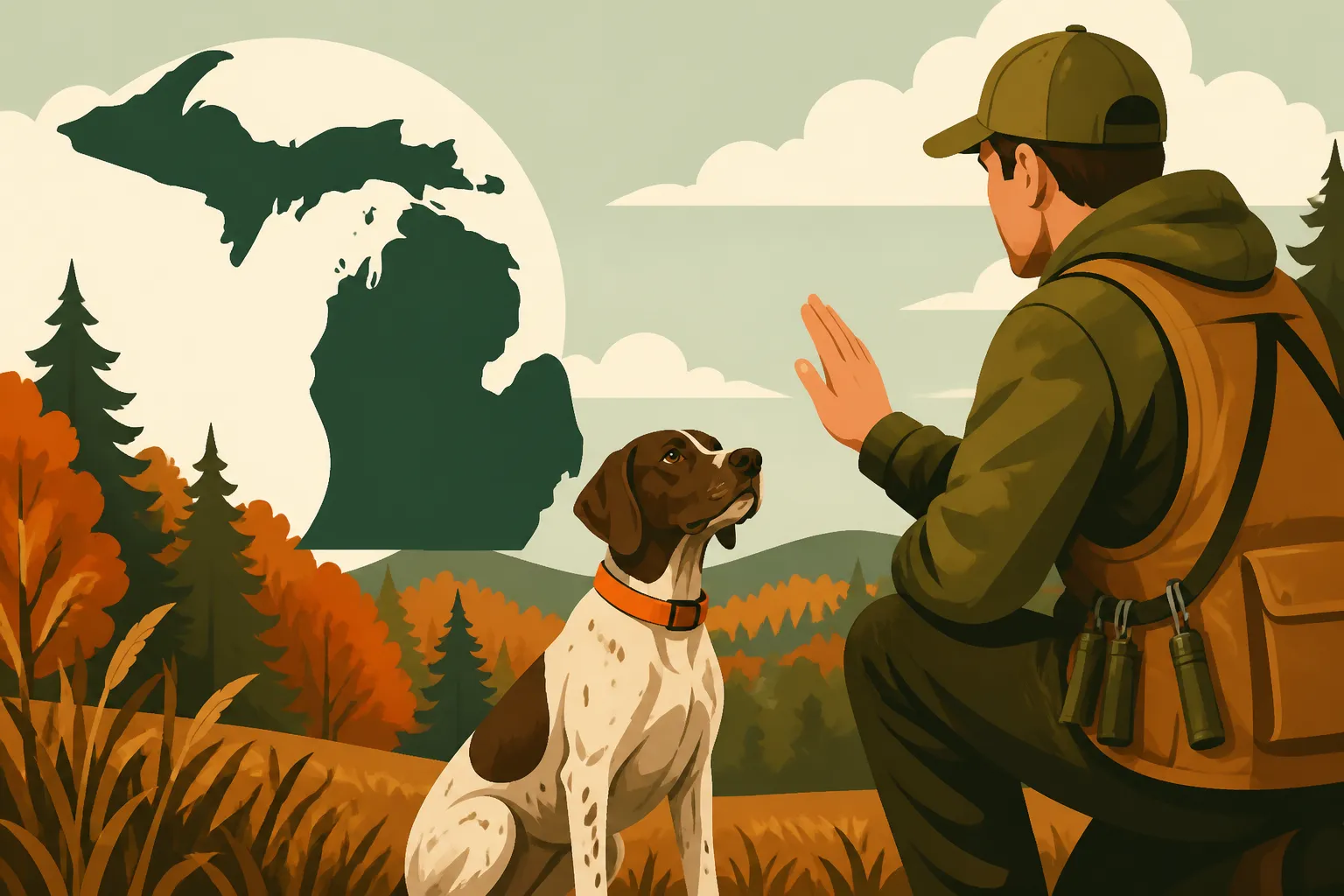
The most common question I hear is about leash laws. Generally speaking, in Michigan, dogs are required to be on a leash unless they are actively engaged in hunting or training for hunting. This is a critical distinction. If you're simply walking your dog on a trail in a State Forest, it should be leashed. However, if you are actively training your dog for hunting purposes, such as practicing retrieves or scent work, you generally have more leeway to have your dog off-leash.
Even when allowed off-leash for training, your dog must remain under your immediate control. This means they should respond instantly to voice commands. If your dog is ranging out of sight or ignoring your calls, it's not truly under "immediate control." This rule is in place to prevent disturbance to wildlife, other users, and to keep your dog safe from hazards. Always carry a leash, even if you plan to train off-leash, for those moments when you need to secure your dog quickly, such as if another person or dog approaches.
Special Permits and Seasons for Training
While general hunting licenses cover most training activities during legal seasons, there are specific instances where you might need to be aware of other permits or seasons. For example, if you're using live game birds for training, you may need specific permits or ensure you're within designated game bird release areas and seasons. Field trials and similar organized events often require special permits from the DNR.
It's also vital to be aware of Michigan's small game seasons. Training your bird dog in a State Game Area during grouse season, for instance, means you're operating under active hunting conditions. Be mindful of other hunters. Conversely, training outside of hunting seasons can often be less crowded, but you still need to respect general property rules and wildlife. Michigan Small Game and Furbearer Seasons provides a comprehensive look at these dates.
Safety Zones and Other Restrictions
Michigan has strict safety zone rules that prohibit hunting, trapping, or discharging a firearm within 150 yards (450 feet) of any occupied building, dwelling, house, cabin, or barn. While dog training itself might not involve firearms, it's essential to understand these zones for a few reasons. Firstly, you should never train your dog in a way that might disturb or appear threatening to residents within a safety zone. Secondly, if your training involves simulated retrieves or other activities that mimic hunting, respecting these zones is critical. Michigan Safety Zone Rules lays out the specifics.
Beyond safety zones, certain areas might have temporary closures for timber harvests, prescribed burns, or wildlife management activities. Always check the DNR website or local signage before heading out. It's also worth noting that while training, it's generally a good idea to avoid areas known for high foot traffic, like popular hiking trails, to minimize conflicts with other outdoor enthusiasts.
Best Practices for Responsible Dog Training
Responsible dog ownership and training go hand-in-hand with being a good steward of Michigan's public lands. It's not just about following the rules, but about exercising common sense and courtesy to ensure enjoyable experiences for everyone.
Respecting Wildlife and Other Users
When you're out training your dog, you're sharing the woods, fields, and waters with a diverse group of users: hikers, birdwatchers, mountain bikers, other hunters, and of course, the wildlife itself. Your presence and your dog's activities can impact them. Always strive to minimize disturbance.
- Wildlife: Avoid training near known nesting sites or during critical breeding seasons, especially in sensitive habitats. If you encounter deer, turkeys, or other wildlife, call your dog back and give the animals plenty of space. The goal is to train a hunting dog, not one that harasses wildlife indiscriminately.
- Other Humans: Be polite and yield the right-of-way. If you see people approaching, call your dog to heel or put it on a leash until they pass. A well-behaved, controlled dog reflects positively on all hunters. Avoid noisy training aids in quiet areas, and always pack out everything you pack in – including any training dummies or spent blanks. Understanding Hunting Pressure on Michigan State Land can help you choose less crowded spots.
Leave No Trace Principles
The principles of "Leave No Trace" are fundamental to responsible outdoor recreation, and they apply directly to dog training.
- Pack It In, Pack It Out: This means all trash, including dog waste bags, spent shotgun shells (if using blanks), and any packaging from snacks or drinks. Do not leave training dummies behind.
- Minimize Impact: Try to stick to existing trails and roads where possible, especially in sensitive environments. Avoid creating new paths or trampling delicate vegetation. If you're doing extensive retriever work in a marsh, be mindful of the impact your activities have on the marsh grasses and substrate.
- Respect Property: While training, you might occasionally cross into adjacent private land if you're not carefully monitoring your position. This is where tools like onX Hunt become invaluable. Always know where you are and avoid trespassing. Reading Aerial Photos for Swamp Deer or other land navigation strategies can apply directly to dog training locations too.
Gear and Safety Considerations
Having the right gear and prioritizing safety are non-negotiable for dog training on public land.
- Identification and First Aid: Ensure your dog has proper ID tags with your contact information. Carry a canine first aid kit with essentials for cuts, scrapes, or minor injuries. On longer excursions, consider a GPS collar for your dog, especially in vast State Forests where a lost dog can quickly become a serious concern.
- Water and Nutrition: Always carry enough fresh water for both yourself and your dog, especially on warm days. Bring high-energy snacks for your dog, particularly if you're planning a strenuous session.
- Hunter Orange: If you're training during any hunting season, particularly deer firearm season, ensure both you and your dog are wearing hunter orange. Even if you're not actively hunting, it's a crucial safety measure to make yourselves visible to others. How Much Hunter Orange Michigan Requires provides details on the legal requirements.
- Mapping Tools: A reliable map is essential. While paper maps have their place, digital mapping apps like onX Hunt are game-changers. They show property boundaries, trails, cover types, and sometimes even recent timber cuts, allowing you to plan your training routes effectively and stay on public land. Many hunters also use these apps for scouting, as detailed in Scouting Michigan Public Land Before Season.
Finding the Right Public Land for Your Training Needs
With so many options, how do you pinpoint the perfect spot for your dog training? It requires a bit of research and understanding of your dog's specific needs and the type of training you're focused on.
Matching Training Goals to Habitat
Think about what you're trying to achieve with your dog.
- Bird Dogs (Pointers, Flushers): For pointing breeds like Setters or Pointers, look for areas with good natural bird cover – aspen cuts for grouse and woodcock, brushy fields for pheasants, or dense thickets. Places mentioned in Grouse Hunting Michigan Aspen Cover or Finding Woodcock in Alder Runs could be ideal. For flushing dogs (Spaniels, Labs), similar cover is great, emphasizing dense cover work.
- Retrievers: Areas with water are obviously key. State Game Areas often have managed wetlands, small ponds, or access to larger lakes and rivers. Just be mindful of other water users. If you're working on longer marks, a large open field in a State Forest might be better.
- Scent Hounds (Beagles, Coonhounds): For rabbits or other furbearers, thick brush, briar patches, and dense swamp edges are perfect. Check out areas known for Rabbit Hunting With Beagles in Michigan. These dogs benefit from complex terrain that challenges their noses.
- General Obedience/Conditioning: Almost any State Forest or less-trafficked State Game Area with trails or two-tracks can work for conditioning and basic obedience, provided you follow leash rules and manage encounters with others.
Utilizing Online Resources and Maps
The Michigan DNR website is your best friend for initial research. They provide maps, regulations, and often specific details about individual State Game Areas and Forests. Look for information on habitat types, existing trails, and any special use designations.
Digital mapping tools like onX Hunt are incredibly powerful. You can layer public land boundaries, habitat types, and even topographical maps to identify promising training locations from your couch. This saves you valuable time and prevents unnecessary trips to unsuitable areas. You can mark potential training zones, entry points, and even "danger zones" to avoid (like private property or busy roads). Many hunters rely on these apps daily for Using Mi-HUNT on a Phone or scouting.
| Public Land Type | Typical Characteristics | Best For Training | Considerations |
|---|---|---|---|
| State Forest | Vast, diverse habitat (woods, swamps, hills) | Long retrieves, extensive scent work, conditioning | Can be remote, check for logging/burns, shared with other hunters |
| State Game Area | Managed for wildlife, often specific habitat types | Bird flushing/pointing, waterfowl retrieving, close-range work | Can be crowded, check specific regulations, active hunting during seasons |
| National Forest | Very large, remote, diverse ecosystems | Wilderness training, long distances, varied terrain | Similar to State Forests, federal regulations apply, remote access |
| HAP Lands (Private) | Agricultural fields, woodlots, often smaller | Specific field work, short retrieves, close obedience | Permission varies, check specific property rules carefully |
| River/Lake Access | Designated access points, boat launches | Water retrieving, swim conditioning | High public use, safety around boats/swimmers, clean up waste |
Scouting Your Training Location
Just like you'd scout for game, it pays to scout your training locations. A quick walk-through can reveal crucial details:
- Accessibility: Are roads passable? Is there adequate parking?
- Terrain and Cover: Does the area offer the specific type of cover or terrain your dog needs? Are there hidden hazards like deep ditches, barbed wire, or steep embankments?
- Water Sources: If training a retriever, is the water clean and safe? Are there strong currents or potential for fast boat traffic?
- Other User Sign: Are there signs of recent hiking, horseback riding, or other hunting activity? This can help you anticipate potential encounters.
- Safety Zones: Double-check your position relative to any nearby dwellings.
By carefully planning and understanding the rules, you can make Michigan's public lands an invaluable asset for developing a well-trained, ethical hunting companion.
Disclaimer
This article is for general informational purposes only and does not constitute professional advice. Laws, prices and regulations vary by location and change over time. Consult a qualified professional for guidance on your specific situation.