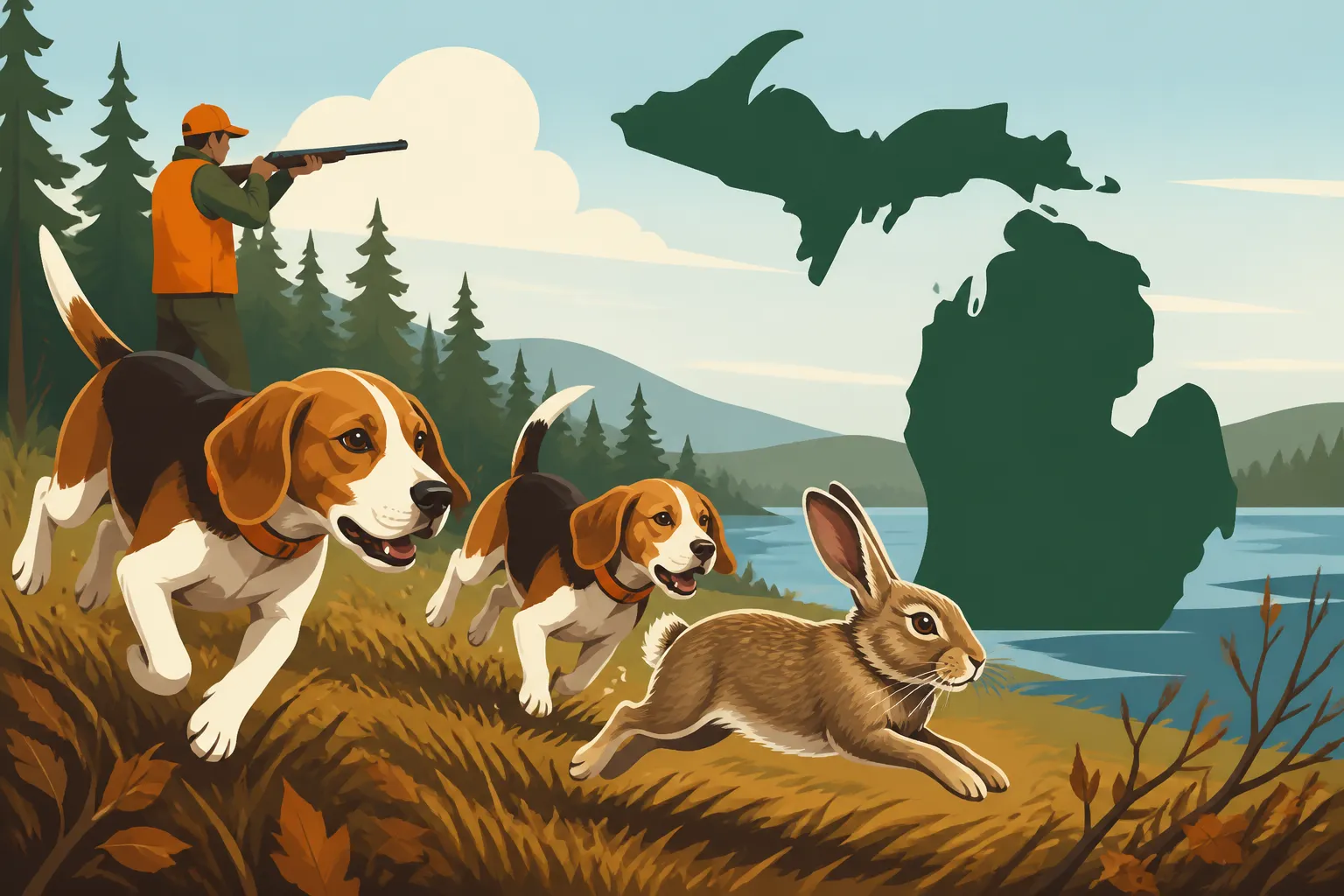
Rabbit Hunting With Beagles in Michigan
When the chill of late autumn truly settles in, and the deer seasons start to wind down, many Michigan hunters might feel a pang of sadness. But for those in the know, the crisp winter air signals the perfect time to grab their shotgun, leash up their loyal beagles, and head to the brush for some thrilling rabbit hunting. If you've ever felt that post-deer season lull or just want a fantastic way to enjoy Michigan's outdoors with a barking soundtrack, this guide is your ticket to understanding how to chase cottontails and snowshoe hares with your beloved canine companions.
Understanding Michigan's Rabbits and Hares
Before you can effectively hunt Michigan's small game, it's crucial to understand the quarry you're pursuing. Michigan is home to two primary species of lagomorphs that offer fantastic hunting opportunities: the eastern cottontail and the snowshoe hare. While both provide exciting chases for beagles, they often prefer different habitats and present distinct challenges.
Cottontails Versus Snowshoe Hares
The eastern cottontail is likely the most familiar rabbit species to many Michiganders. These robust little rabbits are widespread, found throughout the Lower Peninsula and southern parts of the Upper Peninsula, thriving in mixed agricultural areas, brushy fencerows, old fields, and suburban fringes. They're masters of blending into the undergrowth, relying on dense, low cover for protection from predators. Their fur remains a mottled brown year-round, which makes them perfectly camouflaged in dead grass and brush. You'll often find them tucked into briar patches, honeysuckle thickets, or even under old brush piles.
Snowshoe hares, on the other hand, are creatures of the northern woods, primarily found in the Upper Peninsula and the northern reaches of the Lower Peninsula. What makes them truly unique is their remarkable adaptation to winter: their fur changes from a reddish-brown in summer to a pure white in winter, allowing them to disappear seamlessly into snowy landscapes. They also boast larger hind feet, which act like snowshoes, enabling them to navigate deep snow with ease. Snowshoes prefer dense conifer swamps, cedar thickets, and young aspen stands. If you're looking for an excuse to experience a classic northern Michigan hunt, Running Beagles on Michigan Snowshoe Hares is an excellent adventure. Understanding these differences in habitat and behavior is your first step to a successful hunt. The Michigan Cottontail Population Trend and Snowshoe Hare Numbers in Michigan both show healthy populations, though local densities can vary based on habitat.
Rabbit Behavior and Cycles
Both cottontails and snowshoe hares are most active during dawn and dusk, though they can be encountered at any time of day, especially when pushed by beagles. They are herbivores, feeding on a variety of plants, grasses, twigs, and bark, particularly in winter when other food sources are scarce. Their diet and access to food are directly tied to their habitat choices.
Rabbit populations often go through natural cycles of boom and bust, influenced by weather, disease, and predator pressure. Generally, a mild winter followed by a good spring and summer for breeding can lead to an abundance of rabbits. Conversely, harsh winters, significant snow depths, or disease outbreaks can cause populations to dip. Knowing these trends, even anecdotally for your local hunting spots, can help manage expectations. Rabbits are masters of evasion, utilizing their acute hearing and incredible bursts of speed to escape danger. When a beagle barks on their trail, they'll often run in a large circle, hoping to lose the dog before returning to their original bedding area or a nearby escape cover. This circling behavior is precisely what makes them such a perfect quarry for beagles, as it often brings them back within shooting range of the waiting hunter.
The Art of Hunting with Beagles
Hunting rabbits with beagles is a deeply traditional and incredibly rewarding pursuit, offering a unique blend of dog work, tracking, and sharp shooting. It's less about stealth and more about letting your dogs do what they love best: smelling, trailing, and singing on the track of a rabbit.
Training Your Beagle for the Field
While beagles are naturally predisposed to trail rabbits due to their exceptional noses and instinctive drive, proper training is still essential for a safe and effective hunting dog. Training isn't just about getting them to chase; it's about control, recall, and safety. Most beagles will naturally take to rabbit scent. The key is to encourage that natural instinct while teaching them to stay focused and not chase deer or other non-target species. Start young, exposing puppies to rabbit scent and short trails in a controlled environment. Positive reinforcement, patience, and consistency are your best tools.
As they mature, introduce them to real-world hunting scenarios, perhaps with an older, experienced dog. Teach commands like "come" and "no" rigorously, especially given the distractions of the field. Remember, you'll be relying on your dog to navigate thick cover, so proper conditioning is also vital. A well-trained beagle is a joy to hunt with, understanding the unspoken cues and working in harmony with you and the rest of the pack. Modern GPS e-collars can be incredibly useful for tracking your dogs in dense cover and ensuring their safety, especially when you can't see them. Always be mindful of E-Collar Use on Public Ground and local regulations.
Working with Your Pack
Many hunters find that a pack of two to four beagles is ideal for rabbit hunting. A single dog can certainly get the job done, but a pack offers several advantages. More noses mean a better chance of finding a rabbit quickly, and multiple dogs on a trail can keep the rabbit moving more consistently. The cacophony of a full pack in full cry is also an experience unto itself, a true symphony of the chase that gets your heart pumping.
When hunting with a pack, it's important to foster teamwork. Dogs will naturally learn to work together, supporting each other on the trail. Pay attention to the different barks: a "finding" bark when they first strike scent, a "trail" bark as they work the track, and an excited "full cry" when they're hot on the rabbit's heels. You'll learn to interpret these sounds to anticipate where the rabbit is headed. Communicate with your hunting partners about dog locations and anticipated rabbit paths. Some hunters prefer to walk with the dogs, especially in very dense cover, while others will post up in a likely crossing spot and let the dogs work the brush. This coordinated effort between hunters and dogs is what makes beagle hunting so engaging.
The Joy of the Chase
Beyond putting meat in the freezer, the true essence of beagle hunting lies in the chase itself. There's an undeniable thrill that comes with hearing the dogs open up on a fresh track, the sound echoing through the timber. It’s a primal experience, connecting you to generations of hunters and their hounds. The anticipation as the barks get closer, then fade, then intensify again as the rabbit circles, is what keeps hunters coming back year after year.
Watching your dogs work, seeing their instincts come alive, and sharing that pure excitement with them is incredibly rewarding. It’s a hunt where the dogs are the undisputed stars of the show, and you're there to witness their incredible abilities. This pursuit offers a wonderful way to enjoy the quieter, often snow-covered, landscapes of Michigan during the late fall and winter, long after the deer season frenzy has subsided.
Finding the Right Habitat in Michigan
Successful rabbit hunting, whether with beagles or without, hinges on knowing where to find the rabbits. Both cottontails and snowshoe hares rely on specific types of cover for food, shelter, and escape from predators. Understanding these preferences will guide you to the most productive hunting grounds in Michigan.
Thick Brush and Coverts
For eastern cottontails, dense, brushy cover is paramount. Think briar patches, honeysuckle thickets, multiflora rose, wild grapevines, and dense clumps of dogwood or willow. These areas provide invaluable protection from hawks, owls, coyotes, and foxes. Old clear-cuts that have grown up into impenetrable tangles are also prime cottontail habitat. Fencerows that have been left to grow wild, offering a corridor of brush between fields, can be absolute goldmines. Even overgrown abandoned farmsteads with old foundations, apple trees, and thickets can hold surprising numbers of rabbits. The more tangled and difficult for a human to walk through, the better it often is for cottontails.
When scouting for these areas, look for signs like rabbit droppings, clipped vegetation, and well-used runways. In winter, fresh tracks in the snow are the clearest indicator of their presence. Remember, if you can easily walk through it, it's probably not thick enough for a rabbit to feel secure. This is where your beagles, with their low profile and determination, truly shine, pushing rabbits out of cover that you might otherwise overlook or find impossible to penetrate. If you're looking for specific examples of this, our article on Rabbit Hunting Thick Michigan Brush goes into more detail.
Swamp Edges and Cedar Stands
Snowshoe hares, as mentioned, favor northern Michigan's unique forest ecosystems. Their preferred habitat is dense conifer stands, particularly cedar swamps, spruce bogs, and young pine plantations. The thick canopy and dense understory in these areas provide crucial thermal cover during harsh winters and offer excellent concealment. The edges of these swamps, where they transition into mixed hardwoods or aspen regeneration, can also be very productive. They often utilize downed logs and brush piles within these areas for resting and escape.
In the Upper Peninsula and northern Lower Peninsula, you'll find vast tracts of public land that offer this type of habitat. Areas with abundant new growth following timber harvests are also excellent, as the dense saplings provide food and cover. Tools like the GoHunt app can be invaluable for pinpointing these areas, with their detailed mapping layers showing public land boundaries, habitat types, and even topographical features that might hold rabbits. Utilizing platforms like this can greatly assist in your scouting efforts.
Public Land Hotspots
Michigan is blessed with an abundance of Public Hunting Land in Michigan, and many of these areas offer superb rabbit hunting. Michigan State Game Areas are particularly good bets, often featuring a mix of agricultural fields, timber, and dedicated habitat improvements that benefit small game. State forests and national forests across the state also provide vast opportunities, especially for snowshoe hares in their more northern ranges.
When seeking out public land, don't be afraid to walk a little farther or explore areas that might seem less appealing to deer hunters. Rabbit hunters often find success in parcels that are easily overlooked. Utilize online mapping resources, including the Michigan DNR's Mi-HUNT map, to identify blocks of public land with the habitat types described above. Look for areas adjacent to agricultural fields (for cottontails) or large tracts of young conifers (for snowshoes). Remember to always respect private land boundaries, even if a rabbit circles onto it. You can find excellent rabbit hunting opportunities across Michigan State Game Areas and other Public Hunting Land in Michigan. Utilizing advanced mapping platforms, such as those offered by GoHunt, can give you a significant advantage in identifying promising rabbit habitat, showing everything from dense willow thickets to old clear-cuts.
Essential Gear and Preparation
A successful and enjoyable rabbit hunt with beagles requires more than just dogs and a shotgun. The right gear ensures comfort, safety, and efficiency, allowing you to focus on the thrill of the chase.
Shotguns and Ammunition
For rabbits, a reliable shotgun is your best friend. Most hunters opt for a 12-gauge or 20-gauge, but a 16-gauge or .410 can also be effective, especially for younger hunters or those who prefer lighter recoil. Pump-action, semi-automatic, or even a classic break-action double barrel all work wonderfully. The key is to find a gun you can shoulder quickly and swing smoothly, as shots on rabbits are often fast and close-quarters. An open choke, such as an improved cylinder or modified, is usually preferred to allow for a wider shot pattern in the dense cover.
When it comes to ammunition, lead shot is generally permissible for small game on most lands in Michigan. Consult Michigan Small Game and Furbearer Seasons for any specific regulations. For cottontails and snowshoe hares, #6 or #7.5 shot size is usually perfect. These sizes provide enough pellets to create a dense pattern for quick kills without over-penetrating and ruining too much meat. Carry enough shells to last the hunt, but don't overpack – you'll be walking through some tough stuff! Remember to Best Shotgun Gauge for Michigan Grouse, which offers similar advice for dense cover hunting.
Clothing and Footwear for Tough Cover
Rabbit hunting often means busting brush, slogging through swamps, and navigating thorny thickets. Your clothing needs to be durable, warm, and protective. Layers are key, as you'll be exerting yourself, then standing still as the dogs work. Start with a moisture-wicking base layer, add an insulating layer, and top it off with a tough, briar-resistant outer shell. Heavy-duty brush pants or chaps are almost a necessity to protect your legs from thorns and briars. A good hunting vest with plenty of pockets for shells, gloves, and a water bottle is also incredibly useful.
Footwear is arguably the most critical component. You'll be traversing wet, muddy, and potentially snowy terrain, so waterproof boots are a must. Choose boots with good ankle support and aggressive traction. Many rabbit hunters swear by rubber boots, especially when Boots for Michigan Swamps and Snow are involved, as they are completely waterproof and easy to clean. During cold, wet Michigan winters, keeping your feet dry and warm is paramount to an enjoyable day afield. Understanding how rabbits utilize cover changes with the seasons is key, and digital scouting tools like GoHunt can help visualize these transitions by allowing you to study aerial imagery from different times of the year.
Dog Gear and Care
Your beagles are the heart of this hunt, so their gear and well-being are top priorities. Each dog should wear a durable, brightly colored collar with your contact information clearly visible. Many hunters also equip their dogs with GPS tracking collars (like those from Garmin or Alpha) which are invaluable for locating dogs in dense cover or if they get separated. A small bell on the collar can also help you keep track of their general location by sound, especially when they're not in full cry.
Carry plenty of water for your dogs, especially on longer hunts or warmer days. A collapsible water bowl makes it easy to offer them drinks. A small first-aid kit for your dogs, including items for cuts, thorns, or paw pads, is a smart addition to your pack. After the hunt, inspect your dogs thoroughly for ticks, cuts, and burrs. Provide them with a good meal and a warm, dry place to rest. Their performance and enthusiasm depend heavily on their care and comfort.
Tactics for a Successful Hunt
Bringing together your knowledge of rabbits, your trained beagles, and your essential gear is where the real fun begins. Effective tactics ensure that when the dogs do their job, you're in the best position to capitalize on the opportunity.
Setting Up for the Shot
Rabbit hunting with beagles isn't a sit-and-wait game like deer hunting, but it does involve strategic positioning. Once the dogs jump a rabbit and open on its trail, the rabbit will almost invariably run in a large circle. Your job is to anticipate where that circle will bring the rabbit back, or where it might cross an opening. Look for natural funnels, narrow strips of cover, or openings in the brush where the rabbit is likely to cross. These might be old two-tracks, logging roads, field edges, or even slightly thinner sections of timber.
Position yourself quietly, preferably with some cover to break up your silhouette, and be ready. Shotgun mounted, safety off, eyes and ears peeled. Listen carefully to the dogs' barks; as they get closer and the excitement in their voices builds, the rabbit is likely nearing your position. Often, the rabbit will appear silently, darting across an opening, well ahead of the barking dogs. Be prepared for a quick, fleeting shot. Work with your hunting partners to cover different sides of a thicket or different crossing points, ensuring all angles are covered without compromising safety.
Reading the Dogs and the Chase
The beagles are your ears and eyes in the thickest cover. Learn to interpret their language. A steady, consistent bark usually means the rabbit is moving predictably. A chopped, broken bark might indicate the rabbit has momentarily confused them, perhaps by doubling back or pausing in exceptionally thick cover. A sudden change in direction of the barking chorus tells you the rabbit has altered its course.
Use the sound of the pack to visualize the rabbit's path. If the barking suddenly moves away quickly, the rabbit has gained distance. If it stays in a tight area, the rabbit might be holed up in a brush pile or briar patch. The faster and more excited the barks, the closer the dogs are to the rabbit, and the closer the rabbit is to you. This constant interpretation of the chase, combined with your understanding of the terrain, allows you to adjust your position, move to a better shooting lane, or guide your partners to an intercept point. This dynamic interaction makes every hunt unique and exciting. Before heading out, always double-check the latest regulations and season dates, and many hunters find comprehensive resources, including detailed game surveys and access points, through platforms that compile vast amounts of hunting data, much like what GoHunt offers for other species, which can indirectly inform your rabbit hunting strategy.
Post-Hunt Care and Clean-Up
Once you've successfully harvested a rabbit, the work isn't quite done. Field dressing promptly, especially on warmer days, is crucial for preserving the meat. Many hunters carry a small, sharp knife for this purpose. Rabbits are relatively easy to clean, and the meat is delicious, often compared to chicken. Pack your harvested rabbits in a game bag or cooler to keep them cool and clean during the walk back to the vehicle.
After the hunt, give your dogs a thorough check for any cuts, thorns, or exhaustion. Offer them water and a good meal. Clean your shotgun and ensure all gear is properly stored. Take the time to reflect on the day's hunt, what worked well, and what could be improved. The camaraderie of a rabbit hunt, sharing stories of missed shots and incredible dog work, is a highlight for many.
Safety and Regulations
As with any hunting activity in Michigan, safety and adherence to regulations are paramount. Knowing the rules and exercising caution ensures a safe and responsible hunting experience for everyone.
Michigan's Rabbit Hunting Seasons and Limits
Michigan offers generous seasons for rabbit hunting, typically starting in mid-September and extending through March. This long season allows ample opportunity to enjoy the sport, especially during the prime winter months when snow can make tracking easier and provides a beautiful backdrop. However, seasons and bag limits can vary by specific species (cottontail vs. snowshoe hare) and sometimes by region, though generally they are uniform statewide. Always consult the current Michigan Rabbit and Hare Seasons regulations published by the Michigan Department of Natural Resources (DNR) before heading afield. These regulations will specify daily bag limits and possession limits. Failing to check current regulations is a common pitfall, so make it a habit every year.
| Species | Season Dates (Typical) | Daily Bag Limit | Possession Limit |
|---|---|---|---|
| Cottontail Rabbit | Sept 15 – March 31 | 5 | 10 |
| Snowshoe Hare | Sept 15 – March 31 | 5 | 10 |
| Jackrabbit | Closed Season (Not hunted in MI) | 0 | 0 |
Note: These dates and limits are typical and subject to change by the Michigan DNR. Always verify current regulations.
Hunter Orange and Safety Zones
Safety is always the top priority. When hunting rabbits in Michigan, Michigan Hunter Orange Rules typically require hunters to wear hunter orange during specific firearm seasons, even when hunting small game. This means wearing at least 50% hunter orange on your outermost garment above the waist, including a hat. This is vital for visibility, especially when moving through dense cover with other hunters and dogs. Even if not legally required for a specific small game season, wearing hunter orange is always a good safety practice, making you visible to other hunters and outdoor enthusiasts.
Additionally, always be aware of safety zones, which are areas within 150 yards of an occupied dwelling, house, lodge, or building. It is illegal to hunt or discharge a firearm within a safety zone unless you have explicit permission from the owner or occupant. This rule is designed to protect people and property and applies even on public land if a private dwelling is nearby. Always identify your target and what lies beyond it before taking a shot, especially when hunting with dogs that may be out of sight in thick brush.
Caring for Your Dogs in the Field
The welfare of your beagles is paramount. Michigan's diverse terrain and weather can present challenges for hunting dogs. Be mindful of extreme cold and deep snow, which can cause frostbite or hypothermia in your dogs, particularly their paws. Consider dog boots in harsh conditions. Always carry ample water to prevent dehydration, and provide frequent breaks.
Be alert for signs of fatigue, lameness, or injury. Thorns, burrs, and cuts are common in thick cover, so a quick check during breaks and a thorough inspection after the hunt are essential. Carry a basic canine first-aid kit. Finally, ensure your dogs are up-to-date on all vaccinations and parasite prevention. A healthy dog is a happy and effective hunting partner, and responsible dog ownership is a crucial part of the Michigan hunting tradition.
Disclaimer
Please remember that hunting regulations and seasons can change. Always consult the current Michigan Department of Natural Resources hunting guide for the most up-to-date and accurate information before planning your hunt. Safety should always be your top priority in the field.