Snowshoe Hare Numbers in Michigan
It can feel like you're chasing ghosts sometimes, can't it? You head out into the crisp Michigan air, fresh snow on the ground, hoping to find those tell-tale tracks of a snowshoe hare, only to find nothing or just a few scattered signs. It's frustrating when you remember tales of past winters where hares seemed to be everywhere. Understanding the actual snowshoe hare numbers in Michigan, where they thrive, and what influences their populations is key to turning those frustrating walks into successful hunts. This guide will dive deep into the world of Michigan's snowshoe hares, helping you understand their patterns, find their strongholds, and boost your chances of putting some cottontail stew on the table.
Understanding Michigan's Snowshoe Hare Habitat and Cycles
Snowshoe hares aren't just random residents of Michigan's wild spaces; they are very particular about where they set up shop. Their lives are deeply intertwined with specific types of habitat and natural population cycles that can make them seem abundant one year and almost absent the next. Knowing these fundamentals is crucial for any hunter hoping to connect with them.
Preferred Habitat and Cover
If you're looking for snowshoe hares, you need to think "thick." These creatures thrive in dense, young conifer stands, particularly cedar swamps, spruce and fir thickets, and areas with heavy undergrowth. This isn't just a preference; it's a matter of survival. The dense cover provides crucial protection from predators like coyotes, bobcats, and various raptors. They need places where they can disappear quickly, even when they turn their famous white coat in winter.
Beyond just conifers, young aspen and birch stands also play a vital role, especially when they are dense and regenerating after a timber harvest or disturbance. These areas offer abundant browse during all seasons, from twigs and buds in winter to succulent greenery in warmer months. The thick stems provide a maze for escape, and the dense canopy offers a measure of concealment. When you're Hunting Michigan Cedar Swamps or walking through regenerating clearcuts, you're often in prime hare country, even if you don't see one at first glance.
The Natural Population Fluctuations
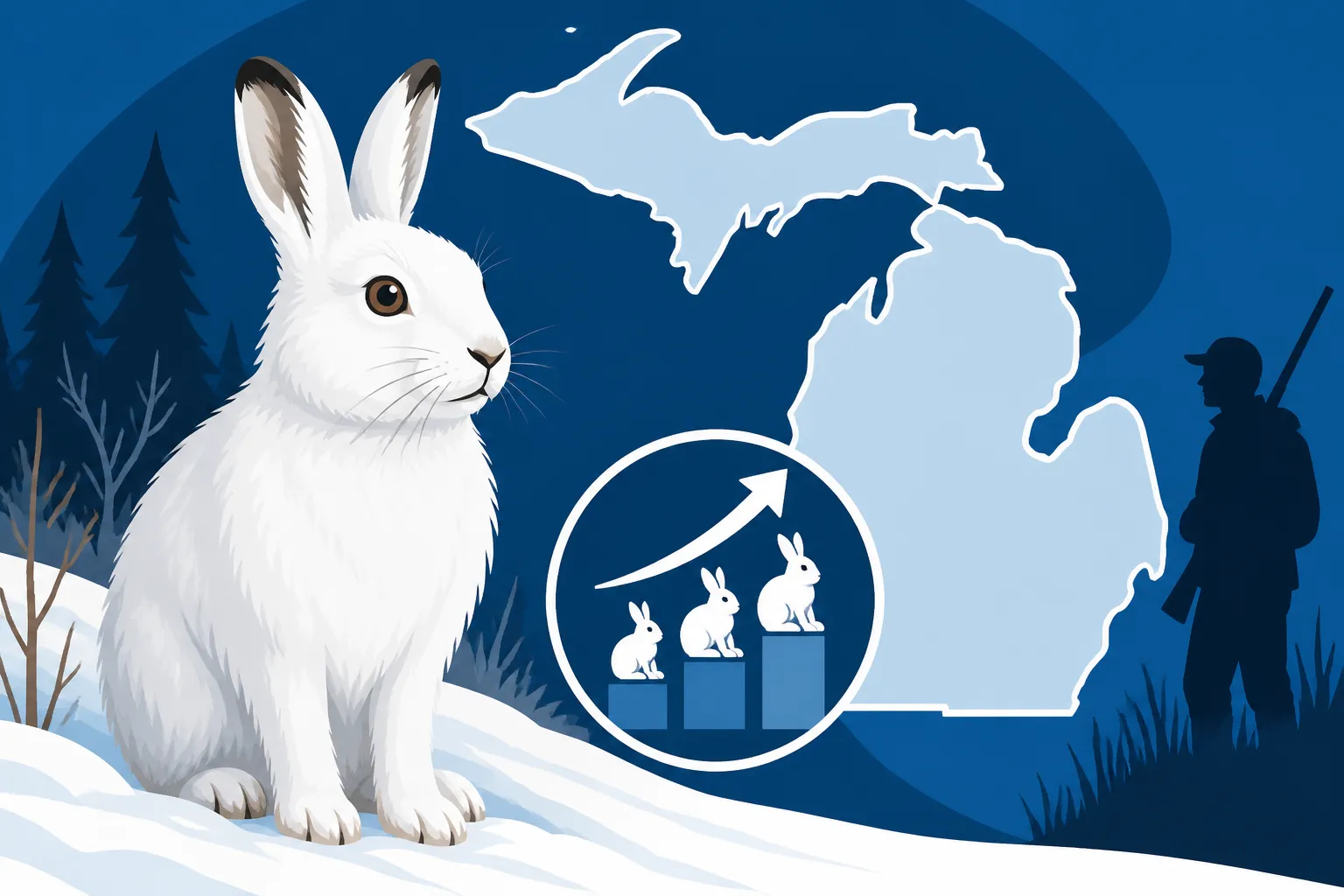
One of the most defining characteristics of snowshoe hare populations is their cyclical nature. Unlike some other game species that maintain relatively stable numbers year after year, hares often experience dramatic boom-and-bust cycles, typically lasting about 7 to 10 years. During a "boom" phase, it can feel like hares are under every bush, their tracks crisscrossing the snow in a dizzying pattern. Then, almost inexplicably, their numbers can crash, making them incredibly difficult to find for several years.
These cycles are complex, driven by an interplay of factors. Food availability is a big one; when browse is plentiful, populations can swell. Predator numbers also rise and fall with the hare population, with lynx and bobcats being particularly dependent on hares. Disease can also play a role, especially when populations are dense. For hunters, this means that even if you find perfect habitat, you might just be hitting the downswing of a cycle, requiring more patience and persistence than usual. It's a reminder that nature is always in flux, and adapting your expectations is part of the game. The Winter Severity Index and What It Means can often hint at how well hares, and other forest dwellers, might be faring.
Current Status of Snowshoe Hare Numbers in Michigan
Michigan is a big state, and the distribution and density of snowshoe hares vary significantly from one region to another. While the entire state offers some opportunities, seasoned hunters know where to focus their efforts for the best chances.
Upper Peninsula Strongholds
When it comes to snowshoe hares, the Upper Peninsula is undoubtedly the undisputed champion. The vast, unbroken tracts of coniferous forest, especially the cedar swamps and spruce-fir bogs, provide ideal habitat across huge landscapes. Counties like Iron, Baraga, Marquette, and Gogebic consistently hold the highest densities of hares, particularly in the lowland areas and river bottoms where dense cover is abundant year-round.
The U.P.'s colder, snowier winters are also more conducive to snowshoe hare survival. The deep snow provides additional cover, allowing hares to browse higher on shrubs and small trees, and their white winter coat is a near-perfect camouflage in this environment. If you're planning a trip specifically for snowshoe hares, especially if you're looking to run beagles or simply want to maximize your chances, the U.P. should be your primary destination. It's a prime reason many hunters head north for Hunting the Michigan Upper Peninsula.
Lower Peninsula Pockets and Decline Factors
While the U.P. boasts impressive numbers, the Northern Lower Peninsula also holds snowshoe hares, though usually in smaller, more localized pockets. You'll find them in the dense conifer swamps of counties like Oscoda, Montmorency, and Kalkaska, as well as in some of the vast state forest lands. However, their numbers here are generally lower and less consistent than in the U.P.
Several factors contribute to the lower densities in the Lower Peninsula. Habitat fragmentation due to more extensive agriculture, human development, and a different historical logging pattern has reduced the amount of continuous, ideal habitat. The winters are also generally milder, meaning less consistent snow cover for their winter camouflage, potentially making them more vulnerable to predators. While you can certainly find hares in the northern Lower Peninsula, especially if you focus on specific, dense cedar or spruce swamps, expect to work harder for them than you would up north. It's not uncommon for hunters to use mapping tools like Using Mi-HUNT on a Phone to pinpoint these isolated pockets of suitable cover.
Impact on Hunting and Management Efforts
Understanding snowshoe hare numbers and habitat is not just academic; it directly influences how you plan your hunt and what you can expect in the field. Effective management helps ensure these opportunities continue for future generations.
Scouting for Success
Knowing where hares should be is one thing, but finding them is another. The current hare population cycle dramatically affects scouting efforts. When numbers are high, fresh tracks and clipped browse are practically everywhere, making it easy to identify active areas. When numbers are low, you'll need to be a much more diligent scout. Look for concentrated fresh droppings, small, clean cuts on twigs about pencil-width, and the tell-tale "L" shaped track in any snow. These signs, even sparse ones, indicate recent activity.
Focus your scouting on the densest cover you can find – spots that might even feel too thick to walk through comfortably. These are the hares' sanctuaries. Pay attention to edges where thick cover meets slightly more open areas, as hares often feed in these transitional zones under the cover of darkness. Using satellite imagery on mapping apps can help you identify these dense conifer pockets and swamps from afar, saving you boot leather.
Seasons and Hunting Tactics
Michigan offers a generous season for rabbits and hares, often extending well into the winter months, allowing hunters to capitalize on prime snow conditions. The Michigan Rabbit and Hare Seasons are typically quite long. For snowshoe hares specifically, most hunters prefer to wait until there's good snow cover. Not only does it make their tracks obvious, but it also allows their white camouflage to work as intended, often making them hold tighter to cover, which is perfect for working with dogs.
When hare numbers are robust, still-hunting through thickets, jump-shooting, or walking slowly with a partner can be very effective. However, when numbers are down, traditional methods often require more effort. This is where a good beagle or two really shines. Dogs can systematically work through the thickest cover, flushing hares that a human might walk right past. Running Beagles on Michigan Snowshoe Hares is a time-honored tradition that often yields results even during lower population cycles, as the dogs can cover more ground and root out those elusive critters. Regardless of the method, quiet movement and patience are paramount.
Conservation and Habitat Management
The Michigan Department of Natural Resources (DNR) monitors snowshoe hare populations through various surveys and habitat assessments. While there isn't typically a specific "snowshoe hare management plan" separate from other small game, efforts to create and maintain early successional forests and conifer cover benefit hares immensely. For example, timber harvests designed to regenerate aspen stands for Grouse Hunting Michigan Aspen Cover also create excellent young growth that snowshoe hares utilize.
Maintaining healthy conifer swamps and managing forests for diversity ensures that hares always have access to the dense escape cover and winter browse they need. This holistic approach to habitat management is vital for many of Michigan's wildlife species, including deer, grouse, and, of course, our snowshoe hares. Hunters themselves contribute to these efforts by purchasing licenses, with a portion of those funds directly supporting habitat projects across the state. GoHunt is a fantastic resource that many hunters use to explore and understand these managed public lands, helping them identify areas where habitat work has been done, which can often translate into better hare hunting.
What to Expect When Hunting Michigan Snowshoes
Heading out after snowshoes means preparing for a specific kind of hunt – one that demands patience, a keen eye for subtle signs, and an understanding of the conditions at hand.
Reading the Sign
The snow is your canvas when hunting snowshoes. Fresh tracks are the clearest indicator, and learning to differentiate them from other critters is important. Snowshoe hare tracks are typically larger than a cottontail's, and in soft snow, you'll often see the impression of their large, furred hind feet landing in front of their smaller front feet as they bound. Look for concentrated tracks in and out of dense cover, especially near browse. When you find these, you know you're in an active area.
Beyond tracks, keep an eye out for clipped branches, as mentioned earlier. These will be small twigs, often woody, with a clean, angled cut, usually 1 to 2 feet off the ground, indicating where a hare has been feeding. You might also find their small, round, pellet-like droppings, often clustered in feeding or bedding areas. Still-Hunting After a Michigan Snow becomes an exercise in reading these subtle clues. A crisscrossing of tracks and clipped browse is like a giant "X" marks the spot for potential hare activity.
Adapting to Conditions and Numbers
Hunting snowshoe hares successfully often means adapting to the ever-changing Michigan winter. Heavy, wet snow can make tracking difficult and might encourage hares to burrow deeper into cover. Light, fresh snow, however, is a tracker's dream. Extreme cold can make hares less active, but a persistent hunter can still find them hunkered down. Understanding that numbers fluctuate means you might have to adjust your expectations; sometimes it's about the chase, the dog work, and the beauty of the winter woods, even if the game bag remains lighter.
If you're hunting without dogs, your pace needs to be slow and deliberate. Pause frequently, scan the thickets for any movement or the tell-tale black eye or ear tip that gives away a camouflaged hare. Many hares are jumped only after you've passed them, so swinging back and forth through dense cover can sometimes surprise them. It’s a game of patience, stealth, and knowing when to speed up and when to pause.
The GoHunt Advantage in Finding Hares
In a state like Michigan, with so much public land, knowing where to start looking for snowshoe hares can be a challenge, especially if you're targeting those elusive Lower Peninsula pockets or new areas in the U.P. This is where tools like GoHunt become incredibly valuable. GoHunt's mapping features can help you identify key habitat elements from your couch, before you even lace up your boots.
You can use their detailed satellite imagery and land ownership layers to pinpoint dense conifer stands, recent clearcuts, or swampy lowland areas – all prime snowshoe hare habitat. The ability to mark waypoints, measure distances, and understand the lay of the land can dramatically increase your efficiency in scouting. By identifying promising areas beforehand, you spend less time wandering and more time hunting in places where hare numbers are likely to be better, making your efforts more fruitful no matter what the population cycle dictates.
Snowshoe Hare Activity Cycle Overview
| Season | Hare Activity Level | Key Behavior / Hunting Considerations |
|---|---|---|
| Winter | High (Feeding/Movement) | Excellent camouflage (white coat), tracks visible in snow, heavy cover use. Prime hunting season. |
| Spring | Moderate (Breeding) | Beginning to lose white coat, less visible. Breeding activity starts, young born. |
| Summer | High (Feeding/Raising Young) | Brown coat, well camouflaged in green vegetation. More nocturnal. Not typically hunted. |
| Fall | Moderate (Transition) | Starting to turn white. Increased feeding before winter. Good for early season hunting before full snow. |
This article is for general informational purposes only and does not constitute professional advice. Laws, prices and regulations vary by location and change over time. Consult a qualified professional for guidance on your specific situation.