Running Beagles on Michigan Snowshoe Hares
Hunting snowshoe hares in Michigan's vast, often challenging winter landscape can be a truly exhilarating experience, but it’s also one that often leaves hunters scratching their heads trying to locate these elusive creatures in their dense, snowy strongholds. Trying to jump them on foot, especially in deep snow, can feel like an exercise in futility, making the prospect of a successful hunt seem like a distant dream. This guide aims to transform that frustration into triumph, diving deep into the art and science of running beagles on Michigan snowshoe hares, providing you with the insights and strategies to make your next hunt a resounding success.
Understanding Michigan Snowshoe Hare Habitat and Behavior
Michigan's snowshoe hares are creatures perfectly adapted to their frosty environment, and knowing where they live and how they act is the first step to a successful hunt with your beagles. Without this fundamental understanding, you're essentially sending your dogs into a haystack without knowing what a needle looks like.
Preferred Cover and Terrain
Snowshoe hares are masters of camouflage, changing their coat from brown in summer to brilliant white in winter to blend seamlessly with the snow. This adaptation, however, only works if they have dense cover to disappear into. You'll find them almost exclusively in thick, young coniferous forests, cedar swamps, and areas dominated by dense tag alders or regenerating clearcuts. These areas provide the overhead cover they need to hide from aerial predators like owls and hawks, and the dense undergrowth offers protection from coyotes, bobcats, and even the occasional fisher.
These thickets aren't just for hiding; they're also where hares find their winter food source. They browse on twigs, buds, and bark of various shrubs and young trees. Picture a tangled mess of balsam fir, spruce, and young pines, often interspersed with thick patches of red osier dogwood or willow – that's prime hare country. These areas, while a nightmare to walk through for humans, are exactly where a beagle's keen nose and persistent nature shine. If you're looking for an excellent place to start your search, areas described in articles like Reading a Michigan Cedar Swamp for Deer often hold good hare numbers.
Sometimes, especially in the northern Lower Peninsula and the Upper Peninsula, you might find hares around the edges of mature timber stands, particularly where logging has created new growth or where there's a heavy component of hemlock or cedar. The key is always density. They want to be able to disappear into the vegetation within a few bounds. Open hardwoods, while great for deer, typically won't hold snowshoe hares for long.
Seasonal Movements and Winter Habits
Snowshoe hares are largely nocturnal, meaning they're most active between dusk and dawn. During the day, especially in winter, they'll typically "form up" or bed down in a shallow depression in the snow, often under a downed log, beneath a low-hanging conifer bough, or tucked into a dense brush pile. They rely on their camouflage and stillness to avoid detection. However, when a pack of beagles hits their scent, that stillness quickly turns into a frantic, circling escape.
As winter progresses and snow depths increase, hares often utilize well-worn "runways" or tunnels through the snow and dense brush. These pathways help them conserve energy and navigate their thick environment more efficiently. They don't typically "yard up" in the same way deer might, but good habitat will hold a higher concentration of hares in a relatively small area. Understanding this allows hunters to focus their efforts. Deep snow, while slowing human hunters, often improves hunting with beagles because it forces the hares to use these established runways, making the scent trail more concentrated and easier for dogs to follow. For a broader look at their population, check out Snowshoe Hares in Northern Michigan and Snowshoe Hare Numbers in Michigan.
Their diet in winter consists mainly of the bark, twigs, and buds of conifers, alders, willows, and other woody plants. You might notice distinct browse lines on small trees and shrubs, often clipped at a sharp angle. This contrasts with deer browse, which tends to be more ragged. This change in diet is critical for their survival, and finding areas with abundant food sources within dense cover is key to locating hare populations.
Identifying Hare Sign
Before you even release your dogs, scouting for hare sign can significantly increase your chances of success. It’s like reading a map before you start driving; you want to know the terrain. The most obvious sign is tracks in the snow. Snowshoe hare tracks are distinctive: large, broad hind feet that splay out, and smaller front feet. They often leave a pattern where their large hind feet land in front of their smaller front feet as they bound.
Look for droppings, which are small, round pellets, similar to rabbit droppings but perhaps a bit larger depending on the hare's size and diet. These will be concentrated in areas where hares frequently feed or rest. Also, inspect vegetation for fresh browse marks. Hares will clip off twigs cleanly, often leaving a distinct 45-degree angle. These signs tell you that hares are actively using the area, and more importantly, they are leaving fresh scent for your beagles.
Using mapping tools can be a game-changer during your scouting phase. Services like GoHunt allow you to pore over satellite imagery, identifying potential thickets, cedar swamps, and regenerating timber stands that look like prime hare habitat from above. You can mark these potential hot spots on your device, making it easier to navigate once you're on the ground, even in heavy snow. This digital reconnaissance can save you countless hours of trudging through unproductive cover.
Training and Preparing Your Beagles for Hare Hunting
Having a pack of beagles is one thing; having a pack of well-trained beagles ready for the rigors of a Michigan winter hare hunt is another. Patience, consistency, and a deep understanding of your dogs are paramount.
Basic Obedience and Conditioning
Even the most natural-born hare dog needs a foundation of basic obedience. Commands like "come," "stay," and "heel" are not just for show; they're vital for safety and control, especially on public lands where you might encounter other hunters or wildlife. Imagine your dogs screaming after a hare and suddenly crossing a busy snowmobile trail – not good. Consistent recall training, using high-value treats or praise, is crucial before you let them off-leash in the woods.
Beyond obedience, physical conditioning is a must. Michigan winters can be brutal, with deep snow, frigid temperatures, and icy conditions. Your beagles need to be in peak physical shape to endure hours of running and trailing. Start with regular walks and runs in varied terrain, gradually increasing the distance and intensity. Ensure they are up-to-date on all vaccinations and have had a recent vet check. Their paws, in particular, need to be toughened up; consider using paw wax or protective boots if you're hunting in particularly harsh conditions or on ice.
Proper nutrition is also key. During hunting season, your dogs will be burning a lot of calories. Feed them a high-quality, high-energy dog food, and make sure they have plenty of fresh water, even in the field. Dehydration is a silent killer, even in cold weather. Carrying a portable water bowl and a thermos of warm water can be a lifesaver for your canine companions.
Introducing to Scent and Live Hares
The natural instinct to trail is strong in beagles, but guiding that instinct toward snowshoe hares requires some intentional effort. For young dogs, start by introducing them to hare scent. You can use a frozen hare hide for drag trails or even let them sniff the carcass of a harvested hare. The goal is to make the scent exciting and rewarding.
The real training, however, comes with live experiences. Ideally, hunt with an experienced pack of beagles that includes some seasoned "strike dogs" – those reliable hounds that pick up the first scent and get the chase started. Young dogs learn immensely by observing and listening to their elders. Supervised releases in known hare habitat, allowing them to follow a fresh trail, is invaluable. This is where they learn to distinguish hare scent from deer scent, a common challenge in areas where both species overlap.
Remember, every dog is an individual. Some pick up the knack quickly, while others need more time and repetition. Celebrate their successes, no matter how small, and maintain a positive, encouraging demeanor. The joy of a beagle's baying as it unravels a complex hare trail is something truly special.
Troubleshooting Common Beagle Challenges
Even the best beagles can run into issues. One of the most common frustrations is dogs losing the trail, especially in tricky conditions like a sudden thaw or a hard freeze. This often comes down to scent conditions, but sometimes dogs simply get confused. When this happens, be patient. Give them time to work it out. Sometimes moving slightly to a new area with potentially fresher scent can help them restart.
Another frequent problem in Michigan is dogs running deer. Deer scent is strong and prevalent, and an inexperienced beagle can easily get sidetracked. Correcting this requires firm, consistent intervention. Some hunters use electronic collars with a tone or vibration setting to gently redirect a dog that's on a deer trail, praising them profusely when they return to hare scent. It’s critical to never use harsh punishment, as it can make a dog timid or afraid to trail anything. Always focus on positive reinforcement when they are doing what you want.
Getting tangled in thickets or venturing too far are also concerns. Good GPS collars, which some GoHunt users integrate for tracking, are invaluable here. They allow you to monitor your dogs' location and direction, ensuring their safety and helping you recover them if they go off course. Teach your dogs to check in periodically, coming back to your location if they haven't picked up a solid trail. This builds trust and ensures they don't get lost in the vast Michigan wilderness.
Effective Strategies for Running Beagles on Hares
Once you have a pack of capable beagles, it's time to put a solid plan into action. A successful hare hunt isn't just about turning the dogs loose; it's a strategic dance between hunter and hound.
Scouting and Location Selection
Your homework doesn't stop once your dogs are trained. Before the hunt, dedicate time to scouting potential locations. As mentioned, thick coniferous cover and regenerating clearcuts are prime. Utilize tools like the Michigan Mi-HUNT Map or your GoHunt app to digitally identify promising public land parcels in areas known for snowshoe hares, particularly the northern Lower Peninsula and the Upper Peninsula. Look for a mosaic of cover types – areas where the dense thickets meet slightly more open ground, as hares often circle through these transition zones.
On the ground, look for fresh tracks and browse marks, especially after a fresh snowfall. Pay attention to how game trails weave through the cover. These are the arteries of the hare's world. Consider the prevailing wind direction, as it can affect how scent carries and how your dogs will work. Ideally, you want to release your dogs into an area where they can quickly pick up a fresh track. This is especially important for the often-tough Hunting the Michigan Upper Peninsula.
Don't be afraid to try different areas. Hare populations can be localized, and what looks good on a map might not hold many hares in reality. Be prepared to move your operation if the first spot isn't producing. Often, areas with less human hunting pressure will yield better results, as the hares are less wary and more likely to hold tight for the dogs.
The Dynamics of the Chase
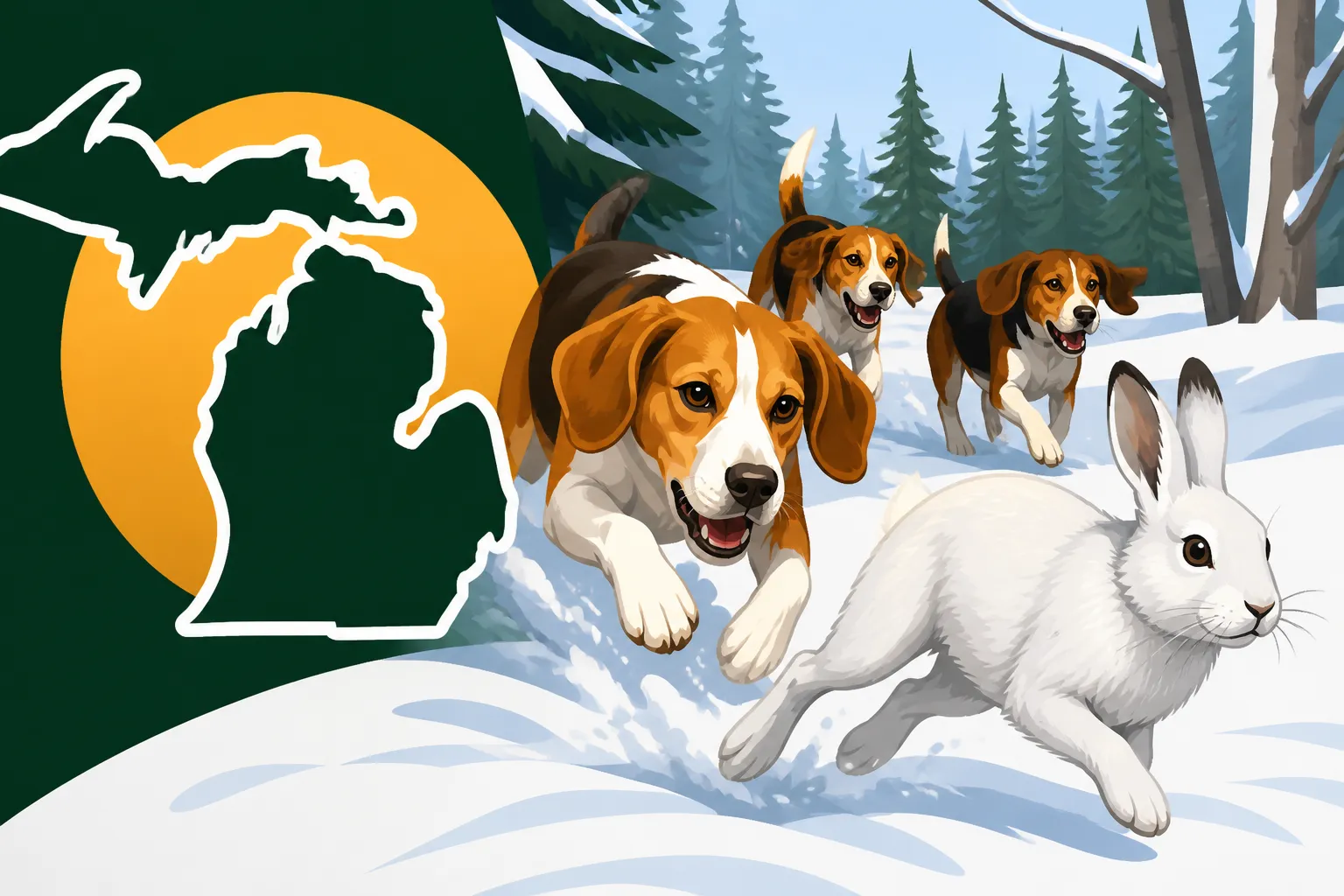
Once your beagles pick up a scent, the magic begins. The sound of a pack of beagles in full cry, working a hare trail, is one of the most exciting sounds in hunting. Snowshoe hares, when jumped, typically don't run straight away for miles like a deer. Instead, they tend to run in large circles, often utilizing the same escape routes and dense cover. This circling behavior is precisely what makes them ideal game for beagles.
Positioning hunters effectively is key. Based on the dogs' direction of travel and the terrain, hunters should try to anticipate where the hare will eventually circle back to. Often, standing along the edges of the densest cover or near natural pinch points can put you in a good position for a shot. Listen intently to the dogs' voices. A consistent, steady baying means they're hot on the trail. A more broken or hesitant bark might indicate the hare is running in tricky terrain or has temporarily lost the dogs.
Communication among hunters is vital. Use two-way radios, especially in dense cover where visibility is limited. Let each other know where the dogs are headed and if you've seen the hare. This collaborative effort increases the chances of intercepting the hare as it completes its circle.
Reading the Dogs and Making the Shot
Interpreting the symphony of your beagles' voices is an art developed over many hunts. A faster, more excited baying often means the hare is running close by. A slight change in tone or pace can indicate the hare has cut a corner, doubled back, or is trying to trick the dogs. Learn your individual dogs' barks; some might have a distinct "chop" when they jump a hare, while others have a more drawn-out "bawl" when on a cold trail.
When the hare eventually circles back, it's often moving quickly, trying to evade the relentless pursuit. Shot placement on a fast-moving target in thick cover requires quick reflexes and a steady hand. Shotguns are the preferred firearm, typically loaded with #4, #5, or #6 shot. Aim for the vital zone, usually the front half of the hare. Safety is paramount: always know what's beyond your target and ensure no dogs or fellow hunters are in the line of fire. Don't be afraid to pass on a shot if it's unsafe or if you don't have a clean, ethical opportunity.
After the shot, ensure the dogs are called off the downed hare immediately. This reinforces good behavior and prevents them from damaging the meat. Congratulate your dogs for their hard work and reward them for a job well done. There’s nothing quite like the satisfaction of a successful chase with a well-earned harvest.
Essential Gear and Considerations for Michigan Hare Hunters
Hunting snowshoe hares with beagles in Michigan's winter landscape demands more than just a good pack of dogs; it requires careful preparation and the right gear to ensure comfort, safety, and success for both you and your canine companions.
Hunter and Dog Gear for Winter Conditions
Michigan winters are no joke. Hunters need to dress in layers to adapt to changing temperatures and exertion levels. A good base layer to wick away moisture, an insulating mid-layer (like fleece or wool), and a waterproof, windproof outer shell are crucial. Hunter orange, as mandated by Michigan regulations, is non-negotiable for safety, especially with multiple hunters and dogs afield. Consider a full hunter orange vest and hat.
Your feet will take a beating in deep snow. Insulated, waterproof boots are essential. Many hunters swear by knee-high rubber boots for navigating slush, shallow water, and keeping snow out. For deeper snow, gaiters can be incredibly useful to prevent snow from entering your boots. Check out tips in articles like Boots for Michigan Swamps and Snow for recommendations. Don't forget warm, waterproof gloves or mittens, as cold hands can quickly end a hunt.
For your dogs, protective vests are highly recommended. These can prevent cuts and abrasions from sharp brush and ice, and brightly colored vests (e.g., orange or yellow) make them easier to spot in thick cover. Bells on their collars can help you locate them when they're working a trail out of sight. Crucially, invest in reliable GPS collars. Brands like Garmin and Alpha are popular among dog hunters, offering real-time tracking that can be synced with mapping apps like GoHunt, allowing you to see your dogs' positions on your phone or handheld device. This is a game-changer for safety and strategy, ensuring you always know where your valuable hunting partners are. Don't forget a First Aid Kits for Remote Upper Peninsula Ground for both yourself and your dogs, as mishaps can happen in remote areas.
Legalities and Regulations
Before you head out, make sure you're fully compliant with Michigan's hunting regulations. A valid Michigan hunting license is required, along with a small game license. Snowshoe hare seasons generally run through the fall and winter, often extending into March in the Upper Peninsula. Always consult the current Michigan DNR hunting digest for specific dates and bag limits for Michigan Small Game and Furbearer Seasons.
Hunter orange requirements are critical during small game season. Anyone hunting small game on public land must wear hunter orange. Be sure to understand the legal shooting hours, which typically begin 30 minutes before sunrise and extend until 30 minutes after sunset. Understanding these rules ensures a legal and safe hunting experience.
Finally, always be aware of private property boundaries. Respect "no trespassing" signs. If a hare leads your dogs onto private land, you may need permission from the landowner to retrieve your dogs or harvested game. Refer to Retrieving Game From Private Land for more details on this important topic. Using mapping apps with property line overlays can prevent accidental trespass.
Ethical Hunting and Dog Care
As ethical hunters, we have a responsibility to our quarry and our dogs. Ensure your shots are clean and ethical, minimizing any suffering. If a hare is wounded, prioritize tracking and recovering it quickly. After a successful hunt, properly care for your harvested game, cooling it quickly to preserve the meat.
Looking after your beagles, your loyal hunting partners, is paramount. They work incredibly hard, often in challenging conditions. After the hunt, check them for cuts, thorns, or ice balls between their paw pads. Provide them with a warm, dry place to rest and plenty of fresh food and water. Consider a high-calorie snack after a long, cold day of running. Their health and well-being should always be a top priority.
Running beagles on snowshoe hares is a tradition steeped in excitement, camaraderie, and the primal joy of the chase. By understanding the hares, preparing your dogs, employing smart strategies, and equipping yourselves appropriately, you’re not just hunting; you’re participating in a rich outdoor heritage that creates lasting memories with your hounds and fellow hunters in the beautiful Michigan wilderness.
Michigan Snowshoe Hare Season & Bag Limits
| Season Dates | Daily Bag Limit | Possession Limit |
|---|---|---|
| Sept 15 – Mar 31 (Lower Peninsula) | 5 | 10 |
| Sept 15 – Mar 31 (Upper Peninsula) | 5 | 10 |
Note: Always consult the current Michigan DNR Hunting and Trapping Digest for the most up-to-date and specific regulations, as dates and limits are subject to change.
Disclaimer
Please note that hunting regulations, seasons, and licensing requirements are subject to change. Always consult the latest Michigan Department of Natural Resources (DNR) hunting and trapping digest or visit their official website before planning any hunting activity. This guide is for informational purposes only and does not supersede state regulations. Safety should always be your top priority in the field.