Breaking Up a Fall Turkey Flock
Many fall turkey hunters feel that autumn woods are frustratingly silent, with large flocks often ignoring even the most perfect calls. It’s a common scenario to watch dozens of birds disappear into the timber, leaving you wondering how to even get a shot. This comprehensive guide will walk you through the proven strategy of breaking up a fall turkey flock, turning those silent departures into exciting chances to call individual birds back into range and significantly increasing your success this Michigan hunting season.
Understanding Fall Turkey Behavior and Why the "Break Up" Works
Hunting fall turkeys is a completely different ball game than the spring strut and gobble. You're dealing with a different set of instincts, and understanding these behaviors is the key to unlocking success in the autumn woods. Forget what you know about drawing in lovesick gobblers; fall hunting requires a more aggressive, yet equally strategic, approach.
The Dynamics of Fall Flocks
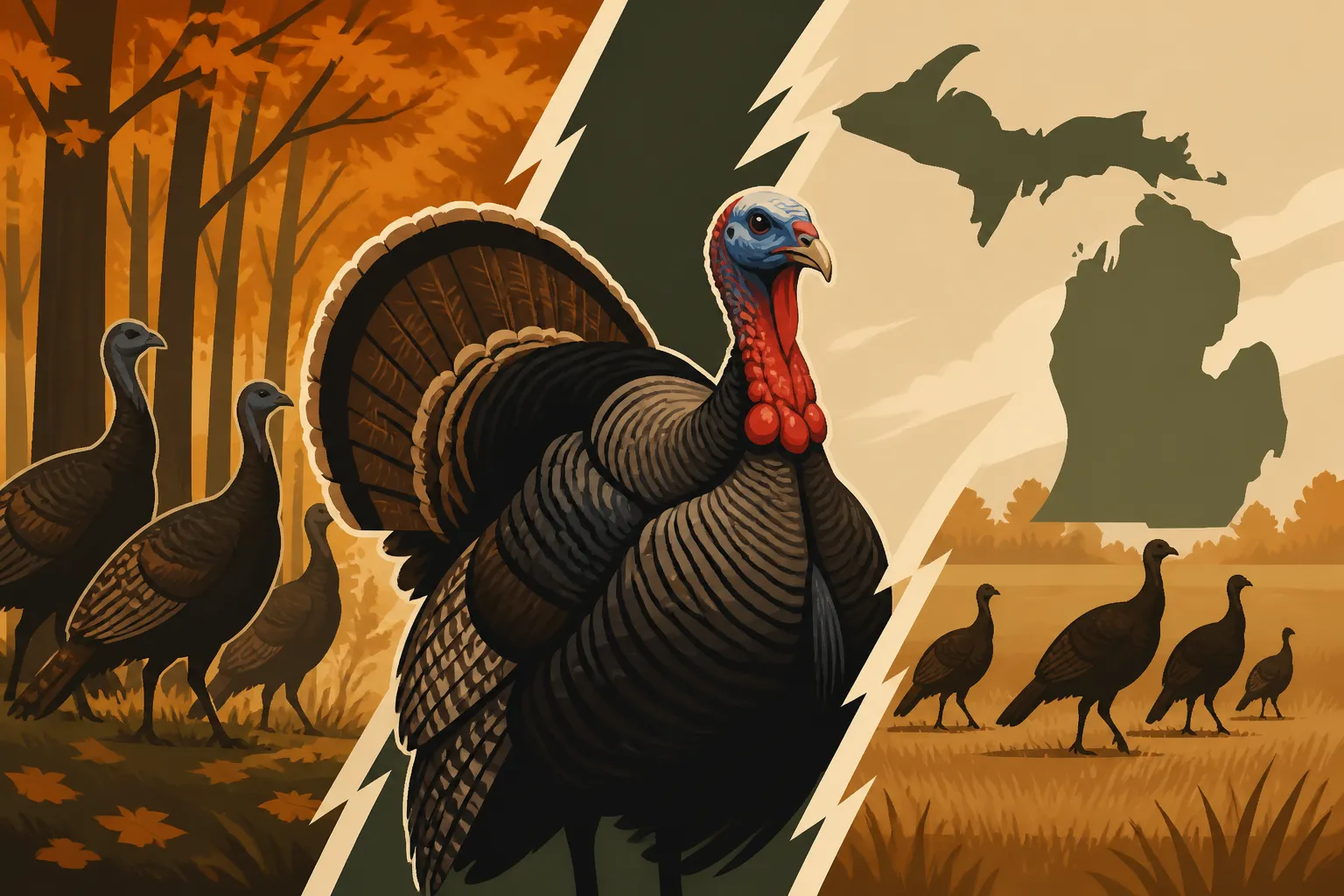
In the spring, it's all about breeding. Toms are focused on hens, and hens are focused on nesting. But come fall, after the breeding season is over and the poults are mostly grown, turkeys tend to gather into larger, more cohesive family units or bachelor groups. These can be all-hen flocks with their jakes and poults, or groups of adult gobblers who have long forgotten their spring ardor. These birds are primarily concerned with safety, feeding, and maintaining their social structure. They travel together, feed together, and roost together. This tight-knit behavior is exactly why a lone yelp often falls on deaf ears; a flock already feels secure in its numbers and sees no reason to come searching for a single bird. They have safety in numbers and companionship already.
You might see these big groups ranging across agricultural fields in Southern Michigan Farm Country Deer Hunting, or picking through acorns in mature hardwood forests up north. They might be concentrated in certain areas for food, or simply moving through their territory. The challenge is, when they’re all together, they often don’t feel the need to respond to calls because they're already with their buddies and family. This is where the strategy of disrupting their social order comes into play, making them vulnerable to calling.
How Separation Triggers Calling Instincts
The core principle behind breaking up a fall turkey flock is simple: you create chaos to exploit their deep-seated instinct for social cohesion. When a flock is scattered, especially vigorously, individual birds suddenly find themselves alone, disoriented, and vulnerable. Their natural inclination is to re-establish contact with the rest of their group. This feeling of being separated and "lost" is a powerful motivator for them to start vocalizing and searching.
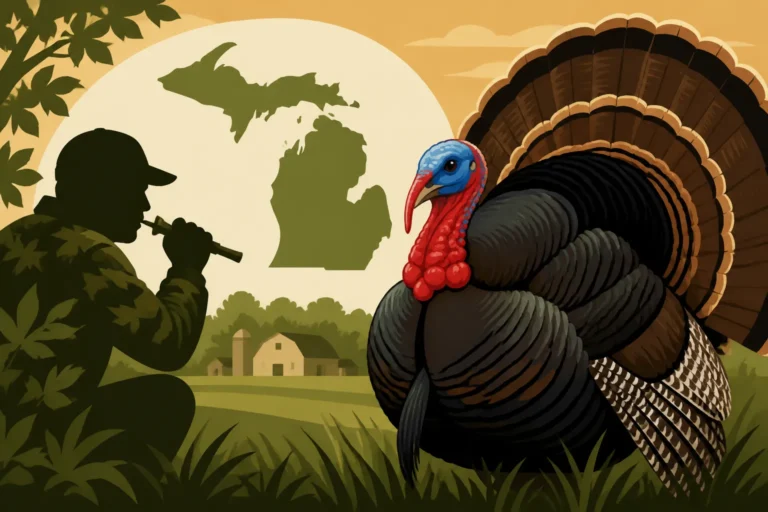
Think of it from a turkey's perspective: one minute you're safely with your whole family, the next you're running for your life, only to find yourself completely alone in the big woods. That's a scary proposition for a prey animal. It triggers a stress response that makes them want to get back together. This is when the "kee-kee" run, the lost hen yelp, or other plaintive calls become incredibly effective. You're not trying to entice them with romance; you're playing on their need for security and companionship. The goal is to mimic the calls of a lost bird trying to reassemble the flock, and if you do it right, they will often come running, sometimes right into your lap. This strategy is particularly effective for Hunting Michigan's Fall Turkey Season.
Executing the Flock Break-Up Strategy
Actually breaking up a flock is where the rubber meets the road. It takes a bit of planning and sometimes a good dose of adrenaline, but the rewards are often well worth the effort. This isn't a subtle game of hide and seek; it's about making a statement.
Scouting for the Right Opportunity
Before you can break up a flock, you need to find one, and ideally, find it when the conditions are ripe for a good scatter. Fall turkeys spend their days moving between roosting areas, feeding grounds, and water sources. Excellent scouting is paramount. I've found that using tools like GoHunt can really help identify potential turkey hotspots on public land, from large tracts of Michigan State Forest Hunting to smaller State Game Areas, by overlaying property lines with habitat maps. Look for areas with a mix of mast trees (oaks, beech), agricultural fields, and good roosting timber, often tall pines or hardwoods near water.
The ideal time to intercept a flock for a break-up is when they are on the ground and relatively concentrated, typically in a feeding area, or perhaps when they are heading to or from a roost. Catching them in open terrain can make it harder to get close enough, but catching them in a tight piece of timber or a thick brushy area can be perfect. Sometimes, simply walking through the woods during a still-hunt can put you in the right place at the right time. You need to be ready to act immediately when the opportunity presents itself. For more scouting tips, check out Scouting Michigan Public Land Before Season.
Methods for a Successful Scatter
Once you’ve located a flock and gotten into position, the goal is to scare them into scattering in every direction. This isn’t about sneaking; it’s about aggression. Here are the primary methods:
- Rushing Them: This is the most common and often most effective method. Once you're within sight or sound of a flock, ideally 50-100 yards, you simply charge them. Run directly at the flock, yelling, waving your arms, and making as much noise as possible. The objective is to make them panic and fly or run off in different directions, not just move as a group. Don't stop until they are truly scattered. The key is to get them to fly if possible, as birds that fly tend to get more disoriented than those that just run.
- Shooting (If Legal and Safe): If you're carrying a firearm and have a legal shot at a bird (and are not specifically targeting a break-up without a shot), firing your gun at a turkey can also cause an immediate and violent scatter. Of course, this is contingent on having a tag for that bird and being in a safe shooting situation. Always prioritize safety and legal hunting practices.
- The "Flushing Dog" Method: While less common for the average hunter, some utilize well-trained turkey dogs (where legal) to actively find and scatter flocks. The dog’s job is to run into the flock, flush the birds, and then return to the hunter. This is a specialized method but highly effective for breaking up those tight groups.
Regardless of the method, immediately after the scatter, you need to quickly find a place to set up. Turkeys that have just been broken up are on high alert, but their desire to regroup overrides their caution fairly quickly. Look for natural cover, a good tree to lean against, or a strategically placed Using a Ground Blind on Michigan State Land if you carry one.
Here’s a quick comparison of break-up methods:
| Method | Description | Pros | Cons |
|---|---|---|---|
| Rushing | Aggressively run and yell at the flock. | Highly effective for a wide scatter. | Requires close proximity; can be physically demanding. |
| Shooting | Taking a shot at a legal bird within the flock. | Instant, violent scatter. | Requires a tag; may only scatter a portion of the flock. |
| Flushing Dog | Trained dog runs into and scatters the flock. | Very effective; dog can locate distant birds. | Requires a trained dog; legality varies by state/area. |
Post-Break-Up: Calling in Isolated Birds
The moment after the flock scatters is perhaps the most critical. This is when your calling skills and patience are truly tested. You've created the perfect scenario; now it's time to capitalize on it.
Mastering the Kee-Kee and Other Recovery Calls
Once you're set up, you need to wait, typically 15-30 minutes, to let the immediate chaos subside and for the birds to start feeling lonely. Then, it's time to start calling. The most effective fall turkey call by far is the "kee-kee" or "kee-kee run." This is the call of a lost young turkey trying to locate its mother or siblings. It's a series of clear, high-pitched "kee" notes, often ending with a few soft yelps.
- The Kee-Kee: Practice this call on a slate or box call, or even a mouth call. Start with a series of 3-5 high-pitched "kees," then transition into 1-3 soft yelps.
- Lost Hen Yelp: A slower, more drawn-out, and plaintive series of yelps, conveying a sense of loneliness.
- Clucks and Purrs: These are softer, reassuring calls that can be mixed in once birds are closer to seal the deal.
Start with soft, infrequent calling. Don't overdo it. The goal is to sound like a lost, slightly nervous bird. Listen intently for responses. Sometimes they'll respond with their own kee-kees, other times with yelps or even clucks. Once you get a response, you can call a bit more aggressively, but always match the intensity of the bird. If they’re hammering back, you can too. If they’re quiet, be quiet. For more on calls, see Turkey Calls Worth Carrying in Michigan. Remember, the birds are trying to find you (or what they perceive as a lost member of their flock), so set up strategically.
Strategic Setup and Patience
Where you set up after the scatter is crucial. You want to pick a spot that offers good visibility in the direction you expect birds to approach, but also provides concealment for you. Think about terrain features:
- Openings: Turkeys are often wary of moving directly into an opening, especially if they’ve been spooked. Set up on the edge of an opening, or in thick cover where they feel secure.
- Funnels: If there's a natural funnel like a narrow strip of timber between two fields, or a saddle on a ridge, that's an excellent place.
- Backdrop: Always have a good, wide backdrop (like a large tree or dense brush) to break up your silhouette. This is especially important for safety in areas with other hunters.
Patience is your biggest virtue here. Don't give up after 15 minutes. Fall turkeys can take a while to gather their courage and commit. I've had birds respond after an hour or more of silence, only to come in on a string. Sit tight, stay still, and keep your head on a swivel. Use your eyes more than your calls. Scan for movement; sometimes a bird will approach silently. This is also where a good set of binoculars, even a compact 8×42, can be invaluable for picking apart distant cover and spotting subtle movements.
Troubleshooting Common Fall Turkey Scenarios
Even with the best intentions and execution, fall turkey hunting can throw curveballs. Flocks don't always cooperate, and conditions aren't always ideal. Being prepared for these challenges can save a hunt from becoming a bust.
When the Flock Won't Scatter or Respond
Sometimes, despite your best efforts, the flock just won't scatter well. Maybe they all run together, or they fly off in one general direction. This can be incredibly frustrating, but it doesn't mean the hunt is over.
- Relocating and Re-breaking: If the initial scatter was poor, try to relocate the flock. They often regroup in a relatively short distance, sometimes within a few hundred yards. Using an app like GoHunt can help you quickly track their likely escape routes based on terrain. Once you find them again, attempt another break-up. Persistence can pay off.
- Changing Tactics: If you've tried the aggressive break-up multiple times with the same group and they're just too wary, you might need to shift tactics. Consider trying a more passive approach, such as ambushing them along a travel corridor or a known feeding area. Sometimes just staying ahead of their daily routine can be more effective than trying to force a scatter. For example, if you know Where Michigan Gobblers Roost, you could set up before dawn and try to intercept them as they fly down.
- Silent Approach: Some birds, especially heavily pressured ones, simply won't respond vocally. They might come in silently. This is why vigilance and a good setup are so important. Never assume silence means no birds.
Dealing with Different Flock Compositions
The composition of the flock you encounter can also influence your post-break-up strategy and the calls you use.
- All-Hen Flocks (with jakes/poults): These are perhaps the most common and often the easiest to call back. The maternal instinct of the hens, combined with the strong social bonds of the young birds, makes them eager to regroup. The kee-kee run is dynamite here. A lost hen yelp is also very effective.
- All-Jake Flocks: Jakes (young gobblers) are often less wary than mature gobblers and equally social. They’re usually looking to stick together. Kee-kees and softer yelps can work, but they might respond to more aggressive gobbler yelps or even clucks if they are slightly older and trying to sound tough.
- All-Adult Gobbler Flocks: These can be the toughest. Mature gobblers, having survived multiple hunting seasons, are often more cautious. They still have a social instinct to group up, but they might be more hesitant to respond to calls or come into open areas. A silent approach or very subtle, infrequent calling might be best. Try to mimic the clucks and soft purrs of other gobblers rather than aggressive yelps. Sometimes, a subtle gobbler yelp can pique their curiosity, especially if they are looking for their "buddies." This is where you might need to adjust your Fall Turkey Tactics in Michigan to a more subtle approach.
- Mixed Flocks: A combination of hens, jakes, and adult gobblers. In this scenario, focus on the calls that will appeal to the most vulnerable members – the hens and jakes. If you can get the hens talking, the gobblers might follow.
Remember that turkeys, especially in Michigan, are constantly reacting to their environment and hunting pressure. Be flexible, adapt your strategy, and don't be afraid to try something different if your initial plan isn't working. Understanding the natural drive of these magnificent birds is the first step toward a successful fall turkey hunt.
Disclaimer
Hunting is an inherently dangerous activity. Always prioritize safety, understand and follow all Michigan hunting regulations, and ensure you have the proper licenses and permits before heading afield. The information provided here is for educational purposes and should not replace proper hunter safety training or direct consultation with the Michigan Department of Natural Resources (DNR).