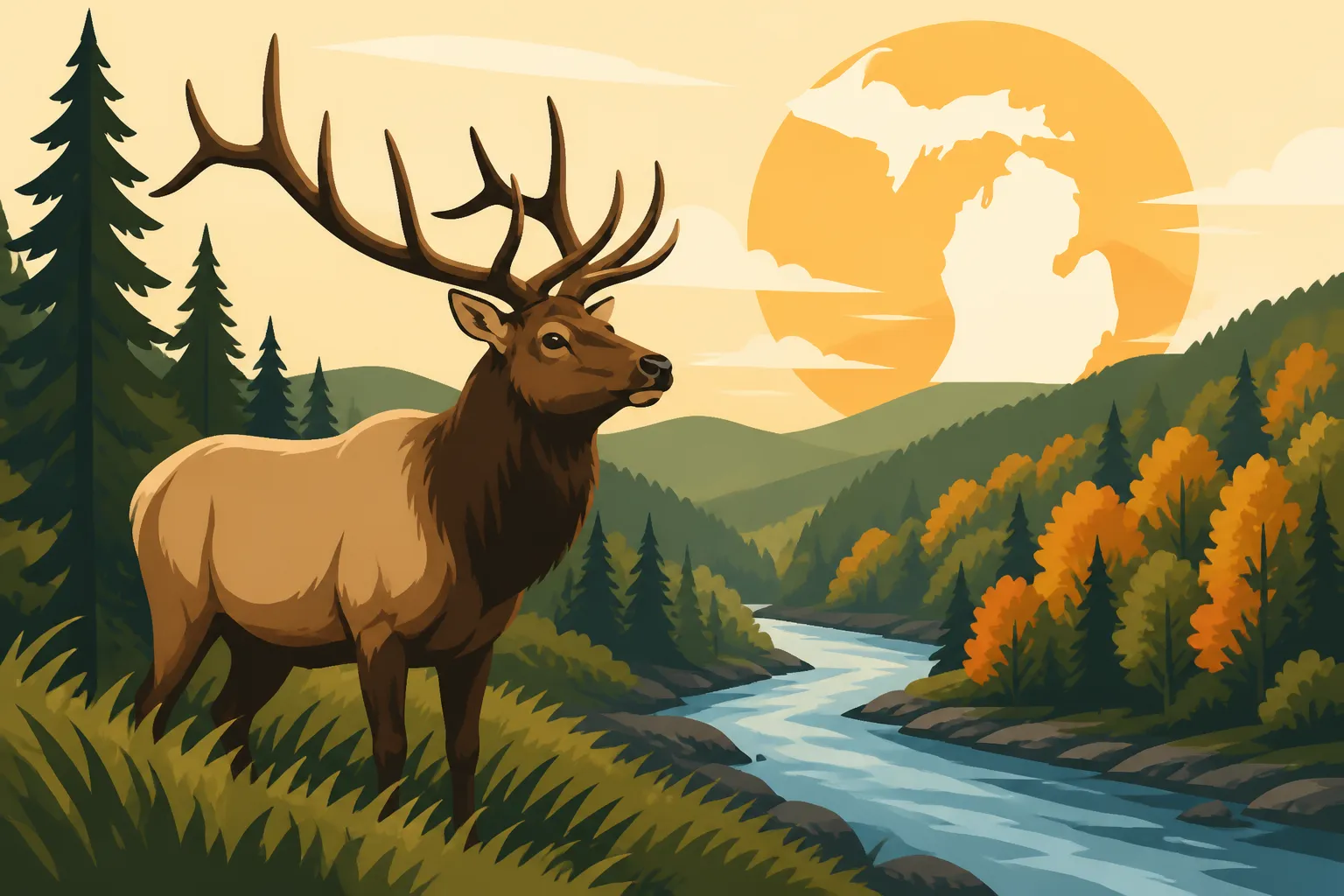
Elk in Michigan’s Pigeon River Country
For many Michigan hunters, the thought of pursuing an elk right here in our home state feels like a distant dream, an almost impossible aspiration given the incredibly low odds of drawing a tag. The frustration is real when you apply year after year, watching your preference points accumulate but never quite hitting the jackpot. This guide is here to shed light on the majestic elk herd residing in Michigan's Pigeon River Country State Forest, offering a comprehensive look at their history, the challenging hunt, and how you can experience these incredible animals, even if a tag never lands in your hands.
The Legacy of Michigan Elk: A Restoration Story
The story of elk in Michigan is nothing short of a wildlife triumph, a testament to dedicated conservation efforts and the resilience of these magnificent animals. It’s easy to forget that at one point, Michigan’s elk were completely gone, a casualty of unregulated hunting and widespread habitat destruction that defined much of the 19th century. Their return is a source of immense pride for our state, giving hunters and wildlife enthusiasts a chance to connect with a piece of wild Michigan that almost vanished forever.
From Extirpation to Reintroduction
Imagine a Michigan landscape without elk – that was the reality by the late 1800s. The last native elk in Michigan were believed to have been killed in the Lower Peninsula around 1875, with no confirmed sightings in the Upper Peninsula after that time either. The expansive forests that once supported them were cleared for timber and agriculture, and hunting regulations, as we know them today, simply didn't exist. It's a stark reminder of how quickly even abundant wildlife populations can disappear without proper stewardship.
Thankfully, the tide began to turn in the early 20th century. In 1918, a pivotal moment occurred: seven Rocky Mountain elk were brought from the western states and released in Cheboygan County, near the heart of what would become the Pigeon River Country State Forest. This wasn't just a random act; it was a carefully considered reintroduction, marking the very first step in bringing elk back to Michigan. These initial animals, though few in number, found suitable habitat and slowly began to reproduce, laying the foundation for the herd we cherish today. It was a slow, deliberate process, but that initial seven laid the groundwork for everything that followed.
The Role of Pigeon River Country
The Pigeon River Country State Forest isn't just a place where elk happen to live; it is the very cradle of Michigan's elk recovery and continues to be the stronghold of the herd. This vast, largely undeveloped tract of public land, spanning over 100,000 acres in Otsego, Cheboygan, and Montmorency counties, provided the perfect sanctuary for the reintroduced elk to thrive. Its mix of mature hardwoods, cedar swamps, and open clearings offered everything an elk herd needed: abundant forage, thick cover for bedding and calving, and the necessary solitude away from heavy human disturbance.
The sheer size and wild nature of the Pigeon River Country were critical. It allowed the elk to establish themselves without constant pressure, providing a buffer against the very factors that led to their initial disappearance. Beyond just the habitat, the area became the focus of intense management efforts by the Michigan Department of Natural Resources (DNR). These efforts included detailed population monitoring, habitat improvement projects, and carefully controlled hunting seasons once the herd grew large enough to sustain it. Without this specific piece of land and the dedication poured into its management, Michigan's elk story might have had a very different, and much sadder, ending.
Understanding Michigan's Elk Herd Today
Michigan's elk herd, centered in the Pigeon River Country, is a dynamic and carefully managed population. For hunters and wildlife enthusiasts alike, understanding the current state of the herd is crucial, from their numbers to how their habitat influences their lives. It's a story of constant adaptation and careful balancing by the DNR to ensure these majestic animals continue to thrive.
Population Dynamics and Current Numbers
The size of Michigan's elk herd fluctuates, influenced by factors like habitat quality, winter severity, and hunting pressure. The DNR diligently monitors the population, aiming for a healthy balance that sustains the herd while minimizing conflicts with agriculture and private landowners. As of recent estimates, the Michigan elk herd typically hovers around 1,200 to 1,300 animals. This might seem like a small number compared to some western states, but it's a remarkably robust population for an eastern state that completely lost its native elk.
These population figures are not just arbitrary numbers; they directly inform the number of hunting licenses issued each year and help shape habitat management decisions. The goal is not simply to grow the herd as large as possible, but to maintain a healthy, viable population within its available habitat. Too many elk can lead to overbrowsing, habitat degradation, and increased conflict, while too few reduces the genetic diversity and resilience of the herd. It’s a delicate dance, and the DNR uses a variety of tools, including aerial surveys and ground observations, to get the most accurate picture possible.
The Impact of Habitat and Management
The success of Michigan's elk herd is inextricably linked to the quality and availability of suitable habitat, and the Pigeon River Country is a prime example of this. Elk require a mosaic of habitats: dense conifer cover for winter thermal protection and bedding, open meadows and clearings for foraging on grasses and forbs, and young aspen stands for crucial browse. The DNR actively manages the Pigeon River Country and surrounding state forests to provide this diverse habitat. This involves controlled burns, timber harvests designed to create early successional growth, and maintaining natural openings.
These management efforts are continuous. For instance, creating new aspen cuts provides vital browse and cover, which benefits not only elk but also other species like ruffed grouse, whose populations often thrive in similar environments. You can learn more about how the DNR manages land for other species by exploring resources like Grouse Hunting Michigan Aspen Cover. The ongoing work to maintain and improve habitat is a critical component of elk conservation, directly affecting the health, reproduction, and distribution of the herd. Without this active management, the wild character of Pigeon River Country, and its ability to support elk, would slowly degrade.
Range and Movement Patterns
While the Pigeon River Country State Forest is the core of Michigan's elk range, the animals don't strictly adhere to its boundaries. Michigan's elk are found primarily within a larger, designated Elk Management Unit (EMU) that encompasses parts of Otsego, Montmorency, Cheboygan, Presque Isle, and even some Alpena and Crawford counties. Within this broader range, the elk exhibit seasonal movement patterns, largely driven by food availability, breeding (the rut), and winter conditions. In warmer months, they might spread out, taking advantage of abundant forage. As winter approaches, they often concentrate in areas with dense thermal cover, like cedar swamps, which offer protection from heavy snow and bitter cold.
Understanding these movements is key for anyone hoping to view or hunt elk. Bulls, especially during the rut, can roam significant distances in search of cows. Cows, particularly those with calves, tend to stick to areas offering good cover and reliable forage. These movement patterns are also why the DNR divides the elk range into specific hunt units during the hunting seasons, allowing for targeted management and harvest. The ability to track and understand these dynamic movements is a testament to modern wildlife management and tools. Many hunters use apps like GoHunt to study these movement corridors on aerial maps, identifying potential bedding and feeding areas. If you're interested in more details, the post on Michigan Elk Management Unit Boundaries provides a thorough breakdown of these areas.
Navigating the Pigeon River Country State Forest
The Pigeon River Country State Forest is a crown jewel of Michigan's public lands, a vast and rugged expanse that offers unparalleled opportunities for outdoor enthusiasts, particularly those interested in elk. However, its wild nature also means that navigating it requires preparation, respect, and a keen understanding of its unique characteristics.
Public Land Access and Regulations
Accessing the Pigeon River Country State Forest is generally straightforward, as it is managed as public land. However, its sheer size and sometimes remote nature mean that "access" can be a relative term. There are numerous two-tracks and forest roads crisscrossing the area, but many of these can become impassable during wet conditions or heavy snow. It’s not uncommon to find yourself miles from pavement, deep within the forest. For those used to hunting smaller, more manicured state game areas, this can be a significant change. You can generally camp dispersed on state forest land, which is a huge benefit for multi-day scouting or hunting trips.
While generally open, specific regulations apply to activities like vehicle use on two-tracks, treestand placement, and the use of trail cameras. It's always crucial to check the most current Michigan DNR hunting and trapping digest for any updates. The forest is also home to several designated wilderness areas and non-motorized zones where vehicle access is restricted, preserving the pristine nature of these areas. Being aware of these rules ensures you stay within legal bounds and respect the integrity of this special place. For a broader understanding of accessing public land, you might find Michigan State Forest Hunting helpful, as it covers general rules for these expansive areas.
Identifying Prime Elk Habitat
When you're in the Pigeon River Country looking for elk, knowing what constitutes prime habitat is half the battle. Elk aren't just anywhere; they favor specific types of terrain and vegetation mixes. Look for areas where dense conifer swamps, particularly stands of cedar and spruce, border more open hardwood ridges or large clearings. These edges are golden. The conifers provide critical cover from predators and harsh weather, especially in winter, while the openings offer valuable browse and grazing opportunities.
Aspen stands, especially those that have been recently harvested or are in a younger successional stage, are also key. Elk are browsers, and they love to feed on the tender shoots of aspen. Water sources are another magnet, so scout near creeks, springs, and even beaver ponds. In the early morning and late evening, elk will often be found grazing in open areas, moving into thicker cover during midday. Using tools like GoHunt's mapping features can help you identify these habitat types on aerial imagery before you even set foot in the woods, allowing you to prioritize your scouting efforts.
Respecting the Ecosystem and Other Users
The Pigeon River Country is a shared resource, and respecting its ecosystem and fellow outdoor enthusiasts is paramount. It’s not just about elk; it's a vibrant ecosystem supporting deer, bears, turkeys, grouse, and a plethora of non-game species. This means practicing Leave No Trace principles, packing out everything you pack in, and minimizing your impact on the environment.
Beyond the wildlife, the Pigeon River Country is also enjoyed by hikers, campers, birdwatchers, and other hunters (deer, bear, turkey, grouse). During hunting seasons, especially elk season, it's wise to be extra mindful of your presence. Park your vehicle in a way that doesn't block access roads, keep noise to a minimum, and always be aware of your surroundings. If you're hunting, wear appropriate hunter orange when required, even if you’re just scouting, to ensure visibility and safety. The goal is to coexist peacefully, allowing everyone to enjoy the incredible wilderness this area offers. For safety reminders, especially regarding visibility, reviewing How Much Hunter Orange Michigan Requires can be beneficial.
The Elusive Michigan Elk Hunt: Drawing a Tag
For most Michigan hunters, the dream of an elk hunt remains just that – a dream. The reality is that drawing a Michigan elk tag is one of the toughest draws in the nation, requiring immense patience and often a good dose of luck. The excitement of applying each year is palpable, but so is the annual disappointment for thousands of hopefuls.
Application Process and Preference Points
The Michigan elk hunt application process is managed by the DNR and is based on a preference point system, similar to other limited-entry hunts like bear. Each year you apply and are unsuccessful, you earn one preference point. These points accumulate and increase your chances in subsequent years, but they don't guarantee a tag. It's a system designed to reward loyalty and persistence, but with so many applicants and so few tags, it can feel like a perpetual waiting game. You can find detailed information about the application deadlines and process by checking Michigan Elk Application Rules.
The application period typically opens in the spring, and it's essential to apply within the specified window. There's a non-refundable application fee, and you must purchase a base hunting license to be eligible. Many hunters opt to apply with a party, which can slightly alter the odds depending on how the system handles party applications, but it mostly means that if one member draws, the whole party draws. It's a long-term commitment, and some hunters accumulate points for decades before finally getting that coveted call or email.
Understanding Hunt Periods and Licence Types
Michigan's elk hunts are broken down into specific periods, typically spanning several days each. These periods are strategically set to occur during different phases of the elk's annual cycle, influencing hunting strategies and the type of experience a hunter might have. For example, some periods might coincide with the peak of the rut, offering opportunities for bugling action, while later periods are often colder, with elk potentially concentrated in wintering areas.
Furthermore, there are different licence types: "Any Elk" and "Antlerless Only." The "Any Elk" tag allows you to harvest either a bull or a cow, while the "Antlerless Only" tag is restricted to cows and calves. The majority of tags issued are typically antlerless, reflecting the DNR's management goal to control herd numbers and maintain a healthy cow-to-calf ratio. The specific number of tags and their distribution across hunt periods and licence types are announced annually by the DNR, based on current population assessments. Knowing what to expect for each hunt period is critical for planning, and you can get more context from Michigan Elk Hunt Periods.
| Hunt Period | Typical Dates (Approximate) | License Type | Primary Focus | Challenges |
|---|---|---|---|---|
| Period 1 | Late August / Early September | Any Elk / Antlerless | Pre-rut, Velvet Bulls | Warm weather, dense foliage, less vocal |
| Period 2 | Late September / Early October | Any Elk / Antlerless | Peak Rut, Bugling | Crowds, vocal elk, changing leaves |
| Period 3 | Mid October | Any Elk / Antlerless | Post-rut, transitioning | Less vocal, cooler, more cover down |
| Period 4 | Early December | Any Elk / Antlerless | Late Season, Snow | Cold, deep snow, concentrated elk |
| Period 5 | Mid December | Antlerless Only | Winter Concentration | Extreme cold, very deep snow, limited access |
Note: Dates and license types are subject to annual change by the Michigan DNR. Always confirm with the official digest.
Improving Your Odds (Realistically)
Let's be realistic: there's no magic bullet to drawing a Michigan elk tag quickly, especially if you're aiming for an "Any Elk" tag. The odds are simply that tough. However, there are a few considerations that, while not guaranteeing success, can potentially tilt the scales ever so slightly in your favor, or at least manage your expectations. Firstly, applying consistently, year after year, is the only way to build preference points. The longer you apply, the more points you accrue, and statistically, your chances improve over time. Patience truly is a virtue here.
Secondly, consider applying for the "Antlerless Only" tags. While still highly coveted, the DNR typically issues more antlerless permits than "Any Elk" permits, which can slightly increase your drawing odds. For many hunters, the experience of a Michigan elk hunt, regardless of the antlers, is the ultimate goal. Finally, research the drawing odds and application trends. Websites like GoHunt often provide detailed breakdowns of historical drawing odds by hunt period and licence type, giving you a better understanding of what you're up against and helping you make informed decisions when you apply. It's about playing the long game and appreciating the journey, even if it's mostly a waiting one.
Scouting and Hunting Strategies for Elk
So, you've defied the odds and drawn that once-in-a-lifetime Michigan elk tag. Congratulations! Now the real work begins. Hunting elk in Michigan's Pigeon River Country is a challenging endeavor, vastly different from chasing deer in your local woodlot. It demands meticulous preparation, physical stamina, and a deep understanding of the terrain and the animals themselves.
Pre-Season Scouting: What to Look For
Once you have a tag in hand, pre-season scouting becomes your absolute priority. This isn't just a casual walk in the woods; it's a full-on reconnaissance mission. Start by pouring over maps, both topographical and aerial, identifying potential bedding areas (dense cover), feeding areas (openings, aspen cuts), and travel corridors (ridges, creek bottoms, pinch points). The Pigeon River Country is vast, and knowing where to focus your efforts can save you countless hours of unproductive walking. Use online mapping tools like those offered by GoHunt to identify key features such as elevation changes, water sources, and different timber types that are crucial for elk.
When you hit the ground, look for fresh sign: tracks, droppings, rubs on trees, and wallows. Wallows, especially active ones, are a great indicator of elk presence, particularly during or near the rut. Listen for bugles if you're scouting in late summer or early fall. Pay attention to prevailing winds and thermals, as these will dictate how elk move and how you'll need to approach them. Don't be afraid to put in the miles; elk are big animals, and they leave big tracks. Understanding Scouting Michigan Public Land Before Season can give you a solid foundation for your pre-hunt preparations.
Hunting Tactics in Michigan's Northern Forests
Hunting Michigan elk is typically a spot-and-stalk or still-hunting game, often combined with calling, especially during the rut. Unlike deer hunting, where you might sit for hours in a treestand, elk hunting often involves covering significant ground. You'll need to be mobile and adaptable. During the rut, locating a bugling bull is the first step. Once you hear one, careful navigation through the timber, using terrain and cover to your advantage, becomes critical. Calling – bugles, cow calls, and chuckles – can be highly effective, but it requires practice and a keen sense of timing to avoid spooking the animals.
In late season, with snow on the ground, elk often yard up in dense conifer stands, particularly cedar swamps. This makes still-hunting these areas extremely challenging but potentially rewarding. Tracking fresh snow can lead you to animals, but approaching them silently in deep snow is tough. Be prepared for long stalks, cold weather, and the physical demands of traversing rugged, snowy terrain. It’s a hunt that tests your endurance as much as your hunting skills. Remember, elk are intelligent animals with incredible senses, so patience and stealth are your greatest allies.
Dealing with Hunting Pressure
Given the limited number of tags issued, Michigan elk hunting generally doesn't experience the same level of pressure as, say, opening day of firearm deer season. However, "limited pressure" doesn't mean "no pressure." There will be other elk hunters in the woods, and elk quickly become wary of human presence. During popular hunt periods, especially those coinciding with the rut, you might encounter other hunters attempting to call or stalk.
The key to dealing with pressure is often to go where others aren't willing to go. This means pushing deeper into the Pigeon River Country, away from main roads and easy access points. Elk that are pressured will seek out the densest cover, often in the deepest swamps or roughest terrain. Being physically prepared to navigate these areas can give you a significant advantage. Also, consider hunting during weekdays if your hunt period allows, as weekends tend to see more activity. Patience and adaptability are crucial; if a spot seems to have too much activity, be willing to move and find new ground. Sometimes, a long, quiet still-hunt through a less-traveled area is far more productive than chasing bugles in a heavily trafficked zone.
Post-Harvest Considerations and CWD
Harvesting an elk in Michigan's Pigeon River Country is a monumental achievement, the culmination of years of dreaming and dedicated hunting effort. But the work doesn't stop once the animal is on the ground. Ethical and responsible hunters understand the importance of proper game care, especially in a remote setting, and adhering to crucial wildlife disease regulations.
Field Dressing and Meat Care in Remote Areas
An adult Michigan bull elk can weigh upwards of 700-800 pounds, and even a cow is a substantial animal. Recovering an elk from the backcountry of Pigeon River Country is a serious undertaking that requires a plan. Field dressing needs to happen quickly to begin the cooling process, especially if temperatures are mild. You'll need sturdy knives, a bone saw, and potentially a good game bag system. Consider the "gutless method" if you're alone or far from vehicle access, as it allows you to quarter the animal in the field and pack out the meat without having to move the entire carcass.
Getting the meat out will likely involve multiple trips, or you might need a game cart or even a sled if there's snow. If you've been preparing for a Michigan elk hunt, you've likely thought about Field Dressing a Deer in Cold Weather, but an elk is on a whole different scale. Packing a frame pack capable of carrying heavy loads is almost a necessity. Ensure you have ample coolers and ice ready for when you get the meat back to camp or home. Proper care immediately after the harvest is vital to ensure high-quality table fare from your hard-earned elk.
CWD Surveillance and Carcass Transport
Chronic Wasting Disease (CWD) is a serious neurological disease that affects cervids like deer and elk. Michigan takes CWD surveillance very seriously, and specific rules apply to elk harvests. If you harvest an elk, you are typically required to submit its head for CWD testing within a certain timeframe. The Michigan DNR usually provides designated drop-off points or stations during the elk seasons for this purpose. This is a critical step in monitoring the health of the herd and preventing the spread of the disease.
Furthermore, strict regulations govern the transport of elk carcasses from the hunt zone, especially from areas within the CWD surveillance zone. Generally, only deboned meat, hides, cleaned skull plates, and antlers can be transported out of certain areas to minimize the risk of spreading CWD prions. It's imperative to familiarize yourself with the current Michigan CWD carcass transport restrictions and any other CWD-related rules before your hunt. Violating these regulations can lead to significant penalties and, more importantly, put the health of Michigan's wildlife populations at risk.
Elk Viewing and Conservation Beyond the Hunt
While drawing an elk tag is the ultimate dream for many, the vast majority of people will experience Michigan's elk through viewing rather than hunting. Fortunately, the Pigeon River Country State Forest offers incredible opportunities to witness these majestic animals in their natural habitat, and these experiences are equally vital to appreciating and supporting elk conservation efforts.
Best Spots for Elk Viewing
Even without a hunting tag, seeing a wild Michigan elk is an unforgettable experience. The Pigeon River Country State Forest is specifically managed to provide viewing opportunities, especially at designated areas. The DNR maintains several elk viewing areas, such as the famous viewing platform on East Sturgeon Valley Road, which offers excellent vantage points, especially during the early morning and late evening hours when elk are most active.
Other popular spots include areas along the Pigeon River, and various two-tracks and clearings throughout the state forest. A tip from a seasoned wildlife watcher: drive slowly, stop frequently, and use your binoculars. Look for fresh sign, and listen for bugles in the fall. Patience is key. Remember that elk are wild animals, and there's no guarantee of a sighting, but knowing where they generally frequent significantly increases your chances. For even more detailed locations and tips on ethical viewing, consult Elk Viewing in Michigan, which can guide you to some of the best spots and times to catch a glimpse.
The Future of Michigan's Elk Herd
The future of Michigan's elk herd is a testament to ongoing conservation work and the careful balance between human activity and wildlife management. The DNR is committed to maintaining a healthy, viable elk population in the Pigeon River Country and the broader Elk Management Unit. This involves continuous monitoring, habitat improvement, and adaptive management strategies that respond to changes in population dynamics, habitat conditions, and disease prevalence. The success of the herd is a direct result of these efforts, ensuring that future generations can also experience the thrill of seeing or hearing a wild Michigan elk.
However, challenges remain. Continued habitat fragmentation outside of protected areas, the potential for disease outbreaks like CWD, and the ongoing need to balance elk populations with human interests (such as agricultural damage) all require vigilant management. The DNR also uses data and input from hunters and public stakeholders to shape future management plans, emphasizing a collaborative approach to conservation.
How Hunters Contribute to Conservation
It’s easy to overlook, but hunters play a crucial, often unsung, role in the conservation of Michigan’s elk herd and wildlife in general. The revenue generated from hunting licenses and applications directly funds wildlife management efforts, including habitat restoration, population surveys, and disease monitoring. Every time an individual applies for a Michigan elk license, even if they don't draw, a portion of that fee goes back into the system to support the very animals they hope to pursue.
Beyond financial contributions, hunters are often the eyes and ears in the woods. They report sick animals, assist in disease surveillance (like submitting heads for CWD testing), and advocate for responsible land use and habitat preservation. The ethical hunter understands that conservation isn't just about bagging an animal; it's about ensuring the health and sustainability of the entire ecosystem. The continued existence of a thriving elk herd in Michigan is a powerful reminder of how conservation, driven significantly by the hunting community, can bring back a species from the brink.
Disclaimer
The information provided in this guide is for general informational purposes only and is subject to change. Hunting regulations, season dates, and specific rules are determined by the Michigan Department of Natural Resources (DNR) and can be updated annually. Always consult the official Michigan DNR hunting and trapping digests, regulations, and website for the most current and accurate information before planning any hunting or outdoor activities.