Michigan Cottontail Population Trend
It's easy to get discouraged when you head out into your favorite brush patch, expecting to jump a few cottontails, only to find the cover empty. Many of us old-timers remember Michigan's "rabbit factories"—fields lined with gnarly fencerows, briar patches that seemed to cough up rabbits at every step, and tangled woodlots where you knew a limit was just a good dog away. But these days, it often feels like those rabbit numbers just aren't what they used to be, leaving many hunters scratching their heads. This guide will dive deep into the factors influencing Michigan's cottontail population trends, exploring the ups and downs, what might be causing them, and how you can adapt your hunting strategies to find success even in leaner years.
Understanding Michigan's Cottontail Dynamics
Cottontails are fascinating creatures, known for their prolific breeding, but also for their incredibly dynamic populations. Unlike deer or bear, whose numbers are often closely managed and monitored, rabbit populations can fluctuate wildly from year to year, influenced by a complex web of environmental factors. It's not always a straight line up or down; sometimes it's more like a roller coaster, and understanding what drives that ride is key to being a successful rabbit hunter in Michigan.
Natural Cycles and Environmental Factors
Just like grouse or ruffed grouse, cottontails experience natural population cycles, though perhaps less dramatically or predictably. These cycles are heavily influenced by the environment. Think about a particularly harsh Michigan winter with deep, prolonged snow cover and biting cold. Rabbits are resilient, but extended periods of extreme weather can take a heavy toll. They might struggle to find food under deep snow, or become more vulnerable to predators when their escape cover is buried. Conversely, a mild winter can lead to better survival rates and a strong start to the breeding season in the spring.
Wet, cold springs can also impact rabbit populations significantly. Young rabbits, called kits, are born relatively helpless. A spring with continuous rain, flooding, or unseasonable cold snaps can decimate litters. This means fewer rabbits making it to maturity to breed in subsequent cycles, leading to noticeable dips in numbers. Disease outbreaks, while less commonly reported for cottontails compared to other species, can also occasionally sweep through localized populations, further influencing the boom-and-bust nature of their numbers. These environmental pressures are constantly at play, creating a dynamic backdrop against which all other factors unfold.
Habitat Loss and Fragmentation
Perhaps the most significant, long-term challenge for Michigan's cottontail population is habitat loss and fragmentation. When we talk about "habitat," for a rabbit, we're talking about dense, brushy cover intertwined with food sources. Think about those old farms with overgrown fencerows, abandoned orchards, or thick briar patches bordering a cornfield. These used to be everywhere in southern Michigan, creating perfect rabbit factories.
Today, however, agricultural practices have become more efficient. Fields are bigger, fencerows are often removed to maximize tillable acreage, and brushy areas are cleared for development or simply "cleaned up." Suburban sprawl eats into prime transitional habitat where rabbits thrive. Even in more rural areas, once-open land might grow into mature timber, which is fantastic for deer but generally too open for cottontails that need thick, low-lying cover to escape predators. This loss of ideal, interconnected habitat means that even if all other factors are favorable, rabbits simply don't have the places to live and breed in the numbers they once did. Trying to find quality rabbit habitat can sometimes feel like searching for a needle in a haystack, especially in rapidly developing areas.
The Role of Predation and Competition
Cottontails are definitely on the menu for a wide array of predators, and their populations are heavily influenced by these natural checks and balances. Coyotes, foxes, bobcats, owls, hawks, and even feral domestic cats can all take a toll on rabbit numbers. When predator populations are high, especially during times when rabbits are already struggling with other environmental factors, it can lead to a significant decline in bunny sightings. It's a delicate balance; healthy predator populations are natural, but they do impact prey species.
Beyond direct predation, cottontails also face competition from other species for food and cover. While they are adaptable, a deer herd that's browsing heavily in a particular area might reduce some of the vegetation rabbits rely on for food and cover. Also, in the northern parts of Michigan, cottontails face direct competition with snowshoe hares. Snowshoes are often better adapted to the deep snow and conifer cover of the North, and while both species can coexist, their overlapping needs can create competitive pressure, especially at the edges of their ranges. Understanding these interactions helps explain why you might see fewer cottontails in areas where other species are thriving.
Historical Trends and Current Observations
It's easy to look back with rose-tinted glasses at the "good old days" of rabbit hunting. While those memories are certainly valid, it's also true that small game populations, including cottontails, are inherently cyclical. Understanding these past peaks and valleys, and what we observe today, can help us put current trends into perspective.
Looking Back at Peak Cottontail Years
If you talk to any long-time Michigan hunter, especially those who grew up in the mid-20th century, they'll likely recount tales of incredible rabbit hunting. Fields bordered by thick, tangled fencerows, small woodlots choked with briars and brush, and neglected corners of farms were absolute rabbit havens. The agricultural landscape was different then; smaller farms, more diverse crops, and less intensive land clearing created a patchwork quilt of ideal small game habitat. There were also fewer predators like coyotes in some areas, and certainly less widespread development.
These conditions often led to years where cottontails seemed to be everywhere. You could often jump a dozen rabbits in a single small woodlot. These peak years were a combination of favorable weather cycles, abundant and connected habitat, and often lower predator pressure. Hunters didn't have to work as hard to find rabbits, and it wasn't uncommon for multiple hunters with a few good beagles to fill a cooler in a morning. Those memories are not just nostalgia; they reflect a time when the ecological conditions for cottontails were, in many areas, simply more abundant and stable.
What Data Reveals About Recent Populations
Unlike white-tailed deer, for which the Michigan DNR maintains detailed harvest data, population estimates, and extensive research, specific, statewide cottontail population data can be harder to come by. There aren't annual surveys or tag allocations for rabbits. Instead, insights often come from hunter harvest reports (which are still crucial for overall trends, even if not highly detailed for rabbits), small game surveys, and anecdotal evidence from hunters and wildlife biologists on the ground.
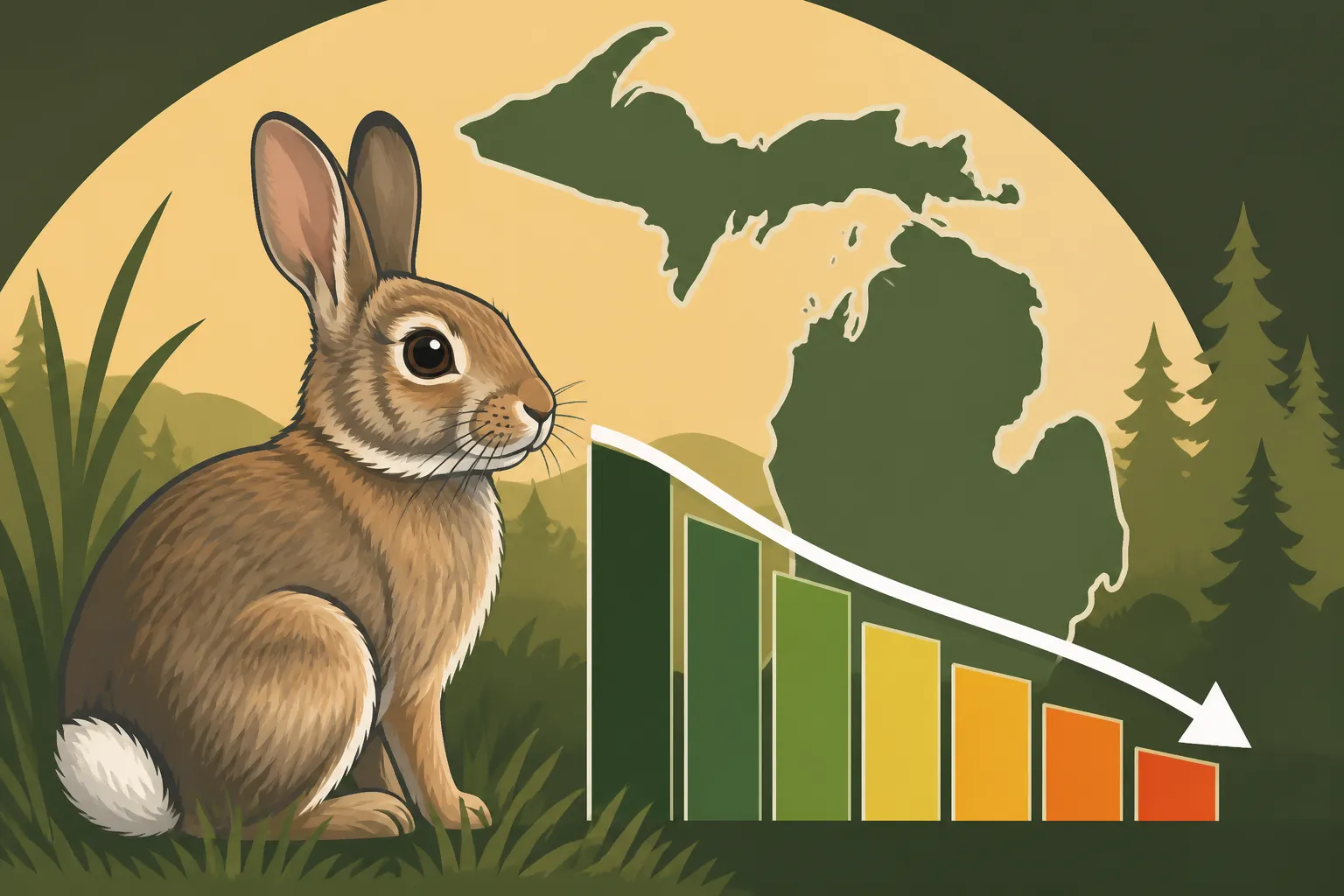
What these observations often suggest is a more localized and fragmented population. While there might not be a dramatic statewide crash, many areas have seen a decline in consistent rabbit numbers. Instead of widespread populations, cottontails tend to be concentrated in pockets of ideal habitat. Hunters often report fewer rabbits in areas that were once productive, or they have to work harder, covering more ground, to find the same number of opportunities. The overall trend, especially in the Lower Peninsula, seems to be towards a more dispersed and, in many places, a reduced average density compared to decades past. However, this doesn't mean rabbits are gone; it just means where and how you find them has changed.
Regional Hotspots and Challenges
Despite the general trend, Michigan still boasts some fantastic cottontail hunting opportunities, largely dependent on specific habitat features. Southern Michigan, particularly the heavily agricultural "Thumb" region and other farm country counties, often remains a hotspot. Here, you can find rabbits concentrated along old fencerows, brushy creek bottoms, woodlot edges, and neglected corners of fields that still offer dense cover and nearby food sources. These areas tend to have richer soils and agricultural practices that, in some instances, still provide enough edge habitat.
In contrast, the more heavily forested northern Lower Peninsula and the Upper Peninsula present different challenges. While cottontails exist there, they are often less numerous, and you'll find yourself competing with snowshoe hares, which thrive in the conifer thickets and deep snow of these regions. When looking for cottontails in these northern areas, focus on transition zones: the edges of small farms, old logging decks that have grown into thick brush, or river corridors that offer a mix of cover types. Using mapping tools, like those offered by GoHunt, can be invaluable for identifying these potential pockets of habitat, no matter where you are in the state. Upper Peninsula Deer Yarding and Winter Movement for instance, shows how important cover can be in cold weather, a principle that applies to rabbits too.
Adapting Your Hunting Strategy to Population Trends
Given the dynamic nature of Michigan's cottontail populations, a successful hunter isn't just someone who knows how to shoot. It's someone who can adapt, scout smart, and understand the subtle signs of rabbit presence. You can't just stumble into rabbits like you might have in decades past; modern rabbit hunting often requires a more intentional and habitat-focused approach.
Prioritizing Habitat Over Sheer Numbers
The biggest shift in strategy for today's Michigan rabbit hunter is to focus almost exclusively on finding and hunting prime habitat. Instead of hoping for sheer numbers, you're looking for quality, dense cover that offers both food and protection. Think about what a rabbit needs: escape cover from predators, shelter from the elements, and readily available food. Briar thickets, blackberry patches, old apple orchards that have gone wild, brush piles, old farm machinery left to rust in a corner, thick multi-flora rose hedges, and even dense conifer plantings can all be magnets for rabbits.
When you're scouting, whether in person or using digital mapping tools, don't just look for "woods." Look for the thickest, nastiest, most impenetrable stuff you can find adjacent to a food source like agricultural fields, clover, or even tender shoots along an old logging road. This is where rabbits feel safe. Even if the overall population in an area is down, those few prime spots will still hold rabbits. Tools like GoHunt's mapping layers can help you pinpoint these dense areas on public land, allowing you to focus your efforts efficiently. Rabbit Hunting Thick Michigan Brush covers this in more detail.
Scouting and Pre-Season Prep
Effective scouting is absolutely paramount for cottontail hunting in Michigan. It's not enough to simply drive by a field; you need to put boots on the ground long before the season opens. In late summer or early fall, walk the edges of potential habitat, looking for signs. Keep an eye out for droppings—small, round pellets, often in concentrated areas. Look for clipped vegetation, especially during winter, where rabbits might be feeding on tender shoots or the bark of young saplings. You might also spot trails through dense brush.
Once snow falls, scouting becomes even easier. Fresh tracks are a dead giveaway, showing you not only that rabbits are there, but also their travel patterns and favored escape routes. Pay attention to how deer move through an area, but remember rabbits are much smaller and will use even tighter cover. Don't be afraid to walk through prospective spots without a gun, just to get a feel for the lay of the land and identify those key escape routes. Remember, a rabbit's primary defense is to bolt into the thickest cover available, so knowing where that cover is will make all the difference when the hunt is on. Scouting Michigan Public Land Before Season offers broader tips that can be applied to rabbit hunting too.
Effective Hunting Tactics for Michigan Cottontails
Once you've found promising habitat, your tactics need to be tailored to the conditions. If you're lucky enough to hunt with beagles, let them do the work. Their keen noses and persistent baying are unparalleled for pushing rabbits out of thick cover. Position yourself strategically along known escape routes or at the edges of the thicket, ready for the rabbit to circle back.
For hunters without dogs, still-hunting or carefully working through cover with partners can be highly effective. If still-hunting, move slowly, stopping often to look and listen. Rabbits will often hold tight, only flushing when you're nearly on top of them. Pause at irregular intervals; sometimes a rabbit will bolt after you've been still for a moment, thinking the danger has passed. If hunting with partners, set up blockers at one end of a thicket while one or two hunters systematically push through the cover. Communication is key, especially when dealing with safety zones and property lines. Always be mindful of Michigan Hunter Orange Rules during any firearm season.
Consider the time of day and weather. Rabbits are often most active during dawn and dusk. Overcast days, especially those after a fresh snowfall, can be excellent. The snow makes tracking easier and helps to quiet your footsteps. Avoid windy days when rabbits tend to hunker down. These adaptable tactics, combined with solid habitat scouting, will maximize your chances of success.
Conservation and Future Outlook
While cottontail hunting might be a bit different than it was for our grandparents, these resilient little game animals are still a cherished part of Michigan's hunting heritage. Ensuring their populations remain healthy for future generations is a shared responsibility, involving both habitat management and hunter participation.
Habitat Management for Small Game
The future of Michigan's cottontail population is inextricably linked to habitat availability. Programs and initiatives that promote early successional habitat – those young, brushy stages of forest growth that are so critical for small game – are vital. This can involve targeted timber harvests, creating brush piles, or simply allowing certain areas to grow wild and thick. On private land, landowners can implement practices like maintaining brushy fencerows, creating small food plots, or even planting native shrubs that provide both food and cover.
On public lands, agencies like the DNR manage state game areas and state forests with wildlife in mind. While deer and timber production often take precedence, there are ongoing efforts to create diverse habitat structures that benefit a wide range of species, including cottontails. Michigan State Game Areas are often good places to find these habitat efforts. You might see recent clear-cuts that, over time, will grow into ideal thickets. Hunters can play a role by advocating for small game habitat initiatives and supporting conservation organizations that work to protect and enhance these critical areas.
Hunter's Role in Population Monitoring
Although cottontails don't have the extensive monitoring of big game, hunters are still crucial data gatherers. Every time you fill out a harvest report, you contribute to a larger picture of small game health in Michigan. While the data might not be as granular for rabbits, consistent reporting helps wildlife agencies track general trends and understand hunter effort. More informally, hunters' observations on the ground – what they see, where they see it, and how numbers compare year to year – are invaluable insights for local biologists.
Consider using tools like the GoHunt app to record your observations, even if you don't harvest. Noting areas with good rabbit sign, or even areas where you expected to see rabbits but didn't, can provide helpful long-term context. Your boots-on-the-ground knowledge is a direct connection to the health of the cottontail population. Being a responsible hunter means not just taking game, but also being an active participant in its management and conservation.
Encouraging New Rabbit Hunters
Perhaps one of the most important aspects of ensuring a future for Michigan cottontails, and small game hunting in general, is to pass on the tradition to new hunters. Rabbit hunting is an accessible and exciting entry point into the outdoors, especially for youth or new hunters. It often doesn't require expensive gear, can be done close to home, and provides ample action and opportunities for teaching tracking, woodsmanship, and ethical hunting practices. Michigan Hunter Safety and Youth Licences are designed to make it easier for young people to get involved.
There's a pure, unadulterated joy in watching a beagle work a track, or the sudden flush of a cottontail from a briar patch. These experiences create lasting memories and foster a deep appreciation for wildlife and habitat. Whether it's taking a child on their first hunt using a Michigan Mentored Youth Licence Package or introducing a friend to the thrill of busting brush, every new rabbit hunter helps keep this tradition alive and ensures that there will be passionate advocates for cottontail populations in the years to come. So next time you're out there, bring someone new along—it's good for the rabbits, and it's good for the soul.
| Key Habitat Features for Michigan Cottontails | Description | How to Identify |
|---|---|---|
| Dense Brush and Thickets | Areas choked with briars, blackberry bushes, multi-flora rose, or other thorny, impenetrable vegetation. Provides escape cover from predators and shelter from weather. | Look for dark, tangled patches on aerial maps. In person, it's the stuff that makes you say, "I really don't want to walk through that." |
| Old Fencerows and Hedgerows | Overgrown lines of brush, small trees, and briars separating fields or properties. Creates travel corridors and linear cover. | Visible as thin, darker lines on aerial imagery. Often found separating agricultural fields or property boundaries. |
| Brush Piles and Downed Timber | Accumulated branches, logs, and other woody debris, either naturally occurring or man-made. Offers immediate, localized cover. | Harder to see on maps, but look for disturbed areas in woodlots or clearings. In person, these are obvious piles of tangled wood. |
| Transitional Edges | Where two different habitat types meet, such as a field meeting a woodlot, or an open area meeting dense cover. Provides food access near safe refuge. | Clear lines where vegetation changes sharply on aerial maps. Look for where green fields meet darker, denser tree lines or brush. |
| Creek Bottoms and Drainages | Areas along small streams or ditches that often accumulate dense vegetation due to moisture and less human disturbance. | Visible as wavy lines or depressions on contour maps and aerials, often showing denser green vegetation than surrounding areas. |
| Abandoned Orchards/Farmsteads | Old apple trees, fruit trees, and the associated overgrown vegetation around derelict buildings. Provides food (fallen fruit) and excellent cover. | Look for circular patterns of trees or old building foundations on historical aerials or current maps. Often very thick and thorny around the edges. |
Disclaimer
This article is for general informational purposes only and does not constitute professional advice. Laws, prices and regulations vary by location and change over time. Consult a qualified professional for guidance on your specific situation.