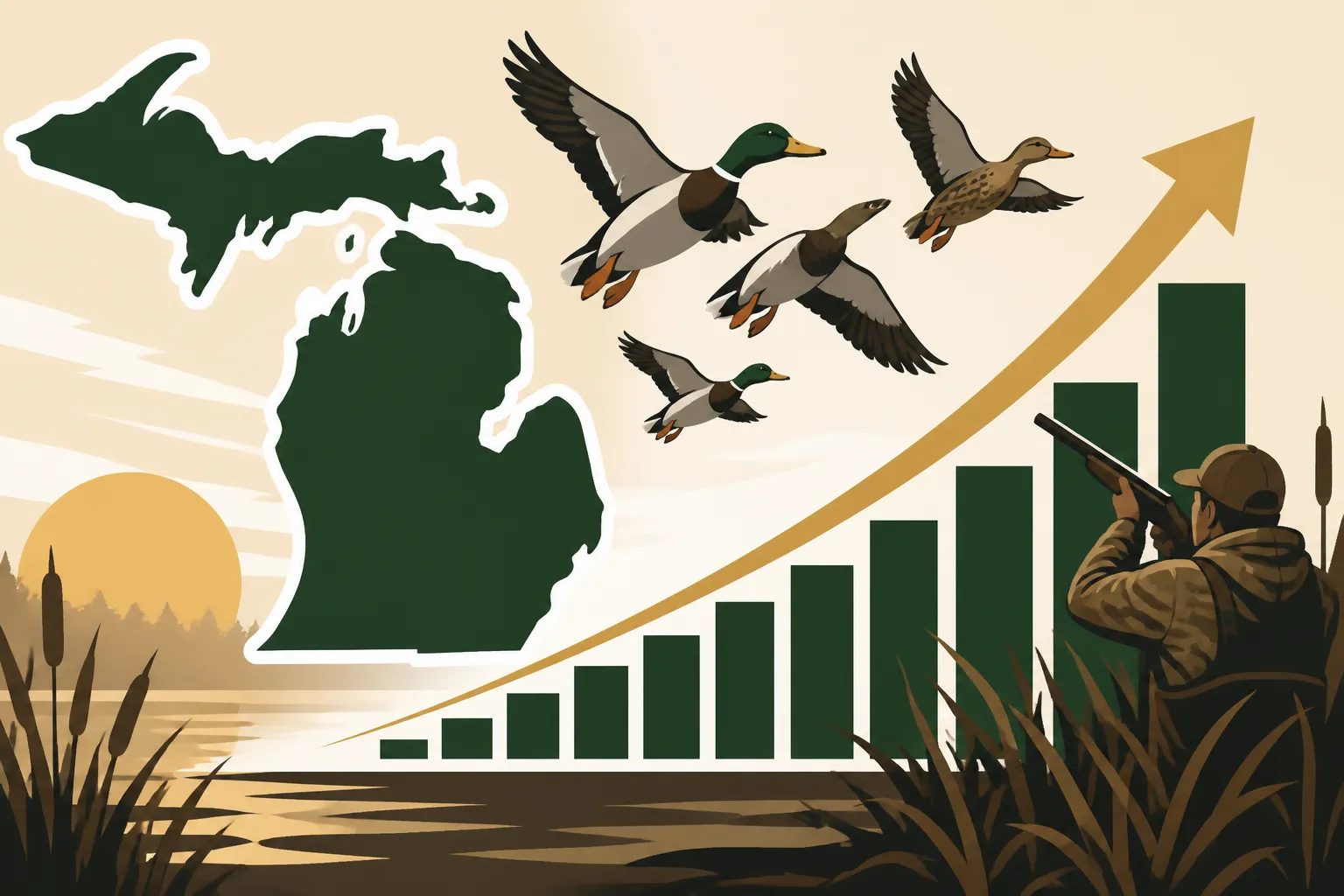
Michigan Duck Harvest Numbers
It can be incredibly frustrating to dedicate time, money, and effort to duck hunting in Michigan, only to wonder if you’re even in the right place or if the numbers are truly there to support your efforts. Understanding Michigan's duck harvest numbers isn't just for biologists; it's a vital tool for us hunters to gauge population health, identify key species, and ultimately, make more informed decisions when we hit the marshes and big water. This guide will walk you through what those numbers mean, where they come from, and how you can use this knowledge to enhance your own waterfowl season.
Decoding Michigan's Duck Harvest: What the Numbers Tell Us
When we talk about duck harvest numbers, it's easy to get lost in a sea of statistics. But at its heart, this data paints a picture of our waterfowl populations and the success (or challenges) hunters face each season. It’s not just about how many birds were shot, but which birds, where, and when—all crucial pieces of the puzzle for the dedicated duck hunter.
Where Does This Data Come From?
The primary source for Michigan's duck harvest data, like much of the nation's waterfowl statistics, comes from a joint federal and state effort. Every waterfowl hunter in the country is required to participate in the Harvest Information Program (HIP). This program gathers vital information on migratory bird hunters, including the species they intend to hunt. From there, a sample of hunters is selected to complete a survey detailing their actual harvest. It's a massive undertaking, designed to give wildlife managers the most accurate picture possible of migratory bird take.
Think about it: every time you check that box for Michigan HIP Certification for Bird Hunters on your license, you're contributing to this pool of data. Without it, the Department of Natural Resources (DNR) and federal agencies would be flying blind, unable to make sound management decisions. This isn't just some bureaucratic hoop; it's a direct way we, as hunters, support the resource we love. The data collected helps assess population trends, allowing wildlife managers to set appropriate season lengths and bag limits for various species across Michigan's different duck zones.
Key Metrics in Harvest Reporting
Harvest reports break down data in several important ways, offering insights beyond a simple total count. These metrics help us understand the nuances of the season.
Firstly, total harvest figures give us the big picture—the overall number of ducks taken statewide. But that's just the starting point. More granular data includes harvest by species. This is critical because certain ducks, like mallards, might be taken in high numbers, while others, like canvasbacks or redheads, might have much lower harvests due to population size, specific habitat needs, or tighter regulations. Knowing which species contribute most to the overall bag can help you target your efforts.
Secondly, success rates, often measured as "ducks per hunter" or "ducks per day," offer a sense of how productive the hunting was. If the total harvest is high, but the ducks per hunter is low, it might suggest a larger number of hunters rather than an exceptionally good bird population. Conversely, a high ducks per hunter ratio, even with a moderate total harvest, can indicate a strong season for those who got out. This kind of data can sometimes be found in state-level reports, offering a look at the overall effort versus reward. Thirdly, harvest can be broken down by region or specific water bodies, which is where it really gets valuable for us on the ground. Understanding that one region of Michigan consistently produces higher harvests for a particular species can guide your scouting and hunting plans, perhaps drawing your attention to specific state game areas or larger lake systems.
Major Players: Top Harvested Duck Species in Michigan
When you look at Michigan's duck harvest numbers, some species consistently rise to the top. These aren't necessarily the flashiest birds, but they are often the most abundant and widely distributed, making them the bread and butter for many Michigan duck hunters.
The Ubiquitous Mallard and Wood Duck
Without a doubt, the mallard often takes the top spot in Michigan's duck harvest. These adaptable ducks are found across the state, from remote northern bogs to small farm ponds in the south, and are comfortable in both agricultural fields and timbered swamps. Their widespread presence and willingness to decoy make them a favorite target. The sheer numbers of mallards that breed within Michigan, combined with the influx of migrants throughout the fall, ensure they contribute significantly to the harvest.
Right behind them, and sometimes even rivaling them in certain areas, is the wood duck. These stunning birds are early migrants and are often heavily harvested during the first few weeks of the season, especially in timbered swamps and flooded bottomlands. They're often associated with smaller, more secluded waters with plenty of overhead cover, making them a challenge to hunt but a prized bird for the table. Michigan Mallard and Wood Duck Numbers typically show robust populations, which is reflected in their consistent presence in hunters' bags. Early season tactics, particularly jump shooting small creeks or setting up in flooded timber, often revolve around these two species.
Diver Ducks and Big Water Opportunities
While mallards and wood ducks dominate inland and small water harvests, Michigan’s vast Great Lakes shoreline and large inland lakes offer incredible opportunities for diver ducks. Species like bluebills (scaup), canvasbacks, redheads, and goldeneyes contribute significantly to the overall harvest, especially for hunters willing to brave the open water. These birds typically arrive later in the fall, riding cold fronts and seeking out the abundant food sources found in Michigan's larger bodies of water.
Places like Saginaw Bay and Lake St. Clair are renowned for their diver duck hunting. Diver Ducks on Saginaw Bay are a huge draw for hunters from across the state and beyond. These hunts often require specialized gear, like layout boats and robust decoy spreads, to be successful. The harvest numbers for diver species can fluctuate more dramatically year-to-year than dabblers, often depending on migration timing, severe weather, and ice conditions. For those committed to hunting divers, understanding these unique patterns and being prepared for the conditions are paramount. While they might not be as numerous as mallards statewide, their localized concentrations and the unique hunting experience they offer make them incredibly important to Michigan's overall duck harvest.
Other Important Species for Michigan Hunters
Beyond the top two or three, a variety of other duck species fill out Michigan's annual harvest reports. Gadwall, wigeon, and green-winged teal are common dabblers often found alongside mallards, especially in marshy areas and agricultural fields. Teal, in particular, can offer exciting early-season hunting opportunities before the main migration arrives. You'll also see modest numbers of pintails and shovelers in the reports, though their populations and harvest levels tend to be more sporadic and less concentrated than other species.
In the northern parts of the state and on the Great Lakes, you might find significant harvests of mergansers and buffleheads, though these are often less sought after by some hunters due to their specific diets affecting meat flavor. Each of these species contributes to the rich tapestry of Michigan's duck hunting tradition. Understanding the harvest composition helps us appreciate the diversity of opportunities available and tailor our hunts accordingly. A savvy hunter using a tool like GoHunt can often filter maps to identify wetlands or specific water bodies that consistently show up in harvest data as prime locations for a particular species, helping to refine scouting efforts.
Trends and Factors: What Influences Michigan's Duck Harvest?
Duck harvest numbers aren't static; they fluctuate year to year based on a complex interplay of environmental conditions, biological factors, and human activity. As hunters, understanding these influences can help us interpret current trends and predict future opportunities.
Habitat Conditions and Breeding Success
The health of duck populations starts far north of Michigan, in the prairie pothole region of the Dakotas and Canadian provinces, which are often referred to as the "duck factory" of North America. Water levels in these breeding grounds are arguably the single most important factor influencing overall duck populations. Wet springs lead to more potholes, more nesting habitat, and ultimately, higher breeding success and more young birds migrating south in the fall. Conversely, drought conditions can severely depress duck numbers. Michigan also has a significant resident duck population, and local habitat conditions—the health of our marshes, the availability of nesting cover, and predator control efforts—play a role in their breeding success.
Beyond the breeding grounds, the quality and quantity of staging and wintering habitat along the migration routes are crucial. If marshes are drained, food sources are scarce, or pollution becomes an issue, birds might struggle to survive the migration or even bypass certain regions entirely. The ongoing efforts by organizations like Ducks Unlimited and state agencies to preserve and restore wetlands directly impact the number of birds that Michigan hunters will see throughout the season. These habitat efforts, both within Michigan and across the flyway, are fundamental to sustaining healthy Michigan Waterfowl on the Great Lakes and inland populations.
Migration Patterns and Weather Systems
For Michigan hunters, the timing and intensity of cold fronts are often the biggest variables influencing an individual season's success. The vast majority of ducks harvested in Michigan are migratory, meaning they pass through our state on their journey south. A warm, extended fall can delay migration, meaning fewer birds arrive in Michigan during the early and mid-season, saving the bulk of the flights for later in the year, sometimes after key season dates have passed. Conversely, an early, severe cold snap can push birds south rapidly, leading to phenomenal hunting for a short window, but potentially clearing out the majority of birds before the season even peaks.
Wind direction and intensity also play a massive role. Strong north winds are often associated with new waves of ducks, pushing them down from Canada. The severity of the winter further north, and its impact on freezing water bodies, can also influence how many birds stage in Michigan before continuing their journey. For example, if Canada freezes solid early, we might see a massive influx of divers on the Great Lakes. This is why paying close attention to weather forecasts, both local and across the flyway, is a core tactic for successful waterfowl hunting, guiding decisions on when and where to set up. You can often see historical Duck Migration Timing Through Michigan reflected in weekly harvest reports during the season.
Hunting Pressure and Regulations
The number of hunters pursuing ducks, and the regulations governing the hunt, also inevitably shape harvest numbers. High hunting pressure, especially on public lands, can cause ducks to become wary, change their patterns, or even abandon certain areas. This doesn't necessarily mean fewer ducks in the flyway, but it can mean fewer ducks in the bag for hunters in specific, heavily-pressured locations. Areas like Michigan's managed waterfowl areas, which see intense hunter competition, often demonstrate how pressure can spread birds out and make them harder to decoy.
Regulations, set by state and federal agencies based on population data, directly influence harvest. Daily bag limits, possession limits, season lengths, and specific restrictions on certain species (like pintails or canvasbacks) are all designed to manage harvest sustainably. For example, if a particular species shows a downward trend in breeding surveys, regulations might be tightened to reduce harvest pressure. Conversely, robust populations might allow for more liberal seasons. The Michigan Duck Daily Bag Limit and other season rules are crafted with these larger population dynamics in mind, aiming to strike a balance between providing hunting opportunities and ensuring the long-term health of the resource.
Translating Harvest Data into Hunting Success
So, how do we take all this information about duck harvest numbers and turn it into more successful hunts? It’s about being strategic, adaptable, and using the available data—and tools—to your advantage.
Scouting Smarter with Historical Data
One of the most powerful ways to use duck harvest data is to inform your scouting. While the most recent harvest numbers are always important, looking at historical trends for specific regions or even individual counties can highlight areas that consistently produce for particular duck species. If you know that a certain county consistently shows high numbers of wood ducks in the early season, that's a good place to start looking for flooded timber or wooded creeks. Similarly, if diver harvest is strong on a particular bay, you know where to focus your big water efforts.
A platform like GoHunt can be invaluable here. While it might not have specific Michigan DNR duck harvest overlays, its advanced mapping features allow you to identify crucial habitat features that historically correlate with strong harvests. You can use it to pinpoint specific wetlands, identify public access points to productive marshes, or find areas with suitable habitat near reported harvest hotbeds. Cross-referencing general harvest trends with detailed aerial imagery and land ownership maps (especially useful on Michigan's extensive public lands) can give you a significant edge in finding unpressured birds. This kind of diligent pre-season work, even if it's just digital scouting from your couch, is key to maximizing your time afield.
Adapting to Annual Fluctuations
Every duck season is different. That's part of the challenge and excitement of waterfowl hunting. Instead of clinging to last year's hotspots, use current conditions and recent harvest reports (often available weekly or bi-weekly from the Michigan DNR during the season) to adapt your strategy. If breeding surveys indicate a strong year for mallards but a weaker year for bluebills, adjust your expectations and focus. If warm weather is delaying migration, you might need to target resident birds or focus on areas that hold water longer.
Flexibility is a duck hunter's best friend. Don't be afraid to change your game plan mid-season based on new information. A sudden cold front pushing new birds into the area could mean shifting from a small water jump-shooting strategy to a big water diver hunt. Pay attention to local water levels, available food sources, and hunting pressure. If a marsh you hunted last year is now dry, or is seeing extreme pressure, look for alternative locations that might be overlooked.
Finding Undisturbed Honey Holes
While harvest reports will never give you the exact coordinates of someone else's secret spot, they can help you infer where less pressured birds might be found. Areas with consistently lower total harvest numbers but still decent "ducks per hunter" might indicate places where fewer hunters go, but those who do still find success. These are often harder-to-access areas, requiring more effort to reach.
Consider remote sections of large state game areas, smaller pockets of wetlands nestled within extensive public forests, or even river corridors that aren't easily accessible by boat. Using aerial maps from tools like GoHunt, look for features that create natural barriers to entry, such as dense cover, long walks, or difficult water access. Often, the effort required to reach these spots deters many hunters, leaving the birds less disturbed. This strategy ties back directly to analyzing those harvest numbers—not just where the most birds are shot, but where successful hunters are finding birds with less competition. This is often the true key to consistent success in heavily hunted states like Michigan, especially during later seasons when birds are warier.
Disclaimer
This article is for general informational purposes only and does not constitute professional advice. Laws, prices and regulations vary by location and change over time. Consult a qualified professional for guidance on your specific situation.