Diver Ducks on Saginaw Bay
There's nothing quite like the rush of diver duck hunting on Saginaw Bay. It’s a completely different ballgame than sneaking into a flooded timber hole for mallards or jump-shooting a river for woodies. The sheer vastness of the bay, the unpredictable winds, and the powerful flight of canvasbacks and bluebills present a unique challenge that can be incredibly intimidating for newcomers, or even seasoned hunters not accustomed to big water. This guide is here to unravel the mysteries of hunting these incredible birds on one of Michigan's premier waterfowl destinations, helping you prepare for a safe and successful hunt.
The Allure of Diver Ducks on Saginaw Bay
Saginaw Bay, a large, shallow inlet of Lake Huron, is a true gem for waterfowl hunters. Its expansive, fertile waters provide an incredible buffet for diver ducks, making it a critical staging and feeding area during migration. You'll find a variety of diver species here, each with its own charm and challenge, but they all share a common trait: a love for open water and the abundant aquatic vegetation or invertebrates that thrive beneath the surface.
Why Saginaw Bay is a Diver Duck Magnet
Think of Saginaw Bay as a giant, shallow dinner plate for ducks. The bay's relatively shallow depths allow sunlight to penetrate, fostering dense beds of wild celery, sago pondweed, and other submerged aquatic vegetation. These plants, along with the invertebrate life they support, are the primary food sources for many diver species. The sheer size of the bay also offers divers the open water they prefer, a natural refuge where they can raft up in large numbers, feeling secure from land-based predators. This combination of abundant food and secure habitat makes Saginaw Bay an irresistible stopover for ducks migrating south, and an incredible destination for hunters willing to put in the work.
Common Diver Species You’ll Encounter
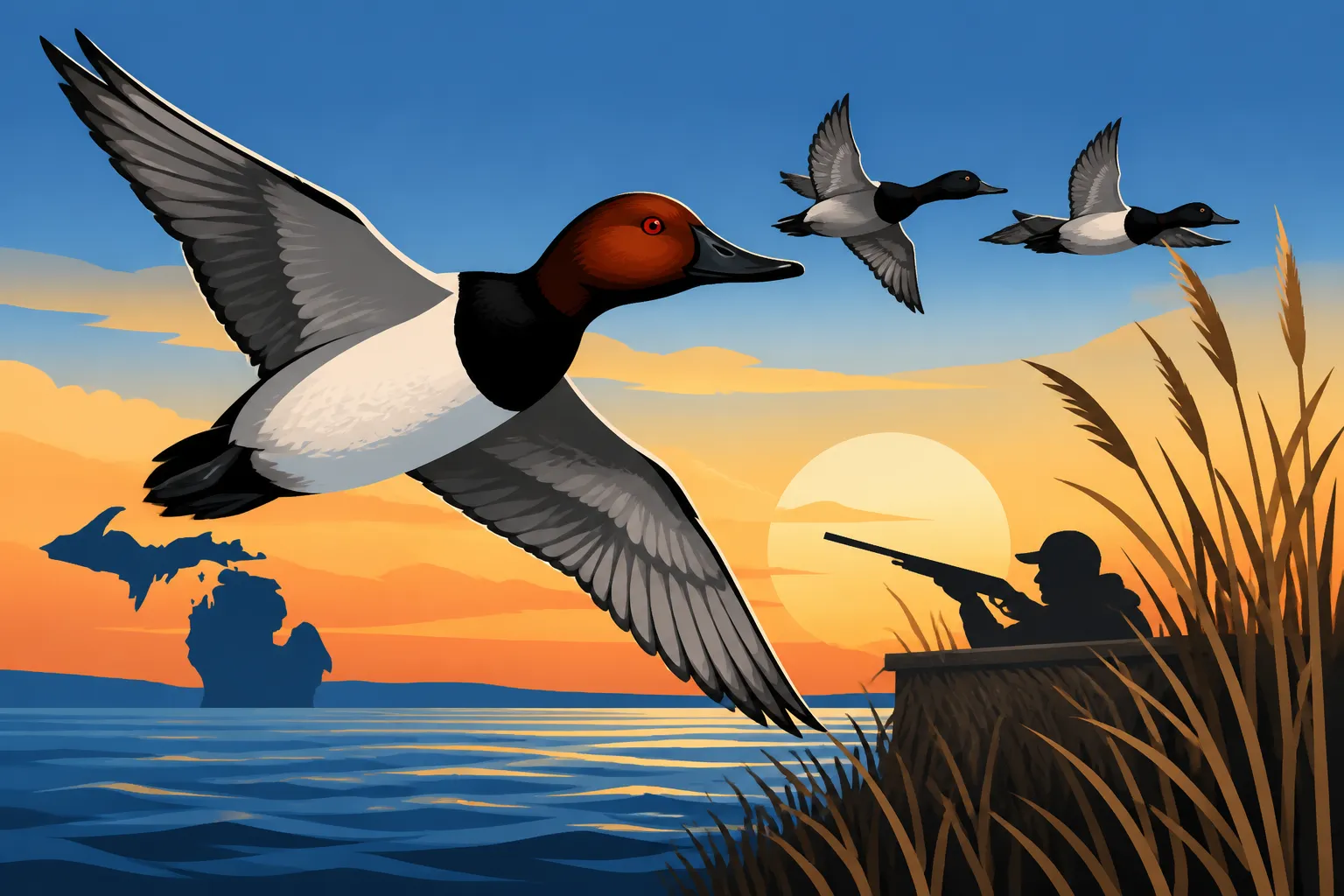
When you’re out on Saginaw Bay, you'll likely encounter a fantastic array of diver ducks. The kings of the bay, for many, are the swift-flying Canvasbacks, known for their distinctive sloped profile and rapid wingbeat. Redheads are another prized bird, often found mingling with 'cans' in large rafts. You'll also see plenty of Bluebills, both Greater and Lesser Scaup, which are often grouped together in identification and bag limits. Ring-necked Ducks, Goldeneyes, and Buffleheads round out the common divers, each offering its own unique hunting experience. While they all dive for food, their specific dietary preferences and habits can vary slightly, which influences where you might find them and what kind of decoy spread might entice them. Understanding these subtle differences is key to consistent success.
| Diver Duck Species | Key ID Features (Males) | Typical Saginaw Bay Preference | Flight Characteristics |
|---|---|---|---|
| Canvasback | Red head, black breast, white body | Deeper open water, often in large rafts, prefers wild celery | Fast, powerful, often high |
| Redhead | Red head, gray body, black breast | Similar to Canvasbacks, sometimes shallower areas, sago pondweed | Fast, agile |
| Bluebill (Scaup) | Glossy black head, white sides (Greater) | Open water, mussel beds, diverse diet | Very fast, low over water |
| Ring-necked Duck | Black back, white sides, gray flank | Slightly more protected bays, often nearer shore, varied diet | Fast, erratic |
| Common Goldeneye | Black back, white body, round white patch | Often in smaller groups, near shore, prefers small fish/crustacea | Extremely fast, distinctive whistle |
| Bufflehead | Black and white with large white head patch | Smallest diver, often in smaller, more protected pockets | Very fast, darting |
Essential Gear for Saginaw Bay Diver Hunting
Hunting diver ducks on Saginaw Bay isn't your typical marsh hunt; it demands specialized gear designed for big, open water and potentially rough conditions. Skimping on safety or critical equipment here isn't just a risk to your hunt; it's a risk to your life. The right setup not only makes the hunt more enjoyable but significantly increases your chances of success.
Boats: Layout and Tender Vessels
At the heart of any successful Saginaw Bay diver hunt is a robust boat system. Most serious diver hunters utilize a combination of a "tender" boat and one or more "layout" boats. The tender boat is typically a larger, stable vessel (like a center console or large utility boat) that serves as your base of operations. It carries all your decoys, hunters, and acts as a safe haven from the elements, as well as a retrieval craft. The layout boat, on the other hand, is a low-profile, coffin-like craft designed to completely disappear on the water's surface amidst your decoy spread. Hunters lie down in the layout boat, offering them incredible concealment right in the heart of the action. It's crucial that both boats are seaworthy, well-maintained, and equipped with reliable motors. Remember, Saginaw Bay can turn from calm to treacherous in a matter of minutes, so Big Water Safety in a Layout Boat is paramount.
Decoys and Spreads
Diver ducks are flocking birds, and to truly attract them, you need to "go big or go home" with your decoy spread. Forget the dozen mallard decoys you use in a marsh; diver hunting often calls for hundreds of decoys, mimicking a massive raft of feeding and resting birds. Focus on diver-specific decoys like Canvasbacks, Redheads, and Bluebills, as these are the species you're primarily targeting. Many hunters use a mix, placing species-specific blocks in groups to simulate natural rafting. Long lines, which allow you to string multiple decoys together on a single main line, are standard for diver spreads, offering both realism and efficiency in deploying and retrieving large numbers of decoys. Texas rigs are also useful for individual blocks. Don't forget motion decoys or simple jerk strings to add vital movement, which can be a game-changer on calm days. For more specific guidance, check out Diver Decoy Spreads and Long Lines.
Shotguns, Ammunition, and Waders
Your choice of shotgun for diver hunting should prioritize reliability and the ability to handle larger, heavier loads. A 12-gauge shotgun is the standard, allowing you to shoot powerful magnum loads. Ammunition is critical: you'll need non-toxic shot, typically steel, for waterfowl hunting. For fast-flying divers, larger shot sizes like BB, 1, or 2 are commonly used to ensure enough energy and pattern density for clean kills at longer ranges. Patterning your shotgun with your chosen loads is vital to understand its effective range. You can learn more about appropriate loads in Waterfowl Loads for Michigan Divers. As for personal gear, robust, chest-high waders are a must, even if you’re primarily hunting from a boat. You'll likely be deploying and retrieving decoys in potentially cold, choppy water. Layering your clothing is also non-negotiable for warmth and comfort against Michigan's often harsh late-season weather. Read up on Waders and Boats for Michigan Marshes for more insights into staying dry and warm.
Navigation and Safety Gear
Given the vastness and potential hazards of Saginaw Bay, proper navigation and safety gear are paramount. A reliable GPS unit, or a smartphone app with detailed nautical charts, is absolutely essential for navigating channels, avoiding shallow spots, and returning to your launch point, especially in fog or low light. Tools like GoHunt can be invaluable for pinpointing those key bottom features, logging previous successful spreads, and marking safe travel lanes. Always carry a compass as a backup. Beyond navigation, safety gear includes Coast Guard-approved life jackets (worn at all times, especially in layout boats), a marine band radio and/or cell phone in a waterproof case, an anchor with sufficient line, extra paddles, a robust first-aid kit, and flares. Never underestimate the power of big water.
Strategies and Tactics for Saginaw Bay Divers
Successfully hunting diver ducks on Saginaw Bay requires a combination of careful planning, keen observation, and an understanding of how these birds interact with their environment. It’s a dynamic form of hunting where conditions can change rapidly, and adaptability is key.
Scouting and Locating Diver Hotspots
The first step to a successful diver hunt is diligent scouting. Divers often raft up in massive numbers in specific areas of the bay where food is abundant. This means spending time before the season, or on non-hunting days, using powerful binoculars or spotting scopes to locate these rafts. Observe their flight lines – where they fly from their resting areas to their feeding grounds, and back again. These flight corridors are prime areas to set up your spread. Don't just look for birds; use nautical charts and depth finders to identify underwater structures like humps, weed beds, or mussel bars that divers might be utilizing. Modern mapping applications, such as GoHunt, are incredibly useful for analyzing bathymetry and identifying subtle depth changes or potential weed beds far from shore, allowing you to virtually scout even before you launch your boat. Understanding Michigan Waterfowl Migration Timing can also help you anticipate when different species might be peaking in the area.
Decoy Spreads and Realistic Presentation
Setting a truly effective diver spread on Saginaw Bay is an art form. The goal is to create a visual invitation that screams "safe and abundant food" to passing birds. Large spreads, often featuring hundreds of decoys, are the norm. The exact configuration can vary, but common effective spreads include large "J" hooks, "V" shapes, or crescent moons, with the opening of the spread pointing towards the direction you expect birds to approach from (often downwind). Place your layout boats or blinds strategically within this opening, ensuring maximum concealment. Many hunters will create a mix of different diver species, sometimes grouping specific types of decoys together, like a cluster of Canvasbacks here and a raft of Redheads there, to mimic natural flocking patterns. Motion decoys, whether battery-operated or simple jerk strings, add a crucial element of realism, making your spread look alive and active, especially on those flat-calm days when static decoys can look lifeless.
Mastering Wind and Weather Conditions
Wind is both your friend and your formidable foe on Saginaw Bay. A moderate breeze helps create realistic decoy movement and aids in scent dispersal (though ducks don't rely on scent as much as deer, it still plays a minor role in perception). It also helps push birds towards your spread as they fight the wind. However, too much wind can quickly turn Saginaw Bay into a dangerous place, creating massive waves that are unsafe for small boats, especially layout boats. Always check detailed marine forecasts before heading out, and be prepared to cancel or cut your hunt short if conditions deteriorate. Divers often prefer to fly lower and closer to the water in strong winds, making them more susceptible to decoying. Conversely, on dead calm days, they might fly higher, making them harder to pull in. Understanding these nuances of wind and weather, and how they affect diver behavior and your safety, is paramount.
Blind Placement and Concealment
Concealment is critical when hunting divers, even in the vastness of Saginaw Bay. Layout boats are designed for ultimate concealment, blending seamlessly with the water and your decoy spread. The challenge often lies in making the tender boat disappear, especially when retrieving birds or shuttling hunters. Some tender boats use elaborate camo nets or pop-up blinds. For layout boats, ensure they are brushed in with natural vegetation or camouflaged effectively to break up their outline against the water. Your position within the decoy spread should be such that birds are approaching into the wind, presenting easy, decoying shots. Planning your layout hunt with precision also means understanding land and water ownership, and digital mapping tools like GoHunt provide crucial layers for navigating these complex boundaries and ensuring your setup is legal and effective.
Navigating Regulations and Safety on Saginaw Bay
Hunting big water is exhilarating, but it comes with a heightened responsibility for safety and strict adherence to regulations. Michigan has specific rules that apply to waterfowl hunting, and the unique environment of Saginaw Bay adds another layer of considerations.
Understanding Michigan Waterfowl Regulations
Before you even think about launching your boat, you absolutely must be familiar with Michigan's waterfowl regulations. This includes knowing the correct Michigan Duck Season Dates by Zone, as Saginaw Bay falls within specific zones. You'll also need to understand the Michigan Duck Daily Bag Limit for each species, as these can vary significantly and are designed to manage populations responsibly. Beyond the species-specific limits, always carry your Michigan hunting license, your Michigan waterfowl license, and crucially, your federal duck stamp. The federal duck stamp is not just a legal requirement; it's a vital contribution to wetland conservation efforts across the country. Make sure to have your Michigan Federal Duck Stamp Rules clearly understood. Additionally, don't forget your Harvest Information Program (HIP) certification. This survey helps biologists track hunter activity and harvest, and you can learn more about it under Michigan HIP Certification for Bird Hunters. Ignorance of the law is never an excuse, and game wardens patrol these waters diligently.
Safety Zones and Ethical Hunting
Michigan, like all states, has safety zones which prohibit hunting within a certain distance of occupied dwellings. While this might seem less relevant on vast Saginaw Bay, it's still crucial to be aware of, especially if you're hunting closer to shorelines or near island cabins. Always identify your target clearly and ensure you have a safe backdrop before taking a shot. Ethical hunting also extends to retrieving crippled birds. In the open water of the bay, a wounded diver can quickly swim away or dive for extended periods. Having a fast, reliable tender boat and ideally, a well-trained retriever, is not just about filling your limit, but about honoring the game you pursue by ensuring quick and humane recovery. Never leave a crippled bird if it can be safely retrieved.
Prioritizing Weather Monitoring and Teamwork
On Saginaw Bay, weather isn't just a factor; it's often the factor that dictates your hunt. The bay can change rapidly from glass-smooth to raging whitecaps, making safe travel impossible and creating dangerous conditions for layout boats. Always check multiple reliable marine forecasts before and during your hunt. Understand wind direction, wave height predictions, and the potential for storms or fog. If the forecast looks marginal, it's always better to err on the side of caution and postpone your hunt. No duck is worth risking a life.
Teamwork is also non-negotiable for a safe and efficient diver hunt on big water. If you're running a layout boat, you need a dedicated tender boat crew who understands their role: watching over the layout hunters, being ready to retrieve birds, and monitoring weather conditions. Clear communication between the layout boat and the tender boat is paramount. Radios are a good idea, as cell service can be spotty in parts of the bay. Ensure everyone in your party knows what to do in an emergency and that all safety equipment is easily accessible.
Disclaimer
This article is for general informational purposes only and does not constitute professional advice. Laws, prices and regulations vary by location and change over time. Consult a qualified professional for guidance on your specific situation.