Michigan Waterfowl Migration Timing
One of the most challenging aspects of waterfowl hunting in Michigan is truly understanding when the birds are going to be where you want them. It's not just about the calendar; it's a dynamic puzzle of weather fronts, water levels, and food availability that can leave hunters scratching their heads, wondering why the marsh is empty one day and teeming with ducks the next. This guide aims to pull back the curtain on Michigan's complex waterfowl migration timing, helping you anticipate the shifts and plan your hunts more effectively across our diverse state.
Understanding Michigan's Waterfowl Zones and Weather Influence
Michigan isn't just one big blob when it comes to duck and goose hunting; the state is divided into distinct waterfowl zones that operate on different season dates. This setup is crucial because it acknowledges the varying timing of migrations and breeding cycles from north to south, and from the Great Lakes shoreline inland. What might be peak migration in the Upper Peninsula could be weeks away in the southern Lower Peninsula, and vice-versa. Navigating these zones is the first step to understanding when to expect certain birds.
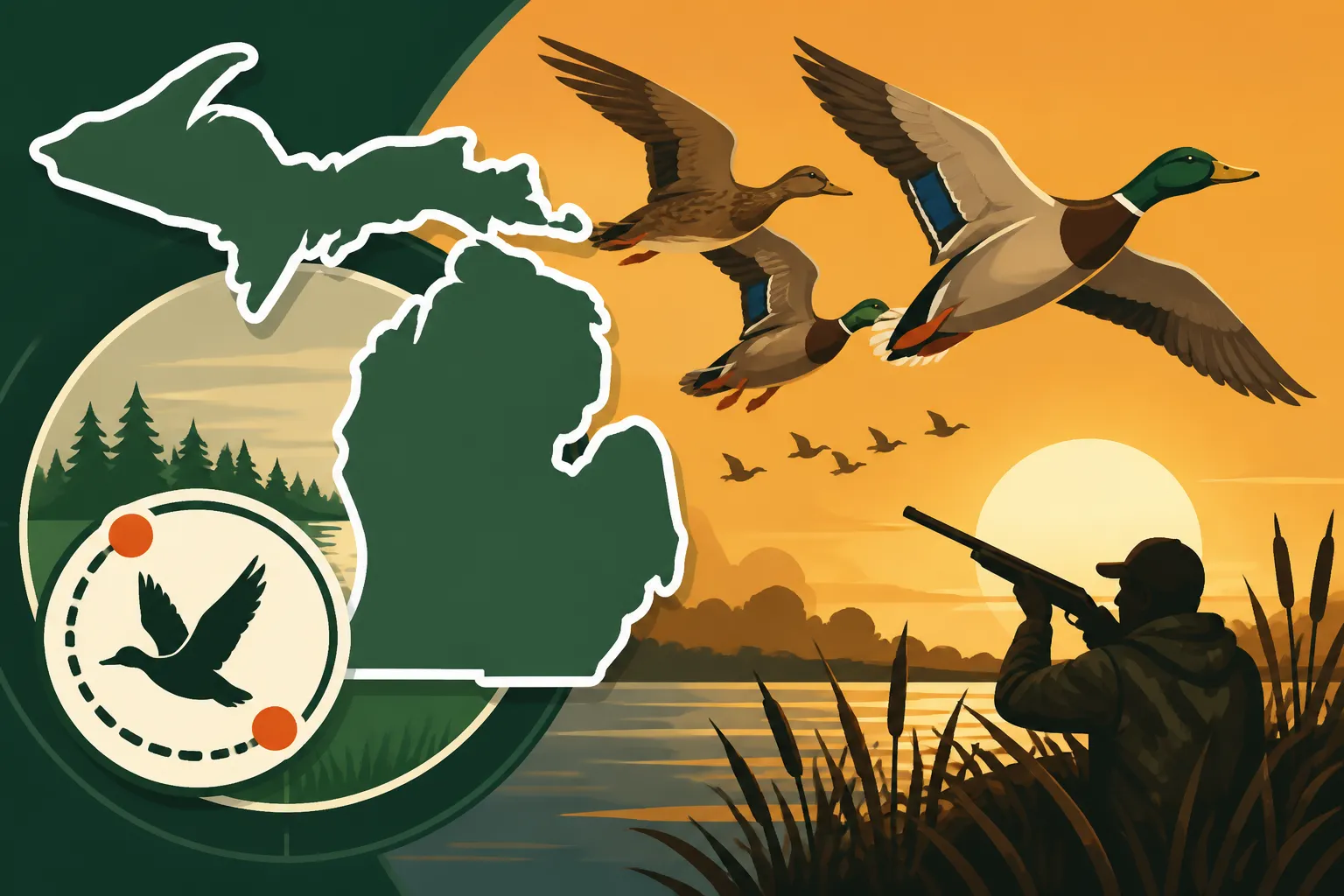
The state's three duck zones – the North Zone, Middle Zone, and South Zone – exist for a very good reason. They reflect the general progression of colder weather and, consequently, the migration. The North Zone, covering the Upper Peninsula, generally opens and closes earliest, as harsh winter conditions arrive there first, pushing birds south sooner. The Middle Zone, encompassing the northern half of the Lower Peninsula, follows, and finally, the South Zone, which includes the heavily populated southern Michigan farmlands and marshlands, often has the latest seasons. Meanwhile, goose hunting also has its own set of zones and seasons, which can sometimes overlap but also have critical differences. You'll want to be familiar with the specifics of Michigan Duck Zone Boundaries and Michigan Goose Seasons and Units before you even start thinking about migration.
Beyond the regulatory zones, Michigan's geography and weather patterns play an enormous role in when and how birds move. The Great Lakes, for instance, are massive magnets for waterfowl, especially divers. But a strong north wind can push birds off the big water and into more sheltered bays, rivers, or inland lakes. A sudden cold snap further north, in Canada or even just the Upper Peninsula, can trigger a mass exodus of birds, bringing new populations downstate almost overnight. Conversely, a mild autumn can delay migration significantly, leaving hunters in southern Michigan waiting well into November for a fresh push of northern ducks. It's this constant interplay of temperature, wind, and precipitation that makes Michigan waterfowl hunting both frustrating and incredibly rewarding.
The Role of Cold Fronts in Triggering Movement
If there's one single factor that consistently puts ducks and geese on the move, it's a solid cold front. We're not talking about a little dip in temperature; we're talking about a significant drop, often accompanied by strong northwesterly winds and even some snow or freezing rain up north. These fronts act like a natural alarm clock for waterfowl, signaling that winter is indeed coming and it's time to head south for easier feeding and open water.
When a major cold front sweeps across the prairie provinces of Canada or through Minnesota and Wisconsin, it’s time to pay attention. Ducks and geese that were staging and feeding might suddenly feel the urge to pack up and travel hundreds of miles in a single flight. For Michigan hunters, this often means new birds showing up in our marshes and fields, sometimes overnight. You might have hunted a spot for days with minimal success, and then after a hard front, it's suddenly full of fresh birds that haven't been pressured. This is why many seasoned hunters closely watch weather forecasts for areas north and west of Michigan, using that information to anticipate when a new wave of birds might arrive.
These cold fronts don't just push birds into Michigan; they also influence their behavior once they're here. Sustained cold can freeze up shallow marshes and smaller ponds, forcing birds onto larger, deeper water bodies like the Great Lakes or major rivers. It can also push them into agricultural fields to feed on waste grain, especially geese and mallards. So, a cold front isn't just about arrival; it's about redistribution and changing feeding patterns, which means adapting your hunting strategy.
Water Levels and Local Food Availability
While weather dictates the large-scale migration, local conditions, particularly water levels and food availability, often determine where birds decide to stop and stay for a while within Michigan. A marsh that was fantastic one year might be a bust the next if it's too dry, or conversely, too flooded.
Ducks, especially dabblers like mallards, wood ducks, and teal, rely heavily on shallow, productive wetlands where they can feed on aquatic invertebrates, seeds, and submerged vegetation. If a particular wetland system has ideal water levels and a robust food source, it will hold birds. If drought conditions have dried it up, or if excessive rain has flooded it too deeply, making food inaccessible, birds will simply bypass it for greener pastures. This is especially true in early season; a good acorn crop in Michigan hardwoods can hold wood ducks and mallards in timbered swamps for weeks. Conversely, an acorn failure might push them out onto agricultural fields much earlier.
Geese are a bit more adaptable, often utilizing agricultural fields for feeding and open water bodies (lakes, rivers, Great Lakes bays) for roosting. However, even for geese, local food sources are key. Fields of cut corn, soybeans, or winter wheat can be magnets. A hunter's success often hinges on knowing not just when birds are migrating, but where the prime feeding and resting areas are during that specific window, which is heavily influenced by what's available on the landscape. Using resources like Michigan's Mi-HUNT Map can help you identify prime habitat areas, and knowing what crops are in local fields can provide an edge.
Early Season Migrations: Teal, Wood Ducks, and Resident Geese
The hunting season often kicks off with a flurry of activity, even before the main migration event begins. This early period is largely dominated by Michigan's resident bird populations and the first wave of migratory species that don't need freezing temperatures to get them moving.
The early teal season, a special hunt preceding the regular duck season, is a prime example. These small, speedy ducks are some of the first to migrate south, often leaving their northern breeding grounds in late August and early September. If you're a fan of those zippy little birds, understanding Michigan Teal Season Dates is crucial. They are largely gone by the time the regular duck season opens, making this dedicated early hunt essential.
September's Fast Movers: Teal and Wood Ducks
September in Michigan is a beautiful time to be in the marsh, and it's when we see the first significant movements of blue-winged and green-winged teal. Blue-wings, in particular, are notorious for their early departure. By mid-September, if you haven't seen them, they've likely already winged their way south to warmer climes. Green-winged teal tend to linger a bit longer, often blending in with early arriving mallards and wood ducks.
Wood ducks, with their stunning plumage, are another early season favorite. Many wood ducks breed right here in Michigan, especially in timbered swamps, beaver ponds, and river systems. As September progresses into October, these local birds will begin their journey south. However, Michigan also sees an influx of wood ducks from further north. A good cold rain in late September can often bring down a fresh flight of these unique ducks, offering some fantastic hunting opportunities in flooded timber or along small creeks. Their reliance on specific habitats like mature hardwoods for acorns means that focusing on areas with these features can be very productive.
It’s worth noting that these early migrants are often less wary than the birds that have seen more pressure later in the season. Decoy spreads don't need to be as elaborate, and calling can be less critical. However, their speed and erratic flight patterns make them challenging targets, especially when they zip through thick cover.
Resident Canada Goose Movements
Before the big pushes of northern geese arrive, Michigan's resident Canada geese offer some fantastic early season hunting opportunities. These are the birds that breed and live in Michigan year-round, often becoming quite a nuisance in suburban parks and golf courses. Early goose seasons are specifically designed to help manage these burgeoning local populations. If you’re interested in hunting these local birds, you'll want to check out Early Goose Season Tactics in Michigan.
Resident geese are generally less migratory in the traditional sense, but they still have daily and sometimes weekly movements. They'll fly from their roosting lakes or rivers to agricultural fields to feed, often following very predictable patterns. As the season progresses and hunting pressure increases, these birds can become incredibly smart, quickly learning to avoid certain fields or flight paths.
While they don't migrate thousands of miles, local weather can still influence them. A sudden shift to colder temperatures might make them feed more aggressively, or a persistent strong wind might alter their flight paths to take advantage of calmer air. Their movements are often more about pressure and food availability than long-distance migration. Successfully hunting resident geese often requires extensive scouting to pinpoint their exact feeding locations and flight corridors.
Mid-Season Movements: Dabblers, Divers, and the Main Goose Push
As we move past the early season, Michigan waterfowl hunting really starts to hit its stride. This is when the main body of ducks and geese from the northern breeding grounds begins to arrive, bringing with them a surge of new birds and new challenges.
The peak of Michigan's waterfowl migration typically occurs from late October through mid-November. This period is often characterized by fluctuating weather—warm Indian summer days interspersed with harsh cold fronts—which keeps the birds guessing and hunters on their toes. It’s a dynamic time when you might encounter a wide variety of species, from puddle ducks to sea ducks, all making their way through our state.
The Peak of Puddle Duck Migration
Late October and early November usually mark the peak migration for many of Michigan's puddle ducks or dabblers, including the ever-popular mallards, black ducks, and gadwalls. These birds are generally moving through from Canada and the northern Midwest, seeking out staging areas with abundant food and open water before continuing their journey further south.
During this period, you'll often find large concentrations of mallards in cornfields, especially after a fresh snow, or loafing on larger inland lakes and rivers. Black ducks, being a bit warier, often prefer more secluded marshes and river oxbows. The key to finding these birds during the peak is often about being where the food is. Waste grain in agricultural fields, smartweed and wild rice in marshes, and even acorns in flooded timber can be huge attractants. Because they are often moving in large numbers, the right spread of decoys and some strategic calling can be incredibly effective.
This is also when you start to see more northern-bred birds, which can be less accustomed to intense hunting pressure than the resident birds you might have encountered earlier in the season. However, they learn fast. Hunters need to be prepared for constantly changing conditions and the need to adjust their tactics daily. A few days of heavy hunting pressure in one area can send a large flock looking for refuge elsewhere, so scouting remains paramount.
Divers Descend on the Great Lakes
While dabblers are often found in shallow marshes and fields, mid-season also ushers in the spectacular migration of diver ducks. Species like bluebills (scaup), canvasbacks, redheads, and goldeneyes descend upon Michigan's Great Lakes shoreline, especially in bays and estuaries, seeking the deep, clear water they prefer. If you're looking to target these birds, exploring options like Layout Hunting Michigan Big Water can be very effective.
The timing of diver migration is heavily influenced by the freezing of inland lakes to the north. As smaller bodies of water ice over, divers are pushed to the vast, open waters of the Great Lakes. Saginaw Bay, Lake St. Clair, and the coastal waters of Lake Michigan and Lake Huron become critical staging grounds. These birds feed on submerged vegetation and mollusks found on the lake bottom, often in waters too deep for dabblers. It’s an entirely different style of hunting, often involving large spreads of decoys and specialized boats.
The sheer numbers of divers can be astounding during peak migration. Observing their flight patterns and identifying their preferred feeding grounds, often areas with specific depths and bottom content, is key. Hunters often use boat blinds or layout boats to target these birds, embracing the challenging, often rough conditions of big water hunting. Remember, safety on the Great Lakes is always the top priority.
The Main Canada Goose Push
The latter half of October and much of November is often when Michigan experiences its most significant influx of migratory Canada geese. These are the large, wary birds that have made their way down from the vast breeding grounds of the Canadian Arctic and boreal forests. Their arrival marks a noticeable increase in goose activity across the state, especially in agricultural areas.
These northern geese are usually much more call-responsive and decoy-friendly than their resident cousins, at least initially. They are traveling in large family groups and often seek out big fields of cut corn, winter wheat, or pastures to refuel. Field Hunting Geese in Southern Michigan can be an exhilarating experience when these birds are in full migration mode.
However, these birds are also incredibly intelligent and can become "educated" very quickly if hunting pressure is high. Their flight paths from roost to feed can be miles long and surprisingly consistent until disturbed. Often, successful goose hunting during this period means getting into the fields they want to be in, well before dawn, with a robust spread of full-body decoys and skilled calling. As the season progresses into late November, freezing conditions will push these birds further south, often to states like Indiana, Ohio, and even Arkansas.
Late Season Strategies: Frozen Water and Wintering Birds
As Michigan embraces the full grip of winter, waterfowl hunting takes on a new character. The vast majority of migratory birds have pushed south, and the landscape is often covered in snow and ice. However, dedicated late-season hunters know that opportunities still exist, especially for the hardy birds that decide to winter in Michigan or those passing through during severe cold snaps.
This period, typically from December through the end of the waterfowl season, is challenging but can be incredibly rewarding. Success hinges on finding open water and understanding how the remaining birds cope with extreme cold and limited food resources.
Open Water Refuges
When inland lakes, marshes, and even many rivers freeze solid, waterfowl become highly concentrated on the few remaining bodies of open water. This often means larger rivers with strong currents, power plant discharge areas that keep water warm, or the vast, open expanse of the Great Lakes themselves. For those targeting ducks and geese in the late season, finding and accessing these open water refuges is paramount.
Mallards, black ducks, and even some hardy pintails might concentrate on sections of major rivers like the Grand, Muskegon, or Saginaw, especially where there are rapids or warm water discharges that prevent freezing. These areas often become magnets for birds and can offer incredible hunting, but they also tend to be highly pressured. Geese, similarly, will gather on large, unfrozen lakes or river stretches, flying out to agricultural fields to feed during daylight hours.
Hunting these late-season concentrations often requires specialized tactics. Smaller, more mobile decoy spreads might be effective on rivers, while boat blinds are crucial for larger water bodies. Stealth and careful approaches are vital, as the birds that remain have seen it all. If you're planning on Hunting Michigan's Late Archery Season for deer, you might also find opportunities for waterfowl in the same area if there's open water nearby.
Cold Weather Feeding Patterns
The harsh realities of late-season weather force ducks and geese to be extremely efficient in their feeding. Every calorie counts. This means that when they do leave their open water roosts, they are usually heading directly to prime feeding grounds, often agricultural fields where they can find waste grain.
Mallards and black ducks will aggressively feed on waste corn or soybeans, particularly after a fresh snowfall reveals the darker grain against the white background. Geese, with their larger body size and higher energy needs, are particularly focused on fields. Scouting is absolutely critical during this time; you need to know exactly which fields the birds are using and at what time of day. This often means driving around at dawn and dusk, watching flight lines and glassing fields to pinpoint their exact feeding locations.
The window for feeding can be short in bitter cold, so birds will often fly out to feed mid-morning, return to water to rest, and then make another feeding flight late in the afternoon. Setting up in a field with layout blinds and a large decoy spread, waiting for these movements, is a classic late-season goose strategy. The challenge is often staying warm enough for long stretches in freezing temperatures while remaining hidden.
Factors Beyond the Calendar: The "X" Factors of Migration
While general timelines and weather patterns give us a good framework, there are always those elusive "X" factors that can completely change the migration playbook. These are the nuances that separate good waterfowl hunters from great ones – the ability to read the subtle signs and adapt.
Michigan's waterfowl migration isn't a static event; it's a living, breathing phenomenon influenced by a myriad of environmental cues. Being attuned to these lesser-known factors can often give you the edge when others are left wondering why the birds aren't doing what they "should" be doing.
The Influence of Full Moons and High Pressure Systems
Many seasoned waterfowl hunters swear by the influence of full moons and stable, high-pressure systems on migration. While scientific consensus on this isn't always clear-cut, anecdotal evidence suggests these conditions can have an impact. A bright full moon provides ample light for birds to migrate at night, allowing them to cover vast distances undetected by hunters. This can lead to a phenomenon where birds arrive in an area overnight and are already established by dawn, often leaving hunters wondering where they came from.
Similarly, a strong, stable high-pressure system, often bringing clear skies and light winds, can sometimes delay migration or cause birds to loaf more. These conditions might not trigger the immediate urge to move that a biting cold front does. Conversely, some hunters find that periods of low pressure, especially when associated with stormy weather, can precede a significant push of birds as they try to get ahead of the adverse conditions.
It's not about relying solely on these factors, but rather using them as additional pieces of the puzzle. If a major cold front is approaching during a full moon, for instance, you might expect an even larger, faster movement of birds. Observing these patterns over multiple seasons can help you develop a deeper intuition for when to hit the marsh or field.
Hunting Pressure and Redistribution
One of the biggest "X" factors, especially in a heavily hunted state like Michigan, is hunting pressure itself. Birds learn quickly. A marsh that sees heavy hunting pressure on opening weekend might be empty by week two, not because the birds have migrated further south, but because they've simply moved to a quieter refuge.
This redistribution of birds due to pressure is a constant battle for hunters. Public lands, while offering fantastic access, often experience significant pressure. Birds will quickly learn safe zones, flight paths that avoid common hunting spots, and when to feed or rest without disturbance. This can lead to what feels like a "disappearing act" of birds, even when the overall population is still in the state. If you find yourself hunting areas with heavy pressure, learning how to find Finding Ground Others Walk Past can be a game-changer.
Understanding this means not only scouting for birds but also for other hunters. Knowing when and where pressure typically occurs can help you anticipate where birds might move. Sometimes, a "rest day" for a popular public marsh can be exactly what it needs for birds to return. Alternatively, seeking out less accessible areas, or hunting during weekdays when pressure is lower, can yield better results. Companies like GoHunt can provide useful mapping tools to help identify public lands and potential access points, which can be invaluable for finding those less-pressured spots.
Disease and Habitat Changes
While less frequent, outbreaks of diseases like Avian Influenza or EHD (Epizootic Hemorrhagic Disease, primarily in deer but can affect waterfowl in some cases), or significant habitat changes can also impact migration timing and bird distribution. A localized disease outbreak can cause birds to bypass an otherwise attractive area, or even lead to unexpected mortality.
Similarly, large-scale habitat alterations, such as the draining of wetlands, major changes in agricultural practices, or even natural events like severe floods or droughts that alter wetland conditions, can impact where birds choose to stop. Michigan's extensive efforts in wetland restoration and conservation, often supported by organizations like Ducks Unlimited and Michigan Ducks Unlimited, play a critical role in providing healthy habitat that continues to attract and hold migratory birds.
Staying informed about these broader environmental factors, perhaps by following updates from the Michigan DNR or local conservation groups, can provide crucial context. While individual hunters can't control these factors, understanding their potential influence helps make sense of observed bird movements and adapt hunting strategies accordingly. It’s all part of respecting the dynamic natural world we love to hunt.
Table: General Michigan Waterfowl Migration Peaks
Understanding the general timing of different waterfowl species in Michigan can help you focus your scouting and hunting efforts throughout the season. Keep in mind that these are averages, and real-world conditions (especially weather!) can shift these timings dramatically.
| Species Group | Early Season (Sept. – Early Oct.) | Mid-Season (Late Oct. – Mid Nov.) | Late Season (Late Nov. – Dec.) | Key Factors |
|---|---|---|---|---|
| Blue-winged Teal | Peak Migration / Departure | Mostly Departed | N/A | Cold fronts north, photoperiod |
| Green-winged Teal | Peak Migration | Still Present, decreasing | Few Present | Cold fronts, shallow water food |
| Wood Ducks | Peak Migration / Departure | Decreasing, local birds gone | Few Present | Local acorn crop, cold fronts |
| Resident Canada Geese | Local movements, high pressure | Mixing with migrants, pressured | Local movements, highly pressured | Hunting pressure, local food, roosts |
| Mallards | Local birds, some early migrants | Peak Migration (northern birds arrive) | Still abundant on open water | Cold fronts north, food in fields |
| Black Ducks | Fewer present | Increasing numbers, peak | Good numbers on open water | Cold fronts, quiet refuges |
| Gadwall/Wigeon | Increasing numbers | Peak Migration | Decreasing, few on open water | Cold fronts, aquatic vegetation |
| Canvasbacks | Few present | Peak Migration (Great Lakes) | Good numbers on open Great Lakes | Freezing of inland lakes, big water access |
| Redheads/Scaup (Bluebills) | Few present | Peak Migration (Great Lakes) | Good numbers on open Great Lakes | Freezing of inland lakes, big water access |
| Northern Canada Geese | Few scouts present | Peak Migration (major influx) | Good numbers in southern fields | Major cold fronts, long-distance flights |
| Diving Ducks (Misc.) | Few present | Increasing numbers | Good numbers on deep, open water | Ice formation, deep water food |
This table provides a snapshot, but remember to always consult the current Michigan hunting regulations for specific season dates, zone boundaries, and bag limits, as these can change year to year.
Disclaimer
This article is for general informational purposes only and does not constitute professional advice. Laws, prices and regulations vary by location and change over time. Consult a qualified professional for guidance on your specific situation.