Winter Severity Index and What It Means
There's nothing quite like a Michigan winter, is there? Beautiful, yes, with its silent, snow-covered landscapes, but for those of us who live and breathe deer hunting, a truly harsh winter can feel like a punch to the gut when you start thinking about next fall's season. We've all wondered just how much those heavy snows and bitter cold truly impact our deer herds, leading to questions like "How Deer Starve in a Bad Michigan Winter". This guide is going to break down the Winter Severity Index (WSI) for you, explaining what it is, why it matters, and how understanding it can help you become a more informed and adaptive Michigan deer hunter.
What is Michigan's Winter Severity Index?
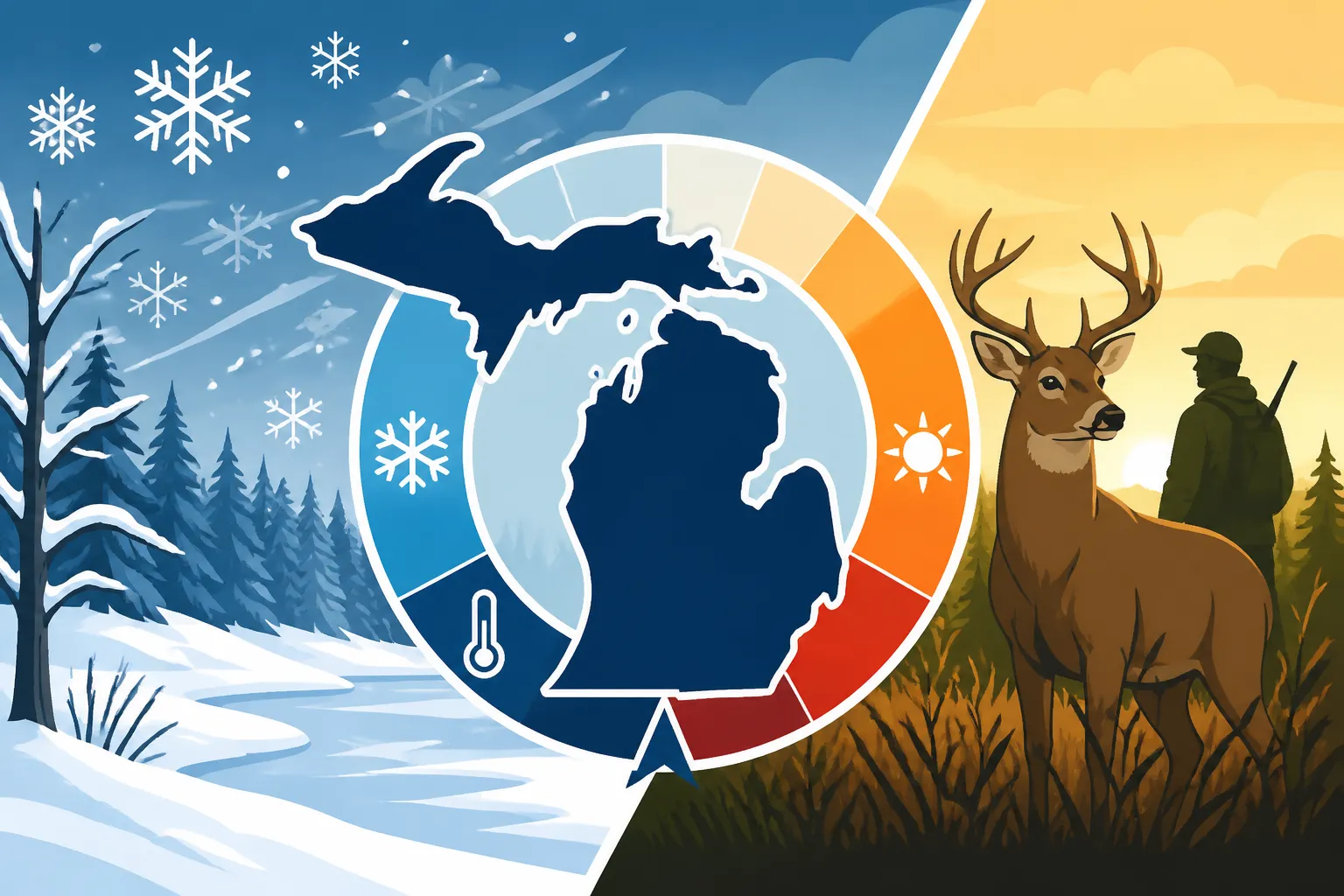
The Winter Severity Index (WSI) isn't some complex scientific mystery; it's a remarkably practical tool that wildlife biologists use to get a handle on how difficult a particular winter has been for our deer. Think of it as a cumulative scorecard for winter's punch. Every day, the WSI adds points based on two key factors: deep snow and bitter cold.
First, there's snow depth. If the snow on the ground hits a certain depth—usually around 18-20 inches—that's when it starts becoming a real problem for deer. Imagine trying to walk through that yourself, day in and day out, with short legs and a constant need to find food. Every day the snow stays at or above that critical depth, a point is added to the WSI. This isn't just about the deer having to slog through it; deep snow makes it incredibly hard for them to access forage that might be buried underneath, and it makes them more vulnerable to predators who can often travel more easily on top of the snow.
Second, there's extreme cold. When temperatures plummet and stay consistently below a certain threshold, like 0 degrees Fahrenheit, it demands an immense amount of energy from a deer just to stay warm. Their bodies are working overtime, burning through precious fat reserves. Each day the mercury dips into these truly frigid zones, another point is added to the WSI. Combine deep snow with bone-chilling temperatures, and you've got a recipe for deer stress. The WSI takes these daily points and simply adds them up throughout the winter. A higher total score at the end of winter indicates a more severe, and therefore more impactful, season for the deer herd. It's a simple calculation, but it provides a profound understanding of the challenges our deer face each year.
Why the Winter Severity Index is Crucial for Deer Herds and Hunters
Understanding the Winter Severity Index isn't just academic; it has very real, tangible consequences for the health of Michigan's deer herd and, by extension, for us as hunters. When those WSI numbers climb, it sends ripples through the entire deer population, affecting everything from fawn survival to the overall antler growth we might see in future years.
The most immediate and heartbreaking impact of a high WSI is on fawn survival. Young deer, born the previous spring, simply don't have the fat reserves or the physical stature to deal with deep snow and extreme cold as well as adult deer. A severe winter can decimate the fawn crop, meaning fewer yearlings will be recruited into the herd the following year. This doesn't just reduce the total number of deer; it also sets back the age structure, potentially leading to fewer mature bucks in the long run. Even adult deer, particularly older or weaker individuals, can succumb to the stresses of a prolonged, harsh winter. Their bodies are working constantly to stay warm and move through snow, burning through fat at an unsustainable rate if food is scarce. This intense energy drain can lead to starvation, making them more susceptible to disease or predation. The WSI provides crucial insights into the overall health and size of the herd, directly influencing the "Michigan Deer Population Estimate" and affecting future "Michigan Deer Harvest Trends".
For us hunters, a high WSI means we might need to adjust our expectations. You might not see the sheer numbers of deer you're used to, especially if the severe winter hit a specific region hard. The impact isn't just on numbers; it can affect the overall health and body condition of the surviving deer. Bucks that survive a brutal winter might put all their energy into simply recovering their body weight in the spring, at the expense of antler growth that year. This means that a severe winter could mean smaller antlers across the board a year or two down the line. Wildlife managers also use WSI data to make decisions about antlerless quotas and special seasons. A very high WSI might lead them to reduce antlerless tags in certain Deer Management Units (DMUs) to help the herd recover. Conversely, a string of mild winters could lead to increased antlerless opportunities. Therefore, keeping an eye on the WSI gives us a clearer picture of the challenges our deer face and helps us understand the decisions made by wildlife officials.
How Michigan Hunters Can Interpret and Use WSI Data
So, you've seen the WSI numbers for your hunting area, and perhaps they look a bit daunting. Don't panic, but do be informed. Interpreting and using this data can really help you become a more strategic and adaptive hunter, shifting from simply reacting to conditions to anticipating them.
First and foremost, a high WSI should prompt you to adjust your expectations for the upcoming season, especially in hard-hit areas. If your usual hunting spot experienced deep, persistent snow and bitter cold, it's realistic to expect a dip in deer numbers, particularly fawns and maybe some older deer. This doesn't mean the season is a bust, but it means you might need to work harder and be more selective. When you're trying to figure out how many deer "How Many Deer the Upper Peninsula Lost" in a particular year, the WSI is one of the first metrics wildlife managers review, and it should be for you too.
Your scouting efforts after a tough winter should fundamentally change. Instead of just looking for rubs and scrapes from the previous fall, really focus on prime wintering areas. These are often conifer stands like cedar swamps or thick pines that offer thermal cover from the wind and snow. Deer will gravitate to these areas for survival, creating "Upper Peninsula Deer Yarding and Winter Movement" patterns that can persist into the early season. Look for subtle signs of winter stress on surviving deer – perhaps more browse lines in conifer thickets, or signs of smaller, less robust deer. Learning about "Finding Deer After a Severe Winter" becomes paramount, as surviving deer will likely concentrate in the best available habitat.
Understanding the WSI can also inform your strategic hunting. Deer that survived a severe winter will be laser-focused on recovering body condition. This means food sources will be even more critical. Areas with abundant "Late-Season Food Sources for Whitetails", even if they were less productive in previous mild years, might become hotspots. Think about south-facing slopes where snow melts faster, exposing browse, or areas with persistent mast crops. It also makes resources like GoHunt incredibly valuable for getting up-to-date information that can inform your pre-season "Scouting Michigan Public Land Before Season". Platforms like GoHunt often compile or link to regional WSI data, allowing you to easily track conditions in your preferred hunting zones and make informed decisions about where to focus your efforts. Adaptability is key; don't be afraid to hunt less traditional spots if the WSI suggests deer are concentrating elsewhere due to winter's effects. This means you might need to adjust your approach for "Hunting Deer in Deep Upper Peninsula Snow" in the following seasons, knowing the herd might be recovering.
Here's a quick look at how general WSI scores can translate into what you might expect to see in the woods:
| WSI Score (General) | Winter Conditions | Expected Impact on Deer Herd | Hunter Implications |
|---|---|---|---|
| Low (0-50) | Mild winter, little snow, moderate temps | Minimal impact, good fawn survival, healthy adults | Normal expectations, potentially strong herd numbers. |
| Moderate (51-99) | Average Michigan winter, some snow, cold snaps | Some fawn loss, minor adult stress | Slight dip in fawn recruitment; potentially healthier survivors. |
| Severe (100-150) | Harsh winter, deep, persistent snow, extended cold | Significant fawn mortality, moderate adult stress | Noticeable reduction in deer, especially fawns; focus on prime habitat. |
| Very Severe (150+) | Extreme winter, record snow, prolonged bitter cold | High fawn & adult mortality, long recovery needed | Very challenging season, herds may take years to rebound. |
Regional Variations in Winter Severity's Impact Across Michigan
Michigan is a big state, stretching from the temperate farmlands of the south to the rugged, boreal forests of the Upper Peninsula. It shouldn't be a surprise then that the impact of the Winter Severity Index isn't uniform across all these diverse regions. What constitutes a "severe" winter in the U.P. might just be an "average" winter in the southern Lower Peninsula, and these regional differences are crucial for hunters to understand.
Upper Peninsula (U.P.)
The Upper Peninsula is traditionally the region most heavily impacted by winter severity. Winters here are typically longer, colder, and feature significantly deeper and more persistent snow cover than anywhere else in the state. This is where the WSI often climbs to its highest points, and consequently, where its effects on the deer herd are most pronounced. Biologists and experienced hunters often look at WSI data to understand "What Biologists Say Limits U.P. Deer" populations, as winter conditions are a primary factor. Deep snow restricts deer movement dramatically, forcing them into traditional deer yards—conifer stands that offer critical thermal cover. Access to food becomes extremely challenging, and the energy demands to simply survive are immense. This often leads to higher fawn mortality and can even claim significant numbers of adult deer during particularly brutal winters. Hunters in the U.P. are acutely aware of these cycles, and a severe winter often means a noticeable decline in deer sightings for a year or two following. You'll definitely want to leverage tools like GoHunt if you're hunting the U.P. to access localized weather patterns and historical WSI data.
Northern Lower Peninsula
Moving south into the northern Lower Peninsula, winters are still formidable, but generally less extreme than in the U.P. Snowfall can be heavy, especially in the lake effect snow belts, but it often doesn't persist to the same depths or for the same duration as in the far north. Cold snaps are common, but prolonged stretches of extreme sub-zero temperatures might be less frequent. Deer in this region still utilize wintering areas, especially dense cedar swamps and conifer stands for thermal cover. The WSI will still climb to significant levels in many northern Lower Peninsula areas, and a severe winter can certainly impact fawn recruitment and overall herd health. However, the slightly milder conditions and sometimes more varied landscape (with a mix of hardwoods and some agricultural influence) can offer deer a bit more resilience compared to their U.P. counterparts.
Southern Michigan Farm Country
In Southern Michigan, particularly in the agricultural belt, the direct impacts of the WSI are generally the least severe. While this region experiences cold temperatures and snowfall, deep, persistent snow that reaches critical levels for deer is far less common. Most winters here are characterized by intermittent snow cover that often melts off before it truly stresses deer for extended periods. Furthermore, the abundance of agricultural food sources—like standing corn or leftover beans—provides crucial caloric intake that helps deer weather cold snaps, even if browse is limited. This isn't to say deer in southern Michigan are immune to winter; a prolonged cold snap combined with heavy, crusting snow can still cause stress and mortality, especially if food sources become locked away. However, the WSI scores for southern Michigan generally remain lower, reflecting milder conditions and less direct impact on the deer herd. Consequently, deer populations here often rebound quicker, and fawn recruitment remains more consistent year-to-year. Hunters in this region might use resources like GoHunt to look at historical data, but might find that habitat and food availability are often bigger drivers of deer movement than the direct severity of winter, especially compared to the more northern parts of the state.
Disclaimer
This article is for general informational purposes only and does not constitute professional advice. Laws, prices and regulations vary by location and change over time. Consult a qualified professional for guidance on your specific situation.