Michigan Deer Population Estimate
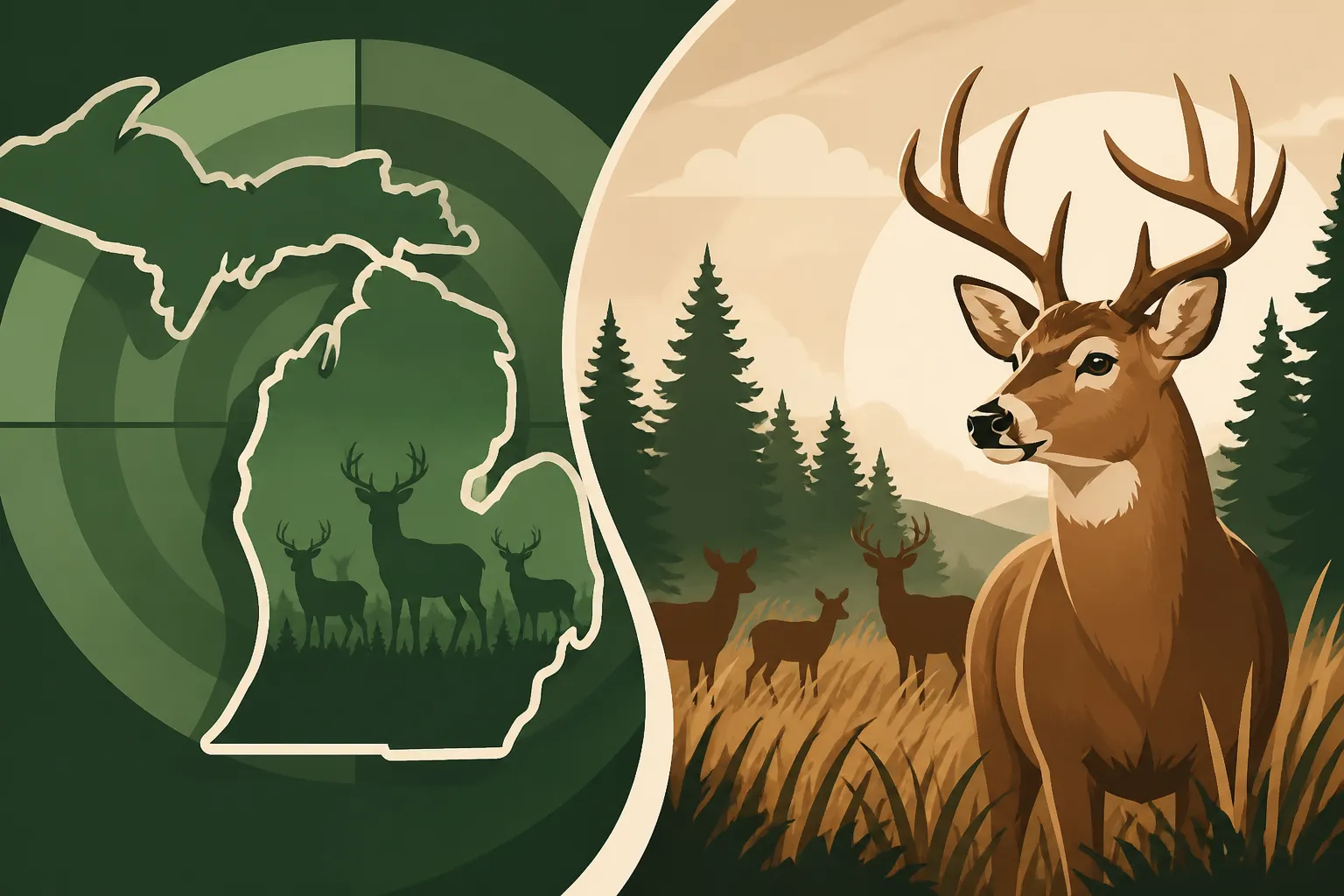
It's incredibly common to wonder just how many deer are actually out there in Michigan's woods, especially when you've put in countless hours in a stand and the sightings have been few and far between. That feeling of uncertainty, questioning if the herd is healthy or declining, is something every Michigan hunter has experienced. This guide is here to pull back the curtain on how wildlife biologists approach the incredibly complex task of estimating Michigan's deer population, giving you a clearer picture of the numbers, the science, and what it all means for your next hunt.
The Complexities of Counting Whitetails in Michigan
Trying to get an exact headcount of every single white-tailed deer roaming Michigan's diverse landscapes is, quite frankly, an impossible task. Unlike livestock in a pasture, deer are wild, constantly moving, and masters of camouflage. This isn't just a Michigan problem; it's a universal challenge for wildlife managers everywhere. The sheer scale of our state, from the vast, dense forests of the Upper Peninsula to the sprawling farm fields of the southern Lower Peninsula, makes a direct count utterly impractical. Every time you're out there, whether it's Hunting the Michigan Rut in November or just scouting after a snow, you realize how easily these animals can vanish into the landscape.
Why Estimating Deer is So Challenging
One of the biggest hurdles is the deer's inherent elusiveness. Whitetails are incredibly adaptable creatures, and their survival often depends on avoiding detection. They're masters of using cover, moving primarily at dawn and dusk, and often bedding down in areas that are incredibly difficult for humans to access. Think about those vast cedar swamps or the thickest clearcuts – ideal deer habitat, but nearly impenetrable for comprehensive surveys. This natural wariness means that simply driving roads or walking through the woods won't give you an accurate picture of the numbers.
Furthermore, Michigan's varied terrain means that deer densities can fluctuate dramatically even within a few miles. A prime agricultural area with abundant food sources might support a much higher deer population than a vast tract of mature, unbroken timber. Add to this the changing seasons, which alter deer behavior, movement patterns, and visibility, and you start to see why a precise census is a pipe dream. It's not about being lazy; it's about the fundamental nature of trying to count a wild, free-ranging animal across millions of acres.
The Limitations of Simple Counts
If simply counting every deer isn't feasible, what are the alternatives? Wildlife agencies, like the Michigan Department of Natural Resources (DNR), don't aim for a literal count. Instead, they focus on estimates and trends. This is where things can sometimes feel a bit abstract for hunters on the ground. You might hear an estimate of hundreds of thousands of deer, and if you haven't seen many, it's easy to feel a disconnect. But these estimates are built on a foundation of scientific methods designed to give the most accurate representation possible, even if it's not a definitive "this many deer" number.
The limitations of simple counts also extend to how local conditions can skew perceptions. If your favorite hunting spot has seen increased pressure, or a major timber harvest has temporarily displaced deer, your personal experience might suggest a statewide decline, even if the broader population is stable or growing elsewhere. It's crucial to understand that these estimates are macroscopic, looking at regions and the entire state, rather than microscopic, focusing on individual woodlots. This is where tools like GoHunt can come in handy, allowing hunters to delve into specific regional data and analyze trends that might impact their local hunting grounds, rather than relying solely on anecdotal evidence from a single parcel.
How the Michigan DNR Estimates Deer Populations
Given the immense challenges, the Michigan DNR employs a multi-faceted approach to estimate deer populations. They combine various data sources, each contributing a piece to the larger puzzle. It's not one magic formula, but rather a system of cross-referencing and analysis that gives biologists their best shot at understanding the health and size of the herd. This scientific rigor helps them make informed management decisions, from setting antlerless quotas to understanding the impact of disease.
Aerial Surveys and Winter Severity Index (WSI)
One critical tool, especially in the northern parts of the state where snow cover is reliable, is the aerial survey. Imagine flying over vast stretches of forest in a helicopter, slowly traversing grid patterns, looking for deer. These surveys are typically conducted in late winter when snow cover is deepest, and deciduous trees have shed their leaves, making deer more visible against the white backdrop. Biologists fly specific transects, recording every deer they see, and then extrapolate those numbers to estimate the broader population in that area. This gives them a snapshot of deer density in specific management units.
Another vital component, particularly in the Upper Peninsula, is the Winter Severity Index (WSI). The U.P. deer herd faces significant challenges, and severe winters can have a devastating impact. The WSI is a simple yet powerful tool that tracks daily measurements of snow depth and temperatures. Each day with 18 inches or more of snow, or temperatures below 0°F, adds a point to the index. A high WSI indicates a harsh winter, which often translates to increased winter mortality for deer, especially fawns and older animals. By monitoring the WSI and combining it with aerial survey data, biologists can adjust their population models to account for winter losses and predict How Many Deer the Upper Peninsula Lost. This helps to explain the Upper Peninsula Versus Lower Peninsula Deer population disparities.
Hunter Harvest Data and Biologist Surveys
Perhaps the most consistent and widely used data source comes directly from hunters: the harvest report. Every time a hunter harvests a deer in Michigan, they are legally required to report it to the DNR within 72 hours. This massive dataset includes information on the deer's sex, whether it was antlered or antlerless, and the Deer Management Unit (DMU) where it was harvested. By analyzing these harvest numbers over time, coupled with known hunter effort, biologists can develop sophisticated models to estimate the total deer population. A higher harvest might indicate a larger population, or simply more efficient hunting, and these models work to disentangle those factors.
Beyond the raw harvest numbers, biologists conduct various localized surveys. These can include pellet group counts (counting deer droppings along transects to estimate deer density), deer observation surveys (where volunteers record deer sightings in specific areas), and even road-kill data. They also gather critical biological information from deer checked at various CWD testing stations or during field checks, such as age structure, fawn-to-doe ratios, and overall herd health. This ground-level data provides crucial validation and refinement for the broader population models. For instance, looking at Michigan Deer Harvest Trends helps paint a clearer picture of how hunting pressure and herd health are interacting.
Understanding Regional Deer Population Differences
Michigan is a state of incredible ecological diversity, and its deer populations reflect that. You can't talk about "Michigan deer" as a single entity; rather, it's a collection of regional herds, each facing its own unique set of challenges and opportunities. Understanding these differences is key to making sense of the statewide estimates and for planning your hunting strategy, especially if you're looking at Hunting the Michigan Upper Peninsula for Deer compared to the Southern Lower.
Upper Peninsula Deer Density Challenges
The Upper Peninsula (U.P.) is renowned for its vast, unbroken wilderness, heavy snows, and iconic cedar swamps. While it offers incredible hunting opportunities, its deer population density is generally much lower than in the Lower Peninsula. The primary limiting factor for the U.P. herd is, without a doubt, winter. Severe, prolonged winters with deep snow force deer into conifer deeryards, concentrating them and making them more vulnerable to starvation and predation. These conditions can lead to significant winter kill, as we discussed with the Winter Severity Index.
The habitat also plays a role. While abundant, much of the U.P.'s mature timber offers less browse and food variety compared to the younger forests and agricultural interfaces further south. Recovery from tough winters can be slow, taking years for populations to rebound. This is why the DNR often manages the U.P. herd more conservatively, with fewer antlerless opportunities in some areas, to allow the population to grow and stabilize. Hunters in the U.P. know that success often comes down to finding those pockets of deer in traditional yarding areas or along the edges of clearcuts, requiring different tactics than those used in farm country. GoHunt's mapping tools can be particularly useful for identifying these specific habitat types in the expansive U.P. wilderness.
Northern Lower Peninsula Dynamics
Moving south into the northern Lower Peninsula (NLP), you find a transition zone. Winters are still significant, but generally less severe than in the U.P. This region boasts a mix of state forests, private timberlands, and increasing agricultural encroachment in some areas. The deer population here tends to be more robust than the U.P., but still experiences fluctuations tied to winter conditions and habitat changes. Large tracts of state forest, like those found when Hunting Michigan State Forest, provide vast areas of diverse habitat.
Clear-cutting and forest management practices in the NLP can have a noticeable impact on local deer numbers. Fresh cuts provide abundant new growth, creating fantastic browse and cover for deer, which can lead to localized population surges. However, as these cuts mature, they become less productive for deer, prompting them to shift their patterns. The NLP also sees more diverse food sources, including acorns and some small agricultural plots, which help deer build up fat reserves for winter. This combination of factors means the NLP often supports a healthy, huntable deer population that is less prone to the dramatic swings seen further north.
Southern Michigan's Abundant Herds
When most hunters think of high deer densities in Michigan, their minds often go to the southern Lower Peninsula (SLP). This region is characterized by extensive agriculture, fragmented woodlots, and suburban sprawl. The mild winters and year-round abundance of high-quality food (corn, soybeans, alfalfa, lush suburban landscaping) allow deer populations to thrive. These deer often exhibit impressive body weights and antler growth, thanks to the rich nutritional landscape.
However, high deer densities in the SLP also bring their own set of challenges, including increased agricultural damage, higher rates of deer-vehicle collisions, and greater concern over diseases like Chronic Wasting Disease in Michigan. This is why the DNR often provides more liberal antlerless quotas in the SLP, encouraging hunters to help manage the population and mitigate these issues. Hunting in these areas can involve navigating smaller parcels, seeking permission from landowners, and understanding deer movement between food sources and bedding cover in relatively small woodlots. The sheer number of deer means that while they might be pressured, the opportunity to see multiple deer, including mature bucks, is often higher.
Factors Influencing Michigan's Deer Population
Michigan's deer population isn't static; it's a dynamic ecosystem responding to a multitude of environmental and human-induced factors. Understanding these influences is crucial not just for wildlife managers, but for hunters trying to make sense of local deer trends and plan their strategies. It's an intricate dance between nature and human intervention that shapes the deer we pursue each season.
Habitat and Food Availability
The availability and quality of habitat are arguably the most critical determinants of a deer population's health and size. Deer need three basic things: food, water, and cover. In Michigan, food sources vary dramatically by region and season. In the agricultural belt of the SLP, standing corn, soybeans, and alfalfa fields provide an almost unlimited buffet, contributing to robust deer numbers. In the big woods of the U.P. and NLP, deer rely more on natural browse – the shoots and twigs of woody plants, acorns from oak trees, and various forbs. A good acorn crop, for instance, can significantly improve deer health going into winter and impact Late-Season Food Sources for Whitetails.
Habitat quality isn't just about food; it's about the structure of the landscape. Young, regenerating forests (often the result of logging or prescribed burns) provide dense cover and abundant browse, making excellent deer habitat. Mature, closed-canopy forests, while beautiful, offer less in the way of food. Areas with a mosaic of different successional stages, from early clearcuts to mature timber and wetlands, tend to support the healthiest and most diverse deer populations. Factors like suburban development or the fragmentation of large forest blocks can also impact deer movement and local densities, forcing them into smaller, more confined areas. This is why Habitat Work on Michigan State Forest is so important.
Predation and Disease Pressure
Predation certainly plays a role in deer populations, especially in the Upper Peninsula. Wolves, coyotes, and black bears can all prey on deer, particularly fawns and weaker adults. While a healthy, robust deer population can typically sustain some level of predation, it becomes a more significant factor in areas with already lower deer densities or during harsh winters when deer are stressed. The interaction between predator populations and deer dynamics is a complex area of ongoing research and management.
Diseases, however, can be far more devastating and rapid in their impact. Michigan actively monitors for several deer diseases, with Chronic Wasting Disease (CWD) being the most concerning. CWD is a fatal neurological disease that affects deer, elk, and moose. While its prevalence in Michigan is currently low, it has the potential to significantly impact deer populations if it spreads widely. Bovine Tuberculosis (bTB), primarily found in a localized area of Northeast Michigan, also impacts deer health. Other diseases, like Epizootic Hemorrhagic Disease (EHD), can cause localized die-offs, especially during dry, late-summer conditions. Monitoring and managing these diseases, including hunter participation in Michigan CWD Rules and Test Sites, is a critical component of ensuring the long-term health of Michigan's deer herd.
Hunting Pressure and Regulations
Hunting is the primary tool for managing Michigan's deer population. The DNR uses regulations such as season lengths, bag limits, and antler point restrictions (APRs) to influence herd dynamics. When populations are high, more liberal antlerless quotas are issued to help reduce deer numbers and bring them into balance with the habitat. Conversely, in areas where deer numbers are lower or recovering from severe winters, antlerless harvests might be restricted to allow the population to grow. Understanding Michigan Antler Point Restrictions by DMU helps hunters know what they can harvest in specific areas.
The number of hunters and their overall success rates also contribute to the population equation. While Michigan has a strong hunting tradition, hunter numbers have seen some fluctuations. The DNR continually assesses harvest data to understand how hunting pressure is affecting the age structure and overall health of the deer herd. Effective management aims for a sustainable harvest, one that provides recreational opportunities for hunters while ensuring the long-term viability of the deer population. This balance requires constant monitoring and adaptation by the DNR, often with input from hunters themselves.
Interpreting Deer Population Trends for Hunters
Understanding Michigan's deer population estimates and trends isn't just academic; it has direct implications for your hunting experience. By knowing what factors are at play and how to interpret the data, you can become a more informed and potentially more successful hunter. It helps you set realistic expectations and adapt your strategies to local conditions.
What Declining or Increasing Numbers Mean for Your Hunt
If population estimates for your chosen hunting area suggest a decline, it doesn't necessarily mean there are no deer. It often means you'll need to work harder, scout more intensely, and potentially adjust your expectations for the number of deer you'll see. A declining trend might be due to a recent severe winter, increased predation, or habitat changes. In such cases, deer might be more concentrated in prime habitat, making those areas even more valuable to locate. It could also mean that the age structure of the herd has shifted, and mature deer might be scarcer.
Conversely, if numbers are increasing, you might expect to see more deer overall. This can mean more opportunities, but also potentially more competition from other hunters, especially on public land. High populations can also mean more young deer, and perhaps a better chance at filling an antlerless tag. However, it's worth noting that simply "more deer" doesn't always equate to "more big bucks." Sometimes, very high populations can lead to poorer nutrition and smaller antler growth due to competition for food. GoHunt's detailed analytics can help you track these trends by DMU, offering insights into localized population shifts.
Using Population Data to Inform Scouting and Strategy
Armed with knowledge about deer population estimates, you can make more strategic decisions about where and how you hunt. If you're hunting in an area known for lower densities, like much of the U.P., your scouting efforts might focus heavily on identifying key resources – specific deeryards, recent clearcuts, or overlooked pockets of cover where deer might congregate. Understanding Where Big Woods Bucks Bed in Michigan becomes paramount. You might also prioritize stealthy tactics like still-hunting over sitting for long periods, increasing your chances of encountering deer on the move.
In areas with high deer populations, especially in the southern Lower Peninsula, your strategy might shift to focusing on specific movement corridors between bedding and feeding areas, or identifying pressure-resistant cover where mature bucks might seek refuge. You might pay more attention to specific food sources that deer are keying in on at a particular time of year. Knowing the general health of the herd and its density can also influence your approach to calling, rattling, or even your choice of stand location. Scouting Michigan Public Land Before Season is always a good idea, but knowing the population context for that land can give you an edge. Ultimately, using population data helps you move beyond just "hunting where you've always hunted" to a more adaptive, informed approach.
The Michigan Deer Population Estimate
To give you a clearer picture, here's a general overview of Michigan's deer population by major region. Keep in mind these are estimates and can fluctuate year to year based on various factors discussed above.
| Region | Estimated Deer Density (Deer per sq. mile) | General Population Trend (Recent Years) | Primary Limiting Factors | Typical Antlerless Harvest Opportunity |
|---|---|---|---|---|
| Upper Peninsula (U.P.) | 10-20 | Stable to Slowly Increasing (post-tough winters) | Severe Winters, Predation, Habitat Quality | Limited to Moderate |
| Northern Lower Peninsula (NLP) | 20-40 | Stable to Increasing | Winter Severity (less than U.P.), Habitat Maturation | Moderate to Liberal |
| Southern Lower Peninsula (SLP) | 40-70+ | Stable to Liberal | Disease (CWD, EHD), Human-Deer Conflict, Habitat Fragmentation | Liberal to Very Liberal |
Note: These figures are generalized estimates and can vary significantly by specific Deer Management Unit (DMU) within each region. Always consult the latest Michigan DNR Hunting Guide for specific regulations and population status reports.
Disclaimer
This article is for informational purposes only and is not a substitute for official regulations. Always consult the latest Michigan Department of Natural Resources (DNR) hunting regulations and guidelines before planning any hunting activities. Seasons, rules, and population estimates can change, and it is the hunter's responsibility to stay informed and compliant with all applicable laws.