Michigan Woodcock Singing Ground Surveys
For those of us who cherish Michigan's timberdoodles, with their quirky sky dance and the thrill of a close-flushing bird in thick cover, there's often a nagging question: how do wildlife managers even keep tabs on these elusive, migratory wonders? It's not like deer, where you can see tracks in the snow or get a good estimate from aerial surveys. This guide will pull back the curtain on the critical Michigan Woodcock Singing Ground Surveys, explaining what they are, why they're so vital for understanding woodcock populations, and how the data they provide helps ensure we continue to have healthy seasons for this beloved game bird.
What Are Michigan Woodcock Singing Ground Surveys?
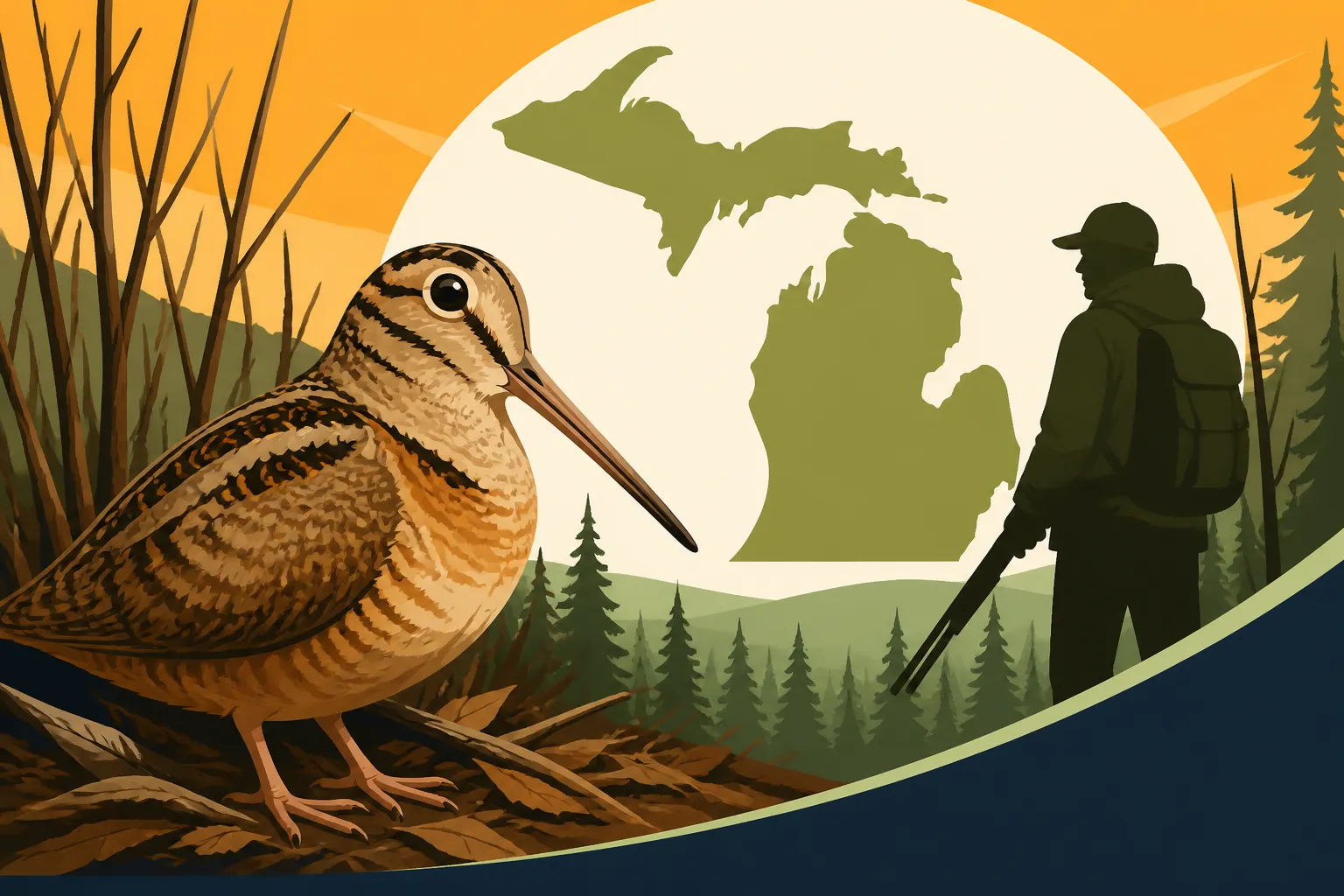
If you've ever spent time in Michigan's alder runs or young aspen stands around dusk or dawn in early spring, you might have heard a strange, nasal "peent!" followed by a rising, spiraling flight and a unique "twittering" sound. That, my friend, is the American woodcock putting on his annual courtship display, often referred to as a "sky dance." It's a truly remarkable sight and sound, and it's also the cornerstone of the Michigan Woodcock Singing Ground Surveys.
These surveys are a standardized method used across the woodcock's breeding range, including right here in Michigan, to monitor population trends. Unlike many other game species, woodcock are migratory, which means their numbers are influenced by conditions not just in Michigan, but also in their wintering grounds down south and along their migration corridors. The surveys are a coordinated effort between the Michigan Department of Natural Resources (DNR), the U.S. Fish and Wildlife Service (USFWS), and a dedicated network of volunteers and professional biologists. They are designed to count the number of male woodcock performing their singing ground display during the peak of their breeding activity. Without this consistent data, we'd be flying blind when it comes to managing these fascinating birds.
The Unique Courtship Display
The male woodcock's courtship display is truly one of nature's marvels, and it's what makes these surveys possible. As the sun dips below the horizon in the evening, or just as it's beginning to paint the eastern sky in the morning, a male woodcock will emerge from the dense cover. He'll usually find a small, open patch of ground, his "singing ground," where he begins his performance with a series of distinct, buzzy "peent" calls. These calls are often described as sounding like a rusty gate hinge or a child's toy trumpet.
After a series of these ground calls, the male suddenly launches himself into the air, flying in wide spirals, sometimes reaching heights of 200 to 300 feet. As he ascends, the air rushing through his specialized primary wing feathers creates a beautiful, whistling or "twittering" sound, a natural symphony that's unique to the species. At the apex of his flight, he'll often pause for a moment, then descend in a zig-zag pattern, emitting a liquid, warbling song, before landing softly back on his original singing ground. This entire performance, from peenting to landing, typically lasts less than a minute. It's a display primarily aimed at attracting a mate, but for surveyors, it's a clear signal that a breeding male woodcock is present in that area.
Standardized Survey Protocols
The consistency of the woodcock's breeding behavior is key to the effectiveness of these surveys. Across Michigan and throughout the species' range, these surveys follow strict, standardized protocols to ensure the data is comparable year after year and region to region. This standardization is crucial for tracking actual population changes rather than just variations in survey effort or methodology.
Survey routes consist of fixed, predetermined segments, typically 3.6 miles long, with ten listening stops spaced out at 0.4-mile intervals. Each route is surveyed once each spring, usually between April 20th and May 15th, which is considered the peak breeding period for woodcock in Michigan. Observers arrive at the first stop 10 minutes before local sunset (for evening surveys) or 40 minutes before local sunrise (for morning surveys) and begin listening exactly at those times. At each of the ten stops, the observer listens for two minutes, recording every peenting or flight song they hear. They also note the weather conditions – ideal conditions are calm winds (less than 10 mph) and clear skies, with no rain, as these elements can significantly affect a bird's willingness to perform or an observer's ability to hear. GoHunt's mapping features, while not directly tied to conducting these surveys, can be a great tool for personal scouting to identify similar open areas within dense cover that might serve as singing grounds.
The consistency of these routes and methods over decades is what gives the data its scientific power, allowing biologists to detect subtle shifts in woodcock numbers. Michigan Woodcock Singing Ground Surveys are a true testament to long-term wildlife monitoring.
Why These Surveys Matter for Michigan Hunters
For those of us who eagerly anticipate Michigan Woodcock Season Dates each fall, the singing ground surveys are far more than just a scientific exercise; they are a direct link to the health of the woodcock population and the decisions made about our hunting opportunities. Without this consistent monitoring, wildlife agencies would lack the fundamental data needed to manage the species sustainably, potentially leading to over-harvest or missed opportunities. It's about ensuring a future for this unique bird and for the tradition of hunting it.
Michigan is a vital state for woodcock, serving as both a significant breeding ground and a crucial stopover point for birds migrating further north into Canada. This dual role means that understanding our local population trends is intrinsically linked to the broader health of the continental woodcock population.
Influencing Season Dates and Bag Limits
The primary reason these surveys are so important to hunters is their direct influence on setting hunting regulations. The data collected from the Michigan Woodcock Singing Ground Surveys, combined with results from other states and provinces, is compiled and analyzed by the USFWS. This federal agency, which has primary jurisdiction over migratory birds, then establishes a framework for hunting seasons, including season lengths, opening and closing dates, and daily bag limits.
Once the federal framework is established, individual states like Michigan then set their specific regulations within those guidelines. If the survey data indicates a stable or increasing population trend, we might see more generous seasons or bag limits. Conversely, if there's a significant decline detected over several years, wildlife managers might implement more conservative regulations to protect the breeding population. It's a delicate balance, trying to provide ample opportunity for hunters while ensuring the long-term health and sustainability of the species. Think about it, every time you check the small game regulations for Michigan Small Game Seasons and Bag Limits, that information has its roots in data collected during those quiet spring mornings and evenings.
Tracking Population Trends Over Time
The real power of the singing ground surveys comes from their long-term nature. By conducting the same survey, in the same locations, using the same methods, year after year, biologists can track population trends over decades. This allows them to differentiate between natural year-to-year fluctuations and genuine, sustained changes in the woodcock population.
Michigan's woodcock population, like that of many early successional habitat species, has faced challenges. Habitat loss due to forest maturation and development is a significant factor. Historically, practices like clear-cutting for timber created abundant young forest habitat that woodcock thrive in, as do ruffed grouse (which also follow Michigan Ruffed Grouse Cycles). As these forests mature, the habitat becomes less suitable. The survey data helps us understand the impact of these changes on woodcock numbers. It also sheds light on broader factors like climate change impacting migration patterns or breeding success. For example, knowing Timing the Michigan Woodcock Flight is key for hunters, and understanding how these timings shift could come from long-term survey data.
Table: Michigan Woodcock Singing Ground Survey Basics
| Aspect | Description | Importance for Hunters |
|---|---|---|
| Purpose | Monitor long-term population trends of American Woodcock. | Ensures sustainable hunting seasons. |
| Method | Listening for male "peent" calls and flight songs at fixed stops. | Directly informs bag limits and season dates. |
| Timing | April 20 – May 15 (peak breeding season). | Data reflects breeding success and population health. |
| Location | Standardized 10-stop routes across Michigan and the US/Canada. | Provides consistent, comparable data. |
| Key Indicators | Number of "peenting" males per route. | Tracks population increases or declines. |
How Survey Data is Used and Interpreted
Once the singing ground surveys are completed each spring across Michigan and the wider woodcock range, the real work of analysis begins. This isn't just about counting birds; it's about interpreting those counts in the context of regional and national trends, accounting for potential biases, and ultimately using that information to make informed conservation and management decisions that impact hunting seasons. It’s a complex process that combines field biology with statistical analysis.
Michigan’s data is a piece of a much larger puzzle, contributing to a continental understanding of woodcock health. This collaborative approach is essential because migratory birds don’t recognize state or national borders.
From Field Data to Management Decisions
After a volunteer or biologist completes their assigned survey routes, the raw data – essentially, the number of peenting males heard at each stop along each route – is submitted to the USFWS. Here, statisticians and biologists analyze the data from all participating states and provinces. They look for statistically significant changes in the average number of woodcock heard per route, both annually and over longer periods (e.g., 10-year trends).
This analysis generates regional and national population estimates and trend lines. These reports are then shared with state wildlife agencies, including the Michigan DNR. The DNR considers these findings, along with state-specific information like habitat conditions, hunter harvest data (from harvest reports), and local observations, to formulate their recommendations for Michigan's woodcock hunting season. For example, if the broader survey shows a decline, but local Michigan habitat projects (like those related to Aspen Management and Michigan Grouse) are showing positive local responses, that nuanced understanding helps shape the final regulations. It’s not just a numbers game; it’s about applying science to real-world ecological conditions. This thoughtful approach ensures that Michigan’s hunting opportunities are sustainable.
Challenges and Future Outlook
Even with the standardized methods and dedicated observers, interpreting woodcock singing ground survey data isn't without its challenges. Variables like observer experience, slight differences in timing or weather on survey days, and natural year-to-year variability in bird behavior can all introduce minor fluctuations. However, by looking at long-term trends and averaging across many routes, these individual anomalies tend to smooth out, allowing for a clearer picture of population status.
A more significant challenge for woodcock is habitat. These birds are specialized for young, regenerating forests – dense thickets of alder, young aspen, and willow, often found in moist areas. As forests age and land use changes, this critical "early successional" habitat declines. The survey data often reflects this habitat loss, showing gradual, long-term declines in woodcock numbers in many areas. Climate change also presents an unknown, potentially altering migration timing, breeding success, or the availability of crucial insect prey. That's why managing areas like Michigan State Forest Hunting land to create diverse age classes of timber is so important.
The future outlook for woodcock, and thus for the hunt, heavily relies on continued monitoring and proactive habitat management. Without these surveys, we wouldn't have the scientific basis to advocate for the creation and maintenance of the young forest habitat that woodcock (and many other wildlife species) desperately need.
How Hunters Can Contribute (Even if Not Surveying)
While formal singing ground surveys are conducted by trained professionals and dedicated volunteers, hunters play an incredibly important role in the overall picture of woodcock conservation in Michigan. Our time in the field, our observations, and our support for habitat initiatives all contribute to the long-term health of this unique bird. You don't need a clipboard and a stopwatch to be part of the solution; your passion for the outdoors and engagement with the species is already a huge step.
Every time you're out there chasing grouse in Grouse Hunting Michigan Aspen Cover or exploring Finding Woodcock in Alder Runs, you're gathering valuable ground-level intelligence, even if you don't realize it.
Citizen Science and Hunter Observations
Hunters are often the first to notice changes on the landscape or shifts in bird populations. While anecdotal, a collective body of hunter observations can provide valuable supplementary information to formal surveys. For instance, if you're consistently seeing fewer woodcock in a particular area where you used to find many, or conversely, discovering new pockets of birds, that's information that can inform your local DNR biologist.
Some hunters use mapping apps, such as those provided by GoHunt, not just for navigation but to mark specific flushes, drumming logs, or areas of good habitat they encounter. While this isn't directly uploaded to a formal survey, it helps individual hunters understand patterns and can be part of their personal scouting process. If you ever happen to harvest a banded bird, reporting that band number to the USFWS is a direct and incredibly valuable contribution to understanding woodcock migration and survival rates. Every piece of data helps build a more complete understanding.
Supporting Habitat and Conservation
Perhaps the most impactful way hunters can contribute to the future of Michigan woodcock is through their support of habitat and conservation efforts. Woodcock, like ruffed grouse and snowshoe hares (Michigan Small Game and Hares), depend on early successional forest habitat. This type of habitat isn't permanent; it needs active management, often through timber harvests or prescribed burns, to regenerate.
Organizations like the Ruffed Grouse Society and American Woodcock Society (often working together due to overlapping habitat needs) are dedicated to promoting and funding these habitat projects. By joining these organizations, donating, or simply advocating for active forest management on public lands, you're directly helping to create and maintain the homes that woodcock need to thrive. When you see habitat improvement projects in Michigan State Forest Hunting areas, understand that those efforts are often a direct response to data showing where these species need help. So, whether you're Hunting Grouse and Woodcock Together or just focusing on woodcock, your support for these initiatives ensures healthy populations for generations to come.
Disclaimer
This article is for general informational purposes only and does not constitute professional advice. Laws, prices and regulations vary by location and change over time. Consult a qualified professional for guidance on your specific situation.