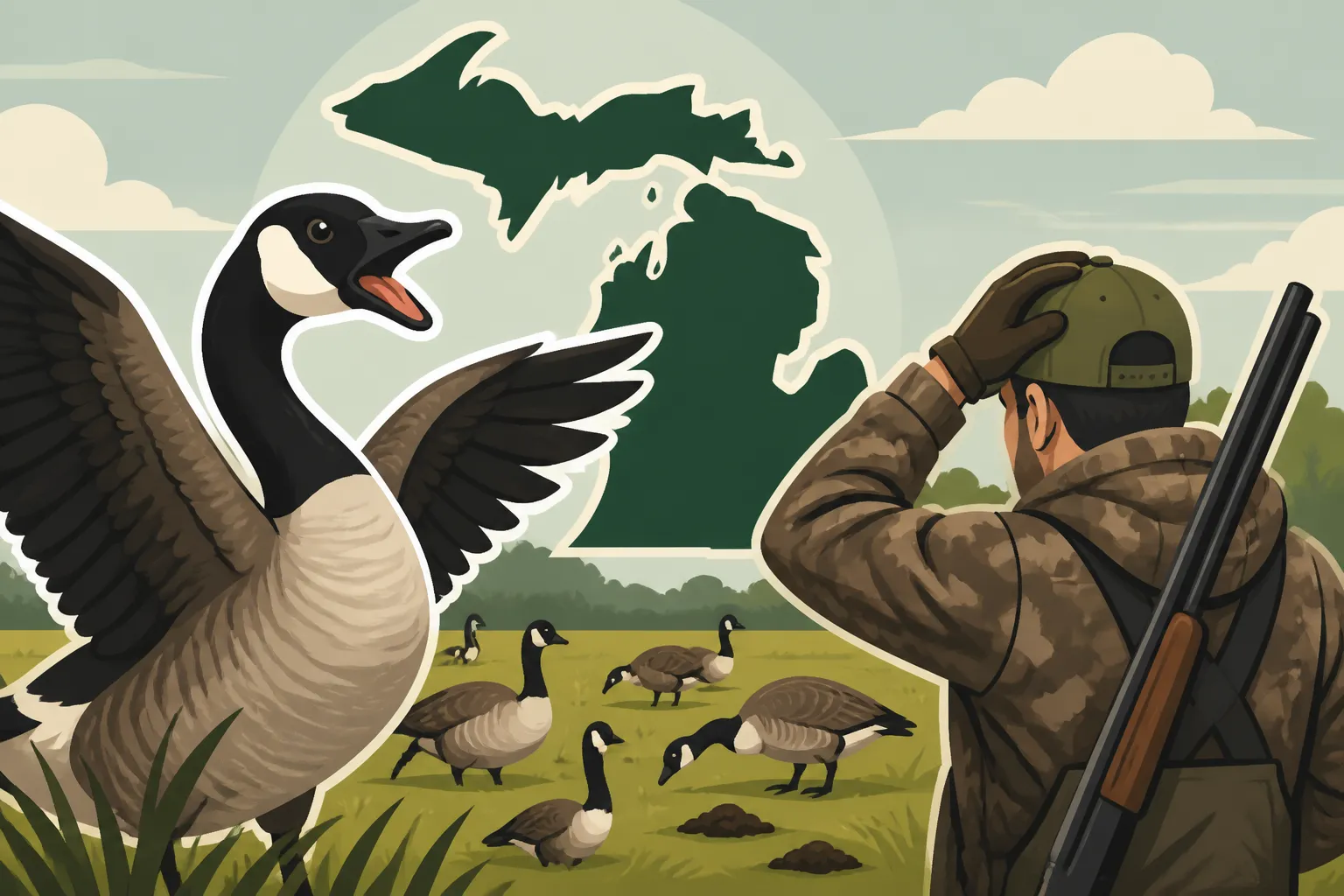
Resident Goose Problems in Michigan
Michigan hunters and homeowners often find themselves scratching their heads, wondering why there seem to be so many Canada geese around these days, especially outside of traditional migration patterns. It's a common frustration, seeing flocks year-round in parks, golf courses, and even farmlands, leaving behind messes and causing real problems. This guide will dive deep into the phenomenon of Michigan's resident goose population, exploring how they've become so prevalent, the issues they create, and the various strategies, including hunting, used to manage their growing numbers.
The Rise of the Resident Goose in Michigan
It's easy to assume all Canada geese are migratory, flying south for the winter and returning north in the spring. While that's true for many "wild" populations, Michigan, like many states, has seen a dramatic increase in what we call "resident geese." These aren't the geese that nest in the far north and pass through. These are geese that live here, often year-round, making themselves quite at home in our parks, suburban ponds, and agricultural fields. They’ve become a distinct demographic, separate from their migratory cousins, and their numbers continue to climb.
Why Resident Geese Stay Put
The truth is, we've created a perfect environment for them. Many decades ago, efforts were made to re-establish goose populations by releasing birds in suitable habitats. These birds, often from captive or semi-domesticated stock, never really developed the strong migratory urge of their wild ancestors. They found everything they needed right here: abundant food, safety from predators, and plenty of water, often in close proximity to human development. With less incentive to undertake arduous migrations, they simply chose to stay.
Our modern landscapes are practically custom-built for resident geese. Expansive, well-manicured lawns, like those found around corporate parks, subdivisions, and golf courses, offer easily digestible, nutritious forage. Stormwater retention ponds and man-made lakes provide safe roosting and nesting sites, often with gently sloping banks that are easy for goslings to navigate. Combine this with a general lack of natural predators in these developed areas, and you have a recipe for booming goose populations that rarely feel the need to leave Michigan.
Differentiating Resident from Migratory Geese
For the average person, a goose is a goose. But for hunters and wildlife managers, understanding the difference between resident and migratory Canada geese is crucial. Migratory geese typically breed in Canada and the northern U.S., undertaking long flights south to wintering grounds. They are often leaner, more wary, and follow established routes. Resident geese, on the other hand, spend their entire lives within a relatively small geographic area. They're often heavier, more habituated to humans, and can be seen grazing fields or swimming in local ponds through every season.
These local populations have developed different behaviors. They're less skittish, having grown up around people, cars, and pets. They often nest earlier in the spring and typically have higher survival rates for their goslings due to fewer predators and stable food sources. This distinction is important because management strategies, including hunting seasons, are often tailored to address the unique challenges presented by these localized, non-migratory birds. Understanding this helps explain why Michigan has special seasons and regulations for geese.
The Real Problems Resident Geese Cause
While a few geese can be charming, their burgeoning populations lead to a host of issues that impact everything from public health to agricultural livelihoods. It's not just about aesthetic complaints; the sheer volume of birds and their waste creates tangible, often expensive, problems. For those who deal with it daily, the term "problem" is an understatement.
Nuisance and Environmental Damage
One of the most immediate and visible problems is the sheer amount of droppings. A single goose can produce a pound or more of feces a day. Multiply that by hundreds or thousands of birds congregating in parks, beaches, and golf courses, and you have a significant mess. This not only makes recreational areas unpleasant but also contributes to elevated bacteria levels in water bodies, potentially leading to closures of swimming areas and impacting water quality. Imagine taking your family to a beautiful Michigan beach only to find it covered in goose droppings – it's a real buzzkill.
Beyond the droppings, geese can cause considerable damage to vegetation. Their constant grazing can denude lawns, golf course greens, and meticulously maintained landscapes. They pull up young plants, compact soil, and create erosion issues along pond banks. In areas where native plant restoration is underway, geese can decimate new plantings, setting back conservation efforts significantly. It's a continuous battle for park managers and homeowners alike to maintain healthy ecosystems and attractive grounds against their relentless foraging.
Agricultural Impacts and Crop Loss
For farmers in Michigan, resident geese are far more than a nuisance; they are a direct threat to their livelihood. Large flocks can descend upon fields, particularly during planting and harvest seasons, causing substantial crop damage. Young corn and soybean shoots are a favorite, often nipped off at the ground level, requiring costly replanting. Later in the season, geese will graze on mature crops, eating grains and trampling plants, leading to significant yield reductions. This can be devastating for a farmer relying on that harvest.
Consider a farmer in the Thumb region, planting a fresh field of winter wheat or early corn. A flock of a few hundred geese can wipe out acres of tender sprouts in a single day. The financial burden of replanting, coupled with the potential for reduced yields or late harvests, can have a profound effect on the bottom line. It's an ongoing battle that often requires farmers to invest in deterrents, from scarecrows and noisemakers to propane cannons, which are often only temporarily effective before the geese adapt. This isn't just a minor inconvenience; it's a serious economic challenge that necessitates effective management.
Health Concerns and Water Quality
The sheer volume of goose droppings also raises legitimate public health concerns. Goose feces can carry various bacteria, including E. coli and Salmonella, as well as parasites like Cryptosporidium and Giardia. When these droppings are deposited near swimming areas, on playgrounds, or in drinking water sources, they can pose a risk of illness to humans and pets. High bacterial counts can lead to beach closures, which impacts local tourism and recreation.
For water treatment facilities, increased bacterial loads from goose populations can lead to higher treatment costs and challenges in meeting water quality standards. Runoff from fields and lawns laden with goose droppings can contribute to nutrient loading in lakes and rivers, exacerbating algal blooms and impacting aquatic ecosystems. It's a complex cycle where the abundance of geese directly correlates with environmental degradation and potential health risks, requiring comprehensive management strategies to mitigate these impacts on Michigan's natural resources and public safety.
Managing Michigan's Resident Goose Population
Addressing the pervasive issue of resident geese requires a multi-faceted approach, combining proactive measures with direct intervention. No single solution works everywhere, and often, a combination of tactics is needed to keep populations in check and minimize their impact. Michigan actively pursues various methods, and property owners also have options to manage geese on their land.
Non-Lethal Deterrents and Habitat Modification
One of the first lines of defense often involves non-lethal methods aimed at making an area less appealing to geese. This can include modifying habitat to make it less inviting, such as letting grass grow taller around ponds, as geese prefer short, easily grazed turf with clear sightlines to detect predators. Barriers like fences, strategically placed landscaping, or even specialized netting can deter them from entering certain areas. Visual deterrents like reflective tape, predator effigies, or even Mylar balloons are sometimes used, though geese are notoriously intelligent and often quickly habituate to these.
Hazing is another common non-lethal approach, involving the use of dogs (often Border Collies trained specifically for goose management) or even remote-controlled boats to harass geese and encourage them to move elsewhere. Chemical repellents, which make grass taste bitter, can also be applied to deter grazing. For nesting geese, egg addling or oiling, where eggs are treated to prevent hatching without harming the adult birds, is a frequently used method to limit population growth in specific areas. These methods require consistent effort and often work best in combination, and some may require permits, especially on public lands.
Direct Control Measures
When non-lethal methods prove insufficient, direct control measures may be necessary, especially in situations where goose populations are causing significant damage or posing health risks. These measures typically involve reducing the number of birds through culling operations or regulated hunting. Culling, often conducted by wildlife professionals, involves humanely removing birds from specific problem areas, usually during their summer molt when they are flightless. This is a targeted approach, often used in urban or suburban settings where hunting is not feasible.
For larger-scale population management, hunting plays a critical role. Michigan's regulated hunting seasons for geese are designed to help control resident populations, especially during early seasons before migratory birds arrive in large numbers. These seasons provide opportunities for hunters to harvest birds, contributing to overall population reduction. Hunters who participate are performing a valuable service, helping to alleviate the pressures these abundant birds place on both natural and human-made environments. Using tools like GoHunt can help hunters find regulations and season dates for goose hunting opportunities across the state.
Michigan's Goose Management Programs
The state of Michigan, through its wildlife agencies, actively manages resident goose populations. This involves monitoring population trends, setting appropriate hunting regulations, and assisting municipalities and landowners with management plans. They understand that a "one-size-fits-all" approach simply won't work across Michigan's diverse landscapes, from crowded suburban parks to expansive agricultural fields. The goal is to strike a balance: preserving healthy goose populations where appropriate, while mitigating the negative impacts where they are overabundant.
Michigan’s waterfowl biologists utilize data from hunter harvest reports, population surveys, and banding efforts to make informed decisions about bag limits, season lengths, and special management zones. Programs like the early September goose season are specifically implemented to target resident geese before the main migration arrives, thereby reducing overall numbers. These efforts are crucial for sustaining ecological balance and ensuring that both wildlife and human interests are considered. Hunters are encouraged to report their harvests accurately, as this data is vital for effective management strategies.
The Hunter's Role in Goose Management
For many non-hunters, the idea of hunting might seem solely recreational. However, when it comes to managing abundant wildlife like Michigan's resident Canada geese, hunting is a proven, effective, and environmentally responsible tool. Hunters directly contribute to population control, provide valuable data, and help fund conservation efforts.
How Hunting Helps Control Populations
Regulated hunting seasons are specifically designed to remove a portion of the goose population annually, thereby helping to keep their numbers within ecological and social tolerance levels. The early goose season in Michigan, for instance, is set strategically in September to target local, non-migratory birds before the influx of more northern-breeding geese. This direct reduction helps alleviate the pressure on local habitats, reduces agricultural damage, and lessens the health risks associated with overpopulation.
Without hunting, these highly adaptable birds would continue to reproduce unchecked, leading to even greater problems. Hunting isn't just about bagging birds; it's about actively participating in the ecological balance. Every goose harvested by a hunter is one less bird contributing to the droppings on public parks, the grazing on farmers' crops, or the bacterial load in our waterways. It's a tangible way individuals can contribute to a healthier environment and more manageable wildlife populations. Early Goose Season Tactics in Michigan can help hunters maximize their effectiveness in these important seasons.
Understanding Michigan's Goose Seasons and Regulations
Participating in goose hunting requires a solid understanding of Michigan's specific seasons, zones, and bag limits. Michigan is divided into different waterfowl zones, each with its own specific opening and closing dates for goose hunting, as well as daily bag and possession limits. These regulations are meticulously crafted by wildlife managers to target specific populations (resident vs. migratory) and ensure sustainable harvests. Hunters are required to purchase a Michigan hunting license, a Michigan waterfowl license, and a federal duck stamp, and be HIP (Harvest Information Program) registered.
It’s crucial for hunters to consult the latest Michigan hunting regulations annually, as dates and rules can change. Resources like the Michigan DNR website, or a platform like GoHunt, offer detailed information on Michigan Waterfowl Seasons and Zones, daily bag limits, and any special restrictions. Knowing your zone, the legal shooting hours, and how to properly identify different goose species (though largely Canada geese in Michigan, it's always good practice) are fundamental to responsible hunting. This preparation ensures a safe and legal hunt while contributing to effective management.
Ethical Hunting Practices and Conservation
Ethical hunting goes hand-in-hand with conservation. For goose hunters, this means not only following all legal regulations but also striving for clean kills, minimizing waste, and respecting wildlife and landowners. It includes being proficient with your chosen firearm, understanding shot distances, and using appropriate non-toxic shot, which is required for waterfowl hunting. After a successful hunt, properly retrieving and utilizing the harvested geese is an important aspect of ethical practice.
Hunters are often the first to notice changes in wildlife populations or habitat, making them invaluable partners in conservation efforts. The funds generated from hunting license sales and federal duck stamps directly support habitat restoration, research, and enforcement activities that benefit not only geese but a vast array of other wildlife. By adhering to ethical standards and actively participating, hunters reinforce their role as conservationists, demonstrating that their passion for the outdoors contributes positively to Michigan's natural heritage. Whether you're Field Hunting Geese in Cut Corn or utilizing one of the Michigan Managed Waterfowl Areas, always prioritize ethical practices.
| Aspect | Non-Lethal Deterrents | Direct Control (Culling) | Regulated Hunting |
|---|---|---|---|
| Primary Goal | Displace or prevent access; reduce reproduction | Rapid population reduction in specific areas | Sustainable population reduction; recreation |
| Methods | Hazing (dogs, effigies), habitat modification, egg addling, repellents | Humane removal by authorized personnel | Licensed hunters harvest birds during set seasons |
| Effectiveness | Variable; requires consistency; geese adapt | Highly effective for immediate local reduction | Effective for broad population management |
| Permit Required | Often for egg addling/oiling or specific hazing | Always, highly regulated | Hunting license, waterfowl license, federal stamp |
| Cost | Ongoing for materials/services; labor-intensive | High for professional services; specialized equipment | License/gear costs for hunters |
| Public Perception | Generally positive | Can be controversial if not well-communicated | Mixed; understood by those familiar with wildlife management |
| Benefits | Reduced local nuisance, habitat protection | Immediate relief from severe problems | Population control, food source, conservation funding |
Conclusion
Michigan's resident goose population presents a complex challenge, one that requires ongoing attention and a combination of strategies. From the widespread messes they create in our parks to the significant financial losses incurred by farmers, these birds, while beautiful, demand thoughtful management. By understanding why these geese have become so prevalent and the various impacts they have, we can better appreciate the efforts being made to manage their numbers. Hunters play a vital, often unsung, role in this effort, providing a sustainable and effective means of population control that benefits both the environment and human communities across the state.
Disclaimer
This article is for general informational purposes only and does not constitute professional advice. Laws, prices and regulations vary by location and change over time. Consult a qualified professional for guidance on your specific situation.