Best Michigan Counties for Grouse
For many of us who chase the king of game birds, the drumming of a ruffed grouse is the true soundtrack of autumn in Michigan. But finding consistent action isn't always easy, and it can be frustrating to put in the miles only to find silent woods. This guide is dedicated to helping you pinpoint Michigan's best counties for grouse, delving into what makes them special and how you can find success within their borders.
Understanding What Makes a Premier Grouse County
Before we dive into specific locations, it's crucial to understand what factors contribute to a county being a grouse hotspot. Ruffed grouse aren't just found anywhere; they thrive in very particular types of cover, and Michigan's diverse landscape means some areas are naturally better than others. It's about more than just trees; it's about the right kind of trees at the right stage of growth, and the management that creates it.
The Critical Role of Young Aspen and Mixed Forests
When you're talking about ruffed grouse, you're almost always talking about aspen. Young, regenerating aspen stands are the undisputed champions of grouse habitat. These are typically areas that have been clear-cut within the last 10 to 25 years, leading to a dense tangle of new growth. This thick cover provides essential protection from aerial predators like hawks and owls, while the buds and catkins of aspen trees serve as a vital food source, especially in winter. Without these young, dense pockets, grouse populations struggle.
Michigan's best grouse counties often have a history of active forest management, specifically timber harvesting, that creates this mosaic of different-aged aspen stands. These clear-cuts, often just a few acres in size, create the perfect conditions for grouse to feed, breed, and hide. Beyond aspen, grouse also utilize mixed forests that include conifers like spruce and fir, particularly for winter cover, and areas with ample food sources like dogwood, hazelnut, and various berries. Aspen Management and Michigan Grouse is key to understanding why some areas consistently produce.
The Influence of Grouse Population Cycles
It's not just about habitat; grouse populations are famously cyclical. These cycles, often peaking every 8-10 years, can significantly impact hunting success regardless of how "good" a county is. Even in a top-tier county, a low point in the cycle can make birds feel scarce, leading to slower hunting days. Conversely, during a high point in the cycle, even marginal cover can hold more birds.
While we can't control the cycle, understanding it helps manage expectations. Biologists monitor these trends, and generally, when the overall state population is up, the best counties will still be your most reliable bets. These counties have the resilient habitat needed to support grouse even during the leaner years, allowing them to rebound quickly when conditions improve. You can find more details on these natural fluctuations in Michigan Ruffed Grouse Cycles.
Premier Grouse Counties in the Northern Lower Peninsula
The Northern Lower Peninsula (NLP) is a beloved destination for many grouse hunters, offering vast tracts of public land and a long history of excellent bird hunting. The rolling hills, diverse forest types, and active timber industries in these counties combine to create outstanding opportunities.
Ogemaw, Roscommon, and Oscoda Counties: The Core of NLP Grouse
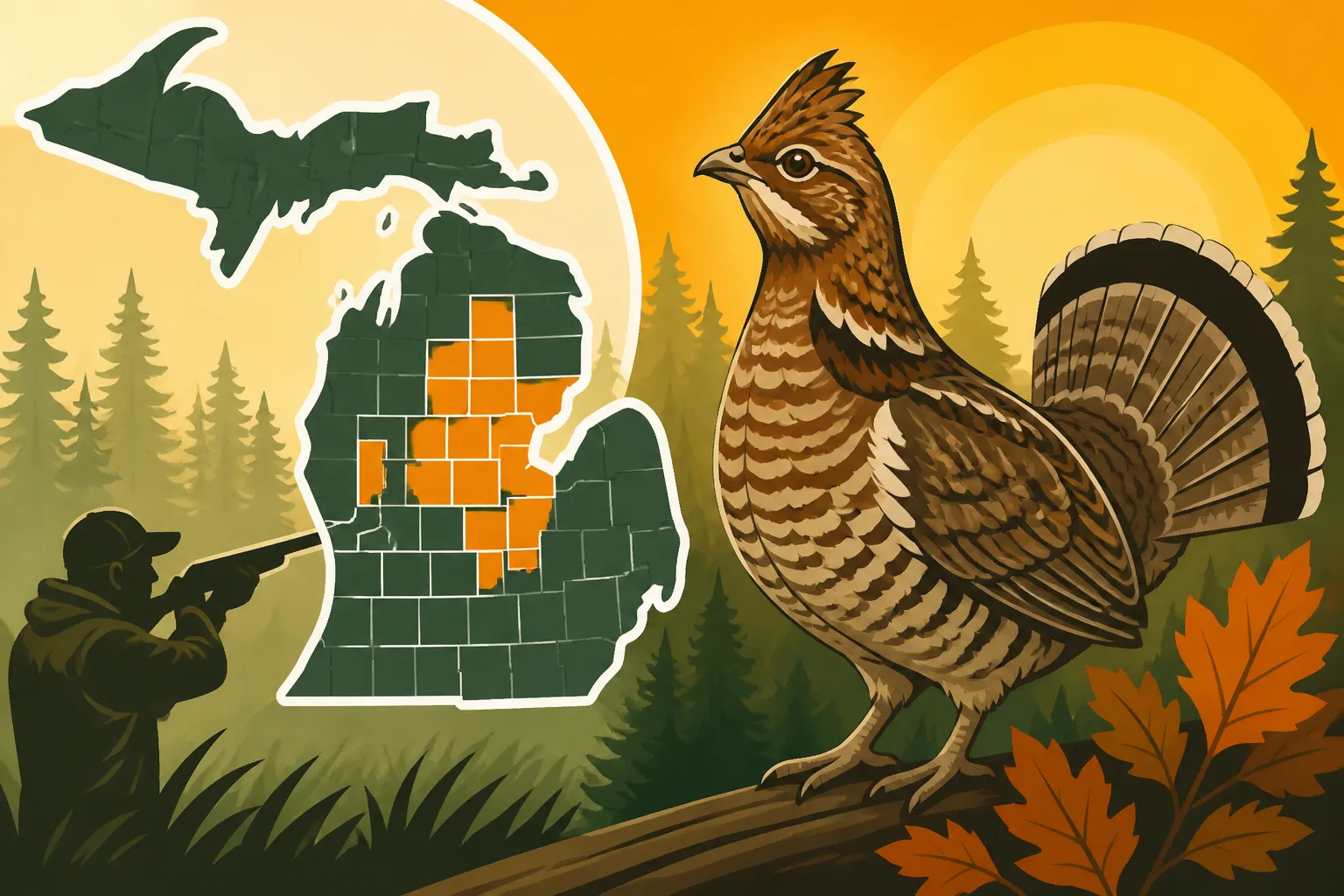
When serious grouse hunters think of the NLP, counties like Ogemaw, Roscommon, and Oscoda often come immediately to mind. These counties, situated within Michigan's "pine barrens" region, have undergone significant habitat changes over the last century, evolving into prime grouse country thanks to fire suppression and extensive timber harvesting. You'll find a patchwork of state forest land throughout, providing ample access.
These counties are characterized by extensive state forest ownership and a healthy mix of aspen, oak, and pine. Active logging operations consistently create the necessary young aspen stands. Look for areas with diverse age classes of timber – a dense young cut next to a slightly older stand, bordered by some mature hardwoods or conifers. These transitions are where grouse thrive, offering food, cover, and drumming sites. Many hunters use mapping tools like GoHunt to scout these areas virtually, looking for recent clear-cuts and diverse cover types before they ever set foot in the woods.
Kalkaska, Missaukee, and Crawford Counties: Hidden Gems and Consistent Performers
Moving slightly west and north, Kalkaska, Missaukee, and Crawford counties also stand out as consistent performers for grouse. Kalkaska, in particular, has a strong reputation, with significant state forest land and a history of active timber management. These areas often feature sandy soils, which, while not always ideal for agriculture, are perfect for growing fast-growing aspen and oak.
What makes these areas particularly appealing is the sheer amount of contiguous public land, much of it managed by the Michigan Department of Natural Resources as state forest. This means less pressure from development and more consistent habitat work. Hunters willing to walk a bit further from main roads or access points often find birds that see less pressure. Remember that grouse, like deer, will often seek out quiet pockets, so don't be afraid to Finding Ground Others Walk Past.
Montmorency and Otsego Counties: Northern NLP Upland Havens
Further north in the Lower Peninsula, Montmorency and Otsego counties offer classic Northern Michigan grouse hunting. These counties are home to portions of the Pigeon River Country State Forest, which, while known for elk, also holds substantial grouse populations due to its vast tracts of mixed forests and ongoing habitat management. The terrain here can be a bit more rugged, with rolling hills and deeper drainages, which can create excellent thermal cover for grouse.
Hunting these counties often involves navigating larger blocks of timber. Focus your efforts around areas of recent logging, particularly where aspen has been regenerated. Alder runs along creek bottoms or swamp edges also hold birds, especially woodcock, which often share the same habitat. Many of these areas also feature designated Michigan Grouse Enhanced Management Site List where habitat work is specifically focused on improving conditions for upland birds.
Upper Peninsula Hotspots for Ruffed Grouse
The Upper Peninsula (U.P.) is often considered the heartland of Michigan's grouse hunting, offering an unparalleled sense of wilderness and vast, sprawling forests. The sheer scale of public land and the robust timber industry here create ideal conditions for ruffed grouse to flourish.
Iron, Gogebic, and Ontonagon Counties: Western U.P. Grouse Paradise
If you're looking for quintessential U.P. grouse hunting, the western counties of Iron, Gogebic, and Ontonagon are legendary. These counties boast immense tracts of national forest (Ottawa National Forest) and state forest land, ensuring virtually endless public access. The landscape is rugged, with significant elevation changes, dense forests, and countless small lakes and rivers.
The timber industry here is very active, meaning fresh clear-cuts and regenerating aspen are a constant feature. This region is also characterized by a mix of northern hardwoods (maple, birch), conifers (pine, spruce, fir), and plenty of aspen. When exploring these counties, target areas where different forest types converge, and definitely seek out those dense, 10-20-year-old aspen stands. The walking can be tough, but the rewards are often worth it.
Marquette, Baraga, and Dickinson Counties: Central U.P. Grouse Richness
Moving east into the central U.P., Marquette, Baraga, and Dickinson counties continue the tradition of excellent grouse hunting. Marquette County, being the largest county in Michigan by land area, offers incredible diversity and vast stretches of public access, including portions of the Huron Mountains and extensive state forest. Baraga and Dickinson also feature significant state and national forest lands.
These counties also benefit from an active timber industry and a varied forest composition. Hunters here will find strong populations of ruffed grouse, often alongside abundant snowshoe hare and woodcock. The sheer remoteness in some parts of these counties means that birds can be less pressured than in more accessible areas. Utilizing detailed maps, perhaps through platforms like GoHunt, to identify logging roads and clear-cuts is invaluable when trying to penetrate these large blocks of timber.
Delta and Menominee Counties: Southeastern U.P. Mixed Forest Opportunities
While the western and central U.P. often get the most attention, the southeastern U.P. counties of Delta and Menominee also offer strong grouse hunting, particularly along their northern reaches. These areas feature a more mixed forest type, transitioning from northern hardwoods and conifers to more agricultural land further south. However, the northern parts of these counties, particularly within the Escanaba River State Forest and other public lands, still hold excellent aspen cover.
Hunting these counties can feel a bit different, often involving working edges between different habitat types or focusing on specific, smaller blocks of prime cover. The advantage here can be slightly less hunting pressure compared to the more celebrated western U.P. hotspots. For those who enjoy a diverse hunt, these areas can also offer opportunities for other small game.
Maximizing Your Success in Michigan's Grouse Country
Simply knowing which counties are good is a fantastic start, but success in grouse hunting often boils down to meticulous planning and understanding bird behavior. It's a game of finding the needle in the haystack, and good strategy makes the haystack smaller.
Scouting Smart: Tools and Techniques
Modern technology has revolutionized how we scout for grouse. Online mapping tools are indispensable. Using the Michigan Mi-HUNT Map is a must, as it provides invaluable information on land ownership, forest types, and even recent timber cuts. Satellite imagery, which you can find on platforms like GoHunt or other mapping apps, allows you to identify regenerating clear-cuts (they'll appear as lighter green, dense, brushy areas) and alder swales without even leaving your home.
When you're physically scouting, look for key habitat features: dense young aspen (5-20 feet tall), brushy creek bottoms with alder, and areas with food sources like hawthorn, dogwood, or berry bushes. Drumming logs, which are often fallen trees in thicker cover, are a dead giveaway that grouse are in the vicinity. Pay attention to edges where different habitat types meet, as these transition zones are often favored by grouse. Scouting Michigan Public Land Before Season is not just for deer; it's critical for grouse too.
Timing Your Hunt: Seasons and Weather
Michigan's grouse season opens in mid-September and runs through early January. Early season (September/October) can be fantastic, with birds still concentrated in family groups. As leaves fall, visibility improves, but birds can become warier. The late season (November/December) offers a unique challenge, with colder temperatures and often snow on the ground, which can make birds hold tighter and reveal their tracks.
Weather plays a huge role. Grouse often feed heavily before a cold front moves in, and they might hunker down during heavy rain or strong winds. Overcast, calm days are often ideal. After a fresh snowfall, you might be able to spot tracks, helping you narrow down productive areas. Don't forget that woodcock often migrate through Michigan during the early part of the grouse season, especially in alder runs, so you might enjoy a bonus if you hit the Timing the Michigan Woodcock Flight just right.
Equipment and Strategy: Walking the Cover
For gear, a good pair of comfortable, briar-resistant brush pants and sturdy boots are essential for navigating the thick cover. A lightweight shotgun, often a 20-gauge or 28-gauge, with open chokes (improved cylinder or skeet) is typical, as shots are often close and fast. Don't forget your hunter orange; How Much Orange Michigan Requires applies to grouse season too!
When it comes to strategy, it’s all about covering ground and being observant. Walk slowly, pause frequently, and listen for the flush. Work parallel to cover edges, and don't be afraid to dive into the nastiest, densest thickets – that's often exactly where the birds are hiding. If you hunt with a dog, choose one that can handle thick cover and has a good nose for flushing or pointing these wary birds. For those without a dog, a slow, methodical walk, stopping and starting, can often make a bird nervous enough to flush.
Top Michigan Grouse Counties at a Glance
To give you a quick overview, here's a table summarizing some of the top counties discussed, focusing on their primary attributes for grouse hunting. This is a general guide; conditions can vary greatly within each county.
| Region | County | Primary Habitat Type | Public Land Access | Key Characteristics |
|---|---|---|---|---|
| Northern Lower | Ogemaw | Young Aspen, Oak, Pine | High (State Forests) | Active logging, diverse age classes, good road access. |
| Northern Lower | Roscommon | Aspen, Pine, Swamp Edges | High (State Forests) | Similar to Ogemaw, excellent habitat mosaic, good for both grouse and woodcock. |
| Northern Lower | Kalkaska | Aspen, Northern Hardwoods, Conifers | High (State Forests) | Well-managed state forest, rolling terrain, consistent habitat work. |
| Northern Lower | Montmorency | Mixed Northern Hardwoods, Aspen | High (State Forests, including Pigeon River Country) | Large blocks of timber, rugged areas, good for those seeking more remote hunting. |
| Upper Peninsula | Iron | Aspen, Mixed Hardwoods, Conifers | Very High (Ottawa National Forest, State Forests) | Vast wilderness feel, very active timber industry, rugged and remote. |
| Upper Peninsula | Gogebic | Aspen, Spruce, Balsam Fir | Very High (Ottawa National Forest, State Forests) | Similar to Iron, deep woods, excellent predator cover, can hold very high bird numbers in good years. |
| Upper Peninsula | Marquette | Diverse Forest Types, Aspen | Very High (Hiawatha National Forest, State Forests) | Michigan's largest county, varied terrain, many small clear-cuts, excellent wild feel. |
| Upper Peninsula | Baraga | Northern Hardwoods, Aspen | High (State Forests) | Good mix of aspen and hardwoods, often less pressured due to its location. |
This table provides a snapshot, but the real fun begins when you dive into specific areas within these counties. Remember, grouse hunting is as much about the journey and the beautiful wild places as it is about the birds in the vest. Enjoy your time chasing Michigan's King of Birds!
Disclaimer
This article is for general informational purposes only and does not constitute professional advice. Laws, prices and regulations vary by location and change over time. Consult a qualified professional for guidance on your specific situation.