Poult-to-Hen Ratios and What They Mean
Many Michigan turkey hunters find themselves scratching their heads some years, wondering why the woods feel quiet or why there are so few jakes running around. It's often not just bad luck; it's a reflection of how well the turkey population reproduced the previous year, and a key indicator for understanding this is the poult-to-hen ratio. This guide will dive deep into what these ratios are, why they matter to your hunting strategy, and how to interpret them for your upcoming Michigan turkey adventures.
Understanding the Poult-to-Hen Ratio
At its heart, the poult-to-hen ratio is a simple, yet profoundly important, metric for wildlife biologists and hunters alike. It offers a direct glimpse into the health and reproductive success of a wild turkey population, providing insights that can help predict future hunting seasons.
What the Ratio Represents
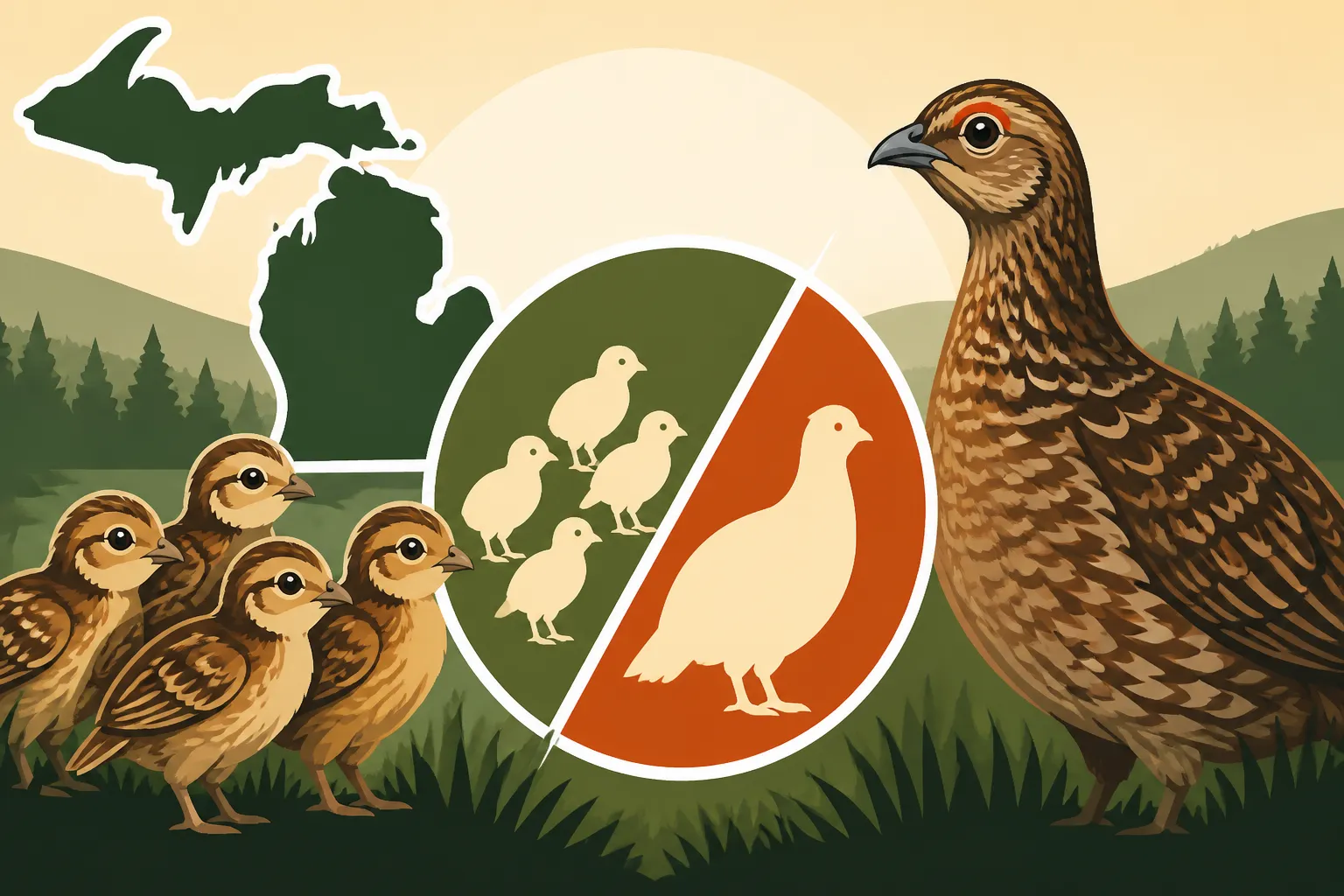
Simply put, a poult-to-hen ratio is the number of young turkeys (poults) observed per adult hen during a specific survey period, usually late summer. This isn't just a random statistic; it's a crucial snapshot of the previous nesting season's success. When wildlife biologists talk about turkey populations, this ratio tells them, and by extension, us hunters, how many new birds made it through the critical early weeks of life for every mature female in the flock. It’s a direct measure of recruitment – how many new turkeys are being added to the overall population. Think of it as the annual health checkup for the turkey herd; if the numbers are good, the future looks bright.
How Wildlife Agencies Collect Data
Typically, state wildlife agencies, like Michigan's Department of Natural Resources (DNR), conduct surveys during late summer, generally from July through August. This timing is strategic: poults are still small enough to be easily distinguished from adult birds but old enough to have survived the most perilous early stages of life. The surveys rely heavily on observations reported by a variety of people, including DNR staff, rural mail carriers, landowners, and avid outdoors enthusiasts like us hunters, birdwatchers, and hikers. Participants record the number of adult hens and the number of poults seen with them. This collective data then gets crunched and analyzed by biologists to give us that all-important ratio. The more observations gathered, the more accurate and representative the ratio becomes for a given area.
Interpreting What the Ratio Indicates
A high poult-to-hen ratio signifies a successful hatch and good poult survival, suggesting a healthy influx of young birds into the population. For instance, a ratio of 3.0 means three poults survived for every one hen observed. This is generally excellent news for hunters. Conversely, a low ratio, perhaps 1.0 or less, points to a poor nesting season, potentially due to harsh weather conditions, high predation rates, or other environmental stressors. These young birds are next year's jakes and, eventually, new breeding hens. Therefore, their survival directly impacts the future health and huntability of the turkey population. A consistently low ratio over several years is a serious concern for biologists, as it indicates a struggling population that might need management intervention.
Why These Ratios Matter to Michigan Turkey Hunters
For us passionate Michigan turkey hunters, understanding poult-to-hen ratios isn't just an academic exercise; it's a practical tool that can profoundly influence our expectations and strategies for the upcoming seasons. It helps us read the pulse of the turkey woods.
Predicting Hunting Success
This is where the rubber meets the road for us hunters. If the previous summer saw a strong poult-to-hen ratio, you can generally expect to see more jakes (yearling gobblers) the following spring. Jakes are typically less wary and more vocal than older gobblers, making them more responsive to calls and often easier to bring into range. More jakes mean more birds willing to gobble and respond to calls, often providing a more active and exciting experience during Spring Turkey Hunting in Michigan. Imagine a spring where the woods are alive with gobbling; a good poult-to-hen ratio from the prior year is often the reason why. A weak ratio, however, often translates to fewer jakes and potentially tougher hunting, as fewer young birds are around to fill the void. This means you might be targeting older, more cautious gobblers, which requires different tactics and more patience.
Impact on Future Seasons and Population Trends
Beyond the immediate spring hunt, these ratios are a crucial bellwether for the long-term health of Michigan's turkey population. Consistently low ratios over several years can signal a sustained decline in local turkey numbers. This could eventually lead to changes in management, such as reduced bag limits, shorter seasons, or even temporary closures in specific areas to protect the breeding stock and allow the population to recover. On the flip side, consistently strong ratios support robust populations and sustainable hunting opportunities, ensuring that Michigan continues to offer fantastic turkey hunting for years to come. By monitoring these trends, the DNR can make informed decisions, and hunters can better understand the Michigan Turkey Population Trends. When planning for future hunts, especially if you're looking at managing tags or applying for specific units, paying attention to these reports can be as valuable as using advanced planning tools like GoHunt, which often compile such data.
Informing Your Hunting Strategy
Knowing the general health of the turkey population in your hunting area, thanks to these ratios, can profoundly influence your approach in the field. In a year following a good hatch, with plenty of jakes around, you might be more aggressive with your calling sequences, knowing there are likely more receptive, less educated birds. You might even find success in areas that typically see a lot of pressure, as new birds disperse. This is a time to really embrace the run-and-gun style.
Conversely, in a year with a poor hatch, expecting fewer jakes, you'll likely need to adjust. This calls for more subtle calling, extensive scouting, and focusing on prime, undisturbed habitat where older, wiser gobblers are more likely to hold out. You might spend more time analyzing historical data or topographical maps, perhaps using a platform like GoHunt to pinpoint less-pressured spots. Understanding When Michigan Gobblers Go Quiet can be particularly important in these tougher years, as you'll need to recognize when to back off or switch locations. This strategic adaptation is key to maintaining success even when the numbers aren't as high.
Environmental Factors Shaping Brood Success
Wild turkeys are hardy birds, but the success of their annual reproduction is heavily influenced by a combination of environmental factors. These elements can make or break a nesting season, directly impacting the all-important poult-to-hen ratios we discussed.
Weather's Dominant Role
There's arguably no bigger factor influencing poult survival than the weather during nesting and the critical early brooding period. Michigan's springs can be notoriously fickle, swinging from warm and sunny to cold and torrential rainstorms in a matter of days. A cold, wet spring, especially during the crucial first few weeks after hatching, can be devastating for young poults. They are highly susceptible to hypothermia and pneumonia, and if the ground is constantly wet and temperatures dip, their chances of survival plummet. Their downy feathers offer little protection from prolonged dampness and cold. Hens will try their best to brood their poults and keep them warm and dry, but there's only so much they can do against persistent, inclement weather. Conversely, a warm, dry spring allows poults to thrive. They can dry out quickly after hatching, maintain their body temperature more easily, and forage more effectively for insects, leading to higher survival rates and, consequently, better poult-to-hen ratios. A string of warm, sunny days immediately following a hatch can set the stage for an excellent year class.
Predation Pressure
While weather often dictates the mass survival events, predation is a constant, year-round pressure that takes a significant toll on turkey nests and young poults. Michigan is home to a host of predators that find turkey eggs and small poults to be an easy and nutritious meal. Raccoons, opossums, skunks, foxes, coyotes, snakes, and even some birds of prey like owls and hawks are all looking for an opportunistic meal. High predator populations in an area can significantly depress poult-to-hen ratios, even in years with otherwise favorable weather conditions. A hen might lay a full clutch of eggs, but if a raccoon finds the nest, the entire brood is lost before it even hatches. This constant threat highlights the importance of good nesting cover. Nest Predation and Turkey Hatches are a natural part of the ecosystem, but when conditions favor predators too heavily, turkey populations can struggle to rebound. Healthy habitat, offering thick brush and tall grasses, provides places for hens to nest and poults to hide, giving them a fighting chance against these ever-present dangers.
Habitat Quality and Food Availability
The quality of available habitat plays a foundational role in a hen's ability to successfully nest and raise a brood. A hen needs secure nesting cover – dense patches of vegetation, brushy edges, or thickets – to hide her clutch from predators. Without adequate cover, nests are easily discovered, leading to failure. Once poults hatch, their diet consists primarily of insects for the first several weeks of their lives, providing the essential protein for their rapid growth. Areas with diverse insect populations, often found in early successional habitats like clearings, regenerating timber cuts, old fields, and along the edges of agricultural land, are prime brooding grounds. If habitat quality is poor – for example, dense, unbroken mature timber with little understory or vast monoculture agricultural fields – it can reduce both nesting success and poult survival, regardless of weather or predator numbers. Hunters often look to public lands that actively manage for these types of early successional habitats, which directly benefits turkey broods and in turn, future hunting opportunities. Places like Michigan State Game Areas or Michigan State Forest Hunting lands that have active timber management can often provide excellent turkey habitat.
Interpreting Michigan's Poult-to-Hen Ratios for Your Hunt
So, you've seen the poult-to-hen ratio for your preferred Michigan hunting unit. Now what? Understanding how to interpret these numbers and apply them to your hunting strategy is where the rubber meets the road. It helps you anticipate the season and fine-tune your approach.
What the Numbers Tell You
Generally speaking, a poult-to-hen ratio above 2.0 to 2.5 poults per hen is considered a good, healthy hatch. This suggests a decent number of jakes will be present the following spring, and the overall population is stable or growing. These are the years when you might hear multiple gobblers sounding off from the roost and responding readily to calls. Ratios closer to or below 1.0 to 1.5 poults per hen are a red flag, indicating a poor hatch and potentially fewer jakes and tougher hunting conditions. These aren't hard and fast rules, as regional variations exist, but they provide a solid benchmark. The Michigan DNR often releases these survey results, sometimes broken down by region or specific Turkey Management Unit, which is invaluable for planning. A quick check of these reports can really help set realistic expectations for Michigan Turkey Harvest Numbers.
Applying Ratios to Your Strategy
Once you have a sense of the hatch success, you can tailor your hunting strategy. This is where the numbers translate into real-world tactics.
High Ratio Year: Abundant and Responsive Birds
In a year following a strong hatch, expect more vocal and less wary jakes. These young birds haven't been pressured as much and are often eager to respond to calling, making for an exciting hunt. Focus your efforts on areas with good strutting zones, open woods, and field edges where younger birds are more likely to display. You might even be able to get away with more aggressive calling sequences, cutting and yelping frequently to locate birds. Consider scouting different areas more thoroughly, knowing that birds could be more widely dispersed and new flocks might have established themselves in previously quieter spots. Don't be afraid to cover ground; you're more likely to bump into a responsive bird. For those hunting in areas like Turkey Tactics for Southern Michigan Farms, a good hatch means more birds might be using the agricultural fields and woodlots.
Low Ratio Year: Patience and Precision are Key
This is when your seasoned hunter skills really come into play. Expect fewer jakes and potentially more pressure on the older, wiser gobblers. You'll need to be more patient, scout extensively, and perhaps adopt a more subtle, less aggressive calling approach. Soft clucks, purrs, and quiet yelps might be more effective at drawing in a wary bird. Focus on known travel corridors, roosting sites, and feeding areas, understanding that the birds you do find might be harder to pull off the property or away from their hens. If you're using a planning tool like GoHunt, you might spend more time analyzing historical data or topographical maps to pinpoint prime, less-pressured spots where those older birds might be hanging out. You might even consider shifting your focus to Hunting Michigan's Fall Turkey Season if spring numbers are particularly low, as fall hunting tactics often revolve around breaking up flocks and calling birds back to a scatter, which can be effective regardless of the age class of the birds.
Considering Regional Variations
It's crucial to remember that Michigan is a big state, encompassing diverse habitats from the farmlands of the southern Lower Peninsula to the dense forests of the Upper Peninsula. A poor hatch reported in one region, say due to localized severe weather, might not mean the same for another. Local weather patterns, predator populations, and habitat types can vary widely. Always try to look for data specific to the Turkey Management Unit or region you plan to hunt. For example, Hunting Turkeys in Upper Peninsula Timber presents different challenges and opportunities than hunting downstate, and local poult-to-hen ratios will reflect that. This localized knowledge, combined with the general poult-to-hen ratios, forms a powerful predictive tool. You can use resources like the DNR's annual harvest reports and pre-season forecasts to hone in on the specific conditions in your hunting zone.
| Poult-to-Hen Ratio (Poults per Hen) | Hatch Success | Likely Spring Gobbler Population (Next Year) | Hunting Outlook |
|---|---|---|---|
| 0.0 – 1.0 | Very Poor | Significantly fewer jakes | Very Challenging |
| 1.1 – 1.5 | Poor | Fewer jakes, some older gobblers | Challenging |
| 1.6 – 2.0 | Average | Moderate jake presence, good older gobblers | Moderate |
| 2.1 – 2.5 | Good | Healthy jake numbers, stable population | Good |
| 2.6+ | Excellent | Abundant jakes, growing population | Excellent |
Disclaimer
This article is for general informational purposes only and does not constitute professional advice. Laws, prices and regulations vary by location and change over time. Consult a qualified professional for guidance on your specific situation.