Are There Breeding Cougars in Michigan?
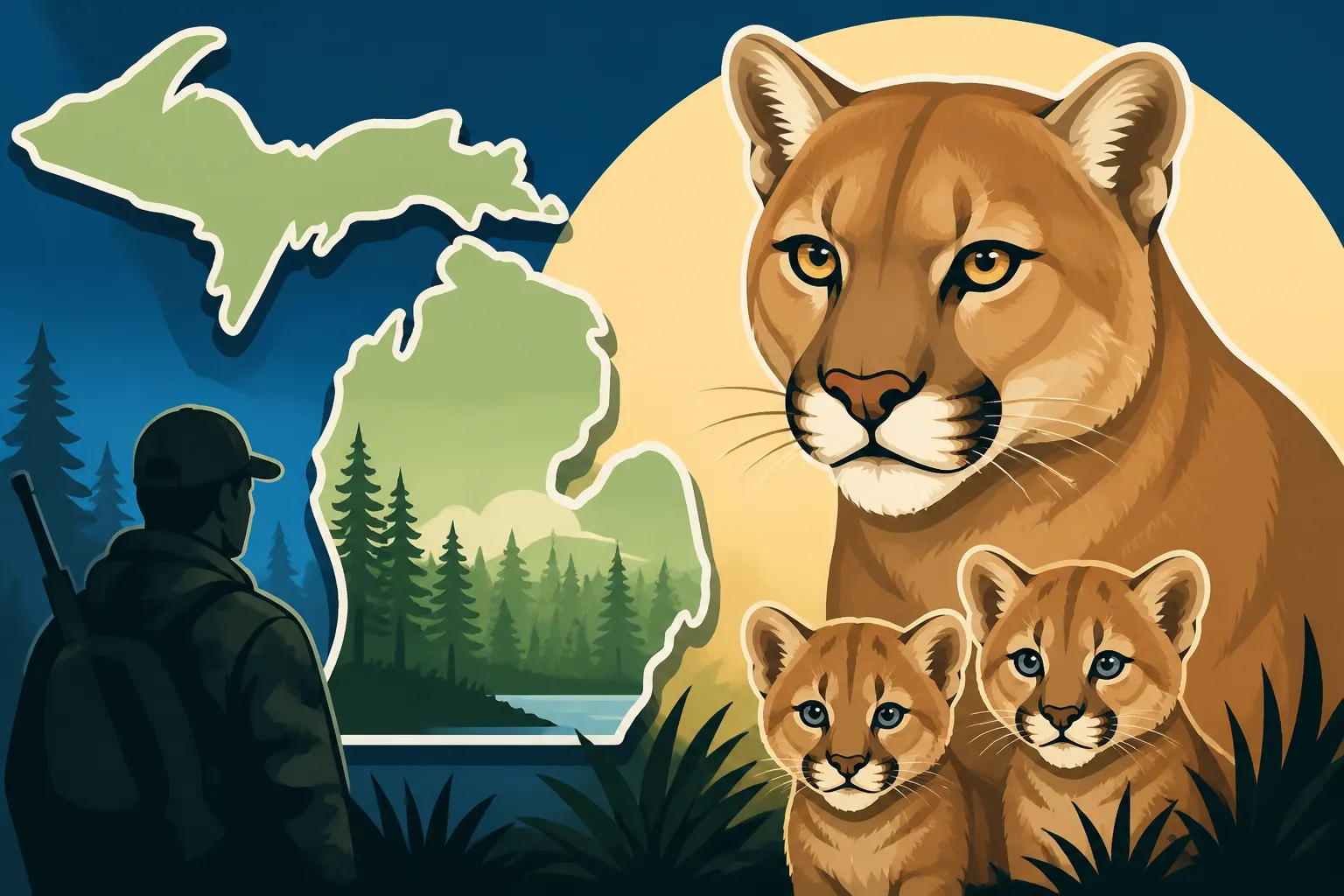
There's a persistent whisper among Michigan hunters, a story passed around deer camp fires and through online forums: "I saw a cougar!" These sightings often spark intense debate and a lot of understandable frustration, especially when official confirmations are rare. This comprehensive guide aims to cut through the speculation, providing a realistic look at the evidence surrounding cougar presence and, more specifically, the question of whether a breeding population exists within our state.
The Elusive Michigan Cougar: A Persistent Question
For decades, the idea of cougars roaming Michigan's woods has been a topic of fascination and controversy. Many hunters, hikers, and rural residents swear they’ve seen them, describing everything from fleeting glimpses to clear, undeniable encounters. Yet, official confirmations from wildlife authorities often lag behind these anecdotal reports, leading to a sense of disconnect and even skepticism among those who feel their observations are being dismissed. It's a genuinely tricky situation for everyone involved, as the dense cover of much of Michigan's wilderness makes definitive proof incredibly hard to come by.
The mystique surrounding cougars, also known as mountain lions or pumas, only adds to the intrigue. They are incredibly stealthy, powerful predators, and their ability to move silently through the landscape makes them extraordinarily difficult to spot, let alone track or photograph. This natural elusiveness means that even in areas with established populations, direct sightings are rare. Imagine trying to confirm the presence of such a ghost in a state where habitat connectivity and population dynamics are constantly debated. Cougar Confirmations in Michigan are indeed a big deal when they happen, precisely because they are so hard to get.
Historical Context and Reintroduction Debates
Historically, cougars were native to Michigan, but they were extirpated from the state in the early 20th century due to habitat loss and unregulated hunting. The last confirmed wild cougar taken in Michigan was in 1906, near Newberry in the Upper Peninsula. Since then, any cougar present in Michigan has either been a transient individual dispersing from other established populations (primarily from the western states, though this is a long journey), or an escaped captive animal. The notion of natural reintroduction is appealing to some, suggesting a resurgence of a truly wild Michigan.
However, the idea of an active, deliberate reintroduction program by the state has been firmly dismissed by wildlife agencies. The Michigan Department of Natural Resources (DNR) has consistently stated that they do not have plans to reintroduce cougars. This stance is often based on several factors, including potential conflicts with livestock and human populations, the difficulty of managing such a top predator, and the ongoing debate about whether Michigan's habitat can truly support a viable, self-sustaining population without significant human intervention. For many, the return of a native species would be a powerful symbol, but the practicalities are far more complex.
Understanding "Breeding Population" vs. Transient Animals
When we talk about whether cougars are "breeding" in Michigan, it's crucial to understand what that actually means in a biological and ecological sense, and how it differs from simply having a cougar or two pass through. This distinction is at the heart of the debate and why official confirmations often don't align with widespread public belief.
A "breeding population" implies several key things:
- Multiple Individuals: There isn't just one lone cougar, but a cohort of males and females.
- Reproduction: These animals are successfully mating and producing offspring.
- Survival of Offspring: The young cougars are surviving to adulthood and eventually reproducing themselves.
- Self-Sustaining: The population is large enough and healthy enough to continue reproducing and maintaining itself over generations without constant immigration from outside areas. This usually requires a certain density of animals and interconnected habitat.
This is a very different scenario from a "transient animal," which is a lone cougar passing through an area, often a young male dispersing from an established population elsewhere to find new territory and mates.
The Lone Wanderer Phenomenon
It's widely accepted that individual cougars do occasionally wander into Michigan. These are often young males, driven by an instinct to find new hunting grounds and establish their own territory. They can travel hundreds of miles, crossing state lines and even large bodies of water. The Upper Peninsula, with its vast tracts of wilderness, is the most likely entry point for such wanderers. Upper Peninsula Big Woods Counties and the general wilderness of Hunting the Michigan Upper Peninsula provide ample space for a stealthy animal to move undetected.
These transient animals, while undeniably present, do not constitute a breeding population. They are typically single animals, not pairs, and certainly not families with cubs. They are often just passing through, perhaps staying for a season or two before moving on or succumbing to environmental factors or accidents (like vehicle collisions). Confirming one of these individuals is a significant event, as seen in the increasing number of Where Michigan Cougars Have Been Photographed incidents, but it doesn't mean a family unit is denning up somewhere.
Evidence of Reproduction: The Missing Link
The absolute cornerstone of confirming a breeding population is evidence of reproduction. This means photographs or direct observations of adult females with cubs, repeated sightings of young animals over time in the same general area, or genetic evidence of related animals born in Michigan. Without this, even numerous individual cougar sightings, while interesting, don't prove a self-sustaining population. Think about it: a bachelor bear might wander far from its home range, but that doesn't mean bears are breeding in that new area unless cubs are seen.
As of recent official statements, the Michigan DNR has confirmed individual cougar sightings, usually through trail camera photos or tracks verified by experts. However, these confirmations have not, to date, provided consistent, unequivocal evidence of breeding activity in Michigan. There have been no confirmed instances of female cougars with dependent young, or multiple, related cougars whose genetics indicate they were born and raised within the state. This is the "missing link" that keeps the official designation from shifting to "breeding population."
Evidence and Confirmations: What the DNR Says
The Michigan Department of Natural Resources (DNR) maintains a very specific and evidence-based approach to cougar confirmations. They understand the public's interest and concern but must operate on verifiable data rather than speculation. This is often where the frustration lies for many Michigan residents who believe they have firsthand proof.
The DNR has a system for investigating reported cougar sightings. When a report comes in, especially if it includes physical evidence like tracks, scat, or photos, wildlife biologists and experts will investigate. They look for specific characteristics in tracks, analyze DNA from scat or hair, and examine photographic evidence for authenticity and clarity. This rigorous process is necessary to differentiate cougars from other animals (like bobcats or large domestic dogs), and to rule out hoaxes or misidentifications. It’s also how they differentiate between a confirmed cougar and a merely suspected one.
Documented Sightings and Trail Camera Captures
Over the years, there have been a number of documented cougar sightings in Michigan, the vast majority of which occur in the Upper Peninsula. These are often captured by trail cameras set up by hunters, or through careful track identification by DNR personnel. Each confirmed sighting adds to the growing understanding of cougar movements, but each also serves to highlight the transient nature of these animals. For example, a single male cougar might be photographed in multiple locations over a few months, demonstrating its immense travel capabilities rather than the presence of multiple animals.
The use of technologies like GoHunt's mapping features and the ability to drop pins on specific locations can aid hunters in recording potential cougar sign. While not official confirmation, precise location data helps biologists assess patterns. Hunters who spend countless hours in the woods, especially in remote areas of Public Hunting Land in Michigan like the Ottawa National Forest or Hiawatha National Forest, are often the first to encounter such elusive animals. Their trail cameras provide invaluable data, and when shared responsibly, can contribute to the scientific understanding of wildlife movements.
The Importance of Scientific Verification
For the DNR, every confirmation is important, but the type of confirmation matters significantly when determining population status. A photograph of a cougar crossing a road is very different from genetic evidence proving a female and her cubs are denning in a particular area. The former confirms presence; the latter confirms reproduction and the potential for a breeding population.
The DNR also monitors for other large predators, such as How Many Wolves Michigan Has in the Upper Peninsula, and their management strategies often differ based on population status. The scientific verification process ensures that management decisions, which can have significant ecological and social impacts, are based on solid evidence, not just speculation. It's a careful balance between public perception and scientific rigor.
Challenges in Confirming a Breeding Population
Confirming a breeding population of a large, elusive predator like the cougar in a diverse landscape like Michigan presents numerous challenges. It's not as simple as counting deer in a field, and several factors make definitive proof hard to acquire.
Habitat and Elusiveness
Michigan offers vast tracts of dense forest, swamps, and remote wilderness, particularly in the Upper Peninsula and parts of the Northern Lower Peninsula. This habitat, while beautiful, is also prime real estate for an animal designed to remain unseen. Cougars are naturally secretive and nocturnal or crepuscular (active at dawn and dusk), which means they actively avoid human contact. Imagine trying to consistently track an animal that moves silently, hides effectively, and covers huge distances, all while trying to find evidence of den sites or successful rearing of young. It’s like searching for a needle in a haystack, only the needle can move hundreds of miles.
The sheer size of a cougar's home range also makes consistent monitoring difficult. A single male cougar can have a territory covering hundreds of square miles, while a female with cubs might have a smaller but still substantial range. Covering such vast areas with enough cameras or human observation to definitively prove breeding is an immense undertaking, requiring significant resources and long-term commitment. This is why tools like GoHunt become so critical for hunters: they allow individual users to become informal scouts, mapping out potential travel corridors or remote corners that might offer refuge. Scouting these areas thoroughly Scouting Michigan Public Land Before Season becomes even more challenging due to the animal's stealth.
Dispersal Patterns and Genetic Evidence
As mentioned earlier, many cougars sighted in Michigan are believed to be dispersing individuals, most likely from established populations in states like South Dakota. These animals travel vast distances, often following river corridors or wild lands, until they either find suitable habitat, encounter obstacles, or perish. Proving that a cougar seen in Michigan is not a disperser, but rather part of a locally born and breeding lineage, requires genetic evidence.
Genetic analysis can determine the origin of a cougar, linking it back to known populations. It can also identify related individuals, providing clues about family units. However, obtaining sufficient genetic samples (from scat, hair, or tissue from deceased animals) is difficult and costly. One-off sightings, even with photographic evidence, don't provide the continuous genetic sampling needed to track a breeding lineage through generations. The lack of such evidence, despite numerous individual confirmations, strongly points to a lack of a self-sustaining, breeding population.
Public Reporting and Misidentification
While public reporting is invaluable, it also presents challenges. Not every sighting is accurate. Misidentification of other animals, such as bobcats, coyotes, or even large domestic dogs, is common. Sometimes, the lighting or a quick glimpse can make an animal appear larger or more feline than it truly is. Bobcat Range and Harvest in Michigan confirms that bobcats are present across Michigan, and sometimes their size can be overestimated in a brief encounter.
The DNR often filters these reports through a rigorous verification process to separate confirmed sightings from probable or unconfirmed ones. This can lead to frustration for individuals who are certain of what they saw but cannot provide the concrete evidence needed for official documentation. It's a classic "seeing is believing" versus "proving it scientifically" dilemma that impacts how the state officially views the cougar's presence. Hunters must also be aware of Michigan Wildlife Violation Penalties if they were to mistakenly harvest a protected species due to misidentification.
What Hunters Should Know About Cougars in Michigan
Even without a confirmed breeding population, the occasional presence of individual cougars in Michigan's woods is a reality. As hunters, it's important to be informed, cautious, and responsible if you encounter one of these magnificent animals.
Safety Precautions and Encounter Protocols
While cougar attacks on humans are exceedingly rare, especially in areas where cougars are not accustomed to people, it’s always wise to be prepared. If you encounter a cougar:
- Do not run. Running can trigger a chase instinct.
- Stand your ground and make yourself look as large as possible. Raise your arms, open your jacket, shout.
- Maintain eye contact.
- Back away slowly.
- If the cougar approaches, be aggressive. Throw sticks or rocks, hit it with whatever you have. Protect your head and neck if attacked.
These are general guidelines for cougar country and apply whether you're deer hunting during Michigan's November Firearm Deer Season or small game hunting. Carrying bear spray, while typically for bears, could also deter an aggressive cougar. For hunters in areas like the U.P., understanding these protocols is just part of being prepared for the wilderness, much like preparing for an encounter with Michigan Black Bear Hunting.
Reporting Sightings to the DNR
If you believe you have seen a cougar or found physical evidence (tracks, scat, kill site), it’s crucial to report it to the Michigan DNR. Provide as much detail as possible, including:
- Exact location: Use landmarks, GPS coordinates, or a mapping app like GoHunt to pinpoint the spot.
- Date and time of sighting.
- Description of the animal: Size, color, any distinguishing features.
- Behavior: What was it doing?
- Evidence: Photos or videos of the animal, tracks, scat, or kill sites. Do not disturb the evidence if possible.
Your report, especially if accompanied by verifiable evidence, helps the DNR track confirmed cougar movements and understand their presence within the state. They typically have an online reporting system or a dedicated email address for cougar sightings.
Respecting Wildlife and the Ecosystem
Regardless of whether Michigan hosts a breeding cougar population, these are wild animals that deserve respect and protection. They are a part of the natural ecosystem, and their presence, even as transient individuals, signifies healthy, wild places. Hunters, as stewards of the land, play a vital role in respecting all wildlife.
The possibility of a cougar in your hunting area, whether it's in a vast Michigan State Forest Hunting block or a remote corner of Hunting the Michigan Upper Peninsula, adds another layer to your outdoor experience. It reinforces the wildness of our state and the incredible biodiversity it supports. Keeping an open mind, staying informed, and reporting sightings responsibly ensures that both wildlife and human safety are prioritized.
| Feature | Breeding Population | Transient Individual |
|---|---|---|
| Number of Animals | Multiple, including males, females, and cubs | Typically a lone animal |
| Reproduction | Documented successful mating and rearing of young | No evidence of reproduction within the state |
| Origin | Born and raised within the state | Dispersing from established populations elsewhere |
| Duration of Stay | Long-term presence, across generations | Temporary, passing through, or short-term stay |
| Ecological Impact | Established role in local predator-prey dynamics | Minimal, temporary impact on local ecosystem |
| DNR Confirmation Basis | Genetic evidence of local lineage, multiple cub sightings | Photographic, track, or scat evidence of an individual |
Ultimately, while Michigan has confirmed individual cougars roaming its wild places, the scientific evidence for a self-sustaining, breeding population simply isn't there yet. This doesn't diminish the incredible experiences of those who have witnessed these magnificent creatures, but it's a critical distinction for wildlife management. The conversation around cougars in Michigan will undoubtedly continue to evolve, much like our understanding of our state's diverse and dynamic wildlife.
Disclaimer
This article is for general informational purposes only and does not constitute professional advice. Laws, prices and regulations vary by location and change over time. Consult a qualified professional for guidance on your specific situation.